
A shipyard in Saudi Arabia recently ordered wrong angle sizes, causing fabrication delays. Understanding standard dimensions prevents such costly mistakes.
Marine angle steel comes in equal leg sizes from 20x20mm to 200x200mm and unequal legs up to 200x150mm, with thicknesses ranging from 3mm to 24mm. Standard lengths are 6m, 9m, and 12m, with section properties following international standards for shipbuilding applications and classification society requirements.
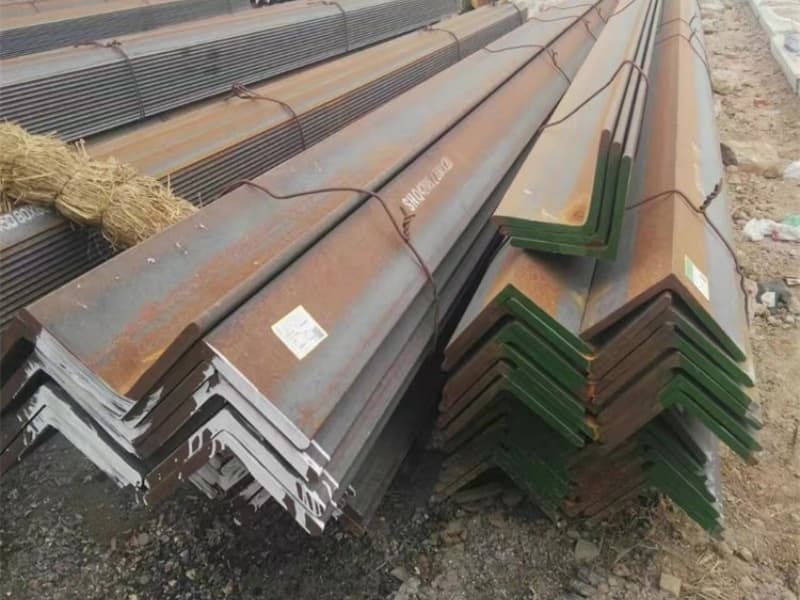
Proper angle steel selection requires understanding size standards and section properties. Let me guide you through the common specifications and their applications.
What are the sizes of angle bars?
A contractor from Qatar needed to verify angle bar sizes1 for their ship repair project. Standard sizes ensured material compatibility.
Angle bars are available in equal leg sizes2 from 20x20x3mm to 200x200x24mm and unequal leg sizes3s](https://cnmarinesteel.com/marine-l-section-steel-dimensions-and-weight-chart/)[^2] like 75x50x6mm to 200x150x18mm. Standard lengths include 6m, 9m, and 12m, with marine grades following classification society specifications for structural applications in shipbuilding and offshore structures.
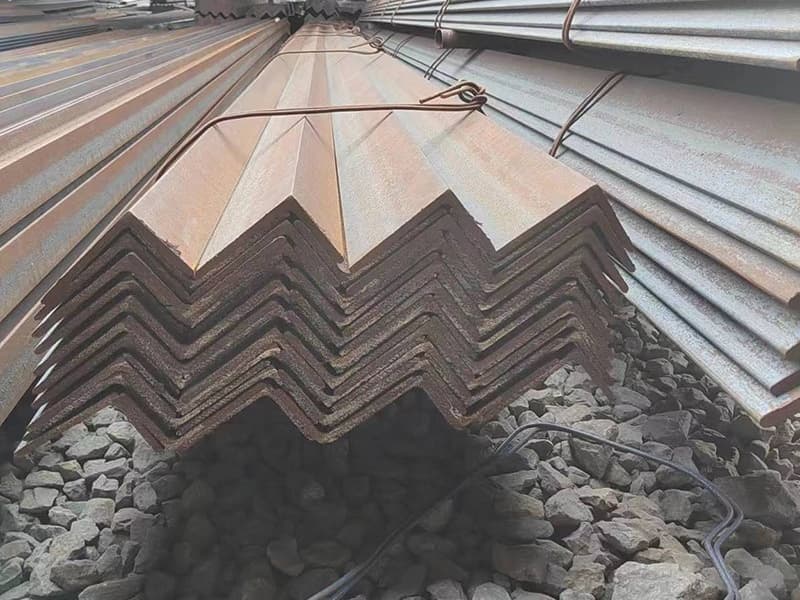
Comprehensive Angle Bar Size Classification
Angle bar sizes follow systematic standardization that ensures material availability and structural consistency. Understanding these sizes helps in proper specification and procurement.
Equal Leg Angle Standards
Equal leg angles represent the most common configuration. The sizes progress in logical increments starting from 20x20mm. Common equal leg sizes2 include 25x25mm, 30x30mm, 40x40mm, 50x50mm, 65x65mm, 75x75mm, 90x90mm, 100x100mm, 120x120mm, 150x150mm, and 200x200mm. Each leg size has multiple thickness options to suit different load requirements.
Unequal Leg Angle Variations
Unequal leg angles serve specific structural needs. Common unequal sizes include 30x20mm, 40x25mm, 50x30mm, 65x45mm, 75x50mm, 90x60mm, 100x75mm, 120x80mm, 150x90mm, and 200x150mm. The unequal configuration provides different strength properties in each direction. This makes them suitable for applications requiring asymmetric loading capacity.
Thickness Progression Patterns
Angle thickness follows predictable patterns. For smaller angles (20-50mm), thickness typically ranges from 3mm to 6mm. Medium angles (65-100mm) offer thickness from 5mm to 10mm. Large angles (120-200mm) provide thickness options from 8mm to 24mm. The thickness selection affects both strength and weight significantly.
Length Standards and Tolerances
Standard lengths facilitate transportation and fabrication. 6 meters serves as the most common length for handling and shipping. 9 meters and 12 meters are available for larger projects requiring fewer connections. Length tolerances typically allow ±100mm variation. Custom lengths are possible but may incur additional costs.
Marine Grade Specific Sizes
Marine applications often use specific size ranges. Common marine angles include 75x75x8mm, 100x100x10mm, and 150x150x12mm for frame construction. The sizes are optimized for ship structural requirements and fabrication efficiency. Classification societies may recommend specific size-thickness combinations.
Regional Size Preferences
Different markets may prefer specific size ranges. European standards typically follow metric dimensions precisely. American standards may use inch-based sizing with metric equivalents. Asian standards often follow Japanese or European practices. Understanding regional preferences helps in material sourcing.
Common Angle Bar Size Applications
| Size Range | Typical Sizes | Common Applications | Weight Range (kg/m) |
|---|---|---|---|
| Small | 20x20x3 to 50x50x6 | Brackets, supports | 0.9 – 4.5 |
| Medium | 65x65x6 to 100x100x10 | Frames, bracing | 5.0 – 15.0 |
| Large | 120x120x10 to 200x200x18 | Primary structures | 18.0 – 55.0 |
| Unequal | 75x50x6 to 200x150x15 | Special applications | 5.5 – 40.0 |
| Marine | 75x75x8 to 150x150x12 | Ship frames, stiffeners | 9.0 – 27.0 |
We supply all standard angle sizes to shipyards worldwide. Clients in Vietnam and Philippines benefit from comprehensive size availability.
What size are angle irons?
A fabricator from Mexico confused angle iron terminology with actual sizes. Clarifying the measurements improved their material planning.
Angle iron sizes range from 1/2"x1/2"x1/8" to 8"x8"x1" in imperial measurements1, equivalent to 13x13x3mm to 200x200x25mm in metric. The term "angle iron" typically refers to smaller sizes used in construction, while "angle steel" denotes larger structural sections used in shipbuilding and heavy industry applications.

Angle Iron Size Specifications and Applications
The term "angle iron" traditionally describes smaller, lighter angle sections, though modern usage often applies it to all angle products. Understanding the size ranges helps in proper material selection.
Imperial Size Standards
Traditional angle iron sizes2 follow imperial measurements1. Common imperial sizes include 1/2"x1/2"x1/8", 3/4"x3/4"x1/8", 1"x1"x1/8", 1-1/2"x1-1/2"x1/8", 2"x2"x1/4", 3"x3"x1/4", 4"x4"x1/4", 6"x6"x1/2", and 8"x8"x1". These sizes remain popular in North American markets and specific industries.
Metric Equivalent Sizes
Metric equivalents provide international standardization. Common metric conversions include 13x13x3mm, 20x20x3mm, 25x25x3mm, 40x40x5mm, 50x50x5mm, 75x75x6mm, 100x100x8mm, 150x150x12mm, and 200x200x20mm. The metric system offers more precise size increments and is widely used in international trade.
Size Category Classification
Angle products are categorized by size ranges. Light angles typically cover sizes up to 50x50mm. Medium angles range from 65x65mm to 100x100mm. Heavy angles include sizes from 120x120mm upward. The classification helps in preliminary material selection and specification.
Thickness to Size Relationships
Angle thickness correlates with leg dimensions. Smaller angles (under 50mm) typically have 3-5mm thickness. Medium angles (65-100mm) commonly use 6-10mm thickness. Large angles (over 120mm) generally have 10-25mm thickness. The relationship ensures structural efficiency and manufacturing feasibility.
Application-Based Size Selection
Different applications favor specific size ranges. Construction applications often use 25x25mm to 75x75mm angles. Shipbuilding typically employs 75x75mm to 150x150mm sizes. Heavy industrial structures may use 200x200mm and larger angles. The selection considers both strength requirements and fabrication practicalities.
Regional Terminology Variations
Terminology varies across different markets. "Angle iron" is common in American English. "Angle bar" predominates in Asian markets. "L-shaped steel" appears in technical specifications. "Equal angle" and "unequal angle" describe specific configurations. Understanding these variations prevents communication errors.
Angle Iron Size Comparison Table
| Imperial Size | Metric Equivalent | Typical Thickness | Common Applications |
|---|---|---|---|
| 1"x1" | 25x25mm | 3-5mm | Light framing, supports |
| 2"x2" | 50x50mm | 4-6mm | Structural bracing |
| 3"x3" | 75x75mm | 6-8mm | Machine frames, ship stiffeners |
| 4"x4" | 100x100mm | 8-10mm | Building frames, ship frames |
| 6"x6" | 150x150mm | 10-15mm | Heavy structures, shipbuilding |
| 8"x8" | 200x200mm | 15-25mm | Columns, heavy supports |
We provide both imperial and metric size options to accommodate international clients. Projects in Thailand and Romania benefit from this flexibility.
What are the different sizes of angles?
A naval architect from Saudi Arabia needed comprehensive angle size data for their vessel design. Complete size tables informed their structural decisions.
Angle sizes include equal legs1 from 20x20mm to 250x250mm, unequal legs2s](https://cnmarinesteel.com/marine-l-section-steel-dimensions-and-weight-chart/)[^1] from 30x20mm to 200x150mm, and thicknesses from 2mm to 35mm. Standard series follow international specifications3 like JIS G3192, DIN EN 10056, and ASTM A36, with marine grade4s requiring additional certification for shipbuilding applications.
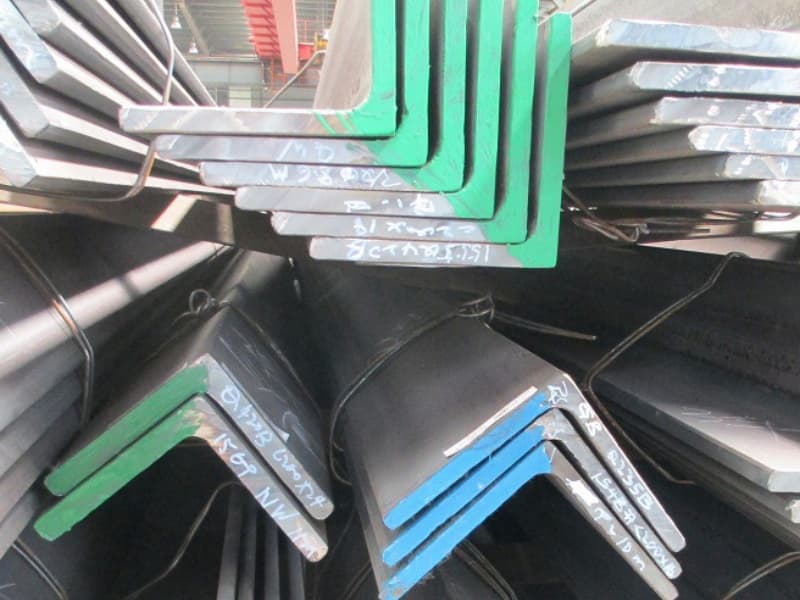
Comprehensive Angle Size Classification System
Angle sizes are systematically organized to cover a wide range of structural requirements. Understanding the complete size spectrum enables optimal material selection.
Equal Angle Size Spectrum
Equal angles cover an extensive size range. The progression typically follows 20, 25, 30, 35, 40, 45, 50, 55, 60, 65, 70, 75, 80, 90, 100, 110, 120, 130, 140, 150, 160, 180, 200, and 250mm leg sizes. Each leg size has multiple thickness options that increase with size. This systematic progression ensures design flexibility.
Unequal Angle Size Range
Unequal angles provide additional design options. Common unequal combinations include 30×20, 35×25, 40×25, 45×30, 50×30, 55×35, 60×40, 65×45, 70×45, 75×50, 80×50, 90×60, 100×65, 100×75, 120×80, 130×90, 150×90, 150×100, 160×120, 180×120, and 200x150mm. The size relationships follow structural efficiency principles.
Thickness Variations
Thickness options increase with angle size. Small angles (20-50mm) typically offer 2, 3, 4, 5, and 6mm thickness. Medium angles (55-100mm) provide 5, 6, 7, 8, 9, and 10mm options. Large angles (110-200mm) include 8, 10, 12, 14, 16, 18, 20, 22, 24, and 25mm thickness. Extra-large angles may go up to 35mm thickness.
Standard Length Options
Length availability varies with angle size. Smaller angles (up to 75mm) are commonly available in 6m, 7m, 8m, 9m, and 12m lengths. Larger angles (over 80mm) typically come in 6m, 9m, and 12m standard lengths. Custom lengths are possible but may have minimum order requirements.
Marine Grade Size Preferences
Shipbuilding favors specific size ranges. Common marine angles include 75x75x8, 90x90x9, 100x100x10, 120x120x12, and 150x150x15mm. These sizes provide optimal strength-to-weight ratios for ship frames. The thickness selection includes adequate corrosion allowance for marine service.
International Standard Variations
Different standards have slight size variations. JIS standards include specific size series not found in DIN. ASTM standards may have different thickness progressions. ISO standards aim to harmonize these differences. Understanding standard variations helps in international projects.
Complete Angle Size Reference
| Category | Leg Size Range | Thickness Range | Standard Lengths | Typical Applications |
|---|---|---|---|---|
| Light | 20×20 – 50×50 | 2-6mm | 6-12m | Supports, brackets |
| Medium | 55×55 – 100×100 | 5-10mm | 6-12m | Frames, bracing |
| Heavy | 110×110 – 200×200 | 8-25mm | 6-12m | Primary structures |
| Extra Heavy | 200×200 – 250×250 | 20-35mm | 6-9m | Columns, heavy supports |
| Unequal | 30×20 – 200×150 | 3-20mm | 6-12m | Special applications |
We maintain comprehensive angle size inventories to meet diverse project requirements. Clients appreciate our ability to supply both standard and special sizes.
How is angle iron size1 measured?
A quality inspector from Philippines needed to verify angle measurements for incoming materials. Proper measurement techniques ensured specification compliance.
Angle iron size is measured by leg length2, leg thickness, and toe radius3 using calibrated tools. Leg length measures from outer edge to outer edge, thickness is measured away from edges to avoid roll-off effects, and the measurement follows standardized procedures in specifications like ASTM A6 or JIS G3192 for accuracy and consistency.
Accurate Angle Measurement Techniques
Proper angle measurement requires understanding the critical dimensions and using appropriate tools and techniques. Consistent measurement ensures material compliance and fabrication accuracy.
Leg Length Measurement
Leg length is the primary dimension specification. Measurement should be taken from the outer surface of one leg to the outer surface of the other leg. For equal angles, both legs should measure identically within tolerance. For unequal angles, each leg requires individual verification. The measurement should avoid the rounded toe areas at the leg ends.
Thickness Measurement Methods
Thickness measurement requires careful technique. Measurements should be taken away from the edges to avoid roll-off effects. Digital calipers provide accurate thickness readings. Multiple measurements along the leg length2 ensure consistency. The specified thickness is the nominal value, with actual measurements falling within standard tolerances.
Toe Radius Considerations
The toe radius3 affects strength and appearance. Standard angles have specified toe radius3 values. Larger angles typically have larger toe radii. The radius measurement requires specialized radius gauges. While not always specified in ordering, the radius affects fabrication and connection design.
Straightness Verification
Angle straightness is crucial for fabrication. Straightness should be checked along the entire length. Visual inspection can identify obvious curvature. Precision straightedges provide quantitative assessment. Torsional twist should also be checked. Straightness tolerances are specified in relevant standards.
Measurement Tool Requirements
Proper tools ensure measurement accuracy. Digital calipers should be calibrated regularly. Tape measures should be certified for length accuracy. Straightedges must maintain their straightness. Radius gauges should cover the expected range. Proper tool maintenance prevents measurement errors.
Tolerance Understanding
All measurements have acceptable tolerances. Leg length tolerances typically range from ±1mm to ±3mm. Thickness tolerances vary from ±0.3mm to ±1.0mm. Straightness tolerances are specified per meter length. Understanding these tolerances helps in acceptance decisions.
Measurement Documentation
Proper records support quality assurance. Measurement results should be documented systematically. Out-of-tolerance conditions require clear recording. The documentation should include measurement locations and conditions. This information supports any necessary claims or adjustments.
Angle Measurement Parameters
| Dimension | Measurement Method | Tools Required | Acceptance Criteria |
|---|---|---|---|
| Leg Length | Outer edge to outer edge | Tape measure, calipers | Within ±1-3mm tolerance |
| Thickness | Away from edges | Digital caliper | Within ±0.3-1.0mm tolerance |
| Toe Radius | At leg junction | Radius gauges | Match standard specification |
| Straightness | Along length | Straightedge | Within 0.2% of length |
| Squareness | Between legs | Square gauge | Within 1-2 degrees |
We implement rigorous measurement procedures for all supplied materials. Clients in Malaysia and Qatar receive detailed measurement reports with their shipments.
Conclusion
Understanding marine angle steel sizes and measurement methods ensures proper material selection and quality assurance. Standard sizes support efficient design and reliable fabrication in shipbuilding applications.
-
Understanding angle iron size is crucial for ensuring compliance with specifications and quality standards. ↩ ↩ ↩ ↩ ↩
-
Measuring leg length accurately is essential for maintaining the integrity and specifications of angle iron. ↩ ↩ ↩ ↩ ↩ ↩
-
Exploring toe radius considerations can enhance your understanding of angle iron’s structural performance. ↩ ↩ ↩ ↩ ↩
-
Explore marine grade angle specifications to ensure your shipbuilding projects meet industry standards for safety and durability. ↩