
I once witnessed a project halt because the wrong grade of steel was delivered to a shipyard. The confusion between similar-sounding grades like A36 and EH36 is common, and it is a costly mistake. Understanding CCS EH36 is critical for anyone involved in serious marine construction.
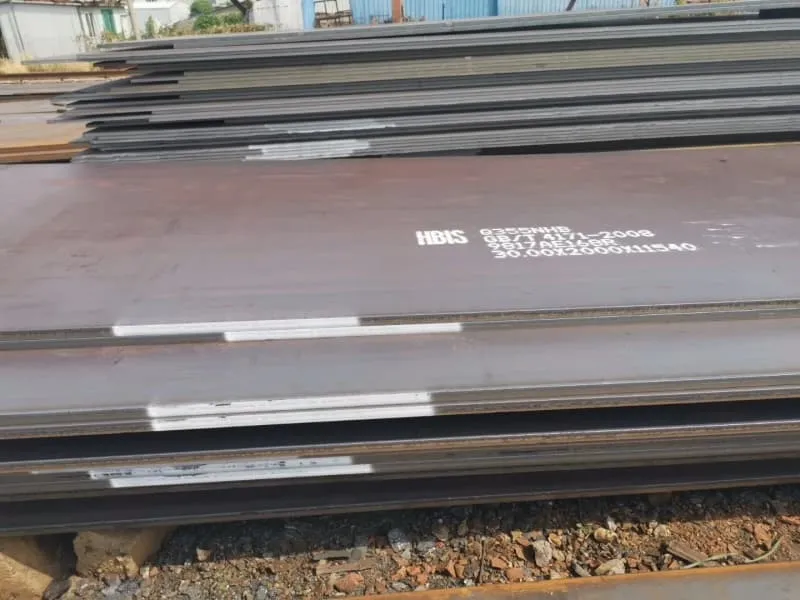
CCS EH36 is a high-strength, low-temperature marine steel plate certified by the China Classification Society (CCS). The "E" indicates it is tested for impact toughness at -40°C, "H" means high tensile strength, and "36" denotes a minimum yield strength of 355 MPa (or 36 ksi). It is a premium material for critical ship structures.
The world of steel grades can be confusing. Names like A36, EH36, S355 sound similar but serve very different purposes. This guide will clearly explain what makes CCS EH36 unique and why it is not interchangeable with other "36" grades. We will answer the most common questions to help you make the right choice for your project.
What is EH36 steel?
Many buyers contact us asking for "EH36 shipbuilding steel1." But they often lack a clear understanding of what the letters and numbers truly demand from the material. This knowledge gap can lead to specification errors.
EH36 is a high-strength shipbuilding steel grade2. The "E" means it is tested for impact toughness at -40°C3, "H" stands for high tensile strength, and "36" specifies a minimum yield strength of 355 MPa4. It is designed for critical parts of oceangoing vessels operating in cold environments.
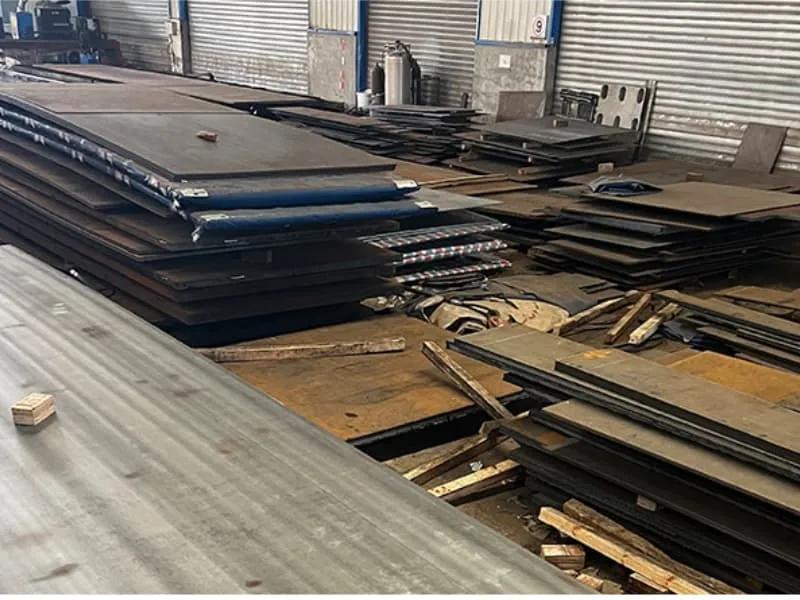
Decoding the EH36 Specification
EH36 is not a single material but a performance standard met through precise chemistry and manufacturing. Let’s break down its components and see how it compares to other grades.
The Naming Code Explained
Each part of "EH36" gives a key piece of information:
- First Letter (Toughness Level): This is the most important letter for marine safety.
- A: Basic impact energy, no specified low temperature.
- D: Impact tested at -20°C.
- E: Impact tested at -40°C.
- F: Impact tested at -60°C (for Arctic applications).
- Second Letter (Strength Type):
- No letter: Ordinary strength steel.
- H: High tensile strength steel.
- The Number (Yield Strength):
- 36: This means a minimum yield strength of 36 kilo-pounds per square inch (ksi). This converts to approximately 355 Megapascals (MPa).
So, EH36 directly tells us: "This steel must have a yield strength of at least 355 MPa and must demonstrate good toughness (not become brittle) at temperatures as low as -40°C."
Key Mechanical and Chemical Properties
Achieving these properties requires tight control. Here is a typical profile for CCS EH36:
| Property | Requirement / Typical Value | Importance |
|---|---|---|
| Yield Strength (ReH) | ≥ 355 MPa | Determines the load the structure can bear without permanent deformation. |
| Tensile Strength (Rm) | 490 – 630 MPa | The maximum stress it can withstand before breaking. |
| Elongation | ≥ 21% | Indicates ductility; how much it can stretch before fracture. |
| Impact Energy (Charpy V-Notch) | ≥ 34 J at -40°C | The critical property. Ensures it won’t crack in cold seas. |
| Carbon Equivalent (Ceq/Pcm) | Low and controlled (e.g., Ceq ≤ 0.40) | Ensures good weldability without pre-heat, reducing fabrication costs and risks. |
The chemical composition is carefully balanced. Mills add micro-alloying elements like Niobium (Nb), Vanadium (V), and Titanium (Ti). They use the Thermo-Mechanical Control Process (TMCP)5 to get a fine-grained microstructure. This process gives EH36 its combination of high strength and exceptional low-temperature toughness.
EH36 vs. Other "36" Grades
The "36" causes the most confusion.
- AH36: High strength, but tested at a higher temperature (often 0°C). Used for less critical parts or warmer waters.
- DH36: High strength, tested at -20°C. A step below EH36 in low-temperature performance.
- EH36: The grade for critical structures in cold environments (e.g., bottom plating, side shells).
For a client like Gulf Metal Solutions in Saudi Arabia, even though their local waters are warm, the vessels they supply might operate globally. They specify EH36 for key projects because it offers a safety margin and meets international classification society rules. They need the Mill Test Certificate (MTC)6 to prove the -40°C impact values. Without that certificate, the steel is just another piece of plate.
What is A36 steel1 material equivalent to?
When international buyers see "A36," they often search for a direct equivalent in their local standards, like EN or JIS. This is a practical need, but the answer is not always a perfect one-to-one match.
ASTM A36 steel1 is a common carbon structural steel. Its closest general equivalents are EN S275 steel2 or JIS SS4003. However, "equivalent" only refers to approximate yield strength4 (around 250 MPa). For critical properties like guaranteed impact toughness or chemical composition, the standards differ significantly.
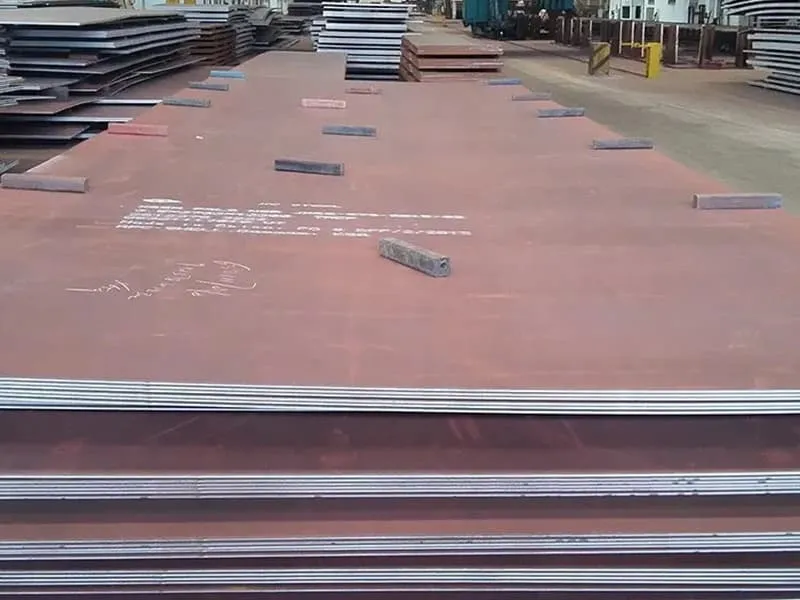
Understanding "Equivalency" in Steel Standards
The term "equivalent" is misleading if used without context. You must ask: Equivalent in what way? Strength? Chemistry? Application? Let’s compare A36 with its so-called equivalents.
The Core of ASTM A36
A36 is defined by the American Society for Testing and Materials (ASTM). It is a versatile, general-purpose steel.
- Minimum Yield Strength: 36 ksi (≈ 250 MPa) for shapes and bars. For plates over 200mm thick, it drops to 32 ksi (≈220 MPa).
- Key Point: Its strength requirement (36 ksi) is in its name, just like EH36. But the ’36’ in A36 means 36 ksi, while in EH36 it also means 36 ksi. This is where the confusion starts. Both have ’36’ but A36 yield is ~250 MPa, and EH36 yield is ~355 MPa.
- Toughness: ASTM A36 has no mandatory Charpy V-Notch impact test5 requirements. This is a massive difference from marine grades6.
- Chemistry: It has a maximum Carbon content and limits for Manganese, Phosphorus, and Sulfur, but the ranges are relatively broad.
Common Cross-Standard Comparisons
We often provide this reference table to buyers, but always with strong warnings.
| Standard | Grade | Min. Yield Strength (MPa) | Key Characteristics | Common Use |
|---|---|---|---|---|
| ASTM | A36 | ~250 (36 ksi) | General purpose, weldable, no mandatory impact test. | Buildings, bridges, general fabrication. |
| EN 10025-2 | S275JR | 275 | Similar strength. Impact tested at +20°C. | General construction in Europe. |
| JIS G3101 | SS400 | 245 (Min. Tensile 400 MPa) | Strength defined by tensile, not yield. No impact requirement. | General construction in Asia. |
| GB/T 700 | Q235B | 235 | China’s general structural steel. | Domestic Chinese construction. |
Why They Are Not True Equivalents for Marine Work
- Lack of Toughness Guarantee: This is the critical divider. A36, S275JR, and SS400 do not guarantee performance in cold temperatures. You cannot assume an A36 plate will have the same fracture resistance as an EH36 plate at -20°C. It likely will not.
- Different Governing Philosophy: A36 is a "general use" standard. Marine grades like EH36 are "application-specific" standards. They are designed to meet the extreme demands of a ship at sea.
- Certification Requirements: An A36 MTC will list yield and tensile strength. An EH36 MTC will list those plus mandatory impact energy values at -40°C, and often a maximum Carbon Equivalent for weldability.
In practice, for non-critical, non-marine applications, a buyer might accept S275JR as a functional substitute for A36 based on strength. However, for any project governed by rules (like ship classification, offshore codes, or seismic design), the specified standard and grade are mandatory. Substituting A36 for EH36, or vice versa, based on an "equivalent" chart would be a serious engineering and safety error.
What is A36 steel plate?
A36 steel plate is one of the most commonly requested materials worldwide. Its popularity comes from its versatility and availability. But its very commonness can lead to misuse in projects that require more specialized grades.
An A36 steel plate is a general-purpose, low-carbon structural steel plate conforming to the ASTM A36 standard. It has a minimum yield strength of 250 MPa (36,000 psi) for thicknesses up to 200mm, offers good weldability and formability, and is widely used in construction, framing, and general fabrication where high impact toughness is not a critical requirement.
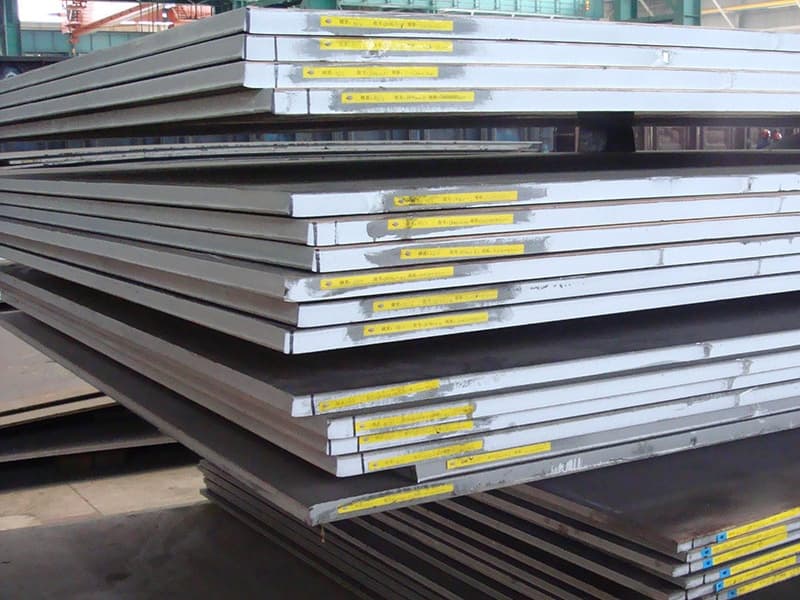
The Workhorse of Industry: Capabilities and Limits
To use A36 correctly, you must understand both what it does well and where it should not be used. It is a commodity product, not a performance product.
Typical Properties and Characteristics
Here is a detailed look at what defines an A36 plate:
| Aspect | Detail |
|---|---|
| Standard | ASTM A36 / A36M |
| Yield Strength (ReH) | ≥ 250 MPa (36 ksi) for shapes & plates ≤ 200mm thick. For plates >200mm: ≥ 220 MPa (32 ksi). |
| Tensile Strength (Rm) | 400 – 550 MPa (58-80 ksi) |
| Elongation | ≥ 20% (in 200mm gauge length) |
| Impact Test | Not required by the standard. Some mills may test, but it is not a mandatory certification. |
| Chemistry (Typical Max %) | Carbon: 0.26%, Manganese: 0.80-1.20%, Phosphorus: 0.04%, Sulfur: 0.05% |
| Delivery Condition | Usually hot-rolled. Can be supplied as-rolled or normalized. |
Primary Advantages of A36 Plate
- Cost-Effective: It is one of the most economical structural steels available due to high production volumes and simple chemistry.
- Excellent Weldability: The relatively low carbon content allows it to be easily welded by all common methods without pre-heating in most thicknesses.
- Good Machinability and Formability: It can be readily drilled, cut, and bent, making it ideal for workshop fabrication.
- High Availability: Produced by mills globally, it is easy to source in most markets with short lead times.
Common and Appropriate Applications
A36 is the correct choice for a vast range of projects:
- Building Construction: Beams, columns, and base plates.
- Bridge Work: Non-critical components, walkways.
- General Fabrication: Machine frames, agricultural equipment, brackets, and supports.
- Truck and Trailer Frames: Where strength and formability are needed.
- Sheet Piling and Trench Shields: For temporary earth retention.
Where A36 Plate Is NOT Suitable
This is the crucial knowledge for buyers. Using A36 here is a mistake:
- Marine/Shipbuilding Structures: It lacks the required yield strength (355+ MPa is standard) and has no guaranteed low-temperature toughness.
- Offshore Platforms: The dynamic, corrosive, and cold environment demands grades like EH36 or S355G3.
- Lifting Equipment or Pressure Vessels: These require specific grades with guaranteed impact properties and tighter controls (like A516).
- Applications Subject to Dynamic or Impact Loading in Cold Climates: Without certified impact values, the risk of brittle fracture is unacceptably high.
I recall a fabricator who used A36 plates for a small utility barge meant for a cold lake. They assumed "steel is steel." The barge developed cracks along welded seams during its first winter. The repair cost far exceeded the initial savings from using cheaper material. The lesson is clear: always match the material to the service environment, not just the initial price.
Does A36 steel rust easily?
This is a practical question from every buyer, especially those in coastal regions like Vietnam or the Middle East. They see the reddish-brown corrosion and worry about the longevity of their structure.
Yes, A36 steel rusts easily when exposed to moisture and air because it is a plain carbon steel without significant alloying elements for corrosion resistance. Its rusting speed depends entirely on the environment. In dry, indoor settings, it stays stable. In humid or coastal conditions, it will rust quickly without protective coatings.
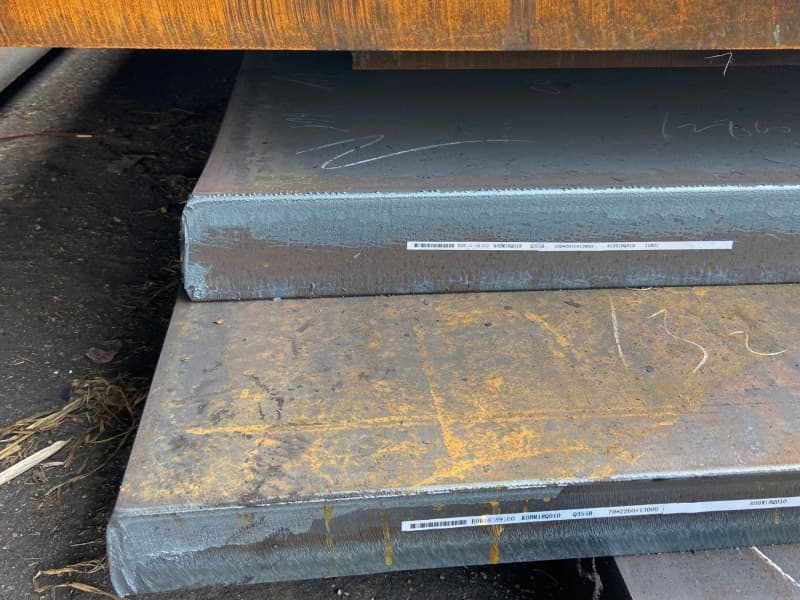
The Reality of Rust on A36 Steel
All carbon steels rust. A36 is no exception. Understanding the why and how fast helps you plan for protection and set realistic expectations.
Why A36 Rusts
Rust is iron oxide. It forms when iron reacts with oxygen in the presence of water (even humidity). A36’s composition is mostly iron (Fe) with small amounts of carbon and manganese. It does not contain enough Chromium (Cr), Copper (Cu), or Nickel (Ni) to form a protective, self-healing oxide layer like stainless steel or weathering steel (e.g., ASTM A588).
Corrosion Rate: Environment is Everything
The speed of corrosion is not a fixed number. It varies wildly:
| Environment | Corrosion Rate & Effect |
|---|---|
| Dry, Indoor Air | Very slow. Negligible rusting. This is why structural frames inside buildings last for decades. |
| Humid / Rainy Outdoor | Moderate. A brown rust layer will form. The rate might be 0.05-0.1 mm per year of thickness loss. |
| Industrial / Urban | High. Pollutants like sulfur dioxide (SO2) create acidic rain, accelerating corrosion. |
| Coastal / Marine | Very High. This is the worst common environment. Salt (sodium chloride) is a powerful electrolyte. It drastically speeds up the electrochemical process of rusting. A36 near the ocean can corrode 5 to 10 times faster than in a rural setting. |
How to Protect A36 Steel from Rust
Since A36 itself is not corrosion-resistant, all protection is external. The system is more important than the base metal.
- Surface Preparation: This is the most important step. All mill scale and rust must be removed. Methods include abrasive blasting (to Sa 2.5 standard), power tool cleaning, or pickling. Painting over mill scale is useless; it will blister and fail.
- Primers and Paint Systems: A robust coating system is essential.
- Primer: Often a zinc-rich epoxy or inorganic zinc silicate primer. This provides galvanic (sacrificial) protection.
- Mid-coat & Top-coat: Epoxy, polyurethane, or other chemically resistant paints are applied for barrier protection and UV resistance. Total dry film thickness (DFT) can range from 250 to 400 microns for harsh environments.
- Hot-Dip Galvanizing: Dipping the steel in molten zinc creates a thick, bonded coating that offers excellent protection for decades. It is common for outdoor structures like transmission towers and guardrails.
- Regular Maintenance: Even the best coatings degrade. Inspection and touch-up of damaged areas are necessary for long-term performance.
A36 vs. Marine Steels Like EH36 on Corrosion
It is a common misconception that marine steel plates like EH36 are "stainless" or rust-proof. They are not. Their advantage lies in strength and toughness, not inherent corrosion resistance.
- Both A36 and EH36 will corrode at similar rates in the same salty environment if left unprotected.
- The key difference is that EH36 is designed to be used with heavy-duty protective systems (like special marine paint schemes or cathodic protection with sacrificial anodes) as part of the vessel’s design.
- Sometimes, marine grades have slightly better composition (e.g., small Copper addition) for improved atmospheric corrosion resistance, but this is minor. The primary defense is always the coating.
For our client in Saudi Arabia, Gulf Metal Solutions, they understand this perfectly. They know the A36 they use for some fabrications needs immediate and proper painting after fabrication. For the EH36 ship plates they supply, they ensure their own customers are aware of the required marine coating specifications. The steel we supply must have a clean, sound surface to allow these critical coatings to adhere properly. Poor surface finish, a pain point they had with previous suppliers, directly compromises the entire anti-corrosion system.
Conclusion
CCS EH36 is a specialized, high-performance steel for critical marine applications, defined by its strength and guaranteed toughness at -40°C. It should not be confused with general-purpose steels like A36, which serve different, less demanding roles.
-
Explore the diverse applications of A36 steel, a versatile material widely used in construction and manufacturing. ↩ ↩ ↩
-
Learn about EN S275 steel’s properties and applications, which are crucial for understanding its equivalence to A36. ↩ ↩
-
Discover the characteristics and uses of JIS SS400 steel, an important equivalent to A36 in Asia. ↩ ↩
-
Understanding yield strength is essential for selecting the right materials for construction and engineering projects. ↩ ↩
-
Explore the significance of the Charpy V-Notch impact test in assessing material toughness, especially in critical applications. ↩ ↩
-
Learn why marine grades of steel are crucial for safety and performance in maritime applications. ↩ ↩