
A ship comes into dry dock for repairs with damaged hull plates. The repair yard must replace them quickly. But using the wrong steel can fail inspection, delay the ship, and risk its future safety. The choice of marine steel plate determines the success of the entire repair.
Marine steel plate is the primary material used to rebuild a ship’s hull and structure during repairs. It must match the original grade (e.g., AH36, DH36), have valid classification certificates, and be welded correctly to restore the vessel’s strength and watertight integrity. Proper plate selection and sourcing are critical to meet tight dry-dock schedules.
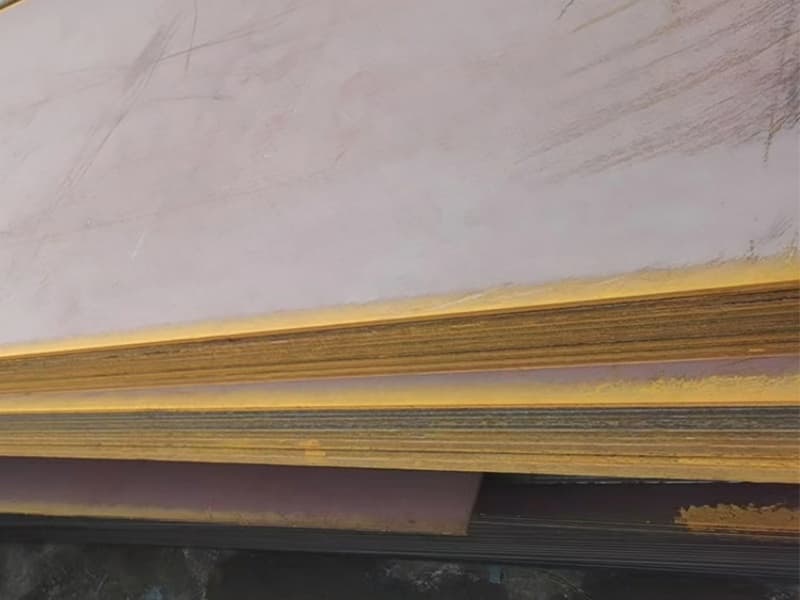
I supply marine steel plate to repair yards and distributors worldwide. I see how urgent repair projects live or die by the quality and availability of the right plate. A delay in steel delivery can cost a shipowner tens of thousands of dollars per day. Let’s explore why marine steel plate is so central to repair work and how to manage its procurement effectively.
What is a marine steel plate?
Many people see a flat piece of steel and think it’s all the same. In a ship repair context, that assumption is dangerous. A marine steel plate is not a commodity. It is a precisely engineered component with a certified history.
A marine steel plate is a flat-rolled steel product manufactured to strict specifications set by maritime classification societies like ABS, DNV, or LR. It has defined strength (e.g., 355 MPa yield), toughness (tested at low temperatures), and chemical composition. Each plate is traceable to its production batch via a Mill Test Certificate (MTC).
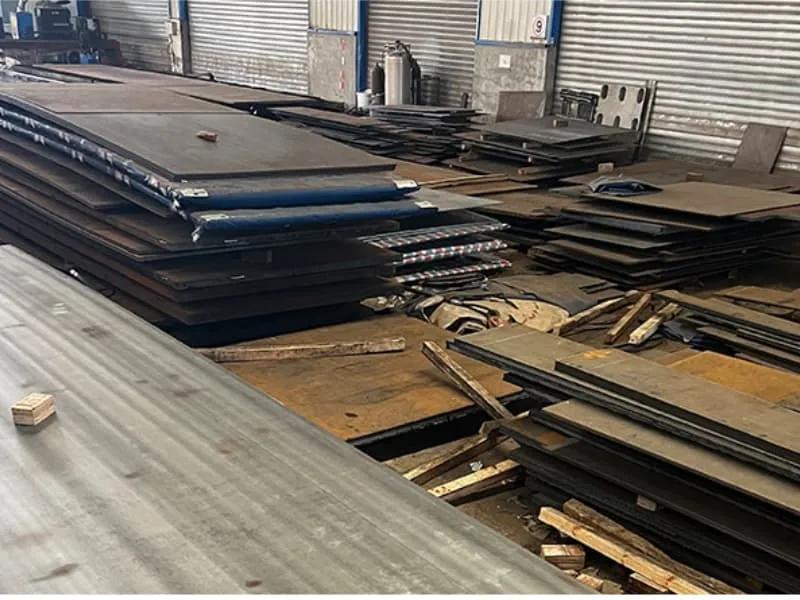
The Anatomy of a Ship Repair Plate: More Than Just Dimensions
When a repair yard orders a plate, they need a perfect match in properties, not just in size. The plate must become a seamless part of the existing hull.
Key Characteristics that Define a Marine Plate
Every specification on the MTC has a purpose for repair integrity.
| Characteristic | Why It Matters for Repair | Consequence of Mismatch |
|---|---|---|
| Grade (e.g., AH36, DH36) | Must match the surrounding original structure’s grade to ensure equal strength and weldability. | A weaker grade creates a weak spot. A stronger grade can cause stress concentration and welding issues. |
| Thickness & Tolerances | Must match the original scantlings (dimensions) to maintain hull shape and strength. Plate thickness tolerance is critical for fairing. | Incorrect thickness affects watertightness and structural calculations. Poor tolerances make fitting and welding difficult. |
| Impact Toughness | Guarantees the plate won’t become brittle in cold water, especially important for vessels in temperate or Arctic routes. | A plate without sufficient toughness can crack under impact or in cold temperatures, leading to catastrophic failure. |
| Certification & Traceability | The MTC proves the plate meets class rules. The heat number stamped on the plate links it to the certificate. | Without a valid, traceable certificate, the class surveyor will reject the repair. The plate cannot be used. |
The Procurement Challenge in Repair Projects
Repair work is unpredictable. Yards often need specific plates at short notice.
- Non-Standard Sizes: Repairs rarely need full-size plates. Yards often need plates cut to specific shapes or dimensions. This requires a supplier who can provide OEM cutting services. We frequently supply plates pre-cut to a shipyard’s nesting drawings, saving them time and material waste.
- Material Matching: The repair specification will state the exact grade (e.g., "ABS DH36, 20mm thick"). The supplier must provide plate from a mill that produces that exact grade under the correct class approval. You cannot substitute a "similar" commercial grade.
- Urgent Delivery: Dry dock time is expensive. Delays in plate delivery delay the entire project. Suppliers must have stock or fast mill access and reliable logistics. Our base in Liaocheng, Shandong, allows fast delivery to major Chinese ports, and we have experience with urgent air or sea freight to global repair hubs.
For a distributor like Gulf Metal Solutions, who supplies repair yards in the Middle East, having a reliable source for certified plates is business-critical. They need a supplier who understands the urgency, provides perfect documentation, and can deliver the exact material needed. A repair project doesn’t allow for "close enough."
Why is steel important in marine technology?
Imagine building a large ship from wood, concrete, or aluminum. Each material has fatal flaws for ocean service. Steel remains the unmatched choice because it offers a unique balance of properties that no other material can match for large, complex marine structures.
Steel is fundamental to marine technology because it offers an unparalleled combination of high strength, good toughness, ease of fabrication (cutting, welding), and relatively low cost. Its properties can be finely tuned to create grades that resist corrosion and brittle fracture in the harsh, cold, and corrosive marine environment.
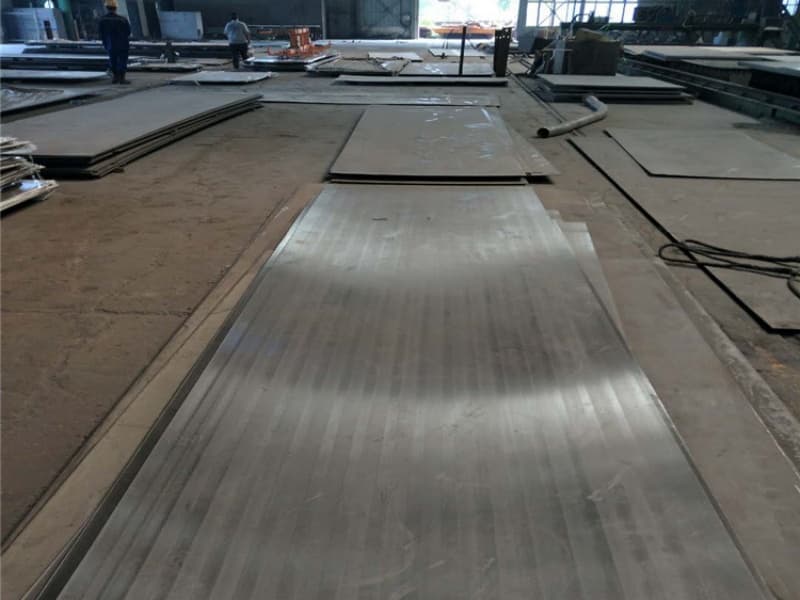
The Unbeatable Combination: Why Steel Still Rules the Waves
We can break down steel’s importance into several key pillars that directly impact ship repair and construction.
The Pillars of Steel’s Dominance in Marine Tech
No single property makes steel the best. It is the combination that matters.
| Pillar | Technical Advantage | Practical Benefit for Ships & Repair |
|---|---|---|
| Strength-to-Weight Ratio | High-strength steels (like AH36) provide 355 MPa yield strength, allowing for thinner, lighter hull structures without sacrificing strength. | Lighter ships can carry more cargo (better deadweight). In repairs, using the correct high-strength grade maintains this efficiency. |
| Fabricability & Weldability | Steel can be easily cut, shaped, and welded using common shipyard equipment. Modern marine grades are designed for good weldability to prevent cracks. | This allows for complex hull shapes and makes on-site repairs in dry dock feasible. Welders can reliably join new plates to the old structure. |
| Toughness & Fracture Resistance | Marine grades are alloyed and processed (TMCP/Q&T) to absorb impact energy and resist brittle fracture, even at sub-zero temperatures. | This is a critical safety feature. It ensures the hull can withstand collisions with ice or floating objects without catastrophic cracking. |
| Cost-Effectiveness & Scale | Steel is produced in massive quantities globally, making it the most economical material for constructing very large objects like ships. | It keeps the cost of newbuilds and repairs within feasible limits. The global supply chain ensures availability. |
| Recyclability | Steel is 100% recyclable without loss of quality. At the end of a ship’s life, its steel is scrapped and melted for new products. | This supports sustainable life-cycle management, an increasingly important factor for the industry. |
The Critical Role in Repair: Maintaining the Original Design Integrity
When a ship is repaired, the goal is to restore it to its original, class-approved condition. Steel is the only material that allows this.
- Material Compatibility: The new steel plate must weld perfectly to the old steel structure. This requires matching not just strength, but also chemical composition and thermal properties. Marine grades are designed for this compatibility.
- Predictable Behavior: Engineers know exactly how steel will behave under load, in fire, and during welding. This predictability is essential for safe repair design and approval by the class surveyor.
- Global Standardization: The standards for marine steel (set by IACS members like ABS, LR, DNV) are globally recognized. A plate made in China to ABS AH36 standard is accepted by a repair yard in Greece, Qatar, or Singapore. This universal "language" is vital for global shipping.
In ship repair, you cannot experiment with new materials. You must use what the original structure was built with: steel. Our entire business is built on supplying this essential, standardized material. When a repair yard orders from us, they are not buying an unknown product; they are buying a globally standardized component that they know will perform as expected.
What is the use of steel plate1?
In everyday construction, steel plate1 is used for floors, machine bases, and tanks. On a ship, its use is more specialized and critical. Every plate is a load-bearing part of a complex, pressurized shell that moves through a corrosive fluid.
In shipbuilding and repair2, steel plate1 is primarily used to form the watertight envelope3 (the hull) and the major internal structures (decks, bulkheads4). It provides the strength to withstand ocean waves, cargo loads, and internal pressures. Plates are cut, shaped, and welded together to create the ship’s monocoque structure.
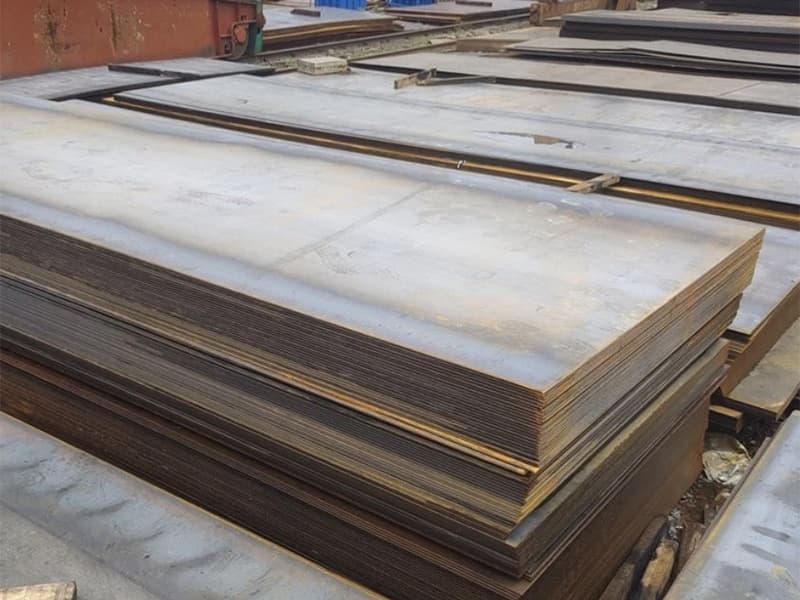
From Raw Plate to Hull Section: The Transformation Process
A flat plate undergoes several processes before it becomes part of a ship. Understanding this helps appreciate why plate quality is non-negotiable.
Primary Applications of Plate in a Ship’s Structure
Different areas of the ship use plate in different ways, often with different grade requirements.
| Ship Area | Primary Use of Steel Plate | Typical Grade & Why |
|---|---|---|
| Bottom Shell | Forms the lowest part of the hull, resisting water pressure and grounding loads. | High-toughness grade (DH36/EH36). It faces constant immersion and impact risk. |
| Side Shell | Forms the vertical walls of the hull. Resists wave slap and docking impacts. | DH36 is common. The sheer strake (topmost side plate) often uses DH36 for extra toughness. |
| Deck Plating | Forms the horizontal "floors" of the ship. Carries cargo and equipment loads. | Varies. Main deck uses higher grades (DH36). Upper decks may use AH36. |
| Bulkheads | Vertical walls inside the hull that divide spaces (watertight compartments, tanks). | Plates for watertight bulkheads4 are critical. They use grades like AH36/DH36 depending on location. |
| Double Hulls (Tankers) | The inner and outer walls of cargo tanks. Must resist corrosion from oil and water. | Special corrosion-resistant grades5 or coated plates are often used. |
The Repair Perspective: Plate as a Replacement Part
In repair, the use of plate is focused and urgent.
- Patch Repair: Damaged sections are cut out. New plates are fabricated to fit the exact cut-out shape. These new plates are then welded into place. The fit-up must be perfect to ensure watertightness and proper stress distribution.
- Renewal: Entire sections of plating (e.g., a deck area or side shell section) may be corroded beyond repair. These areas are marked for "renewal." Large plates are used to replace whole panels.
- Strengthening (Doubling): Sometimes, instead of replacing a plate, a new plate is welded over an existing, weakened one to add strength. This requires careful design and approval.
The ability to provide plates in the exact size and grade needed for these tasks is a key service. We don’t just sell full-size plates; we work with clients to provide the most efficient material for their specific repair plan, whether that means pre-cut shapes or specific dimensions to minimize yard waste and labor time.
What is marine steel1?
This is the core question. "Marine steel" is not a single thing. It is a category of materials defined by performance under extreme conditions. It is steel that has passed the most rigorous quality tests to earn the right to be part of a seagoing vessel.
Marine steel is a family of high-strength, low-alloy steels2 specifically produced under the rules of a classification society (ABS, BV, DNV, LR, etc.) for use in ship hulls and offshore structures. Its defining features are certified impact toughness at low temperatures, controlled chemical composition3 for weldability, and full traceability from the mill to the final product.
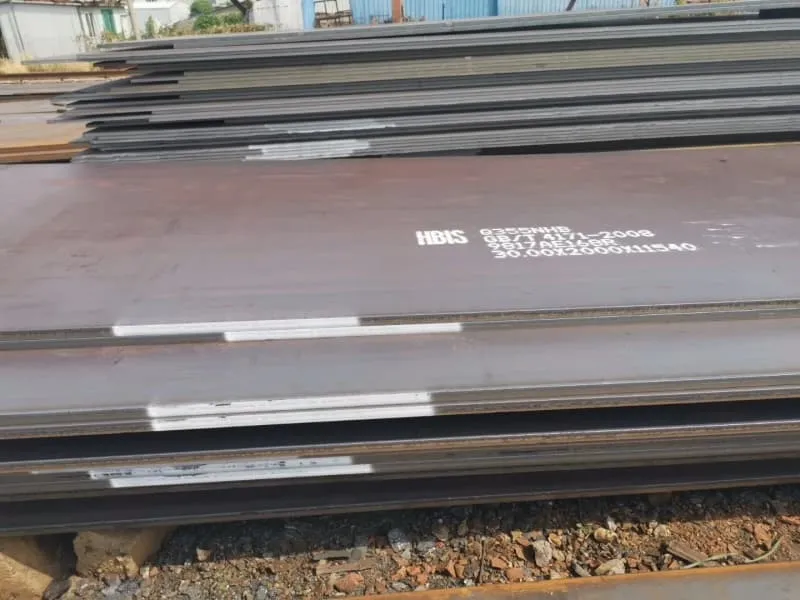
The Making of Marine Steel: A Process of Control and Certification
Ordinary steel becomes "marine" through a controlled manufacturing process and independent verification.
The Journey from Iron Ore to Class-Certified Product
The path involves several stages that add cost but are essential for safety.
| Stage | Process & Control | Outcome for Marine Steel |
|---|---|---|
| 1. Melting & Alloying | In the furnace, the chemical composition is tightly controlled. Elements like Niobium, Vanadium, or Nickel are added in precise amounts to achieve strength and toughness. Low levels of impurities (Sulfur, Phosphorus) are mandatory. | Achieves the required chemical "recipe" for the grade (e.g., AH36). |
| 2. Rolling (TMCP/Q&T) | The slab is rolled into plate. For marine grades, this is often Thermomechanical Controlled Processing (TMCP) or Quenching & Tempering (Q&T). These processes refine the steel’s internal grain structure. | Creates the combination of high strength and high toughness. TMCP is more common for standard grades; Q&T is used for the highest grades. |
| 3. Testing & Certification | Samples from each heat (batch) are tested for tensile strength, yield strength, and Charpy impact toughness. An independent surveyor from the class society may witness these tests. | Generates the Mill Test Certificate (MTC)4, the legal proof that the steel meets the rules. |
| 4. Marking | Each plate or section is permanently marked with its heat number, grade, and mill identification. | Provides physical traceability that links the steel piece to its certificate. |
Why "Marine Steel" is Non-Negotiable for Repairs
In a repair scenario, you cannot use anything else. Here’s why.
- Regulatory Requirement: Classification society rules explicitly require that all hull structural material be of an approved grade with proper certification. Using non-marine steel1 would violate these rules and void the ship’s class certificate.
- Safety and Liability: The shipowner, the repair yard, and the certifying surveyor all assume the replaced structure is as good as the original. Using sub-standard material transfers enormous liability onto them in the event of a failure.
- Weldability and Compatibility: Marine grades are engineered to be welded together. Their chemical composition ensures they can be welded without pre-heat in most thicknesses and without post-weld heat treatment, which is crucial for efficient repairs in dry dock.
Our business is built on this definition. When we say we supply "marine steel1 plate," we mean plate produced by mills with active ABS, BV, or DNV approvals, accompanied by genuine, traceable certificates. This is what our clients—rational, results-driven professionals—demand. They don’t have time for guesswork. They need a partner who provides the real thing, with the paperwork to prove it, so they can focus on executing the repair and getting the ship back to sea on time.
Conclusion
In ship repair, marine steel plate is more than a material; it’s the foundation of safety, compliance, and operational continuity. Choosing the right certified plate ensures repairs are strong, fast, and accepted by class.
-
Explore the properties and applications of marine steel to understand its critical role in shipbuilding and offshore structures. ↩ ↩ ↩ ↩ ↩ ↩
-
Learn about high-strength, low-alloy steels and their significance in various industries, especially in marine applications. ↩ ↩
-
Discover the importance of controlled chemical composition in steel manufacturing for ensuring quality and performance. ↩ ↩
-
Understand the significance of a Mill Test Certificate (MTC) in verifying the quality and compliance of steel products. ↩ ↩ ↩
-
Find out about corrosion-resistant grades for steel plates, vital for maintaining the integrity of marine structures. ↩