
You need a strong steel plate for a project near water. But is a "marine" plate overkill, and would a cheaper "boiler" plate do the job? Choosing wrong can lead to catastrophic failure, rust, and huge replacement costs.
Choose marine steel plate for ship hulls, offshore structures, and any application exposed to seawater and dynamic loads. Choose boiler steel plate for pressure vessels, tanks, and high-temperature systems where internal pressure and heat are the main concerns, not saltwater corrosion.
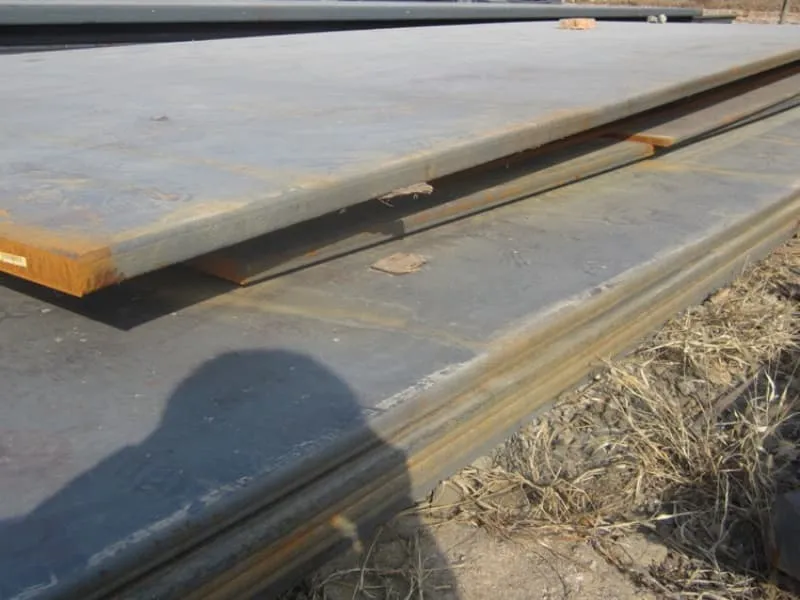
A client in the Philippines once asked me for a quote on "thick steel plates" for a barge repair. They sent a drawing that simply said "Plate, 20mm." I asked about the application. They said it was for a new section of the barge’s hull. I immediately advised them to use AH36 marine plate, not a general plate. They had considered using a cheaper boiler plate because it was also "strong." That decision would have been a mistake. The barge would have been at risk of brittle fracture in cold water. This article will explain the critical differences so you can choose with confidence.
What is the difference between marine grade and stainless steel?
People often confuse these two terms. They think both are "good for water." But they are designed for completely different battles. One fights corrosion with chemistry, the other fights ocean forces with toughness.
Marine grade steel is carbon steel optimized for strength and impact toughness in cold seawater, and it requires a protective coating. Stainless steel is an alloy steel that uses chromium to resist corrosion inherently, but it is often not as tough or cost-effective for large structural hulls.
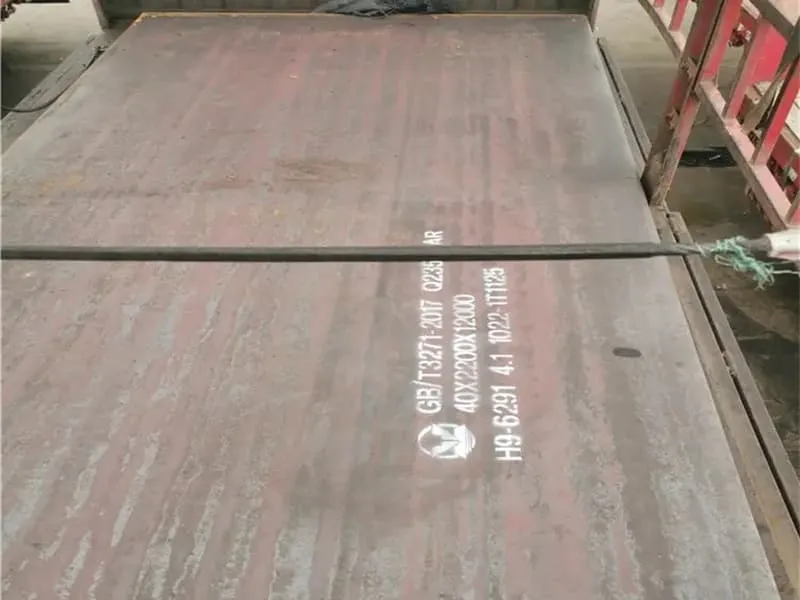
Two Different Philosophies for Two Different Problems
Understanding the difference is key to avoiding a very expensive error. You cannot substitute one for the other in their primary roles.
Marine Grade Steel1: The Hull Specialist
Marine grade steel is a type of high-strength low-alloy (HSLA) carbon steel2. Its main enemies are the ocean’s dynamic forces and low temperatures.
- Primary Goal: To have high notch toughness3 to resist cracking and brittle fracture. A ship’s hull flexes in waves and faces impact from ice or objects.
- Corrosion Strategy: It will rust if left bare. Its defense is an external system: thick, multi-layer paint coatings and sacrificial anodes4 (zinc blocks) that corrode instead of the steel. This is a managed, expected process.
- Key Property: Charpy V-Notch Impact Test5 results at low temperatures (0°C, -20°C, -40°C). This defines grades like A, D, E.
- Cost: Relatively low per ton. It is the economical choice for building structures that weigh thousands of tons.
- Typical Use: The entire hull, decks, and frames of ships, oil rigs, and port structures.
Stainless Steel: The Corrosion Fighter
Stainless steel is an alloy steel with a high chromium content (at least 10.5%).
- Primary Goal: To resist corrosion and staining through the formation of a passive chromium oxide layer on its surface.
- Strength/Toughness: While strong, common grades like 304 are not optimized for the extreme low-temperature toughness required for a ship’s hull. Some grades can be brittle.
- Cost: Much higher per ton than marine carbon steel6. Often 3 to 5 times more expensive.
- Typical Use in Marine: Non-structural components: railings, fittings, propeller shafts, kitchen galley equipment, and specialized tanks on chemical carriers. It is not used for the primary hull of large commercial vessels.
The Critical Mistake to Avoid
Never think, "Stainless steel doesn’t rust, so it must be better for my boat." This is wrong for two reasons:
- Cost: Building a ship’s hull from stainless steel would be financially impossible.
- Suitability: Stainless steel (especially common grades) can suffer from pitting and crevice corrosion7 in stagnant seawater, which is more dangerous than uniform rust. It also may not have the required fracture toughness.
Here is a clear side-by-side comparison:
| Aspect | Marine Grade Steel1 (e.g., AH36) | Stainless Steel (e.g., 304) |
|---|---|---|
| Base Type | Carbon Steel / HSLA Steel | Alloy Steel (High Chromium) |
| Main Design Goal | High Toughness & Strength for Dynamic Loads | High Corrosion & Stain Resistance |
| Corrosion Resistance | Poor (requires paint & anodes) | Excellent (inherent, from passive layer) |
| Key Test | Charpy Impact at Low Temperature | Pitting Resistance Equivalent Number (PREN)8 |
| Primary Marine Use | Ship Hulls, Offshore Structures | Fittings, Trim, Specialized Tanks |
| Relative Cost | Low | Very High |
In practice: For the barge repair I mentioned, marine grade AH36 was the only correct choice. It is tough, weldable, and designed to work with a coating system. Using stainless steel would have been a colossal waste of money for no structural benefit, and using a plain carbon steel could have led to cracking.
What is a marine steel plate1?
When you order a "marine steel plate1," you are not just ordering a flat piece of metal. You are ordering a certified engineering component with a guaranteed performance profile for the harshest environment.
A marine steel plate1 is a flat-rolled steel product manufactured under strict rules of classification societies (like DNV, ABS). It has guaranteed impact toughness at low temperatures, controlled chemistry for weldability, and is used primarily for ship hulls and offshore structures.
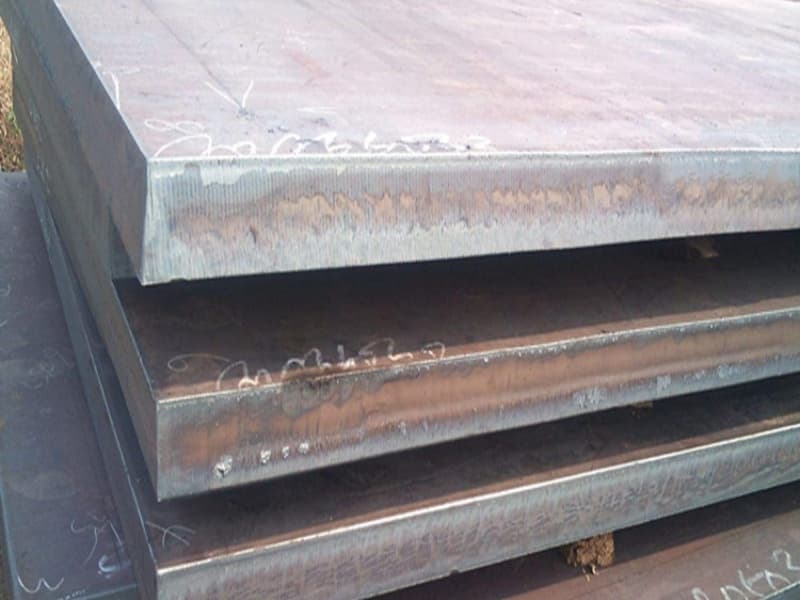
The Anatomy of a Marine Steel Plate
Every detail of a marine plate, from its birth in the mill to its arrival at the shipyard, is controlled.
Mandatory Certification and Traceability
This is the most important feature. A steel plate becomes "marine" when it is produced according to a class society’s rules and receives its certificate.
- Class Society Rules: The mill follows a specific standard, like DNV Rules for Ships or ABS Steel Vessel Rules. These rules dictate everything: melting practice, rolling temperature, heat treatment, and testing.
- Mill Test Certificate (MTC)2: Every single plate (or batch) gets a unique MTC. This document is its passport. It lists:
- Heat/Cast number for full traceability.
- Chemical composition (C, Mn, Si, S, P, etc.).
- Mechanical properties (Yield Strength, Tensile Strength, Elongation).
- Charpy V-Notch Impact Energy values3 at the specified temperature.
- Surveyor Involvement: Often, a surveyor from the classification society will witness the production and testing. The surveyor may stamp the certificate or the plate itself.
Key Mechanical Properties: More Than Just Strength
While strength is important, other properties are critical:
- Yield Strength (ReH)4: The stress at which it begins to deform permanently. Common grades are 235 MPa (Normal Strength), 355 MPa (AH36/DH36), 390 MPa (EH40).
- Impact Toughness: This is the defining property. Plates are graded A, B, D, E, F based on the temperature at which they pass the impact test. A D-grade plate is tested at -20°C. An E-grade is tested at -40°C.
- Through-Thickness Properties (Z-direction): For thicker plates used in critical, highly stressed areas, the steel must also resist lamellar tearing5. This is a type of cracking under stress through the plate’s thickness. Plates for this use have a special "Z" quality rating (e.g., AH36 Z25).
Common Grades and Applications
- General Hull Plating: AH36, DH36 are the most common. They provide a good balance of strength, toughness, and cost for most ocean-going vessels.
- Ice-Class Vessels6: EH36, FH36 plates are used. The "E" and "F" grades guarantee toughness at Arctic temperatures.
- High-Stress Areas: Grades with higher strength (like AH40, DH40) or with Z-quality are used in the keel, sheer strake, and other critical zones.
Why you can’t just use any plate: A shipyard in Thailand once received a batch of cheaper, uncertified plates for a small cargo ship. The plates looked identical. But during construction in the cool morning, a plate cracked while being handled. It had no impact toughness at that temperature. The entire batch was rejected, causing months of delay. The marine plate certification exists to prevent this exact scenario.
What grade steel is a boiler plate?
The term "boiler plate" comes from its original use, but today it means much more. It refers to a family of steels designed to contain pressure, not to fight the ocean.
Boiler plate1 is typically a carbon-manganese steel plate made to pressure vessel quality standards like ASTM A5162 or EN 10028-2. Common grades are A516 Gr. 70 (USA) or P355GH3 (Europe). These steels are designed for good strength and weldability to safely contain internal pressure at moderate temperatures.
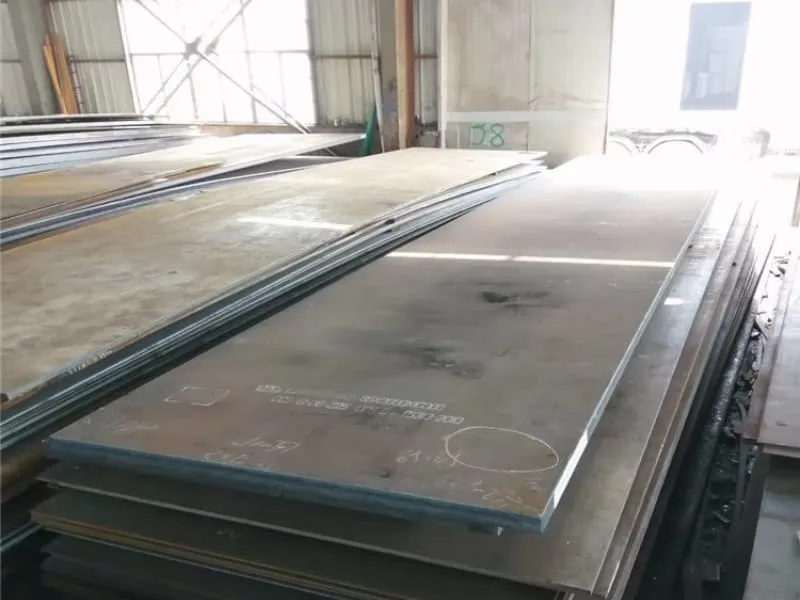
The World of Pressure Vessel Quality (PVQ)4 Steel
Boiler plate1s are part of the Pressure Vessel Quality (PVQ)4 category. Their design focus is inward pressure and heat, not outward environmental attack.
Key Standards and Grades
The standards define the rules for making steel that will not fail under pressure.
- ASTM A5162 / A516M: This is the most common standard for carbon steel plates for pressure vessels. The "Grade" indicates the minimum tensile strength in ksi (kilo-pounds per square inch).
- A516 Grade 70: Has a tensile strength of 70-90 ksi (485-620 MPa). This is a very common grade for many applications.
- EN 10028-2: This is the European standard for flat products made of non-alloy and alloy steels for pressure purposes.
Properties Optimized for Pressure Containment
These steels are engineered differently from marine steels:
- Strength and Ductility: They need high tensile strength and good elongation to withstand pressure without rupturing. They must be able to deform slightly without breaking.
- Weldability5: Pressure vessels are heavily welded. The steel must have a low carbon equivalent to prevent weld cracking. Post-weld heat treatment (PWHT) is common.
- Temperature Resistance: They are rated for service at elevated temperatures (e.g., up to 300-450°C for grades like A516 Gr.70). Their strength is guaranteed at these temperatures, unlike marine steel which is rated for ambient or low temperatures.
- Impact Testing: They require Charpy impact testing6, but usually at a higher temperature (like +20°C or 0°C) unless specified for low-temperature service. The focus is not on extreme cold toughness.
Common Applications of "Boiler Plate"
- Boilers and Pressure Vessels: The classic use, for steam generation.
- Storage Tanks: For oil, gas, chemicals, and water.
- Heat Exchangers and Condensers.
- Process Industry Equipment: In petrochemical and fertilizer plants.
The important distinction: A "boiler plate" like A516 Gr. 70 is an excellent material for its job. But if you use it for a ship’s hull, you are using a material not designed for cyclic wave loading or impact at -20°C. It might work for a while, but it introduces an unnecessary risk of brittle fracture in cold water.
Which is better, steel or ceramic plates?
This question seems unusual, but it highlights a key point: the "best" material does not exist. The best material is the one perfectly suited to the specific job. Comparing steel and ceramic plates shows this principle clearly.
For structural marine applications like ship hulls, steel plates are far better than ceramic plates. Steel offers the necessary combination of strength, toughness, weldability, and impact resistance. Ceramic plates are brittle, impossible to weld, and used only for specialized applications like ballistic armor or extreme heat shielding.
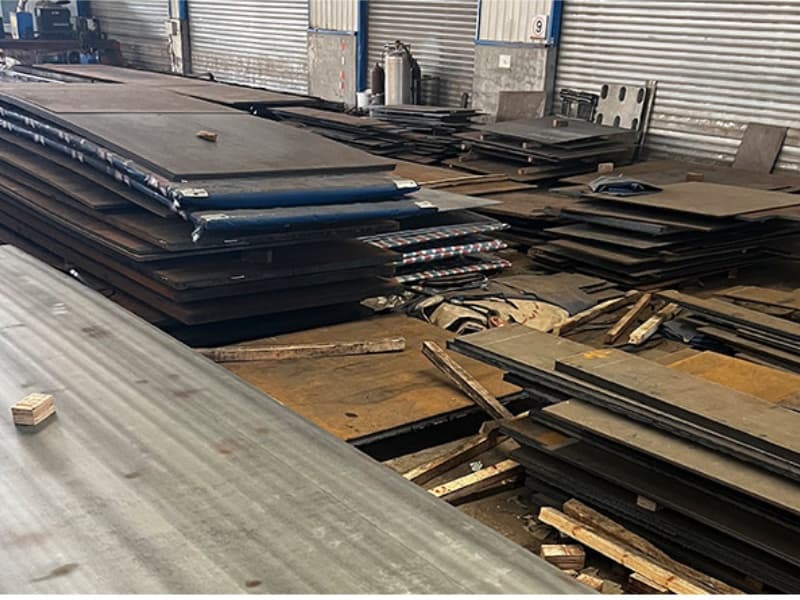
A Comparison of Fundamentally Different Materials
Steel and ceramics are at opposite ends of the material spectrum. Choosing between them is not about one being universally better; it is about matching properties to function.
The Case for Steel Plates1 in Marine Use
Steel is the backbone of modern shipbuilding for solid reasons:
- Toughness and Ductility2: This is steel’s greatest advantage. It can bend, stretch, and absorb impact energy without shattering. A ship’s hull must flex in waves and survive collisions with driftwood or minor groundings.
- Weldability3: Large structures are built by welding. Steel can be welded reliably and efficiently in shipyards around the world. The welds become as strong as the parent metal.
- Strength-to-Weight Ratio4: Modern high-strength steels (like AH36) are very strong but not too heavy, allowing for efficient ship designs.
- Repairability: Damaged steel can be cut out and new steel can be welded in. This is a routine repair in any shipyard.
- Cost and Availability: Steel is produced in massive quantities at a relatively low cost. It is the most economical material for constructing objects as large as ships.
The Role and Limitations of Ceramic Plates5
Ceramics (like alumina, silicon carbide) have amazing properties, but for different purposes:
- Extreme Hardness and Wear Resistance6: They are much harder than steel. This makes them excellent for lining pipes carrying abrasive slurry.
- High Temperature Resistance7: They can withstand temperatures that would melt steel. They are used in furnace linings and heat shields.
- Ballistic Protection8: In body armor, a ceramic plate is used to shatter a high-velocity bullet, while a backing material (like fiberglass) catches the fragments. The ceramic is great at breaking the projectile but is brittle.
- Critical Weaknesses for Structural Use:
- Brittleness: They fracture with little warning and no plastic deformation. A crack in a ceramic hull plate would propagate instantly.
- Impossible to Weld: You cannot weld ceramics to build a ship. They must be bonded or mechanically fastened, which is not suitable for watertight, load-bearing structures.
- Poor Impact Resistance: They cannot handle the constant, low-energy impacts of waves and docking.
Decision Framework: When to Use What?
This comparison is not just academic. It teaches us how to think about material selection.
| Requirement | Best Material | Reason |
|---|---|---|
| Build a ship hull | Steel Plate | Tough, weldable, strong, repairable. |
| Line a coal slurry pipe | Ceramic Plate | Extremely wear-resistant. |
| Make a furnace inner wall | Ceramic Plate | Withstands extreme heat. |
| Make ballistic armor | Composite (Ceramic + Backing) | Ceramic breaks projectile, composite absorbs energy. |
| Make a chemical storage tank | Stainless Steel or Special Alloy Plate | Corrosion resistance is key. |
The lesson: The question "steel or ceramic?" is answered by the application. For a shipbuilder, the answer is unequivocally steel. But for an engineer designing a component for a cement plant, the answer might be ceramic. This same logic applies to the choice between marine plate and boiler plate. You must start with the question: "What is the plate’s job?" The material follows the function.
Conclusion
Always choose based on the application’s primary threat: marine plate for ocean forces and cold, boiler plate for internal pressure and heat. Using the wrong plate risks safety, compliance, and the entire project’s success.
-
Explore the benefits of steel plates in shipbuilding, including strength, toughness, and cost-effectiveness. ↩ ↩ ↩ ↩ ↩ ↩ ↩ ↩
-
Understand how toughness and ductility contribute to the durability and safety of marine structures. ↩ ↩ ↩ ↩ ↩
-
Discover why weldability is crucial for building large structures and how it impacts repairability. ↩ ↩ ↩ ↩ ↩ ↩
-
Find out how a favorable strength-to-weight ratio enhances ship performance and efficiency. ↩ ↩ ↩ ↩ ↩
-
Learn about the unique properties of ceramic plates and their specialized applications in various industries. ↩ ↩ ↩ ↩
-
Explore how ceramics’ hardness makes them ideal for applications in harsh environments. ↩ ↩ ↩ ↩
-
Learn about materials that can withstand extreme temperatures and their applications in industry. ↩ ↩
-
Understand the role of ceramics in body armor and how they protect against high-velocity threats. ↩ ↩