
You have just ordered a batch of marine angle steel for a critical shipbuilding project. The steel is expensive, the schedule is tight, and a single defect could cause costly delays or even structural failure. How can you be absolutely sure the material is perfect before it leaves the factory?
A proper pre-shipment inspection for marine angle steel is a systematic process. It involves verifying mill certificates, conducting visual and dimensional checks, performing on-site non-destructive tests, and ensuring proper packaging. For high-risk shipments, engaging a third-party inspection company or a P&I Club surveyor is a mandatory best practice.
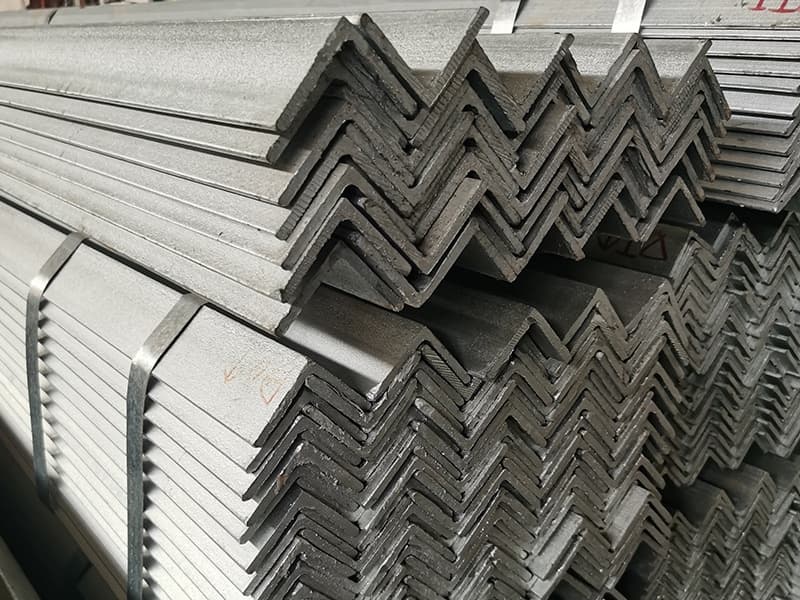
Skipping any of these steps is a gamble with your project’s budget and timeline. Based on my experience supplying to shipyards from the Middle East to Southeast Asia, I will guide you through a practical inspection framework. This framework covers what to check on-site, how to measure correctly, and why these steps are non-negotiable for marine applications.
How to check the quality of steel at a site?
You are at the factory yard or the loading port. The steel bundles are in front of you. You don’t have a full laboratory, but you need to make a confident quality decision quickly. Where do you start, and what are the red flags you must not miss?
On-site quality checks focus on three key areas: document verification, visual and dimensional examination, and simple non-destructive testing (NDT). This practical approach catches the majority of common defects before the steel is shipped.
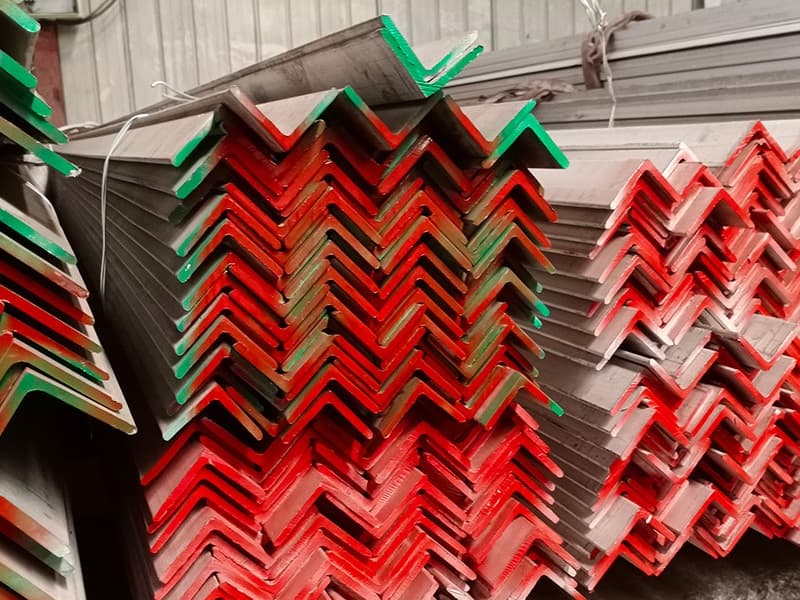
A Step-by-Step Guide to On-Site Verification
A thorough on-site inspection is a multi-layered process. It moves from paperwork to physical checks, each step building confidence in the product’s integrity. Here is a breakdown of the critical phases.
| Inspection Phase | Key Actions & Checks | Tools Required | Acceptance Criteria / Red Flags |
|---|---|---|---|
| 1. Document Verification | Review the Mill Test Certificate (MTC). Confirm it is a Type 3.1 or 3.2 certificate per EN 10204. Cross-check heat number, grade (e.g., AH36, DH32), and chemical/mechanical results against your order and class rules (ABS, LR, DNV, etc.). | None (documents). | The MTC must be original, stamped, and match the material markings. Red Flag: No MTC, or data does not meet specified standard. |
| 2. Visual Inspection | Check for pitting, heavy scaling, deep scratches, laminations, and rust. Examine edge conditions for cracks. Look for straightness and obvious deformities. | Good lighting, wire brush, magnifying glass. | Surface should be uniform. Light, even mill scale is acceptable. Red Flag: Heavy pitting, deep surface cracks, or severe bending. |
| 3. Dimensional Check | Measure leg length, thickness, and length against ordered tolerances. Check straightness along the length. | Calipers, micrometer, tape measure, straight edge. | Must comply with standard tolerances (e.g., ASTM A6). Red Flag: Thickness consistently under tolerance, excessive camber or bow. |
| 4. Non-Destructive Testing (NDT) | Perform Ultrasonic Testing (UT) to check for internal laminations or inclusions. Perform Dye Penetrant Testing (PT) or Magnetic Particle Testing (MT) on weld areas or suspect surfaces. | Portable ultrasonic flaw detector, dye penetrant kit, magnetic yoke. | No internal defects beyond acceptable limits per ASTM A898. Red Flag: Indications of significant internal splitting or surface cracks. |
| 5. Marking & Packaging | Verify the heat number, grade, and size are stenciled on each piece or bundle. Check packaging is secure for ocean transport (waterproof wrapping, proper blocking). | None. | Markings must be clear and match MTC. Bundles must be tight and protected from moisture. Red Flag: Faded/missing markings, exposed steel, loose bundling. |
Let me give you a real example. One of our clients from Saudi Arabia was inspecting a batch of marine angle steel for a port construction project. Their inspector followed these steps. The documents and visual checks were fine. However, when they did a random ultrasonic test, they found a localized lamination in one piece. Because this was caught on-site, we immediately isolated the non-conforming piece and replaced it from stock before the container was sealed. This prevented a potential rejection at the job site, which would have caused a multi-week delay. The key is to never assume. Always verify. Even with certified mills, human error or handling damage can occur. A systematic on-site check is your final and most important defense.
How is angle steel measured?
You have the calipers in your hand. Measuring seems straightforward, but are you measuring the right parameters in the right places? Inaccurate measurements lead to fit-up problems during fabrication, causing rework and welding issues that are far more expensive than the steel itself.
Marine angle steel is measured by its key dimensions: leg lengths (A & B), thickness (t), and length. It is crucial to measure at specified points, use calibrated tools, and check for straightness (camber and bow) to ensure it meets the tight tolerances required for ship construction.
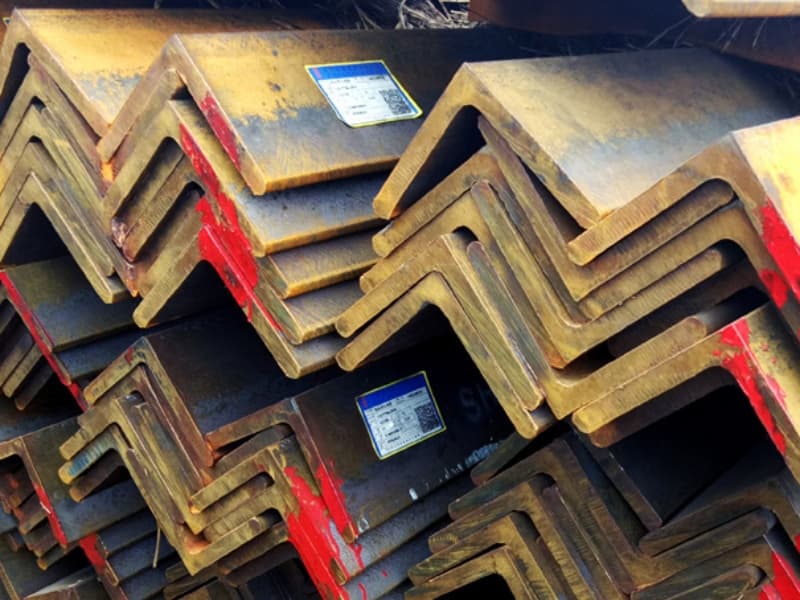
The Complete Measurement Protocol
Simply measuring the middle of a leg is not enough. Shipbuilding requires precision, and your measurement process must be just as precise. The following table details the what, where, and how of accurate angle steel measurement.
| Dimension to Measure | How & Where to Measure | Tool Required | Importance for Shipbuilding |
|---|---|---|---|
| Leg Length (A & B) | Measure the outside length of each leg. Take measurements at both ends and the middle of the piece. For unequal leg angles, clearly identify which is the ‘A’ leg and ‘B’ leg. | Digital calipers or a precise tape measure. | Ensures the angle will fit correctly into the designed structure. Mismatched leg lengths cause assembly gaps. |
| Thickness (t) | Measure the thickness of the web (the center of the angle). Avoid measuring near the toe or heel where rolling can cause thickness variation. Measure at multiple points along the length. | Ultrasonic thickness gauge or micrometer. | Directly related to structural strength and weight calculation. Undersized thickness reduces load-bearing capacity. |
| Length | Measure the total length of the piece along the back of the angle. | Steel tape measure. | For cutting schedules and minimizing waste. Incorrect lengths disrupt production flow. |
| Straightness (Camber & Bow) | Place the angle on a flat surface. Camber is curvature along the length (viewed from the side). Bow is curvature perpendicular to the length. Use a taut string or straight edge to measure the maximum gap. | Straight edge, taut string, feeler gauges. | Critical for alignment in hull structures. A bowed angle cannot create a straight, load-bearing frame. |
| Squareness of Heel | Check that the two legs form a 90-degree angle. Place a precision square in the heel and check for gaps. | Precision engineering square. | Affects weld joint preparation and the fit of connecting plates. Out-of-square angles create stress concentrations. |
A common mistake is only checking one or two pieces per bundle. For marine orders, we recommend a AQL (Acceptable Quality Level) sampling plan. For example, inspect 10% of the pieces in a batch. If you find one piece out of tolerance, increase the inspection to 20%. This statistical approach balances thoroughness with efficiency. Remember, the mill’s tolerance standards (like ASTM A6) allow for minor variation. Your job is to ensure the variation in your shipment is within those published limits and, more importantly, within the even tighter tolerances your specific project may require. Providing a clear inspection report with photos and recorded measurements also protects you in case of any dispute.
What is the function of the steel angle?
Why is angle steel1 so ubiquitous in shipbuilding? It is not the most glamorous component, but without it, modern vessels could not be built. Its function goes far beyond being just a simple "brace."
In shipbuilding, angle steel1 primarily functions as a stiffening frame member. It provides crucial structural reinforcement2 to hull plates, decks, and bulkheads, distributing loads and increasing the vessel’s resistance to bending, vibration, and buckling under the immense stresses of the sea.

The Multifunctional Backbone of Marine Structures
To truly appreciate its role, we must break down its functions into specific engineering applications. The angle is a versatile profile that solves multiple structural challenges simultaneously.
| Primary Function | How It Works | Typical Shipbuilding Application | Key Property Required |
|---|---|---|---|
| Stiffener & Frame | Attached perpendicular to a plate (like hull plating), it dramatically increases the plate’s resistance to buckling3 under water pressure and axial loads. | Hull frames, deck beams, bulkhead stiffeners. These form the "skeleton" of the ship. | High stiffness (modulus of elasticity), good weldability to join with plate. |
| Edge Reinforcement | Provides a finished, strong edge to structures, preventing tearing and deformation. | Hatch coamings, door openings, access panels. | Good toughness to withstand impact at edges. |
| Bracketing & Support | Used to create brackets for supporting platforms, machinery, piping, and electrical conduits. | Engine room brackets, equipment foundations, pipe hangers. | Good strength-to-weight ratio, easy to cut and weld into custom shapes. |
| Composite Section Building | Combined with plates or other profiles (like tees) to build up larger, stronger structural sections. | Built-up girders, columns in offshore platforms. | Consistent geometry and straightness for proper fit-up. |
| Corrosion Performance | Marine-grade angles are made from steel with controlled chemistry (e.g., low sulfur) and often have corrosion-resistant elements4 like copper. | All applications in the ballast tanks and other corrosive areas. | Certified chemical composition per marine standards (e.g., ASTM A131), corrosion resistance. |
From my conversations with shipyard engineers in Vietnam and Qatar, the choice between a standard angle and a bulb flat (another stiffener profile) often comes down to specific design efficiency. The angle is more versatile for bracketing and supports. Its L-shape provides stability in two directions, which is why it’s perfect for frames. During construction, surveyors from classification societies like CCS pay close attention to the welding of angles5 to plates, as this connection is vital for hull integrity. They check for proper fit-up, weld procedure, and the absence of cracks. Therefore, when you inspect angle steel1, you are not just checking a piece of metal. You are verifying the integrity of a fundamental component that will bear the structural loads of the vessel for its entire operational life.
Is angle iron1 steel?
The term "angle iron1" is used everywhere, from old construction manuals to casual site talk. But when you are procuring material for a class-approved vessel, using the wrong term can lead to confusion and the risk of receiving a product that does not meet marine specifications2.
Yes, "angle iron1" is made of steel. However, in modern engineering and marine procurement, the term "angle iron1" is outdated and non-specific. The correct term is "angle steel3" or "steel angle," which denotes a rolled steel section with an L-shaped cross-section, produced to precise dimensional and material standards.
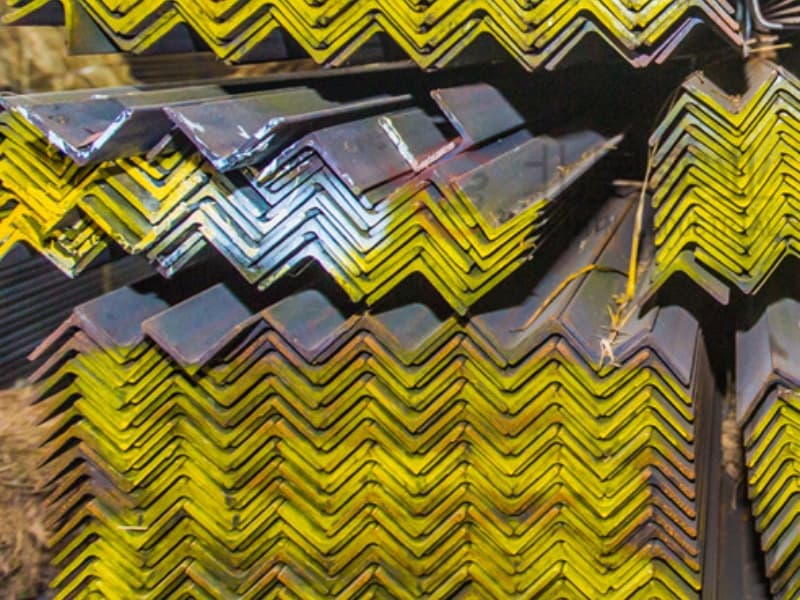
Clarifying Terminology and Specifications
The confusion arises because language in the industry has evolved, but old habits persist. It is critical to understand the distinction to ensure clear communication with mills and suppliers.
| Aspect | "Angle Iron" (Historic/Colloquial Term) | "Marine Angle Steel" (Modern Technical Term) | Implication for Your Order |
|---|---|---|---|
| Material | Originally referred to wrought iron. Now commonly (but imprecisely) used for low-grade steel. | Specifically refers to steel produced to a recognized standard (e.g., ASTM A364, ASTM A131, EN 10025). | You must specify the steel grade (e.g., DH36 for high-strength hull frames). "Iron" does not define a grade. |
| Specification | Implies a generic shape with no guarantee of properties. | Manufactured to strict standards governing chemistry, mechanical properties, tolerances, and testing. | Your purchase order must reference the standard and grade, not just "angle iron1." |
| Certification | Unlikely to come with a Mill Test Certificate5. | Must be supplied with a traceable Mill Test Certificate5 (MTC) stating heat number and test results for class approval. | Without an MTC, the material cannot be used in classed ship construction. |
| Marine Suitability | Not suitable for marine environments due to poor corrosion resistance6 and uncontrolled properties. | Designed for marine use with enhanced corrosion resistance6, toughness at low temperatures, and excellent weldability. | Using unspecified "angle iron1" in a marine environment risks premature corrosion and structural failure. |
| Common Use | Non-critical applications like simple brackets, shelving, or temporary structures. | Critical ship structures: frames, stiffeners, and other load-bearing components. | Using the wrong material is a major safety and compliance risk. |
I once had a client from the Philippines who sent an inquiry for "angle iron1." Our sales team, trained to clarify, asked for the application. It was for internal non-structural platforms on a barge. We offered a standard commercial-grade angle steel3 with an MTC at a good price. For another client in Romania building an oil tanker, their specification was explicitly "ABS-grade AH36 Angle Steel, per ASTM A131." The difference in material cost, testing, and documentation was significant. Always use the precise terminology. In your drawings, orders, and inspection checklists, write "Marine Angle Steel, Grade [XX], to [Standard]." This eliminates ambiguity, ensures you get the certified material you pay for, and satisfies the surveyor who will eventually review the paperwork for the vessel.
Conclusion
A rigorous pre-shipment inspection is your best insurance. It transforms hope into certainty, ensuring the marine angle steel you receive is the certified, high-performance material your project’s safety and success depend on.
-
Understanding angle iron’s applications can help you make informed decisions in construction and procurement. ↩ ↩ ↩ ↩ ↩ ↩ ↩ ↩ ↩ ↩
-
Discover the standards that ensure safety and durability in marine environments. ↩ ↩
-
Explore the differences to ensure you choose the right material for your projects. ↩ ↩ ↩
-
Understanding ASTM A36 can help you select the right steel for your structural needs. ↩ ↩
-
Learn about MTCs to ensure the quality and compliance of materials in construction. ↩ ↩ ↩
-
Explore the importance of corrosion resistance to ensure longevity and safety in marine structures. ↩ ↩