
In my years at the shipyard, I saw how a single element could define a vessel’s life. Imagine a tanker’s hull—its strength determines safety, cost, and time at sea. This strength comes from carbon.
Carbon is the most critical alloying element in steel. In marine steel plates, increasing carbon content directly increases tensile strength and hardness, but only to a point. Beyond this point, it starts to reduce weldability and toughness, which are vital for marine structures. The optimal balance is key for performance at sea.
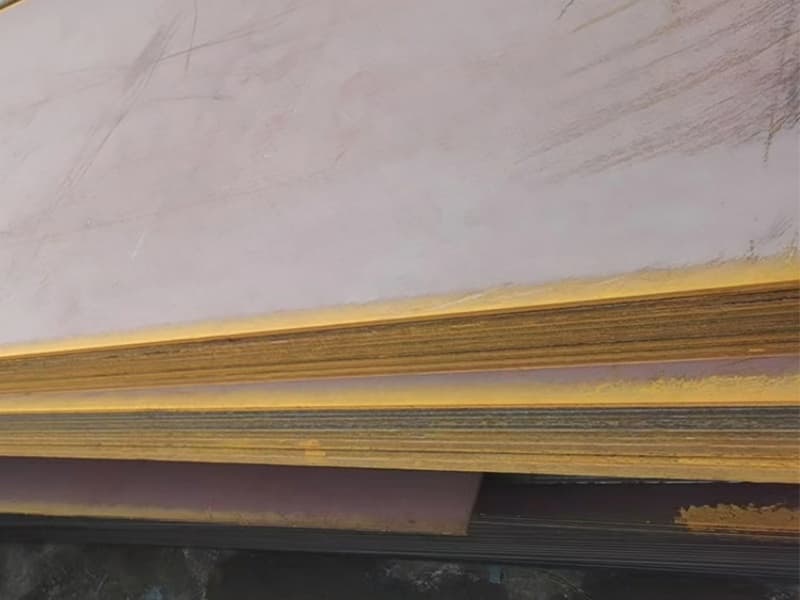
Understanding this balance isn’t just academic. It’s the daily reality for buyers and fabricators. Getting the carbon content wrong means risking cracks in freezing seas or hulls that can’t handle a collision. Let’s look at what carbon really does to the steel that builds our ships and offshore platforms.
How does carbon content1 affect the strength of steel?
Choosing the wrong steel grade can lead to project failure. You might face cracking during construction or premature failure in service. The root cause often traces back to one thing: carbon content1.
Carbon atoms fit into the microscopic spaces within the iron’s crystal structure. This act of fitting in creates a resistance to movement. In simple terms, it makes it harder for the steel layers to slide past each other when force is applied. So, more carbon means more internal resistance, which we measure as higher yield strength2 and tensile strength3.
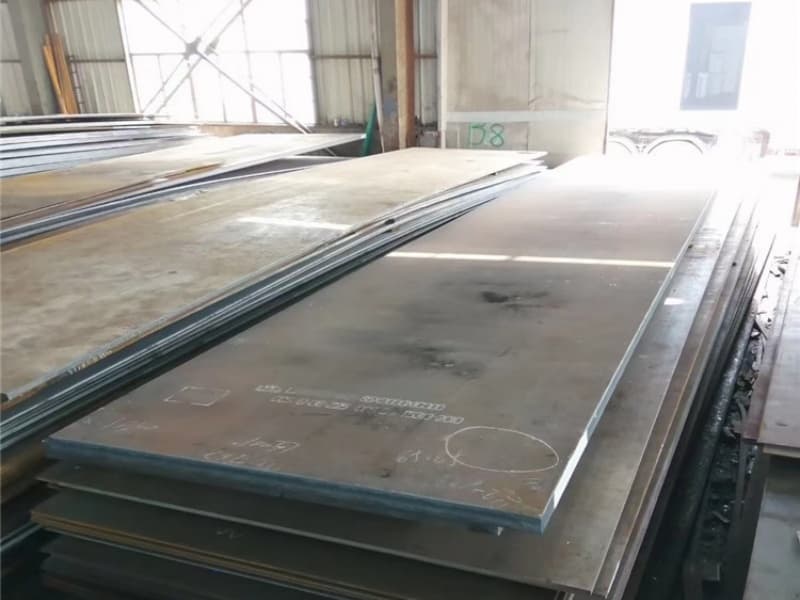
The Detailed Mechanics and Trade-offs of Carbon in Steel
When we talk about "strength" in marine applications4, we are usually referring to three specific mechanical properties: yield strength2, tensile strength3, and hardness5. Carbon content has a direct and predictable effect on all three. However, this comes with significant trade-offs that every marine engineer and purchaser must understand.
First, let’s define these properties clearly:
- Yield Strength: This is the amount of stress a steel plate can withstand before it starts to deform permanently. For a ship’s hull, this is the threshold before it starts to bend under load and stay bent.
- Tensile Strength: This is the maximum stress the steel can take before it fractures. Think of it as the absolute breaking point.
- Hardness: This is the material’s resistance to surface indentation or abrasion. High hardness5 is good for wear resistance but can be bad for other properties.
Here is a simplified table showing the general trend as carbon content1 increases in standard mild to medium-carbon steels:
| Carbon Content Range | Primary Effect on Strength | Primary Effect on Other Properties | Common Marine Application Example |
|---|---|---|---|
| Very Low (Below 0.1%) | Low strength and hardness5. Very soft and ductile. | Excellent weldability6 and toughness. Easy to form and cut. | Non-critical internal structures, some decorative fittings. |
| Low (0.1% – 0.25%) | Good combination of strength, ductility, and toughness. | Very good weldability6 without special precautions. | Ship hull plating (AH36, DH36), general structural parts. This is the most common range for marine plates. |
| Medium (0.25% – 0.5%) | Higher strength and hardness5. | Weldability decreases. Requires pre-heat and controlled procedures. Toughness can decrease. | Shafts, forgings, higher-strength structural components needing more wear resistance. |
| High (Above 0.5%) | Very high strength and hardness5. | Poor weldability6. Low toughness and ductility. Becomes brittle. | Rarely used for primary marine structures. May be used for specialized tools or wear parts. |
The relationship is not a simple "more is better." Up to about 0.25-0.3%, adding carbon is highly effective for increasing strength. But after this point, the gains in strength become smaller, while the negative impacts on weldability6 and toughness grow rapidly. This is crucial. A marine plate with 0.4% carbon might test very strong in the lab, but it could crack during the welding process on a cold day in the shipyard, or it could fracture in a brittle manner upon impact.
The science behind this involves the formation of "pearlite7," a hard micro-constituent in the steel. More carbon means more pearlite7. While pearlite7 increases strength, it also creates paths for cracks to propagate more easily. For ships sailing in icy waters or offshore platforms facing dynamic loads, this loss of toughness is a critical failure risk. Therefore, classification societies like Lloyd’s Register, DNV, and ABS strictly specify not just the minimum strength, but also the maximum carbon content1 and, more importantly, the resulting toughness (measured by Charpy V-Notch tests8) for different grades and service temperatures. As a supplier, our job is to source plates from mills that achieve the required strength not just by cranking up the carbon, but through a controlled combination of chemistry and thermomechanical rolling processes.
Does adding carbon to steel make it stronger?
Yes, absolutely. But this is a classic "yes, but…" answer in materials engineering. If pure iron is a soft, malleable material, adding carbon is the primary way we transform it into useful structural steel. It is the most cost-effective strengthening agent available.
Adding carbon to iron creates alloys we classify as steels. This process fundamentally changes the material’s behavior under stress. The carbon atoms act like countless microscopic anchors, locking the iron’s crystal structure in place, making it much harder to deform. So, for a given application, increasing carbon is a direct way to meet higher strength specifications.
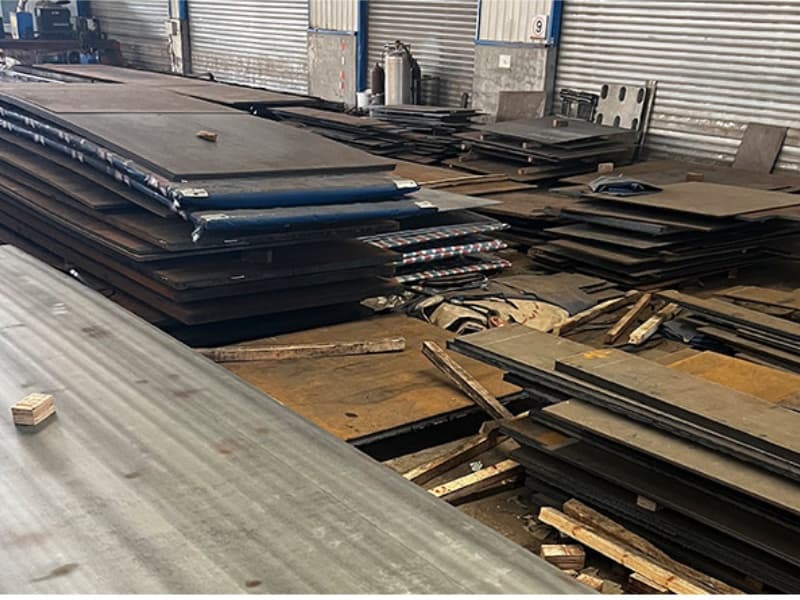
The Full Picture: Strengthening vs. Compromising
While the statement "adding carbon makes steel stronger" is factually correct, it represents an incomplete and potentially dangerous oversimplification for industry professionals. It’s like saying "adding more engine power makes a car faster"—it’s true, but it ignores fuel efficiency, handling, and safety. In the context of marine steel plates, we must ask: stronger in what way, and at what cost to other essential properties?
The strengthening mechanism is called "solid solution strengthening1." However, carbon’s effect is not linear or free. Its primary costs are to ductility2, toughness3, and weldability4.
-
Ductility: This is the material’s ability to deform (stretch) before breaking. A highly ductile steel can bend and stretch, absorbing enormous energy. A ship’s hull plate in a storm needs this. As carbon increases, ductility2 plummets. High-carbon steel is strong but unforgiving; it will fracture suddenly with little warning, a phenomenon known as brittle fracture, which is catastrophic in marine environments.
-
Toughness: This is closely related to ductility2 but specifically refers to the ability to absorb energy and resist impact, especially at low temperatures. Marine steels for Arctic routes or the North Sea must have excellent low-temperature toughness3. Carbon is the enemy of toughness3. High carbon content makes the steel’s crystalline structure more prone to cleaving under impact.
-
Weldability: This is arguably the most critical practical concern. Over 90% of marine structures are joined by welding. Carbon greatly increases the "carbon equivalent5" (CE) of steel. A high CE value means the steel is prone to forming hard, brittle zones in the weld and the "heat-affected zone" (HAZ) right next to it. These zones can crack during or after welding, creating fatal flaws. Welding high-carbon steel requires extensive pre-heating, strict control of interpass temperatures, specific filler materials, and post-weld heat treatment—driving up time and cost exponentially. For standard shipbuilding, we always recommend steels with a controlled, lower carbon content and carbon equivalent5 to ensure smooth, reliable, and fast welding operations.
Therefore, the marine industry uses carbon as a controlled ingredient, not a maximized one. Grades like A, B, D, E, and AH, DH, EH indicate different strength and toughness3 levels. The higher grades (E, EH for exceptional toughness3) often have lower maximum allowed carbon content than standard grades. Their superior properties come from finer grain structure achieved through controlled rolling and micro-alloying6 with elements like niobium and vanadium, not from more carbon. So, while adding carbon makes the base iron stronger, modern marine steelmaking is about achieving the target strength without relying solely on carbon, thereby preserving the weldability4 and toughness3 that sea-going structures depend on for their safety and longevity.
How does carbon impact steel?
Carbon’s impact goes far beyond just strength. It changes the very identity of the material, defining its grade, its processing requirements, and its ultimate suitability for a job. It influences everything from how the steel is made in the mill to how it is cut and welded in your fabrication shop.
Carbon determines the steel’s phase—whether it is ferrite, pearlite, or cementite at room temperature. This microstructure dictates all its mechanical properties. For you as a buyer, this means the carbon content noted on the mill certificate is your first clue about how the steel will behave in real-world fabrication and service.
From Microstructure to Macro-Performance: A Comprehensive Impact Analysis
To truly appreciate carbon’s role, we must connect the microscopic world to the macroscopic performance we care about. When steel cools from its molten state, carbon and iron form different arrangements or "phases." The amount of carbon present decides which phases form and in what proportion. Let’s break down this impact across the entire lifecycle of a marine steel plate.
1. Manufacturing and Thermal Treatment:
At the mill, carbon content dictates the heating and rolling schedules. High-carbon steels require higher rolling temperatures and more careful cooling to avoid internal stresses and cracks. They are also amenable to "quenching and tempering" – a heat treatment that can create very high-strength steels (like ASTM A514). However, such plates are specialty items. Most common marine plates (e.g., AH36) are delivered in the "as-rolled" or "normalized" condition, where a moderate, controlled carbon content is essential for consistent performance without expensive extra heat treatment.
2. Fabrication and Workshop Processing:
- Cutting: High-carbon steel is harder to cut. Oxy-fuel cutting can be more difficult and may lead to harder edges that need grinding. Plasma and laser cutting parameters must be adjusted.
- Forming and Bending: Lower carbon steels (like Grade A) are more ductile and can be cold-formed into complex shapes for ship hulls. As carbon increases, the steel becomes stiffer and more prone to springback, requiring more force and sometimes heat to achieve the same bend without cracking.
- Machining: Higher carbon content generally improves machinability up to a point, as it can create a more brittle chip that breaks away cleanly. But it also increases tool wear due to higher hardness.
3. In-Service Performance:
- Corrosion Resistance: This is a subtle but critical point for marine applications. Carbon itself does not directly cause rust. However, the microstructures formed by higher carbon (like pearlite) can create tiny galvanic cells with the surrounding ferrite, potentially accelerating corrosion in certain environments. More importantly, to achieve strength with lower carbon, mills add elements like copper, chromium, and nickel, which actually improve atmospheric corrosion resistance. So, a lower-carbon, micro-alloyed steel might offer better long-term corrosion performance than a simple high-carbon steel.
- Fatigue Resistance: Ships and offshore structures are subject to constant cyclic loading from waves. Fatigue failure starts at stress concentrators like small cracks or notches. Higher carbon steels, with their lower toughness, are generally more susceptible to fatigue crack propagation. A tougher, lower-carbon steel can better resist the growth of small fatigue cracks.
- Fracture Behavior: As emphasized, this is the paramount concern. In the event of an overload or impact, a low-carbon marine plate will dent, deform, and tear—absorbing energy. A brittle, high-carbon plate may shatter.
In summary, carbon is the master variable. It doesn’t just change a number on a test report; it changes the fundamental character of the steel. For marine use, where failure is not an option, the impact is managed by strictly limiting carbon and using advanced metallurgy to achieve the required strength through other, less detrimental means. This is why sourcing from certified mills that understand these balances is non-negotiable.
What happens to the strength of steel when you decrease its carbon content?
The immediate effect is a reduction in yield strength, tensile strength, and hardness. The steel becomes softer and more ductile. Think of the difference between a rigid steel ruler (higher carbon) and a soft iron wire (very low carbon). For applications requiring high formability and easy welding, this decrease is intentional and beneficial.
Decreasing carbon content makes steel more ductile and much easier to weld. It significantly improves toughness, especially at low temperatures. This is why the toughest marine grades (like EH36) have strictly limited maximum carbon content. The lost strength is regained through grain refinement and micro-alloying.
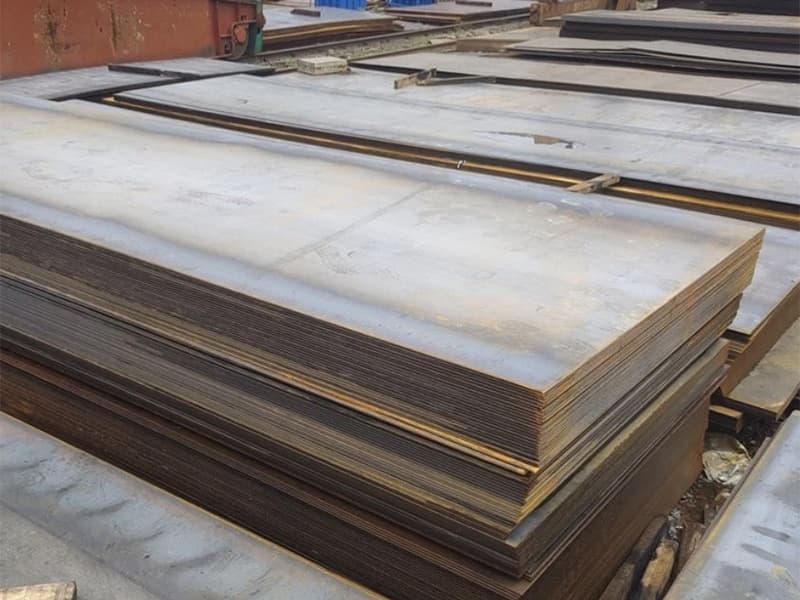
The Strategic Trade-off: Sacrificing Raw Strength for Fabricability and Safety
Choosing to decrease carbon content is not a compromise; it is a strategic engineering decision. In the marine world, we almost always prioritize a suite of properties over raw, single-point strength. Let’s explore what we gain when we specify a lower-carbon marine plate and how modern steelmaking allows us to do this without simply accepting a weak material.
What We Gain by Lowering Carbon:
-
Dramatically Improved Weldability: This is the single biggest advantage. A lower Carbon Equivalent (CE) means welders can join plates quickly and confidently without complex procedures. There’s minimal risk of hydrogen-induced cracking (cold cracking) in the heat-affected zone. This speeds up construction, reduces inspection costs, and enhances overall structural integrity. For our client, Gulf Metal Solutions, this was key—their fabricators needed steel that welded smoothly every time to meet project deadlines.
-
Superior Toughness and Impact Resistance: Lower carbon directly results in a finer, more uniform ferritic microstructure that can absorb impact energy by deforming. For plates destined for cold environments (like offshore platforms in the North Sea or ships on Arctic routes), this is specified by "Grade" (e.g., A, B, D, E). Grade E steel has the highest impact toughness requirements and consequently has one of the lowest allowable carbon contents. It is designed to remain ductile down to -40°C or lower.
-
Enhanced Cold Forming Ability: Ship hulls have complex curves. Plates need to be pressed, rolled, and bent without cracking. Low-carbon steels have high elongation values, meaning they can be extensively deformed in the shop. This allows for more ambitious designs and reduces waste from forming failures.
How We Regain the Necessary Strength:
If we simply took iron and reduced carbon, we would get a soft, weak material. Modern marine steels use sophisticated methods to compensate:
- Grain Refinement: This is the most powerful strengthening mechanism that also improves toughness. The mill uses controlled rolling processes—finishing the rolling of the plate at a lower temperature—to produce an extremely fine grain structure. Smaller grains mean more grain boundaries, which block the movement of dislocations (the defects that allow metals to deform), making the steel stronger and tougher. Elements like niobium (Nb) and vanadium (V) are added in tiny amounts to promote this fine grain structure.
- Precipitation Strengthening: Micro-alloying elements like vanadium and titanium form fine carbide or nitride particles within the steel matrix. These particles also pin dislocations, increasing strength.
- Solid Solution Strengthening (from other elements): While we reduce carbon, we can add small amounts of manganese (Mn), silicon (Si), and phosphorus (P) in controlled amounts to contribute to strength without as drastic an effect on weldability and toughness as carbon.
The result is a modern high-strength low-alloy (HSLA) steel like AH36 or DH36. Its chemical composition shows a low carbon content (typically 0.14-0.18% max) but includes precise amounts of Mn, Si, Nb, V, and Al. This recipe gives it the yield strength of 355 MPa, excellent weldability, and certified toughness at low temperatures. Decreasing carbon is the first, essential step in creating this optimized material. It shifts the steel’s profile from "strong but brittle and hard to use" to "strong, tough, and fabricator-friendly." For bulk buyers and project contractors, this means faster build times, fewer quality issues, and ultimately, a more reliable and safer marine structure.
Conclusion
Carbon defines steel’s strength, but the optimal level for marine plates balances strength with essential toughness and weldability. Modern steelmaking achieves this through precise chemistry and controlled processes.
-
Understanding solid solution strengthening is crucial for grasping how carbon enhances steel’s strength while affecting other properties. ↩ ↩ ↩ ↩ ↩
-
Ductility is vital for marine structures; learn how it impacts safety and performance in harsh conditions. ↩ ↩ ↩ ↩ ↩
-
Toughness is essential for steel used in cold environments; explore its significance in marine applications. ↩ ↩ ↩ ↩ ↩ ↩ ↩ ↩
-
Weldability is critical in shipbuilding; discover how carbon content influences welding processes and outcomes. ↩ ↩ ↩
-
Understanding carbon equivalent helps in selecting the right steel for marine applications, ensuring safety and reliability. ↩ ↩ ↩ ↩ ↩ ↩ ↩
-
Micro-alloying techniques enhance steel’s performance; learn how they contribute to strength and toughness without excessive carbon. ↩ ↩ ↩ ↩ ↩
-
Pearlite plays a key role in steel strength; understanding it can enhance material selection. ↩ ↩ ↩
-
Charpy V-Notch tests measure toughness; essential for ensuring steel performance in critical conditions. ↩