
Your ship’s structural drawing specifies a certain grade of angle steel. The material arrives, but how can you be sure it meets the required strength and toughness? Paperwork can be faked, but verified mechanical properties cannot.
You confirm the mechanical properties of angle steel by obtaining and verifying the Mill Test Certificate (MTC) from the supplier, which reports test results for yield strength, tensile strength, elongation, and often impact energy. For critical verification, hire a third-party inspection agency (like SGS or BV) to witness or perform sample testing against the specified standard (e.g., ASTM A36, ABS AH36).
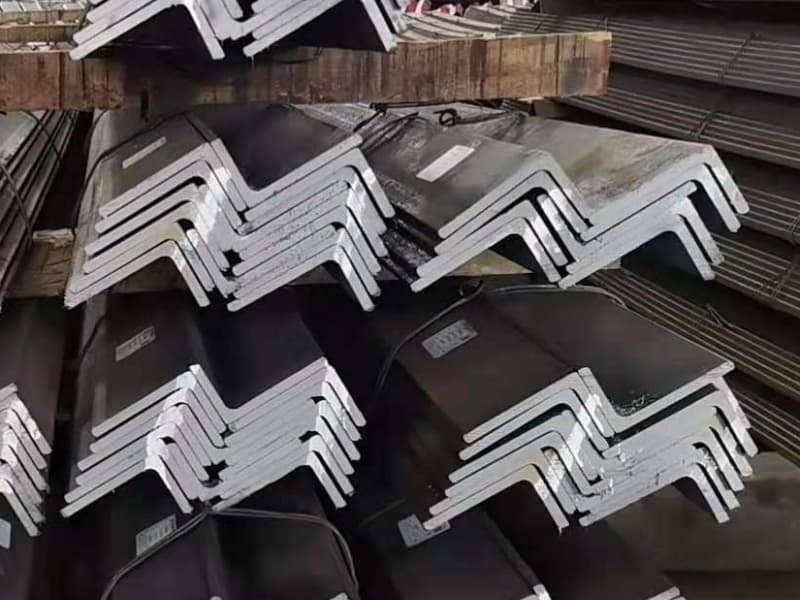
Trusting a supplier’s word is not enough in marine construction. Every piece of steel in a ship must perform as expected under extreme stress. Confirming properties is a two-step process: understanding what the numbers mean and knowing how to verify them independently. Let’s start with the core properties that define angle steel.
What are the properties of steel angles?
When you select an angle steel, you are not just buying an L-shaped piece of metal. You are buying a set of guaranteed mechanical and physical properties that determine how it will behave in your structure.
The key properties of steel angles include mechanical strength (yield and tensile), ductility (elongation), toughness (impact resistance), and physical attributes like dimensions and weight. These properties are determined by the steel’s chemical composition and manufacturing process, and are verified through standardized tests documented on a Mill Test Certificate.
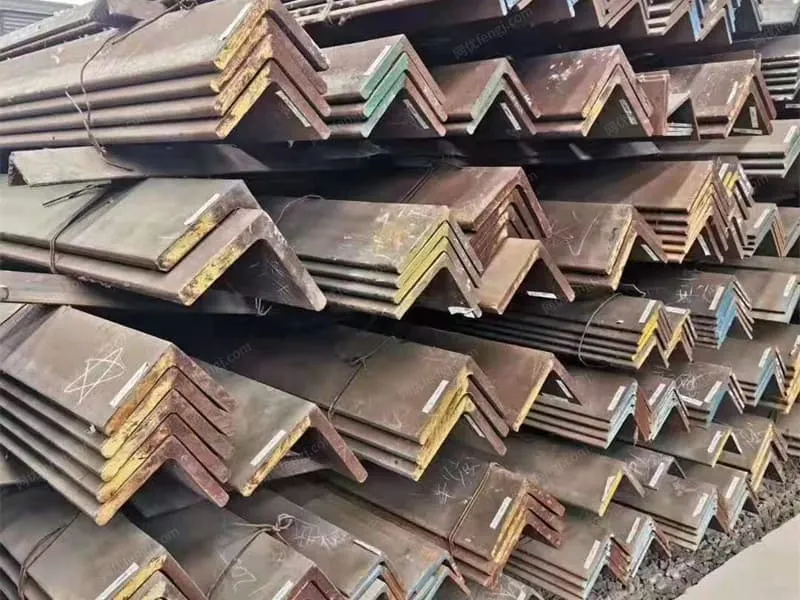
These properties are not abstract ideas. They are measurable, critical indicators of performance. Think of them as the steel’s "health report."
The Two Main Categories of Properties
We can group the essential properties of angle steel into two clear categories.
- Mechanical Properties: These describe how the steel reacts to forces. They are the most critical for structural integrity.
- Physical/Chemical Properties: These describe the steel’s composition and form.
A Detailed Breakdown of Key Properties
Here is what each property means and why it matters for your project:
| Property | What It Is | How It’s Measured | Why It Matters for Your Project |
|---|---|---|---|
| Yield Strength (ReH) | The stress at which the steel begins to deform permanently. | Tensile test (ISO 6892, ASTM A370). | This is the most important design property. It defines the safe working load. Exceeding it leads to permanent bending. |
| Tensile Strength (Rm) | The maximum stress the steel can withstand before breaking. | Tensile test. | Indicates the material’s ultimate load capacity and its reserve strength beyond yielding. |
| Elongation (A) | The percentage the steel stretches before fracture. | Tensile test. | A measure of ductility. High elongation means the steel can deform a lot before breaking, which is a safety feature. |
| Impact Toughness (KV) | The energy absorbed during a sudden impact, often at low temperature. | Charpy V-notch test (ISO 148, ASTM A370). | Measures resistance to brittle fracture. Critical for ships in cold waters. A low value means the steel can crack easily. |
| Chemical Composition | The percentages of Carbon (C), Manganese (Mn), Silicon (Si), etc. | Spectrochemical analysis. | Controls the steel’s weldability, strength, and toughness. Limits for elements like Sulfur (S) and Phosphorus (P) are strict. |
| Dimensional Tolerance | Allowable deviation from specified leg length, thickness, and straightness. | Calipers, micrometers, straightedges. | Ensures the angle fits and aligns correctly during fabrication. Poor straightness makes welding difficult. |
For marine angles, properties like Yield Strength and Impact Toughness are paramount. A ship’s bracket made from angle steel must yield predictably under load and must not shatter in a cold storm. When we supply AH36 angles, the MTC shows a yield strength of at least 355 MPa and a Charpy impact value that meets the classification society’s rule at a specified temperature (e.g., 0°C or -20°C). These are not optional numbers; they are contractual requirements. You must know how to ask for and verify this data.
What is the mechanical property of steel?
This is a foundational question. "Mechanical properties" are the specific measures of a material’s ability to withstand forces. For steel angles in shipbuilding, we focus on a core set that dictates safety and performance.
The primary mechanical properties of steel are strength (yield and tensile), ductility (elongation), and toughness (impact resistance). These properties describe how steel deforms (elastically or plastically) and ultimately fails under applied loads such as tension, compression, bending, or impact.

These properties are interdependent. They are determined by the steel’s internal microstructure, which is shaped by its chemistry and how it was made (rolled, heat-treated). Understanding them helps you read an MTC like an expert.
The Core Mechanical Properties Defined
Let’s look at the "big three" in more detail, using the common tensile test as our reference.
-
Strength: The Capacity to Resist Force
- Yield Strength: Imagine slowly pulling a steel bar. At first, it stretches like a spring and will return to its original length if you stop (elastic deformation). The Yield Point is the stress where this changes. Beyond this point, the steel starts to stretch permanently (plastic deformation). For designers, this is the practical limit. In ship structures, stresses must stay below the yield strength to avoid permanent distortion.
- Tensile Strength: If you keep pulling past the yield point, the steel continues to stretch and becomes stronger (strain hardening). The Tensile Strength is the highest stress reached before the sample begins to "neck down" and finally fracture. It shows the absolute maximum load capacity.
-
Ductility: The Ability to Deform Before Breaking
- Elongation: After the tensile test, the broken pieces are fitted together. The percentage increase in the gauge length is the Elongation. A high elongation (e.g., 20% or more) means the steel is ductile. It will bend and stretch a lot as a warning before it breaks. A low elongation means it is brittle and could fail suddenly.
-
Toughness: The Ability to Absorb Energy
- Impact Toughness: This is different from strength. A material can be strong but brittle (like glass). The Charpy V-notch test measures toughness. A notched sample is cooled to a specified temperature and struck by a pendulum. The energy absorbed to break it is recorded in Joules. For marine steels, this test is often done at 0°C, -20°C, or -40°C to simulate service conditions. High toughness at low temperatures is non-negotiable for hull structures.
How These Properties Interact in Marine Steel
For shipbuilding, we don’t just want one property; we need a specific combination.
- Marine Grade A36 vs. AH36: Both might have good ductility.
- ASTM A36 has a yield strength of 250 MPa. It has no mandatory impact toughness requirement. It is suitable for general use but not for critical marine structures.
- ABS AH36 has a yield strength of 355 MPa and must pass a Charpy impact test at a defined low temperature. This combination of high strength and guaranteed toughness is what makes it a marine grade.
When you look at an MTC, you are checking for this verified combination. The test report will list the yield strength (e.g., 365 MPa), tensile strength (e.g., 490-620 MPa), elongation (e.g., 22%), and the Charpy impact values (e.g., 60J at -20°C). Each value must meet or exceed the minimums in the purchase specification. This is how mechanical properties move from theory to a verified guarantee of structural safety.
What is ASTM A 36 steel angle?
ASTM A36 is one of the most common structural steel grades in the world. But in marine contexts, its use is specific and limited. Understanding its exact definition helps you know when it is appropriate and when it is not.
ASTM A36 steel angle is a hot-rolled carbon structural steel angle defined by the ASTM International standard. It has a minimum yield strength of 36,000 psi (250 MPa) and good weldability. It is widely used in construction, bridges, and general fabrication, but for critical marine structures, higher-grade steels with guaranteed toughness (like AH36) are required.
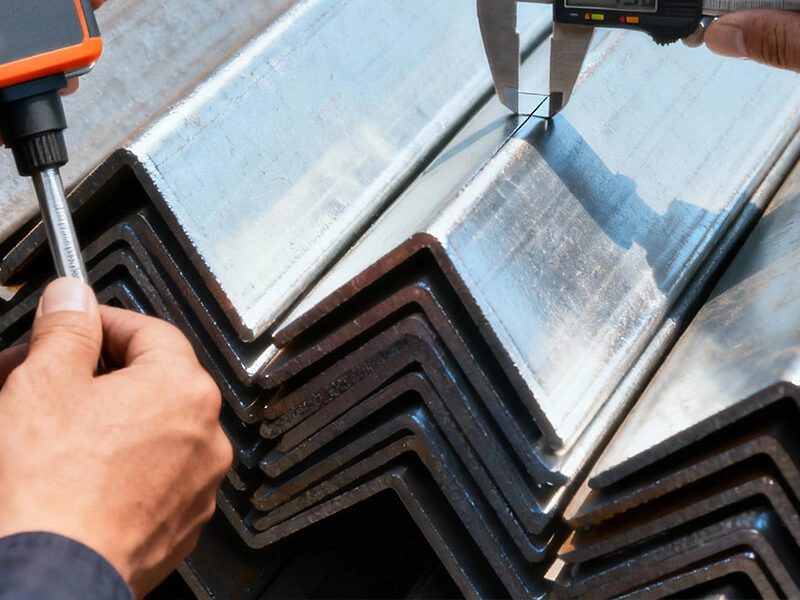
A36 is a versatile workhorse, but "versatile" does not mean "suitable for everything." Its properties make it an economical choice for many applications, but marine environments have extra demands.
The Specification of ASTM A36
The standard ASTM A36/A36M provides the rules for this material. Its key characteristics are:
- Minimum Yield Strength: 36,000 psi (250 MPa). This is its defining number.
- Minimum Tensile Strength: 58,000 psi (400 MPa).
- Chemical Composition: It is a carbon steel. The standard sets maximum limits for carbon, manganese, phosphorus, and sulfur to ensure weldability and formability. However, the ranges are relatively broad.
- Notch Toughness: Crucially, the ASTM A36 standard does not require Charpy impact testing. This is its most significant limitation for marine use.
Application: Where A36 Fits and Where It Doesn’t
Because of its properties and lack of mandatory toughness, A36 angle steel has clear roles:
-
Appropriate Uses (Marine Context):
- Non-classed, secondary structures: Staircases, ladders, railings, platforms, and shelving inside the ship’s superstructure.
- Temporary works: Construction supports, scaffolding, or jigs used during shipbuilding.
- Land-based projects: Warehouses, factory frames, and general construction—its primary domain.
-
Inappropriate Uses (Marine Context):
- Primary hull structure: Any part of the load-bearing hull, decks, or bulkheads.
- Critical brackets and connections: Especially those subject to dynamic loads or in cold environments.
- Any classed vessel component: Classification society rules (ABS, BV, LR) will not accept A36 for certified structural parts because its toughness is not guaranteed.
The Critical Difference: A36 vs. AH36
This comparison highlights why grade selection is vital:
| Property | ASTM A36 Angle | ABS AH36 Marine Angle | Implication for Marine Use |
|---|---|---|---|
| Yield Strength | 250 MPa | 355 MPa | AH36 is over 40% stronger, allowing for lighter structures. |
| Governing Standard | Commercial (ASTM) | Marine Classification Society (ABS) | AH36 is produced under much stricter survey and quality rules. |
| Impact Toughness | Not Required | Mandatory. Tested at low temp (e.g., 0°C). | This is the key safety difference. AH36 is certified to resist brittle fracture. |
| Certification | Mill Test Report (may lack traceability) | Mill Test Certificate (MTC) with full heat number traceability. | Traceability is essential for quality assurance and class approval. |
For a client like a project fabricator, using A36 for an interior platform is fine. But if they are building a bracing bracket for an offshore module, they must specify AH36 or equivalent. The MTC for the AH36 material is their proof that they used the correct, certified grade. Confusing these two can lead to rejected materials, rework, and liability issues.
What is the modulus of elasticity of the steel angle?
The modulus of elasticity is different from strength. It is a measure of stiffness, not strength. It tells you how much a material will deform under a given load within its elastic range.
The modulus of elasticity (Young’s Modulus) for steel angles is approximately 200 GPa (29,000 ksi). This value is remarkably consistent for all carbon and low-alloy steels, including common grades like A36 and AH36. It describes the steel’s inherent stiffness when force is applied, determining how much it will bend or stretch elastically.
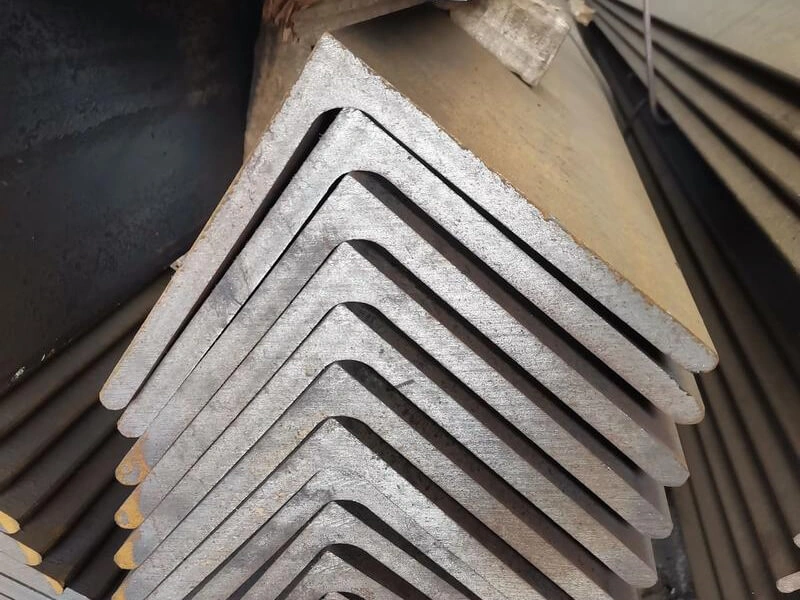
While yield strength varies between grades, the modulus of elasticity is a fundamental constant. This has important practical implications for design and verification.
Understanding Stiffness vs. Strength
It is easy to mix up these concepts, but they are distinct:
- Strength (Yield Strength): Answers "At what load will it bend permanently?" This depends on the grade (A36 yields at 250 MPa, AH36 at 355 MPa).
- Stiffness (Modulus of Elasticity): Answers "How much will it bend under a given load before it yields?" For the same size angle, under the same load, both A36 and AH36 will bend the same amount initially, because their modulus (200 GPa) is the same.
Think of two identical springs, one made of strong steel and one of weaker steel. If you hang a light weight on both, they will stretch the same distance (same stiffness). But the stronger spring can hold a much heavier weight before it is permanently stretched (different strength).
Why This Constant Matters in Design and Verification
The uniformity of the modulus of elasticity is useful in several ways:
- Predictable Deflection: Engineers use the value of 200 GPa to calculate how much a beam or angle will deflect under load. This calculation is the same regardless of whether they specify A36 or AH36. The choice of grade comes later, to ensure the calculated stress does not exceed the yield strength.
- Not a Quality Control Metric: You will not find the modulus of elasticity listed on a standard Mill Test Certificate. This is because it is assumed to be 200 GPa. Mills do not routinely test for it. Its consistency means it is not used to verify a specific batch of steel.
- A Tool for Advanced Verification: In rare cases, if there is suspicion about the fundamental material (e.g., is this really steel?), a dynamic test like ultrasonic measurement can check the modulus. A significantly different value could indicate a serious issue, like the wrong material type. However, this is not standard practice for confirming grade compliance.
What You Verify Instead: Section Modulus
While the material’s elastic modulus is constant, the shape’s contribution to stiffness is captured by the Section Modulus. For an angle steel, the section modulus depends on its leg dimensions and thickness. A larger angle has a higher section modulus and will bend less under the same load.
When confirming your angle steel, you verify:
- Dimensional Properties: Leg length, thickness, and straightness (to ensure the calculated section modulus is correct).
- Mechanical Properties: Yield strength, tensile strength, elongation, and impact toughness from the MTC (to ensure the material strength matches the grade).
The modulus of elasticity is the background constant that makes engineering calculations reliable. You trust it is 200 GPa. You focus your verification efforts on the properties that do vary and are critical for safety: the strength and toughness guaranteed by the grade specification and confirmed by the MTC.
Conclusion
Confirming angle steel properties requires verifying the Mill Test Certificate for strength and toughness values and performing third-party inspection for critical applications. Always ensure the certified grade, like AH36, matches your project’s structural and safety requirements.