
Your ship design calls for AH36 angle steel. You receive two quotes with different prices. How do you know if the cheaper steel has the right chemistry for strength and weldability? The chemical composition holds the answer.
Marine angle steel grades like AH36, DH36, and EH36 have tightly controlled chemical compositions defined by classification societies. Key elements include Carbon (C) for strength, Manganese (Mn) for toughness, and micro-alloys like Niobium (Nb) for grain refinement. The Carbon Equivalent (CEV) is also limited to ensure good weldability in marine construction.
The numbers on a chemical analysis report are not just data. They are the recipe that determines if the steel will be strong, tough, and weldable. Understanding this recipe is key to verifying quality and avoiding failures. Let’s start by understanding the different grades available.
What are the grades of steel angle?
You need to order steel angles, but the list of grades is confusing. A36, A572, AH36, SS400—each one is suited for a different job. Choosing the wrong one for marine use is a critical mistake.
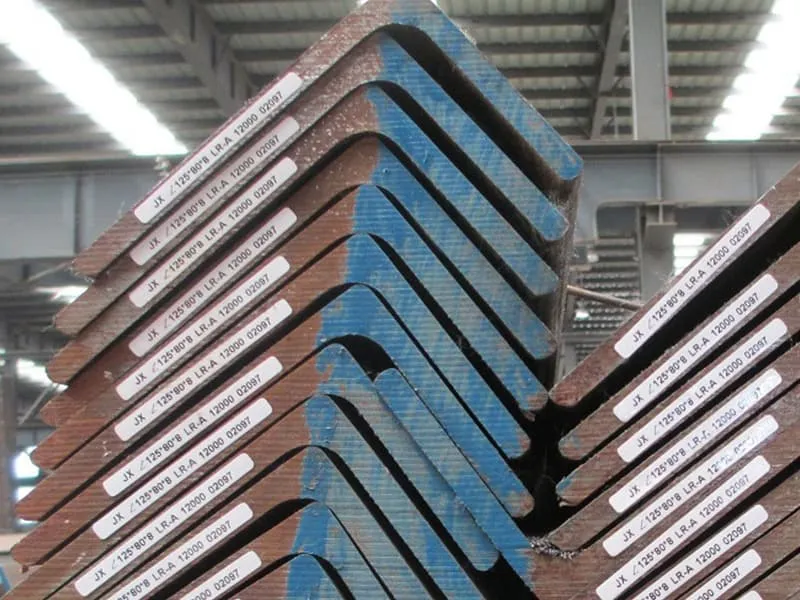
Steel angles come in many grades, divided into commercial grades (like ASTM A36, A572) and marine grades (like ABS AH36, LR DH36). Commercial grades prioritize general strength and cost. Marine grades have stricter rules for chemical composition and toughness to ensure safety in harsh ocean environments.
The grade is a code that tells you the steel’s capabilities. For shipbuilding, we use a specific family of grades governed by international rules.
The Two Worlds of Steel Angles: Commercial vs. Marine
The most important division is between steel for land and steel for sea.
- Commercial & Structural Grades: These are governed by standards like ASTM (USA), JIS (Japan), or GB (China). They are designed for buildings, bridges, and factories.
- ASTM A36: The most common carbon steel. Yield strength 250 MPa. No mandatory impact toughness.
- ASTM A572 Grade 50: A high-strength, low-alloy steel. Yield strength 345 MPa.
- SS400 (JIS G 3101): A general structural steel from Japan.
- Marine Grades: These are defined by Classification Societies like ABS, LR, DNV, BV, and CCS. They follow rules set by the International Association of Classification Societies (IACS). They have guaranteed toughness.
Understanding the Marine Grade Code System
The marine grade name, like AH36, is a clear formula.
- The First Letter (A, D, E, F): This indicates the notch toughness level.
- A: Basic grade.
- D: Impact tested at -20°C.
- E: Impact tested at -40°C.
- F: Impact tested at -60°C (for Arctic service).
- The ‘H’: This stands for High Tensile Strength. Normal strength grades (like Grade A, B, D, E) do not have an ‘H’.
- The Number (32, 36, 40): This indicates the minimum yield strength in ksi (kilopounds per square inch). 36 means 36 ksi, which is approximately 355 MPa.
So, DH36 means: A steel with D-level toughness (tested at -20°C), High tensile strength, and a 36 ksi (355 MPa) yield strength.
Why Marine Grades Are Non-Negotiable for Ships
The difference is not just in strength. It is in guaranteed performance under severe conditions.
| Feature | Commercial Grade (e.g., A36) | Marine Grade (e.g., AH36) | Impact on Marine Use |
|---|---|---|---|
| Governing Body | National Standards Body (e.g., ASTM) | International Classification Society (e.g., ABS) | Marine rules are specific to risks at sea. |
| Key Focus | Strength, formability, cost. | Strength + guaranteed toughness + weldability. | Ships need resistance to brittle fracture in cold, stormy seas. |
| Impact Testing | Not required by many commercial standards. | Mandatory. Charpy V-notch test at specified low temperature. | This is the core safety requirement that A36 lacks. |
| Chemical Control | Looser ranges, higher impurities allowed. | Tight, optimized ranges. Strict limits on S, P, and specific alloys added. | Ensures consistent weldability and toughness in thick sections. |
| Traceability | Mill Test Report. | Full Mill Test Certificate (MTC) with heat number. | Essential for quality tracking and class society approval. |
When a shipyard in the Philippines orders steel, they specify "ABS AH36 Angles" or "BV DH36 Angles." The grade code tells the mill exactly what chemical recipe and mechanical properties to deliver. As a supplier, we must provide the MTC that proves the steel meets this exact grade specification. This is the foundation of marine safety.
What is marine grade steel?
Marine grade steel is a specialized product. It is not just "steel that goes on a ship." It is steel engineered and certified to survive the unique challenges of the marine environment for decades.
Marine grade steel is a classification society-approved structural steel specifically designed for shipbuilding. Its defining features are controlled chemical composition for weldability, high strength-to-weight ratio, and most importantly, guaranteed notch toughness at low temperatures to prevent brittle fracture in cold seawater and dynamic loads.
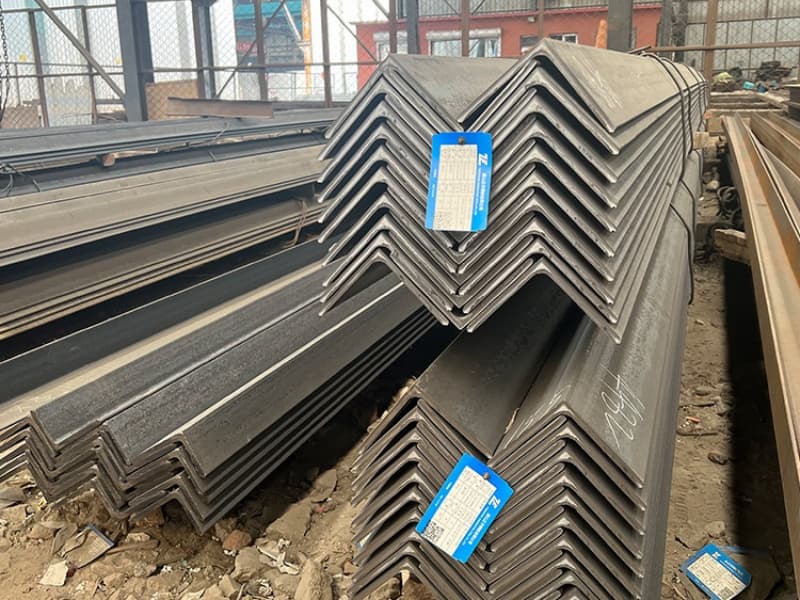
Think of it as "safety-critical" steel. A building can be evacuated if a beam cracks. A ship in a storm cannot. Marine grade steel is designed not to crack in the first place.
The Core Mission: Preventing Brittle Fracture
The ocean is a hostile environment. Storms create huge, cyclic stresses. Water temperatures can be near freezing. A small crack in brittle steel can spread incredibly fast under these conditions, leading to catastrophic hull failure. This is called brittle fracture.
Marine grade steel is engineered to prevent this. It achieves this through two main strategies controlled by its chemical composition:
- Ensuring Adequate Toughness: The steel must be able to absorb energy and deform slightly (ductile behavior) even at low temperatures. This is verified by the Charpy Impact Test.
- Maintaining Excellent Weldability: Ships are mostly welded. Poor weldability can lead to cracks in the weld or the Heat-Affected Zone (HAZ), which become starting points for failure. Chemistry controls this.
How Chemistry Fulfills the Mission
The chemical composition is the starting point to achieve these goals. Each element plays a role:
- Carbon (C): Increases strength but reduces toughness and weldability. In marine grades, carbon content is kept moderate and strictly controlled (e.g., often below 0.18% for AH36). This balances strength with good weldability.
- Manganese (Mn): Increases strength and, crucially, improves toughness. It helps refine the grain structure. Marine steels have a specified Mn content, often as a ratio to Carbon (Mn/C ratio).
- Silicon (Si): A deoxidizer used in the steelmaking process. It adds some strength.
- Sulfur (S) & Phosphorus (P): These are impurities. They make steel brittle and harm weldability. Marine grades have very low maximum limits for both (e.g., S ≤ 0.025%, P ≤ 0.025%).
- Micro-alloys (Niobium Nb, Vanadium V, Titanium Ti): These are the "secret ingredients." Added in small amounts (often <0.05%), they form carbonitrides that pin the grain boundaries during rolling. This results in a very fine grain structure, which simultaneously increases strength and dramatically improves toughness.
Furthermore, the combined effect of these elements on weldability is calculated as the Carbon Equivalent (CEV). Formulas like the IIW CEV are used. For marine steels, the CEV has a maximum allowable value (e.g., CEV ≤ 0.41 for AH36). This ensures the steel can be welded without pre-heating under normal conditions, preventing cold cracking.
In short, marine grade steel is a chemically optimized product. Its composition is carefully designed to deliver the trifecta of Strength, Toughness, and Weldability. When you buy marine angle steel, you are buying this engineered chemical balance, verified by the mill's chemical analysis report on the MTC.
What is the chemical composition of steel1?
Steel is not pure iron. It is an alloy of iron and carbon, with other elements added or controlled to achieve specific properties. The chemical composition is the master blueprint for the steel's behavior.
The chemical composition of steel1 is defined by the percentages of key elements: Carbon (C), Manganese (Mn), Silicon (Si), Phosphorus (P), Sulfur (S), and often alloying elements2 like Chromium (Cr), Nickel (Ni), or micro-alloys like Niobium (Nb). This recipe determines the steel's strength, hardness, toughness, weldability3, and corrosion resistance.
%[Infographic of a steel ingot with elemental percentages labeled](https://cnmarinesteel.com/wp-content/uploads/2025/10/Marine-angle-steel-11.webp "Steel Chemical Composition Breakdown")
Every element has a job. Some are essential for strength, some are needed for manufacturing, and some are harmful impurities that must be minimized. Understanding these roles helps you read a chemical analysis report4.
The Roles of Major Elements in Steel
We can group the elements by their primary function in structural steel.
| Element | Symbol | Typical Role & Effect | Importance for Marine Steel |
|---|---|---|---|
| Iron | Fe | The base metal, making up over 98% of the alloy. | The foundation. |
| Carbon | C | The primary hardening element. Increases strength and hardness but reduces ductility and weldability3. | Content is carefully limited (e.g., ~0.18% max) to balance strength with good toughness and weldability3. |
| Manganese | Mn | Increases strength and hardness. Improves toughness and helps remove oxygen during steelmaking. | A critical element. Its content is specified precisely to achieve the required toughness. |
| Silicon | Si | Used as a deoxidizer. Increases strength and hardness slightly. | Controlled for consistent properties. |
| Phosphorus | P | An impurity. Increases strength but severely reduces toughness (makes steel cold brittle). | Harmful. Kept to a very low maximum (e.g., ≤0.025%) in marine grades5. |
| Sulfur | S | An impurity. Reduces ductility and weldability3, causes hot shortness. | Harmful. Kept to a very low maximum (e.g., ≤0.025%) in marine grades5. |
| Micro-alloys | Nb, V, Ti | Added in tiny amounts (<0.1%). Form precipitates that pin grain boundaries, refining grain size. | Crucial. Fine grains mean higher strength and better toughness. A key technology in modern marine steels. |
From Composition to Properties: The Carbon Equivalent (CEV)6
The elements don't work in isolation. Their combined effect on weldability3 is so important that it is calculated into a single number: the Carbon Equivalent (CEV)6.
A common formula (IIW) is:
CEV = C + Mn/6 + (Cr+Mo+V)/5 + (Ni+Cu)/15
This formula puts the effect of other elements in terms of "carbon equivalents." A higher CEV means the steel is harder to weld and more prone to cracking in the weld zone.
- For general steel: A CEV below 0.40 is generally good for welding.
- For marine grades5 like AH36: The specification often sets a maximum CEV, for example, CEV ≤ 0.41. This is a contractual limit on the chemical composition.
When you receive the MTC for a batch of AH36 angles, the chemical analysis section will list the percentages of C, Mn, Si, P, S, and sometimes Nb. You can check that each element is within the range specified by ABS rules. More importantly, you can see that the calculated CEV is below the maximum. This is direct proof that the steel has the correct "recipe" for marine service. It is not enough for a supplier to say the steel is "AH36." They must provide the chemical data that proves it.
What is stronger, C channel or angle iron?
This is a common practical question. Both C channels (or U channels) and angle irons (L shapes) are used for support and framing. The answer depends on what you mean by "stronger" and the direction of the load.
Neither is universally stronger. Their strength depends on the load direction relative to their shape. An angle iron is stronger against loads applied to its "toe" (creating symmetry). A C-channel is generally stronger against bending from loads applied perpendicular to its web (its open side), as it has a higher section modulus in that primary axis.
%[Diagram comparing load direction on C-channel vs angle iron](https://cnmarinesteel.com/wp-content/uploads/2025/10/Marine-angle-steel-10.webp "C Channel vs Angle Iron Strength")
"Strength" in engineering is specific. We need to talk about axial strength (in tension/compression) and bending strength (flexural). The shape of the profile determines how efficiently it uses material to resist these forces.
Comparing the Structural Geometry
The key difference is how the material is distributed in space.
- Angle Iron1 (L-shape): The material is distributed along two legs at a 90-degree angle. Its center of gravity is at the intersection of the legs.
- C-Channel2 (U-shape): The material forms a "U" with a web (the back) and two flanges (the sides). Its center of gravity is in the middle of the web.
This difference in geometry leads to different Section Modulus (Z)3 and Moment of Inertia (I)4 values, which are the mathematical measures of bending strength and stiffness.
Strength in Different Loading Scenarios
Let's compare them in common situations:
| Loading Type | Angle Iron1 Performance | C-Channel2 Performance | Which is "Stronger"? |
|---|---|---|---|
| Axial Tension/Compression | Good. Strength depends on the total cross-sectional area. | Good. Strength depends on the total cross-sectional area. | Similar, if they have the same weight per meter. |
| Bending – Strong Axis | Bending about its "strong" axis (through the toe). Moderate strength. | Bending about its strong axis (perpendicular to the web). Very good strength. The flanges are far from the neutral axis, giving a high section modulus. | C-Channel2 is typically stronger. It is a more efficient shape for resisting bending in its primary direction. |
| Bending – Weak Axis | Bending about its "weak" axis (through the root). Poor strength. | Bending about its weak axis (parallel to the web). Poor strength, and the open shape can lead to torsional buckling. | Both are weak, but angles may be slightly more symmetrical. |
| Torsion (Twisting)5 | Fair, due to its symmetric shape. | Poor. The open section is very weak against torsion and can warp easily. | Angle Iron1 is significantly stronger. |
| Connection & Bracing | Excellent. Easy to bolt or weld on both legs to connect in two planes. | Good for web connections, flanges can be awkward. | Angle Iron1 is more versatile for brackets and bracing. |
Application in Shipbuilding: Choosing the Right Tool
In marine structures, the choice is driven by the specific function:
- Angle Iron1 is used for:
- Brackets and Gussets6: Its two legs are perfect for welding to perpendicular plates (e.g., connecting a deck beam to a bulkhead).
- Secondary Stiffeners: On non-critical bulkheads or walls.
- Bracing: Providing diagonal support in frameworks, where it handles both tension and compression well.
- C-Channel2 is used for:
- Main Framing Members: Where primary bending loads are clear and predictable, such as in some deck edge supports or built-up girders.
- Purlins or Sills: In superstructure construction.
- Machinery Foundations: Where a stiff, straight edge is needed for mounting.
Crucially, for both angles and channels in marine use, the material grade (like AH36) is more important than the shape. A marine-grade angle iron made from AH36 is "stronger" in terms of material performance than a commercial C-channel made from A36, even if the C-channel shape is more efficient. The guaranteed toughness and weldability of the marine grade make it the only choice for critical ship structures. Always select the profile for its structural function and the grade for its material integrity.
Conclusion
The chemical composition is the foundation of marine angle steel performance. Grades like AH36 use controlled amounts of carbon, manganese, and micro-alloys to guarantee the critical combination of strength, toughness, and weldability required for safe shipbuilding.
-
Learn about the versatile applications of Angle Iron in construction, particularly for bracing and connections. ↩ ↩ ↩ ↩ ↩ ↩ ↩
-
Explore the benefits of C-Channel in construction, especially for bending loads, to understand its applications better. ↩ ↩ ↩ ↩ ↩
-
Understanding Section Modulus is crucial for evaluating material efficiency in structures; this link provides in-depth insights. ↩ ↩ ↩ ↩ ↩ ↩
-
Discover how Moment of Inertia influences the strength and stability of structures, essential for engineering design. ↩ ↩
-
Explore the impact of torsion on materials to understand their limitations and applications in engineering. ↩ ↩ ↩ ↩
-
Explore the role of brackets and gussets in enhancing structural integrity and their applications in various projects. ↩ ↩ ↩