
You are reviewing a ship specification that calls for "ABS HP Bulb Flats." This is not just a material request; it is a precise instruction with legal and safety implications. Misunderstanding it can lead to rejected materials and project delays.
ABS HP Bulb Flat Steel refers to High-Tensile Strength (HP) bulb flat profiles produced under the American Bureau of Shipping (ABS) rules. The ‘HP’ indicates a minimum yield strength of at least 315 MPa (for HP32) or 355 MPa (for HP36), with mandatory impact toughness testing, making it suitable for critical hull stiffeners in ships and offshore structures.
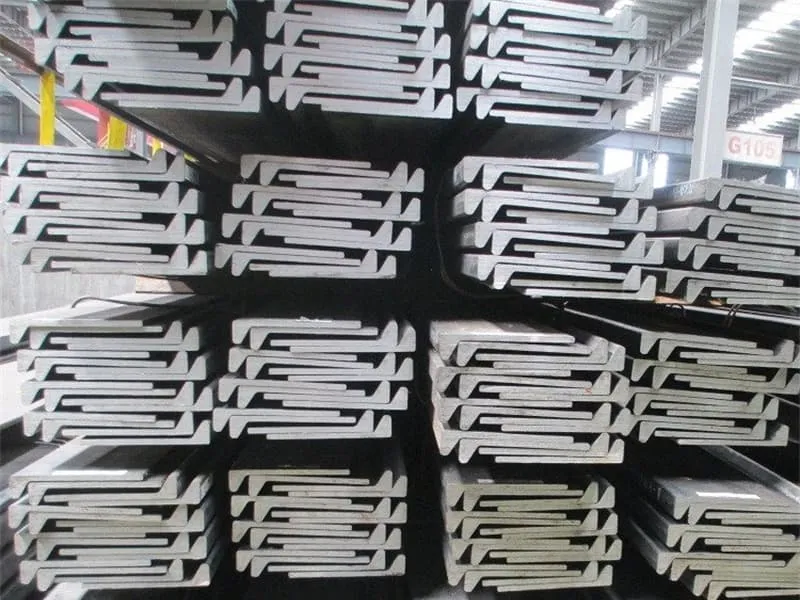
Navigating classification society specifications is a core part of professional marine sourcing. ABS rules are among the most widely used globally. To get it right, we need to break down the key terms, starting with the fundamental grade classifications within the ABS system.
What is the difference between Grade A and Grade B ABS?
In the ABS system, "Grade A" and "Grade B" refer to different categories of normal strength steel1. The difference is not about quality, but about the level of guaranteed toughness, which is crucial for where the steel is used on a ship.
The main difference between ABS Grade A2 and Grade B steel is the mandatory impact toughness3 testing. Grade B steel requires Charpy V-notch impact testing4 at 0°C (32°F), while Grade A does not have this mandatory requirement for all thicknesses. Grade B offers better guaranteed resistance to brittle fracture for more critical applications.
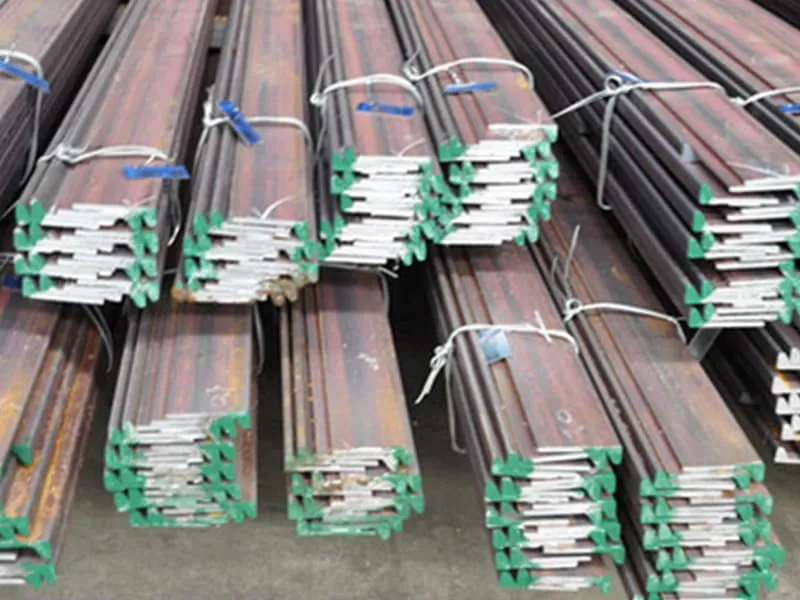
Think of Grade A and Grade B as tools for different jobs within the "normal strength" toolbox. Both have a minimum yield strength of 235 MPa, but their safety margins differ.
The Core Distinction: Mandatory Toughness Assurance
The Charpy impact test measures a material’s toughness—its ability to absorb energy and resist crack propagation, especially at low temperatures. For a ship in cold waters, this is a critical safety property.
- ABS Grade A2: This is a general-purpose hull steel. The ABS rules allow Grade A steel up to certain thicknesses (e.g., 25mm or 50mm depending on the rule edition) to be supplied without impact testing. This makes it cost-effective for many applications. However, for thicker sections where the risk of brittle fracture is higher, impact testing becomes required even for Grade A.
- ABS Grade B5: This grade always requires Charpy V-notch testing. The test must be conducted at a temperature of 0°C (32°F). The steel must absorb a minimum amount of energy (measured in Joules) to pass. This provides a documented, guaranteed level of toughness.
Application Guidance: Choosing the Right Grade
The choice between Grade A and Grade B is guided by the structural location and the design temperature.
| Feature | ABS Grade A2 | ABS Grade B5 |
|---|---|---|
| Minimum Yield Strength | 235 MPa (34 ksi) | 235 MPa (34 ksi) |
| Tensile Strength | 400-520 MPa | 400-520 MPa |
| Impact Toughness | Not mandatory for thinner plates in non-critical areas. May be required for thicker gauges. | Mandatory. Charpy V-notch test at 0°C. |
| Typical Applications | Internal decks, secondary bulkheads, non-critical structural parts in warmer climates. | Hull plating for vessels operating in cooler waters, more critical parts where extra safety assurance is desired. |
| Cost & Availability | Generally more readily available and slightly lower cost due to simpler testing. | Slightly higher cost due to mandatory testing, but very common. |
It is important to note that ABS HP Grades (like HP32, HP36) are a separate category from Grade A/B. HP stands for "High Strength." When a spec calls for "ABS HP Bulb Flats," you are dealing with high-tensile steel (yield strength 315 MPa or more), which has its own toughness requirements, typically more stringent than Grade B. Confusing Grade B with an HP grade is a significant error. The Grade A/B distinction is primarily for normal strength plates and sections, providing the first level of selection for toughness assurance.
What grade is steel flat bar?
A "steel flat bar" is a shape description, not a grade specification. It is a rectangular cross-section. You can have a flat bar in almost any steel grade, from cheap mild steel to high-tech marine grade1s. The key is to specify both the shape and the grade.
A steel flat bar has no inherent grade. The grade must be specified separately based on its intended use. It could be a commercial grade like ASTM A362 (250 MPa yield) for general fabrication, or a marine grade1 like ABS AH36 (355 MPa yield) for structural shipbuilding. The procurement document must clearly state both the dimensions and the material grade.
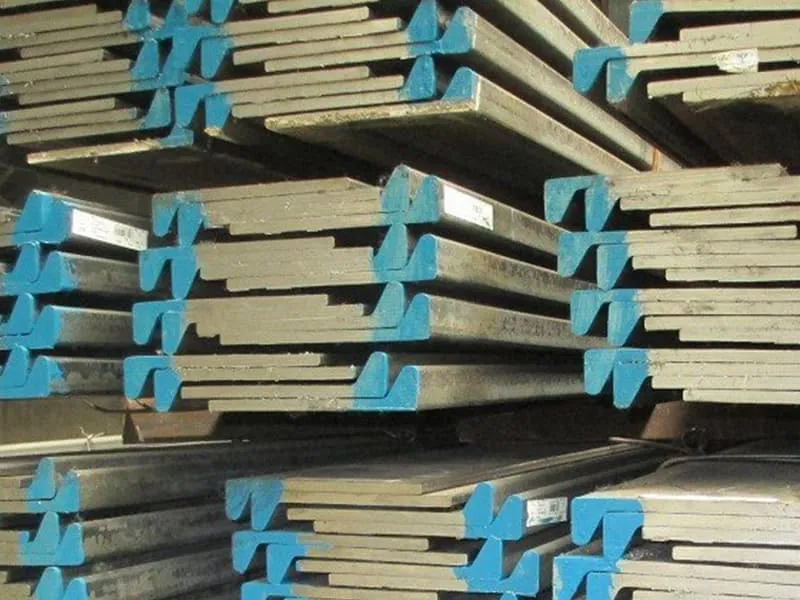
Asking for a "flat bar" is like asking for a "metal sheet." You must define what metal it is made from. This is a common source of confusion that can lead to receiving incorrect or non-compliant material.
From Shape to Specification: Completing the Description
A complete order description for a structural flat bar includes:
- Profile: Flat Bar.
- Dimensions: Width (W) x Thickness (T) in mm or inches. (e.g., 100 mm x 12 mm).
- Material Standard and Grade: This is the crucial part. (e.g., ASTM A362 or ABS Grade AH36).
- Length: Random, cut-to-length, or specific mill length.
- Certification Requirement: "With ABS Certificate" or "With Mill Test Certificate (MTC)."
Why Grade Specification is Critical for Bulb Flats vs. Flat Bars
This directly relates to our main topic. A bulb flat3 is a specialized profile almost exclusively used as a stiffener in shipbuilding. Therefore, when someone orders a bulb flat3, it is implicitly understood they need a marine grade1 like ABS AH/HP, BV DH, or LR EH. The profile itself dictates the application.
A general flat bar, however, has countless uses. It could be for a staircase in a building (A36), a machine guard in a factory (S235JR), or a small bracket on a ship. Because of this, the grade is not implied and must be explicitly stated.
- Incorrect Order: "Please quote for flat bar 100x12mm."
- Correct Order: "Please quote for flat bar 100x12mm, material ASTM A362, with mill test report."
- Correct Marine Order: "Please quote for bulb flat3 250x11mm per EN 10067, material ABS AH36, with ABS certificate."
For bulb flat3s, the standard dimensional series (like EN 10067 or JIS G 3192) is usually specified. For flat bars, the dimensions are custom. This is another key difference. When sourcing, you must provide or demand this complete set of information. A professional supplier will always ask for the grade if it is not provided. As a buyer, never accept a quote for just "flat bar" or "bulb flat3" without a confirmed grade and certification standard. This clarity is the first defense against quality problems.
What is a bulb flat?
A bulb flat is not just a strange-shaped bar. It is a highly engineered structural profile designed to solve a specific problem in shipbuilding with maximum efficiency.
A bulb flat is a hot-rolled steel section with a cross-section resembling a tall, thin vertical web with a bulb (rounded protrusion) at its tip. It is designed to be welded as a stiffener to steel plates, forming a weight-efficient T-beam that provides exceptional resistance to bending and buckling in ship hulls and decks.
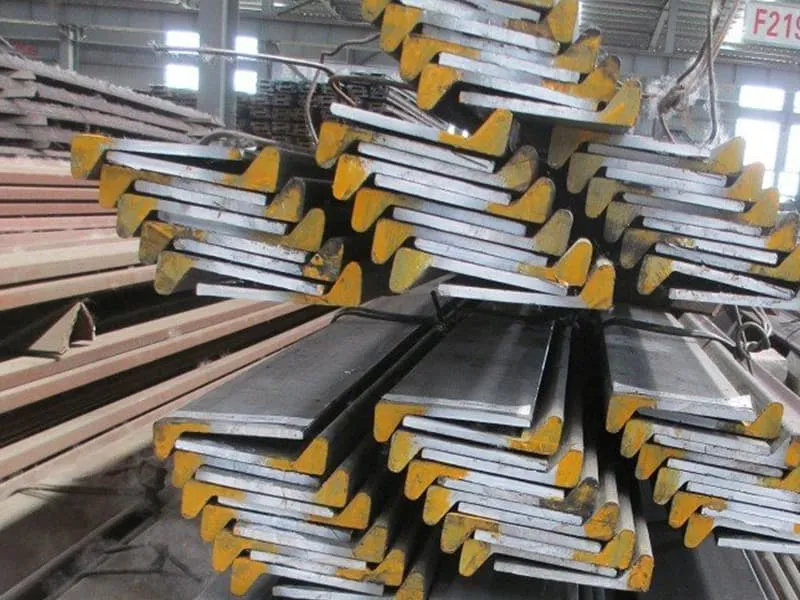
Its unique shape is the result of optimizing material distribution for a single, critical purpose: to make thin plates act like deep, strong beams without adding excessive weight.
Anatomy and Function of the Bulb
Let’s break down its parts and their engineering purpose:
- The Web: This is the vertical, flat part. Its height provides depth to the composite T-beam, which is the primary factor in resisting bending. A taller web is stiffer.
- The Bulb: This is the rounded end. Its function is twofold:
- Increase Section Modulus: It adds mass at the farthest point from the attached plate. In beam theory, this dramatically increases the section modulus1, a direct measure of bending strength. A bulb flat is significantly stronger in bending than a simple flat bar of the same weight and web height.
- Improve Weld Connection: The rounded shape allows for a smoother, larger weld fillet where it joins the plate. This reduces stress concentration at the weld toe, making the connection more resistant to fatigue cracking—a vital consideration for a structure facing cyclic wave loads over 25+ years.
Standardization and Naming
Bulb flats are produced to standardized dimensional series to ensure interchangeability. Common standards include:
- EN 100672 (Europe): Specifies "Bulb Flats" with designations like "Bulb Flat 300 x 12" (300mm high, 12mm thick web).
- JIS G 3192 (Japan): Specifies "Bulb Plates" with similar designations.
The terms "bulb flat," "bulb plate," and "bulb bar" are often used interchangeably in the industry to refer to this same profile. The material grade (like ABS AH36) is a separate specification applied to this standard shape. When you order "ABS HP Bulb Flats," you are ordering a profile from one of these standard series, made from steel that meets the chemical and mechanical requirements of the ABS rules for high-tensile steel, and backed by ABS’s certification. This combination of optimized shape and certified material is what makes it the preferred choice for primary ship structures.
What is a bulb bar?
In practical, day-to-day marine industry language, "bulb bar" is simply another name for "bulb flat1." The terms are synonyms. The choice of word often depends on regional preference or the speaker’s background.
‘Bulb bar’ is a common industry synonym for ‘bulb flat1.’ It refers to the same hot-rolled steel profile with a web and a bulbous tip, standardized under codes like EN 100672. The term ‘bar’ emphasizes its role as a long, linear raw material product that is cut and fabricated into stiffeners.
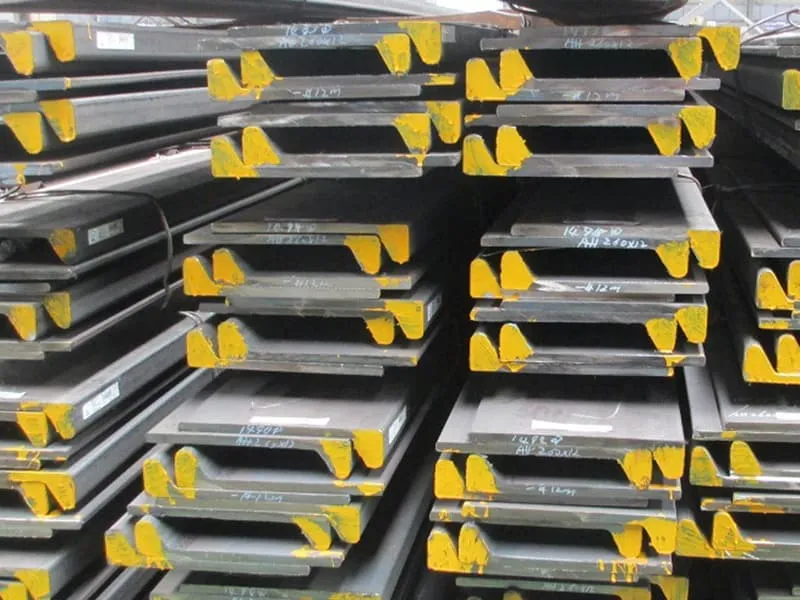
While technically identical, the subtle difference in connotation can sometimes be useful for clarity in specific contexts.
Context and Connotation: Why Both Terms Exist
The persistence of both terms tells us something about how the product is viewed and used.
- Bulb Flat: This term focuses on the cross-sectional shape. It is descriptive and geometric. It is the formal term used in many technical standards and engineering drawings.
- Bulb Bar: This term focuses on the form factor. It classifies the product as a "bar" product—a long, straight length of steel, similar to a round bar, square bar, or flat bar. This is the term often used in mills, stockyards, and by traders discussing inventory, tonnage, and cutting.
You might see a mill’s production schedule list "Bulb Bar 260 x 10" and a shipyard’s drawing call out "Bulb Flat 260 x 10." They are the same item.
Procurement Clarity: The Non-Negotiable Details
Regardless of the name used, a precise procurement specification3 must include details that remove all ambiguity. When you are sourcing ABS HP material, the specification is multi-layered:
- Profile Designation: Bulb Flat (or Bulb Bar) per [Standard], e.g., EN 100672 Bulb Flat 300 x 12.
- Material Grade: ABS [Grade], e.g., ABS AH36 or ABS HP364. (Note: "HP" is often used interchangeably with "AH" in ABS context for high-strength grades).
- Certification Requirement: With valid ABS Mill Test Certificate (MTC)5.
- Processing (if any): Cut to 6,000mm lengths, both ends squared.
- Quantity: In metric tons or by number of pieces.
A supplier who is familiar with marine standards6 will understand all these elements. For example, if you request a quote for "ABS HP364 Bulb Bars, 300×12, EN 100672, with MTC," you have given a complete commercial and technical description. The use of "bar" or "flat" does not change the meaning. The critical elements are the standardized profile dimensions and the ABS grade certification. These are what ensure the product will perform its intended structural function on the vessel and gain approval from the ABS surveyor. In our daily work with clients from Saudi Arabia to the Philippines, we use both terms but always ensure the formal specification on the contract and certificate is perfectly clear to avoid any risk at the delivery point.
Conclusion
ABS HP Bulb Flat Steel is a certified, high-strength profile for critical marine structures. Understanding its specifications requires knowing the ABS grade system (A, B, AH/HP), precisely defining the profile and grade, and ensuring delivery with the proper ABS Mill Test Certificate for traceability and approval.
-
Understanding ‘bulb flat’ is crucial for clarity in marine procurement and engineering specifications. ↩ ↩ ↩ ↩ ↩ ↩ ↩
-
Explore the EN 10067 standard to ensure compliance and quality in bulb bar specifications. ↩ ↩ ↩ ↩ ↩ ↩ ↩ ↩ ↩ ↩
-
A detailed procurement specification is vital for successful sourcing and project execution. ↩ ↩ ↩ ↩ ↩ ↩ ↩
-
Learn about ABS HP36 to understand its applications and benefits in marine construction. ↩ ↩ ↩
-
Discover the importance of MTCs in verifying material quality and compliance. ↩ ↩ ↩
-
Familiarize yourself with marine standards to ensure safety and compliance in maritime projects. ↩