
You have ordered a batch of AH36 steel plates for a new ship. The supplier provides a Mill Test Certificate, but how do you know the tests behind it are correct? Relying on unverified testing can compromise your entire vessel’s structural integrity.
Marine steel plate testing is governed by a multi-layered framework. This includes international testing standards (like ASTM, ISO), mandatory rules from classification societies (ABS, DNV, CCS, BV), and national standards (GB, IS). These cover chemical analysis, tensile strength, impact toughness, and specialized tests for corrosion and fracture resistance to ensure safety at sea.
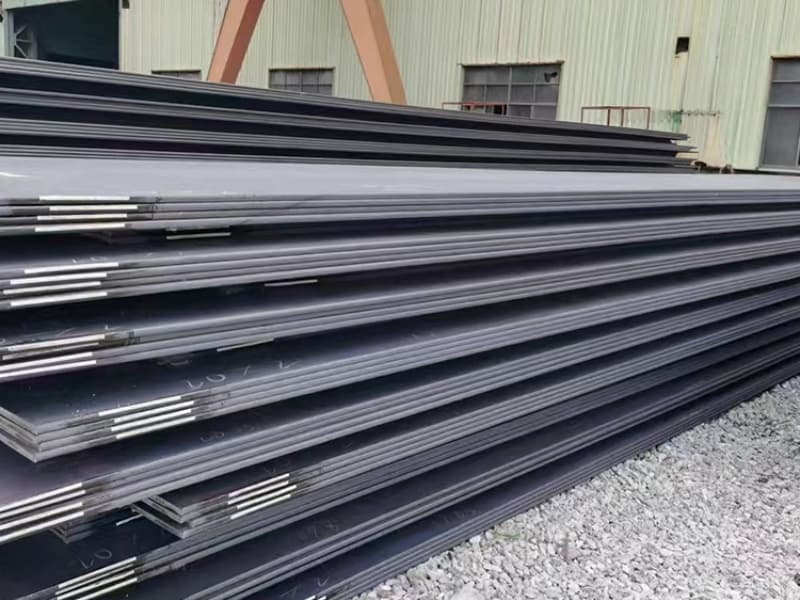
The certificate is just the summary. The real assurance comes from knowing that every test performed adheres to a specific, recognized, and often legally mandated procedure. Let’s break down this complex framework, starting with one of the most common families of testing standards.
What is the ASTM standard for steel testing?
When a testing laboratory needs a definitive method, they often turn to ASTM International. ASTM standards provide the precise, step-by-step "recipe" for conducting material tests, ensuring results are consistent and comparable worldwide.
ASTM standards are detailed test methods for evaluating steel properties. Key standards include ASTM A3701 for mechanical testing (tensile, yield, bending), ASTM E232 for Charpy impact tests, and ASTM A7513 for chemical analysis. These methods form the technical backbone for verifying if a steel plate meets its specified grade requirements.
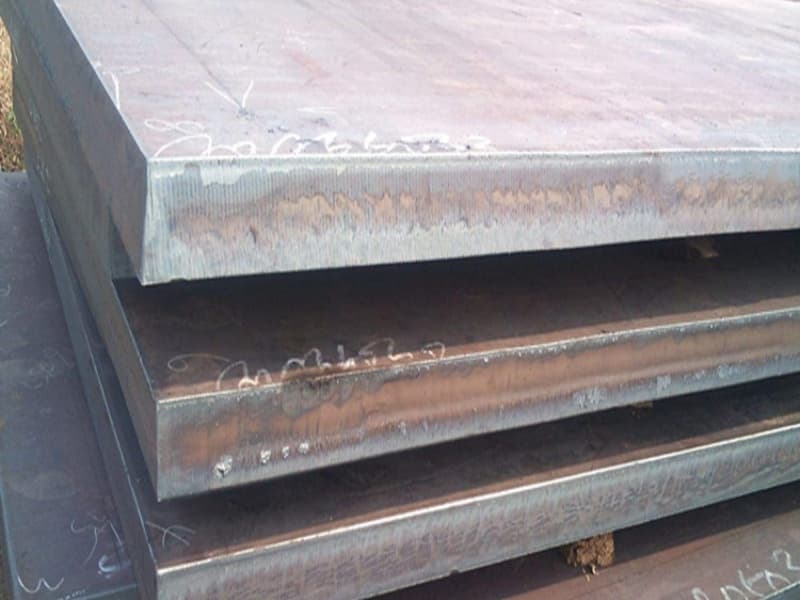
ASTM does not specify what the strength of AH36 steel should be—that’s the job of the grade specification. Instead, ASTM dictates how to measure that strength so that every lab gets the same answer.
The Role of ASTM in the Marine Testing Ecosystem
Think of ASTM as providing the universal measuring tools. Classification societies and national standards then define the acceptable measurement results for different applications.
- Ensuring Reproducibility: An ASTM standard precisely defines the sample shape, testing speed, machine calibration, and data calculation method. This means a test in a lab in China should yield the same result as a test in a lab in Norway for the same material.
- Referenced by Higher Authorities: Crucially, the mandatory rules from classification societies and national standards frequently reference and require the use of specific ASTM test methods. For example, a shipbuilding contract requiring ABS approval will mandate that impact tests be performed according to ASTM E232 or its ISO equivalent.
Key ASTM Test Methods for Marine Steel
Here are some of the most critical ASTM standards encountered in marine plate testing:
| ASTM Standard | What It Governs | Why It Matters for Marine Steel |
|---|---|---|
| ASTM A3701 | Standard Test Methods and Definitions for Mechanical Testing of Steel Products. | This is the overarching standard for tensile, yield, and bend tests. It defines how to determine the 355 MPa yield strength of an AH36 plate. |
| ASTM E232 | Standard Test Methods for Notched Bar Impact Testing of Metallic Materials. | Defines the Charpy V-notch test procedure. This test is mandatory for marine grades to prove toughness at low temperatures (e.g., 0°C, -20°C). |
| ASTM A7513 | Standard Test Methods and Practices for Chemical Analysis of Steel Products. | Dictates how to measure the percentage of Carbon, Manganese, Silicon, Sulfur, Phosphorus, etc. Tight chemical control is essential for weldability and toughness. |
| ASTM E709 | Standard Guide for Magnetic Particle Testing. | A common method for non-destructive testing4 (NDT) to find surface cracks on plates before fabrication. |
When you read a Mill Test Certificate5, phrases like "Tested per ASTM A3701" or "Charpy Impact per ASTM E232" are signs of a professionally executed testing program. They provide the technical legitimacy behind the numbers on the page. For a buyer, insisting that tests follow recognized ASTM (or equivalent ISO) methods is a fundamental quality check.
What is the ASTM code for plates?
This question often leads to confusion. "ASTM A361" is a material specification for a grade of steel, not a test method. It uses the "A" prefix common to many ferrous material specs. The testing standards (like A370, E23) are separate documents that define how to verify if the plate meets the A36 specification.
There is no single "ASTM code for plates." Instead, ASTM publishes material specifications (like ASTM A361 for carbon steel, ASTM A572 for high-strength steel) that define required properties. Separate ASTM test method standards (like A370, E23) are then used to verify compliance with these material specs.
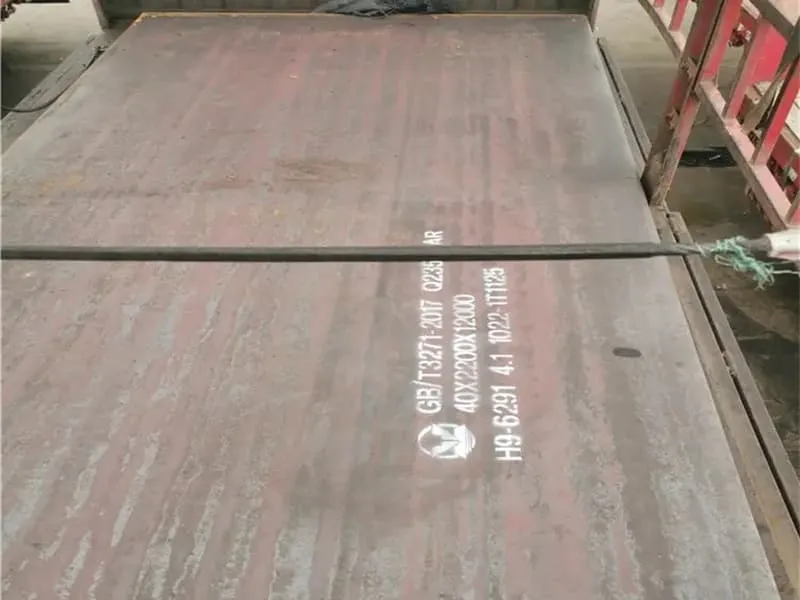
It’s critical to distinguish between the "what" (the material specification) and the "how" (the test method). In marine contexts, the "what" is usually defined by a classification society, not ASTM.
ASTM Material Specs vs. Marine Grade Specs
For general construction, ASTM A361 is a common plate specification. However, for shipbuilding, ASTM A361 is generally not acceptable for primary structures because it lacks mandatory toughness requirements.
- ASTM A361 Plate: Specifies a minimum yield strength of 250 MPa. It references ASTM A3702 for how to perform the tensile test. However, it does not require Charpy impact testing3.
- ABS AH36 Plate4: Specifies a minimum yield strength of 355 MPa and requires Charpy impact testing3 at a specific temperature. It will mandate the use of ASTM E235 (or ISO 148-1) to perform that test.
Therefore, in marine procurement, you are far more likely to encounter plates specified as "ABS AH36" or "LR DH36" than "ASTM A361." The applicable "ASTM code" in this case is not for the plate grade itself, but for the test methods referenced in the classification society’s rules to prove the plate is AH36.
The Hierarchy in Practice
A practical flow for marine steel plate testing is:
- Contract & Design Specification: States the required grade – e.g., "Deck Plates to be BV DH366".
- Governing Rulebook: The BV ship rules define the chemical limits, mechanical properties (355 MPa yield, XX Joules impact at -20°C), and required tests for DH36 steel.
- Referenced Test Standards: The BV rules will state that impact tests must be performed according to ASTM E235 or ISO 148-1. The tensile test must follow ASTM A3702 or ISO 6892-1.
- Mill Production & Testing: The steel mill produces the plate. Their quality lab performs the chemical analysis, tensile test, and Charpy impact test, strictly following the ASTM/ISO methods cited in the rules.
- Certification: The mill issues a Certificate of Compliance or a Mill Test Certificate, listing the results and affirming compliance with BV DH366 requirements, and noting the test standards used.
So, while you might not order "ASTM A361" plate, your marine-grade plate’s entire qualification process relies on ASTM (and ISO) test method standards to provide the legally defensible proof of quality.
Is 316 steel marine grade?
The short answer is yes, but with a critical clarification. "Marine grade" has two different meanings: one for structural strength and one for corrosion resistance1. 316 stainless steel2 falls into the second category.
316 stainless steel2 (often AISI 316 or UNS S31600) is a ‘marine-grade3‘ corrosion-resistant alloy, not a structural hull steel. It is used for fittings, piping, tanks, and equipment exposed to seawater due to its excellent resistance to pitting and crevice corrosion from chlorides. It is not governed by the same strength and toughness testing standards as hull structural plates like AH36.
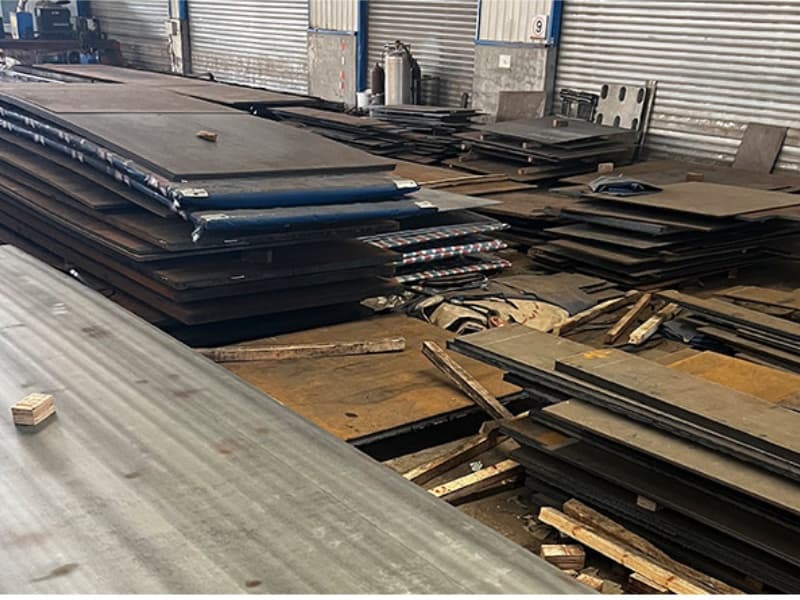
Mixing up these two categories is a common but significant error. The testing standards for a 316 stainless valve are completely different from those for an AH36 hull plate.
Two Distinct "Marine Grade" Realms
| Aspect | Hull Structural Steel (e.g., AH36, DH36) | Corrosion-Resistant Alloy (e.g., 316 Stainless) |
|---|---|---|
| Primary Purpose | Provide the strength and toughness for the ship’s main hull, decks, and frames. | Provide corrosion resistance1 in aggressive marine environments. |
| Key Properties | Yield Strength, Tensile Strength, Charpy Impact Toughness, Weldability. | Pitting Resistance Equivalent Number (PREN), Crevice Corrosion Resistance, General Corrosion Rate. |
| Governing Standards | Classification Society Rules (ABS, DNV, etc.), National Standards (GB 712, IS 3039). | ASTM/ASME material specs (e.g., A240/A240M), ISO specs, and corrosion testing standards4. |
| Typical Tests | Tensile (ASTM A370), Impact (ASTM E23), Chemical Analysis (ASTM A751). | Corrosion tests like ASTM G485 (for pitting/crevice corrosion), ASTM G31 (immersion test). |
Corrosion Testing Standards for 316 Steel
For a material like 316 stainless steel2 to be qualified for marine service, it must undergo specific corrosion tests, not Charpy impact tests. Common standards include:
- ASTM G485: Standard Test Methods for Pitting and Crevice Corrosion Resistance of Stainless Steels and Related Alloys by Use of Ferric Chloride Solution. This accelerated test is a key indicator of performance in chloride environments.
- ASTM G31: Standard Guide for Laboratory Immersion Corrosion Testing of Metals. Used for more general corrosion rate assessment.
- NACE TM0177 / ISO 15156: Standards for testing materials in environments containing sulfide stress cracking agents, critical for offshore oil and gas applications.
So, when procuring "marine-grade3" 316 stainless components, your focus shifts from toughness test reports to material certificates and corrosion test reports that prove compliance with specs like ASTM A240 and demonstrate performance per relevant corrosion standards. The testing universe is different, but just as rigorous.
What is grade S275 and S3551 steel?
S275 and S3551 are common European structural steel grades defined by the EN 100252 standard. They are widely used in general construction and offshore engineering. In the marine world, they have direct equivalents in the classification society system.
S275 and S3551 are European structural steel grades where the number indicates the minimum yield strength in MPa (275 MPa and 355 MPa). S355 is broadly equivalent to normal-strength shipbuilding grades like ‘A’ or ‘B’, and to higher-strength grades like ‘AH36’ or ‘DH36’ depending on its specific toughness sub-grade.
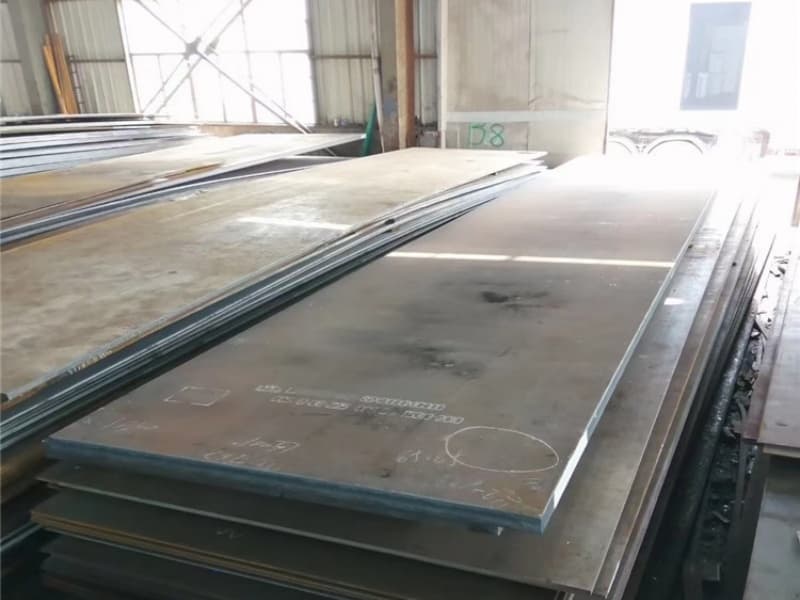
The designation seems simple, but the devil is in the details. The letter ‘S’ stands for "Structural steel." Additional letters and numbers (like S355J2, S355N, S355ML) denote the delivery condition and, most importantly for marine use, the impact toughness3 at different temperatures.
Decoding the EN 100252 Grade Designation
A full grade like S355J2+N4 tells a complete story:
- S355: Minimum yield strength of 355 MPa.
- J2: Impact toughness of 27 Joules at -20°C.
- +N: Delivered in the Normalized condition.
This system allows engineers to select a grade with the right strength and the right toughness for the service environment. An offshore wind foundation in the North Sea would require a higher toughness grade (like S355NL) than a structure in the Mediterranean.
Relation to Marine Classification Society Grades
There is a close correlation between these EN grades and common marine grades:
- S275JR / S275J0: Roughly equivalent to Grade A normal strength hull steel.
- S355J2+N4: Often accepted as equivalent to Grade D or DH36 steel, due to its -20°C toughness and normalized delivery, which is common for marine plates.
- S355ML (Thermomechanically rolled): Offers high strength and good toughness with a finer grain structure, similar to modern TMCP-produced AH/DH36 steels.
Testing Standards for S275/S355
The testing of these grades to verify their properties is governed by a suite of European (EN) and International (ISO) standards, which are globally accepted on par with ASTM.
- Tensile Testing: ISO 6892-1 (Metallic materials — Tensile testing — Part 1: Method of test at room temperature). This is the direct ISO equivalent of ASTM A370.
- Impact Testing: ISO 148-1 (Metallic materials — Charpy pendulum impact test — Part 1: Test method). This is the direct ISO equivalent of ASTM E23.
- Chemical Analysis: Various EN and ISO standards5 for spectrometric analysis.
When a European shipyard or offshore fabricator orders S355J2+N4 plate, the mill’s MTC will show test results referencing these ISO standards5. The principles are identical to ASTM-based testing; only the standard organization differs. This highlights the globalized, multi-standard nature of marine material verification.
Conclusion
Marine steel plate testing is governed by a robust, interlinked system of international test methods (ASTM, ISO), enforced by classification society rules, and applied to specific material grades. Understanding this framework is essential to ensure the material’s performance and the vessel’s safety.
-
Explore this link to understand the specific properties and applications of S275 and S355 steel grades in construction and marine engineering. ↩ ↩ ↩ ↩ ↩ ↩ ↩ ↩ ↩ ↩ ↩ ↩ ↩ ↩ ↩
-
Learn about the EN 10025 standard to grasp the specifications and classifications of structural steel grades like S275 and S355. ↩ ↩ ↩ ↩ ↩ ↩ ↩ ↩ ↩ ↩ ↩
-
Discover the importance of impact toughness in steel grades and how it affects performance in various environments. ↩ ↩ ↩ ↩ ↩ ↩ ↩
-
Find out what S355J2+N signifies in steel classification and why it’s crucial for selecting the right material for engineering projects. ↩ ↩ ↩ ↩ ↩ ↩
-
Explore the ISO standards for testing steel materials to understand the global benchmarks for quality and performance. ↩ ↩ ↩ ↩ ↩ ↩ ↩
-
Explore BV DH36 requirements to see why it’s crucial for shipbuilding and marine structures. ↩ ↩