
You are budgeting for a shipbuilding project that requires hundreds of tons of L-shaped marine angle steel. Getting the 2025 price forecast wrong by even $50 per ton can blow your entire project margin. Relying on today’s prices is a sure way to miscalculate.
The L-shaped steel price per ton in 2025 will be shaped by broader steel market trends. Prices are expected to stabilize but remain volatile, influenced by Chinese industrial demand, global iron ore and energy costs, and regional supply-demand imbalances. Marine-grade L-steel (like AH36) will command a significant premium over common structural angles due to certification and alloy costs.

Predicting a single price is impossible, but understanding the powerful market forces at play allows for intelligent budgeting and sourcing strategy. The price of L-shaped steel does not exist in a vacuum; it is a product of the colossal global steel industry. Let’s examine the forecasts that will set the stage for 2025.
What is the steel market forecast for 2025?
Industry analysts project a year of cautious stabilization for the global steel market in 2025, following the volatility of recent years. Growth will be moderate, and prices will remain sensitive to policy shifts in China and global economic health.
The global steel market forecast for 20251 points to moderate demand growth of 1-2%, led by India and Southeast Asia, while Chinese demand plateaus. Supply is expected to remain ample, keeping a lid on major price surges, but volatility from raw material costs and decarbonation policies will persist, creating a ‘stable but fragile’ market environment.
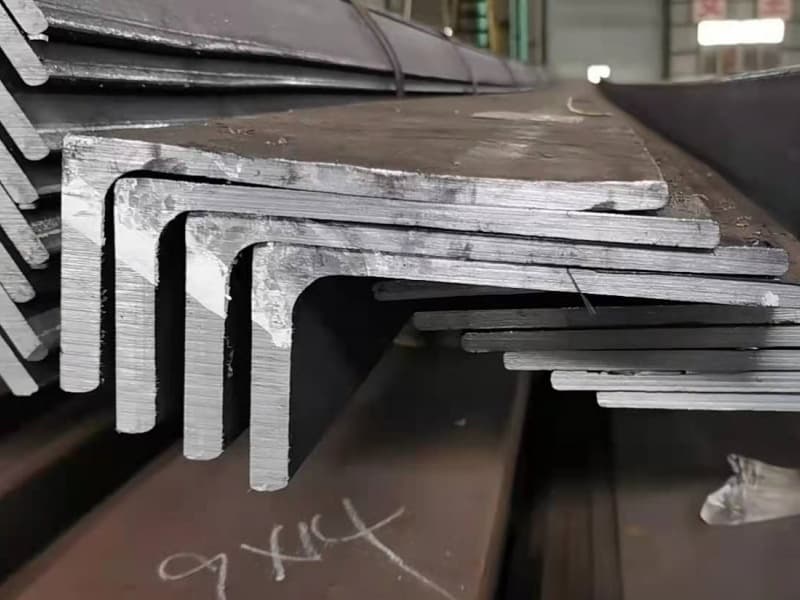
Think of 2025 as a year of balancing acts. Several major forces will push and pull on the market, determining the baseline from which all steel product prices, including L-shaped sections, will be derived.
Key Drivers Shaping the 2025 Market
The price of your marine angle steel starts here, with these macro dynamics:
- The China Factor2: China produces and consumes over half of the world’s steel. Its property market recovery and the scale of its infrastructure stimulus will be the single biggest influence on global prices. Current forecasts suggest Chinese demand will be flat to slightly down, which generally exerts downward pressure on global prices.
- Raw Material Costs3: The cost of iron ore and coking coal sets a floor for steel prices. Forecasts for iron ore suggest a gradual decline from 2024 peaks due to increased supply, but prices will stay historically elevated above $100/tonne. Energy costs (coal, natural gas) for steelmaking will also be a critical variable.
- Regional Divergence4: Demand will not be uniform.
- India: A clear growth leader, with massive infrastructure spending driving strong domestic demand.
- Southeast Asia & Middle East: Steady growth from ongoing industrialization and construction.
- Europe & North America: Demand is expected to be soft, influenced by higher interest rates and a focus on inventory drawdowns rather than new buying.
Implications for L-Shaped Steel Buyers5
This macro forecast tells us that 2025 is unlikely to see a dramatic, sustained price crash or boom for general steel. However, "stability" does not mean "a fixed price." It means prices will move within a band, reacting to monthly data on Chinese production, port inventories, and policy news.
For a buyer, this means:
- Budgeting: You should budget with a price range, not a single number. Include a contingency for volatility.
- Sourcing Strategy: Consider locking in prices with fixed quotes for known project quantities when the market dips. Maintain relationships with multiple suppliers to ensure competitive access.
- Focus on Total Cost6: In a stable-price environment, competition shifts. The best value may come from suppliers who offer superior logistics, certification guarantees, and technical support, not just the absolute lowest ticket price per ton.
The 2025 steel market sets the stage. The next step is to look at a key downstream product that shares production lines and demand drivers with structural sections like L-steel.
What is the steel rebar forecast1 for 2025?
The rebar (reinforcing bar) market is an excellent bellwether for L-shaped steel2. Both are long products, often produced on the same mills, and their demand is heavily driven by construction and infrastructure spending3. Rebar trends give us direct clues about the market for structural sections.
The steel rebar forecast1 for 2025 anticipates steady demand from global infrastructure projects4, particularly in Asia and the Middle East. However, high interest rates may constrain private construction in some regions. Prices will follow broader steel trends but may show relative strength due to sustained public sector demand5, providing support to other long products like structural angles.

Rebar is the backbone of concrete construction. Its demand is a proxy for the health of the construction sector, which is also a major consumer of L-angles for building frames, supports, and industrial structures.
The Link Between Rebar and L-Shaped Steel
Understanding rebar helps us understand part of the demand pool for L-steel:
- Shared Raw Materials & Production: Both rebar and structural angles are made from billets. When billet prices move due to iron ore and scrap costs, both rebar and angle prices are affected.
- Shared Demand Drivers: Government-led infrastructure (bridges, ports, power plants) uses massive amounts of rebar and structural steel for frameworks. Strong infrastructure forecasts in regions like India, ASEAN, and the Gulf support demand for both product categories.
- Market Sentiment Indicator: Rebar is a highly traded commodity with frequent price quotes. Its price movements often lead or confirm trends in the wider construction steel market, including sections.
2025 Rebar Dynamics and Their Meaning
The forecast suggests rebar will have a stable demand base. This is important for L-steel prices because:
- It Provides a Demand Floor: Sustained infrastructure spending3 means mills producing long products will have consistent orders. This prevents a collapse in production that could lead to fire-sale prices for all long products, including angles.
- It Competes for Mill Capacity: If rebar demand is strong, mills may allocate more production to it. This can tighten the supply of structural angles, potentially supporting their price relative to flat products.
- It Highlights Regional Opportunities: Buyers in regions with strong infrastructure pipelines (like our key markets in the Middle East and Southeast Asia) should expect firm local demand. This may make imported angles more competitive, but also means local prices may be less likely to crash.
For a marine L-steel buyer, the robust rebar forecast is a double-edged sword. It indicates a healthy underlying construction sector6, which is good for overall industrial activity. However, it also means the mills producing your material are not struggling for orders, giving them less incentive to offer deep discounts. Your negotiating power may depend more on order size and relationship than on a desperate market.
What is the world steel forecast for 2026?
Looking beyond 2025 to 2026 provides insight into the medium-term trajectory. This helps in strategic planning for multi-year projects, like shipbuilding programs or large-scale fabrication contracts that span both years.
The world steel forecast for 2026 projects a continuation of modest growth, with demand potentially accelerating to 2-3% as global economic conditions improve. The green steel transition1 is expected to become a more significant price factor, potentially creating a widening cost gap between traditional and low-carbon production methods.
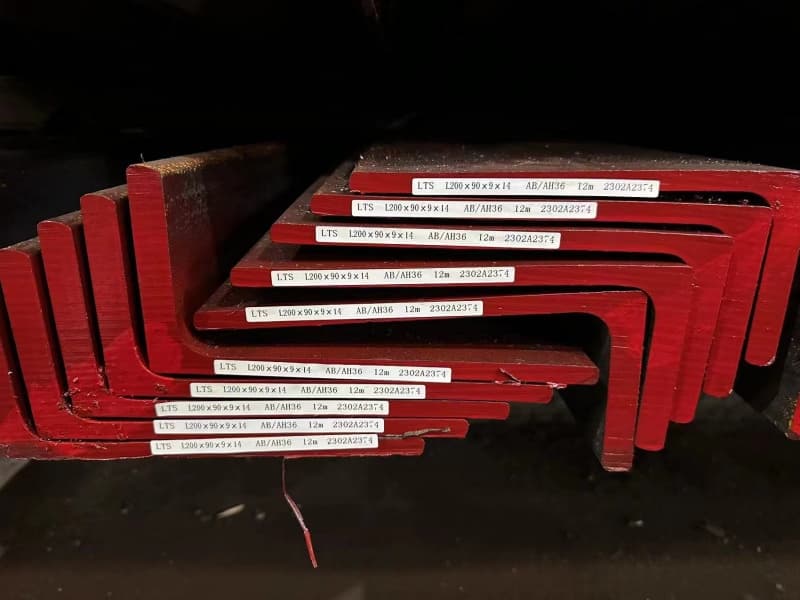
The 2026 outlook introduces a crucial new variable: the tangible financial impact of decarbonization. While 2025 will feel the policy pressure, 2026 may see the start of a real market split.
The Decarbonization Premium Becomes Real
The steel industry is one of the largest global CO2 emitters. Regulations like the EU’s Carbon Border Adjustment Mechanism (CBAM) and corporate net-zero pledges are forcing change.
- Traditional Blast Furnace (BF) Route: This method uses coke and is carbon-intensive. It will face rising costs from carbon taxes or emission permit purchases.
- Electric Arc Furnace (EAF)2 & Green Routes: EAFs using scrap are cleaner. The future lies in green hydrogen-based direct reduction (DRI). This technology is low-carbon but currently has much higher production costs.
In 2026, we may begin to see:
- A clearer price premium3 for steel produced with verified lower carbon footprints.
- Regional price divergence between markets with strict carbon rules (Europe) and those without (parts of Asia).
- Increased buyer interest in carbon footprint documentation for steel products.
Strategic Implications for L-Steel Buyers
This has direct relevance for marine L-steel procurement:
- Cost Structure Evolution: The cost of coal and carbon credits will increasingly be baked into the price of traditionally produced angles. Buyers in regions linked to the EU market need to factor this in.
- Supplier Selection Criteria: A mill’s investment in cleaner technology (like efficient EAFs or energy recovery) may become a competitive advantage, offering more stable future pricing.
- Product Differentiation: For marine grades, the certification dossier may one day include not just a Mill Test Certificate (MTC) but also a Carbon Footprint Certificate4. Progressive suppliers will start to prepare for this.
For a 2025 project, the 2026 forecast is a warning: the era of pricing based solely on commodity inputs is evolving. When evaluating suppliers and prices in 2025, it is wise to ask about their decarbonization roadmap. A supplier with a modern, efficient mill may offer better long-term price stability, even if their current quote is not the absolute lowest. This forward-thinking approach protects against future regulatory shocks.
What is the steel industry forecast for 2030?
The 2030 forecast shifts from near-term trading to a fundamental transformation of the industry. It describes the landscape in which today’s newbuild ships will be midway through their operational life, making it highly relevant for asset planning.
The steel industry forecast for 2030 envisions a transformed landscape driven by decarbonization1, with green hydrogen-based steelmaking scaling up. Demand will be supported by global infrastructure for energy transition (wind, grid, EV plants). Regional self-sufficiency may increase, and digital supply chains2 will be the norm, making price discovery and logistics more efficient but also more complex.
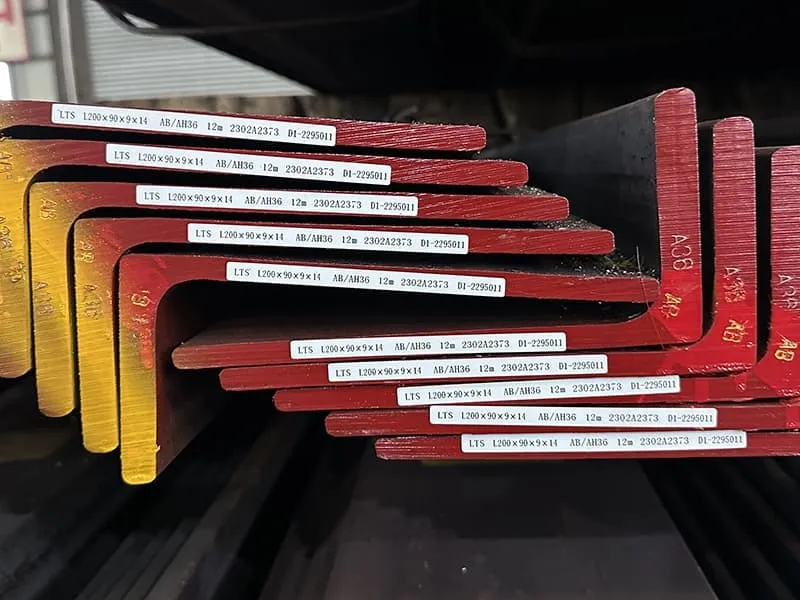
By 2030, the trends we see as emerging in 2025-2026 will have matured. The industry that supplies your L-shaped steel will look and operate differently.
The Two-Tier Market of 2030
A likely scenario is a market divided into two clear segments:
- Commodity/Standard Steel: Produced via traditional or slightly improved methods, still dominant in price-sensitive markets. Its price will remain tied to iron ore, coal, and carbon tax costs.
- Green/Premium Steel3: Produced via EAF (with renewable power) or hydrogen-DRI. This steel will carry a significant green premium but will be mandated for certain public projects and demanded by corporates with strict sustainability goals.
What This Means for the Marine L-Steel Buyer in 2025
Your purchasing decisions today have implications for the 2030s. Consider this:
- Asset Valuation: A ship built in 2025 with documented low-carbon steel in its structure may have a higher residual value in 2030, as carbon regulations tighten in global shipping (via IMO). It could face lower retrofitting costs or trading restrictions.
- Supply Chain Resilience: By 2030, digital platforms will track material from mill to end-use. Suppliers who invest in this traceability today (like providing full MTCs and batch tracking) will be your reliable partners tomorrow.
- Price Paradigm Shift: The basis of pricing may partially shift from "cost of raw materials + margin" to "cost of carbon compliance + technology premium + margin." Building relationships with technologically advanced mills now is a long-term strategic move.
Therefore, when you evaluate the "L-shaped steel price per ton in 2025," you are not just buying a commodity for immediate use. You are making a decision that touches on future regulatory compliance, asset value, and supply chain partnership. The most competitive price in 2025 might come from a mill with no carbon strategy, but that could be a liability for your asset’s future. The smartest buyers will balance the 2025 price with an assessment of the supplier’s viability in the 2030 landscape we can already foresee.
Conclusion
The L-shaped steel price in 2025 will be influenced by stable yet fragile market fundamentals, sustained infrastructure demand, and the early effects of green transition policies. Strategic buyers will focus on securing not just competitive prices, but also reliable, future-ready supply chains that can navigate the evolving market towards 2030.
-
Explore how decarbonization is reshaping the steel industry and its impact on sustainability and innovation. ↩ ↩ ↩ ↩ ↩
-
Discover the future of digital supply chains and their role in enhancing efficiency and transparency in the steel sector. ↩ ↩ ↩ ↩
-
Learn about Green/Premium Steel and its importance for sustainability and compliance in future projects. ↩ ↩ ↩ ↩ ↩
-
Understand the significance of Carbon Footprint Certificates in promoting sustainable steel production. ↩ ↩ ↩
-
This link will explain how public sector investments impact the steel market and pricing. ↩ ↩
-
Learn how the health of the construction sector affects steel prices and market dynamics. ↩ ↩