
You need a specific marine angle for a repair job, but suppliers only sell by the container load. Or you’re planning a large project and need to budget accurately. The MOQ question blocks your progress and makes cost planning feel like a guess.
The Minimum Order Quantity (MOQ) for Marine Angle Steel varies greatly by supplier, mill, and specification. For standard commercial-grade angles, MOQs can be as low as 5-10 tons. For certified marine-grade angles (like AH36, DH36), the MOQ is typically higher, often 20-25 tons, as mills produce these in dedicated heats. However, flexible suppliers working with multiple mills can offer lower MOQs, sometimes even 3-5 tons for popular sizes, by consolidating orders. The key is to ask about both the material MOQ and the economical shipping unit (like a 20ft or 40ft container).
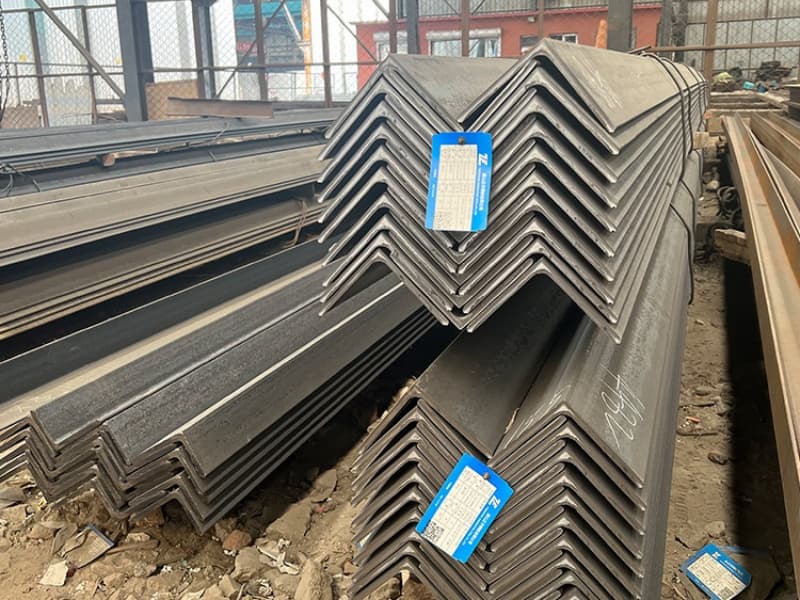
The MOQ is not a random number. It is the result of production economics and logistics. To understand what MOQ you can get, and at what price, you must first understand the factors that define the product itself. Let’s answer the foundational questions that shape both the product and the order quantity.
What is the price of 40x40x5 angle per kg?
You find a tempting price online for "40x40x5 angle." But this price is almost meaningless without context. Is it mild steel or marine-grade? Is it from a certified mill? The per-kg price is a final number influenced by many hidden variables.
There is no single price for a 40x40x5 angle per kg. The cost depends primarily on the material grade and certification. A common mild steel (MS) angle might cost $0.70-$0.90 per kg. A certified marine-grade angle (e.g., AH36) will cost significantly more, typically $1.10-$1.50+ per kg, due to controlled chemistry, testing, and normalization. Always request a quote specifying the exact grade (e.g., ASTM A36 vs. ABS AH36), the quantity, and the delivery terms to get an accurate price.
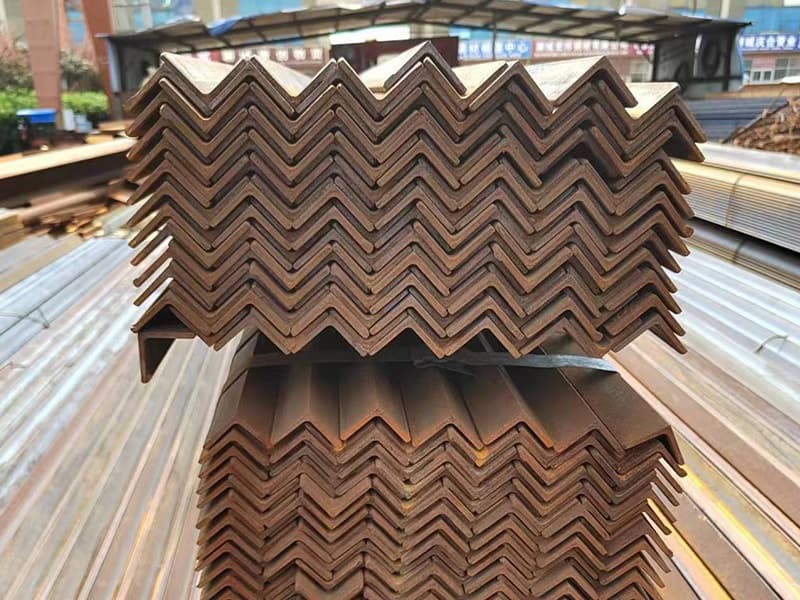
The price per kilogram is a useful metric for comparison, but only when comparing identical products. To use it wisely, you need to dissect what makes up that price.
The Layers of Cost in an Angle Bar
The price you see is the sum of the base material cost plus a premium for any special attributes.
- Base Material Cost: This is driven by the cost of iron ore/scrap and the energy required to produce basic steel.
- Grade and Certification Premium: This is the additional cost for tighter chemical control, mechanical testing, heat treatment, and the administrative cost of certification.
- Processing and Logistics Cost: This includes the cost of rolling the specific shape and getting it to your port.
Breaking Down the Price Difference
This table shows why two angles with the same dimensions can have wildly different prices.
| Price Influencing Factor | Impact on 40x40x5 Mild Steel (MS) Angle | Impact on Certified Marine Grade (e.g., AH36) 40x40x5 Angle | Reason for the Difference |
|---|---|---|---|
| Raw Material & Production | Made from standard commercial-grade steel billets. Produced in large, efficient runs for the construction market. | Made from specially formulated steel heats with controlled levels of elements like Carbon, Manganese, and micro-alloys. Often requires Normalizing heat treatment. | Marine steel requires more expensive raw material input and additional, energy-intensive processing steps. |
| Quality Control & Testing | Basic testing may be done on a batch basis. Certification is usually a simple Mill Test Certificate (MTC) 2.2. | Each heat is rigorously tested for chemistry, tensile strength, and Charpy impact toughness. Must be certified to a classification society standard (ABS, DNV, etc.). | Extensive testing adds labor, time, and cost. The certification itself from a class society involves audits and fees paid by the mill. |
| Market & Availability | High-volume commodity product. Many mills produce it. Price is very competitive and sensitive to global scrap prices. | Niche product with fewer approved mills. Production runs are scheduled less frequently, often against specific orders. | Lower production volume and higher specialization reduce economies of scale and increase the unit cost. |
| Supplier’s Supply Chain | Often available from local stockists or large trading houses with high inventory. | Usually sourced directly from a limited number of certified mills or specialized distributors. Requires more managed logistics. | The supply chain for certified material is shorter but more specialized, which can affect price and MOQ. |
In my daily work, when a client from Pakistan or the Philippines asks for a price for a 40x40x5 angle, my immediate follow-up question is: "What is the application?" If it’s for a non-critical warehouse rack, mild steel is correct and cost-effective. If it’s for a ship’s framing or an offshore platform walkway, marine grade is mandatory. Providing a mild steel price for a marine application would be irresponsible. We always clarify this first, because the price difference reflects a fundamental difference in safety and performance. Understanding this helps you budget correctly and avoid the dangerous trap of comparing apples to oranges.
How much is 1m3 of steel?
You are estimating the weight of a structure for shipping or calculating loads. The question "price per cubic meter" is common, but it’s a conceptual calculation, not a purchasing price. Steel is sold by weight (tons, kg), not by volume.
Steel is not sold by the cubic meter. It is purchased by weight (kilograms or metric tons). However, you can calculate the weight of 1 cubic meter (1m³) of steel for estimation purposes. The density of steel is approximately 7,850 kg/m³. Therefore, 1m³ of steel weighs about 7.85 metric tons. To find the cost, you would multiply this weight by the price per kg/ton of the specific steel product you need.
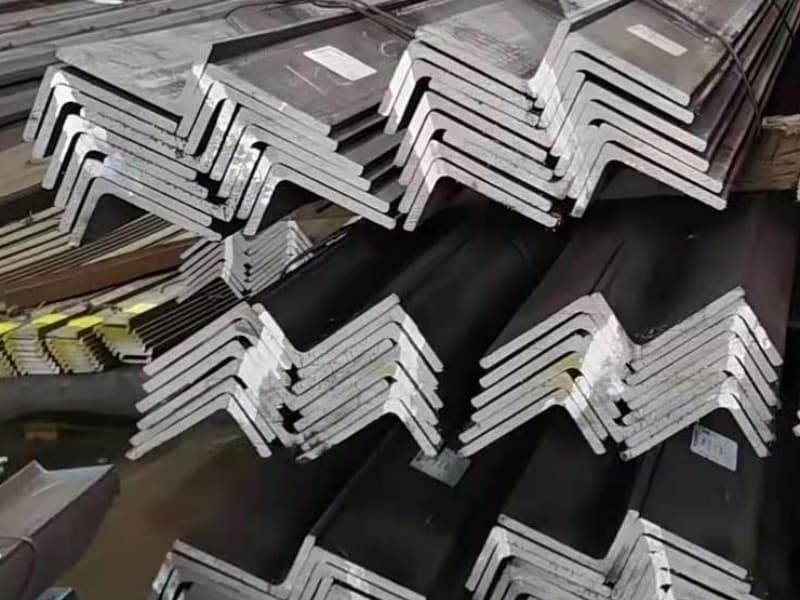
The value of knowing the weight per cubic meter is in conversion and estimation. It bridges the gap between the designer’s drawings (which think in volume) and the procurement officer’s world (which thinks in weight and cost).
Why Weight, Not Volume, Is the Commercial Unit
Steelmaking and trading have practical reasons for using weight.
- Production Measurement: Mills melt and cast metal by weight. The entire process is controlled and measured in tons.
- Variable Shape Density: A cubic meter of solid steel plate weighs the same as a cubic meter of steel angles, but the angles contain air gaps. Weight is a consistent measure of actual material.
- Logistics and Cost: Shipping, handling, and customs duties are all based on weight (Gross Tonnage, Net Weight).
Using the Density for Practical Calculations
Let’s see how this conversion works in real scenarios a shipyard or fabricator faces.
| Calculation Purpose | How to Use the Density (7850 kg/m³) | Example for Marine Angle Steel | Why It Matters |
|---|---|---|---|
| Estimating Material Weight from Drawings | Calculate the volume of steel in your design (in m³). Multiply by 7850 to get the estimated weight in kg. | You design a frame using 200 meters of 100x100x10mm angle. First, find the cross-sectional area of the angle (from tables, e.g., 0.0019 m²). Volume = 200m 0.0019 m² = 0.38 m³. Weight ≈ 0.38 7850 = ~2,983 kg. | This lets you create a preliminary Bill of Materials (BOM) weight for cost estimation and logistics planning before you get detailed quotes. |
| Comparing Material Efficiency | The density is constant, but different steel grades have different strength. You can compare the weight needed to achieve the same strength. | High-strength steel (e.g., AH40) has a higher yield strength than mild steel. You might use a thinner or smaller section, reducing the volume (m³) and thus the weight for the same job. | Allows you to evaluate if paying a premium for higher-grade steel can save money on total weight, shipping, and fabrication. |
| Calculating Loads & Capacities | In structural engineering, loads are often in kN (force). Converting steel weight to force requires density and gravity. | To calculate the dead load of a steel deck, you need the weight of the steel per square meter, which comes from the section’s volume and density. | Essential for safe structural design. It ensures the ship’s structure can support its own weight plus cargo. |
| Understanding Shipping Quotes | Freight rates for breakbulk or containers are often based on per-ton charges. Knowing your total weight in tons is key. | If your order of various angles totals 18,000 kg (18 tons), you know you need space for 18 tons of cargo, which helps determine if you need a full container (FCL) or can ship less-than-container (LCL). | Directly impacts your total landed cost. Accurate weight estimates prevent surprise freight charges. |
When clients like Gulf Metal Solutions plan their quarterly orders, they start with a volume of work (e.g., frames for 5 barges). They use these density-based calculations to estimate a total tonnage requirement. This estimated tonnage then directly informs the MOQ discussion. If their need is 15 tons, they know they need a supplier with an MOQ around or below that. Our "flexible MOQ" policy is designed exactly for this—to match the real-world needs of project-based businesses, not just the mill’s most convenient production run.
What are the standard MS angle sizes?
You are designing or sourcing. Knowing the standard sizes prevents costly custom rolling fees and delays. "MS" typically means Mild Steel, but the concept of standard sizes applies to structural angles in general.
Standard MS angle sizes follow established industrial dimensions. Equal angles (legs same length) commonly range from 20x20x3mm to 200x200x24mm. Unequal angles (legs different lengths) range from sizes like 30x20x3mm to 200x150x18mm. The dimensions are always listed as Leg x Leg x Thickness (e.g., 50x50x5mm). For marine applications, you must specify the steel grade (e.g., AH36) on top of the size; the sizes themselves are often the same as commercial standards, but the material properties are different.
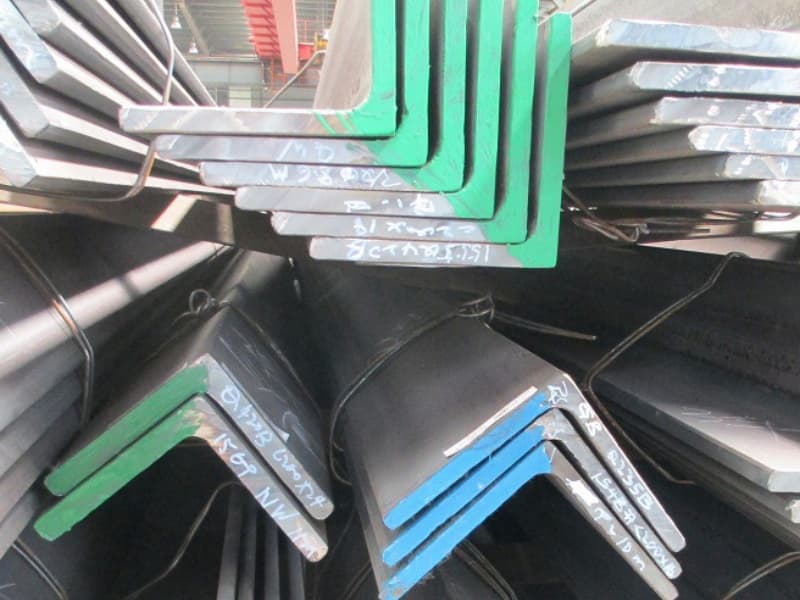
"Standard" means the mills have rolling equipment set up to produce these sizes efficiently. Deviating from these standards is possible but expensive. Your goal is to design with standard sizes in mind.
The Logic Behind Standard Sizing
Standards exist to create compatibility, predictability, and efficiency in the construction and manufacturing industries.
- Manufacturing Efficiency: Mills have rolls designed for specific size ranges. Producing a standard size is faster and cheaper.
- Design Consistency: Engineers use standard size tables with known sectional properties (area, moment of inertia) for calculations.
- Global Availability: Standard sizes are more likely to be in stock or produced by multiple mills worldwide.
Navigating Angle Size Standards
This table outlines the common size ranges and how to think about them for marine projects.
| Angle Type | Common Standard Size Range (Leg x Leg x Thickness) | Typical Applications (General & Marine) | Important Considerations for Marine Use |
|---|---|---|---|
| Small Equal Angles | 20x20x3mm, 25x25x3mm, 30x30x3mm, 40x40x5mm, 50x50x5mm. | Light framing, braces, supports, brackets, handrails, ladder frames. | Even small angles on ships need to be marine-grade if they are part of the structure. Corrosion resistance is critical in salt air environments. |
| Medium Equal Angles | 65x65x6mm, 75x75x6mm, 80x80x6mm, 100x100x8mm, 100x100x10mm. | Primary ship frames, stiffeners for bulkheads and decks, structural supports for machinery. | These are very common in shipbuilding. Availability in marine grades (AH/DH/EH) is good, but MOQ may apply. |
| Large Equal Angles | 120x120x10mm, 150x150x12mm, 150x150x16mm, 200x200x16mm, 200x200x24mm. | Heavy framing, large brackets, foundations for major equipment, crane pedestals. | May require sourcing from specific mills. Lead time can be longer. Per-ton price may be higher due to lower production volume. |
| Unequal Angles | 30x20x3mm, 45x30x4mm, 75x50x6mm, 100x75x8mm, 150x90x12mm, 200x150x18mm. | Used where one leg needs more strength or for specific connection details. Common in custom fabrications and complex brackets. | Ensure you specify the orientation (long leg vertical/horizontal) on drawings. Not all sizes are readily available in marine grade from stock. |
A key insight from supplying to shipyards in Vietnam and Thailand is that standardization saves time and money. If your design calls for a 52x52x5.5mm angle, you will pay a huge premium for custom rolling and wait weeks. If you adjust the design to use a standard 50x50x5mm or 50x50x6mm angle, the material is cheaper, available faster, and easier to replace if needed. When we discuss OEM available, it often refers to cutting, drilling, or welding to your print, not custom-rolling non-standard sections. For marine projects, always check with your supplier about the most readily available standard sizes in the required marine grade before finalizing designs.
What is the MPa of mild steel?
You see "MPa" on certificates and drawings. It is the most important number for a structural engineer. Knowing the MPa of your steel tells you how much load it can carry. Confusing mild steel with marine steel on this property is a fundamental error.
The MPa (Megapascal) of mild steel refers to its yield strength, the stress at which it begins to deform permanently. Standard mild steel (like ASTM A36 or S235JR) has a minimum yield strength of 235 to 250 MPa. In contrast, common marine-grade steels like AH36/DH36 have a higher minimum yield strength of 355 MPa. The "36" in AH36 stands for 36 ksi (kilo-pounds per square inch), which converts to approximately 355 MPa.
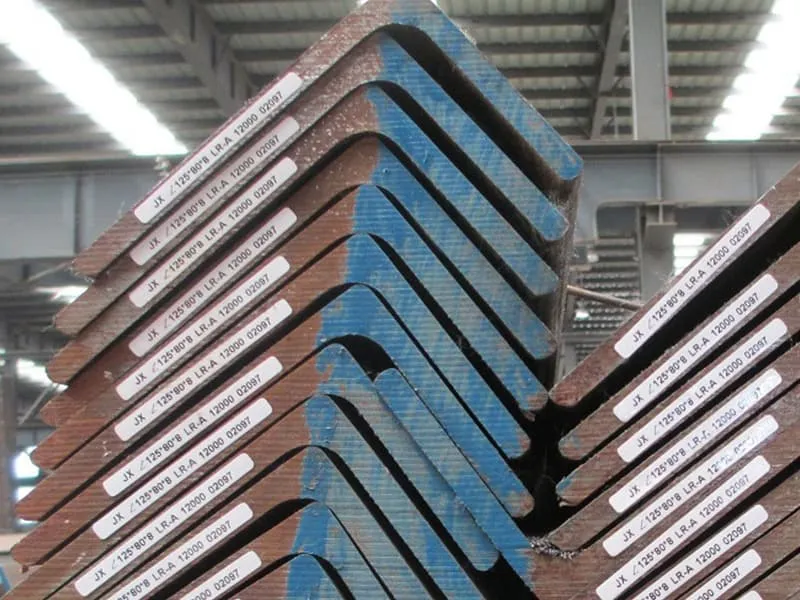
MPa is the language of structural integrity. It is a direct measure of performance. Choosing a steel with insufficient MPa for the application is an engineering failure.
Yield Strength vs. Tensile Strength: The Critical Difference
Two key MPa values are on a certificate, and they mean different things.
- Yield Strength (Rp0.2, MPa): This is the design strength. Engineers use this value to size beams and columns. It is the stress limit to avoid permanent deformation.
- Tensile Strength (Rm, MPa): This is the ultimate strength before breaking. It is higher than yield strength and represents a safety margin against catastrophic failure.
Comparing MPa Across Common Steel Types
This table shows how MPa values dictate material selection for different jobs.
| Steel Type / Grade | Typical Minimum Yield Strength (MPa) | Typical Tensile Strength (MPa) | Structural Implication & Typical Use |
|---|---|---|---|
| Mild Steel (e.g., S235JR, A36) | 235 – 250 MPa | 360 – 500 MPa | Adequate for many static, low-stress construction applications (buildings, non-critical frames). Not suitable for primary ship hull structures. |
| Marine Grade Steel (AH/DH/EH36) | 355 MPa | 490 – 620 MPa | The standard for ship hulls, offshore structures. The 355 MPa yield allows for lighter, stronger designs compared to mild steel. Essential for dynamic ocean loads. |
| Higher-Strength Marine Steel (AH/DH/EH40) | 390 MPa | 510 – 650 MPa | Used where weight savings are critical (e.g., high-speed vessels, upper decks of large ships) or for higher design loads. |
| High-Strength Low-Alloy (HSLA) Steels | 450 – 690+ MPa | 550 – 850+ MPa | Used in specialized applications like advanced naval vessels, where maximum strength-to-weight ratio is needed. |
| Stainless Steel 304/316 | ≥ 205 MPa (Annealed) | ≥ 515 MPa | Chosen for corrosion resistance, not primarily for yield strength. Its MPa is adequate for many marine fittings and components. |
For a rational, results-driven buyer, the MPa is a non-negotiable specification. When Gulf Metal Solutions orders Marine Angle Steel for a barge project, the classification society rules mandate a minimum yield strength (e.g., 355 MPa for DH36). If they bought mild steel with 235 MPa yield, the barge’s frames would be dangerously under-strength. This is why certification is so vital—the MTC provides the tested proof that the steel meets the claimed MPa. As a supplier, we cannot stress enough: Do not substitute mild steel for marine-grade steel based on size alone. The identical-looking 100x100x10 angle in mild steel and in AH36 are completely different products with a 50% difference in load-bearing capacity. Your project’s safety depends on this distinction.
Conclusion
The MOQ for marine angle steel depends on grade and supplier flexibility. To navigate this, understand the true cost drivers (grade, certification), use weight for calculations, design with standard sizes, and never compromise on the MPa strength your project requires.