
Your ship design is ready, but you are unsure which angle size to specify. A small error in thickness or width can compromise the entire structure’s strength. I’ve seen projects delayed because the specified angle was a non-standard size, causing sourcing nightmares and cost overruns.
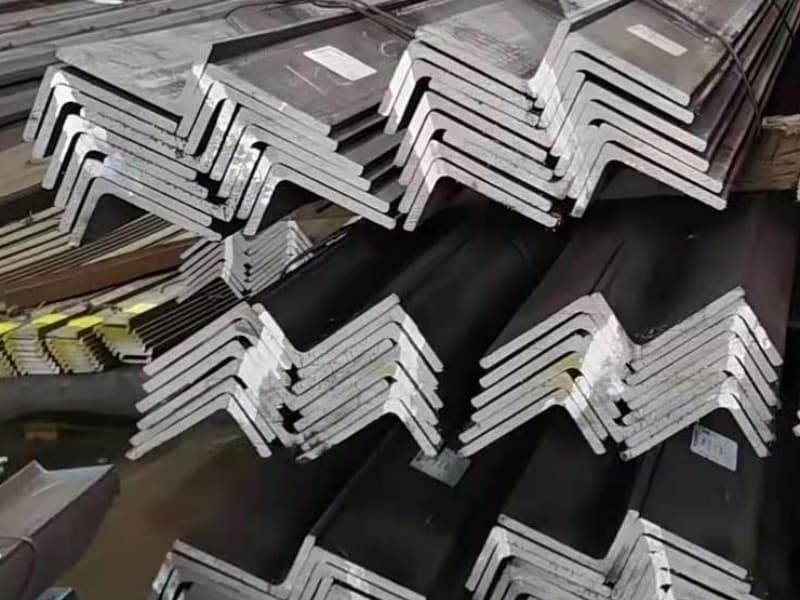
Marine angle steel follows standardized dimensions for width and thickness to ensure global availability and structural reliability. Common widths (leg lengths) range from 20mm to 200mm, and thicknesses typically range from 3mm to 24mm, proportional to the width. These standards are defined in specifications like EN 10056-1, ASTM A36, or JIS G3192. For marine use, the critical factor is that the steel meets the required grade (e.g., AH36, DH36) for strength and toughness, not just the dimensional standard.
You now understand that standards exist for a reason. But to use them effectively in procurement and design, you must get specific. The following questions drill down into the most common practical queries about angle iron. Answering them will give you the concrete knowledge needed to order with confidence.
How thick is standard angle iron?
You hear "angle iron" and picture a common item. But its thickness is not random. Using an angle that is too thin for your load can lead to buckling. Using one that is too thick wastes money and adds unnecessary weight.
Standard angle iron thickness varies with its size. For common equal angles, thickness typically ranges from 3mm for small sizes (e.g., 25x25mm) to 24mm for large sizes (e.g., 200x200mm). There is no single "standard" thickness; it is part of a standardized size series where thickness increases as the leg length increases to maintain structural performance. You must always refer to the full size designation: Leg x Leg x Thickness (e.g., 100x100x10mm).
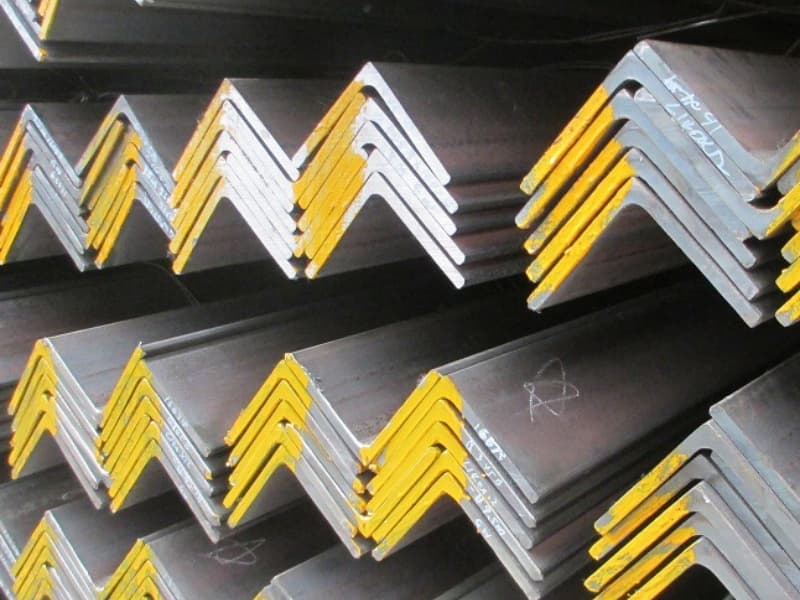
Thickness is the dimension that resists bending and buckling. Its relationship with leg length is governed by engineering principles and manufacturing practicality.
The Relationship Between Leg Length and Thickness
Think of an angle as a beam. A longer beam (leg) needs to be thicker to support itself and applied loads without failing.
- Structural Logic: The thickness provides the "depth" of material to resist bending stress. For a given leg length, a thicker angle is stronger but heavier.
- Manufacturing Constraints: Rolling mills have limits on the ratio they can produce. An extremely thin 200mm leg would be impossible to roll without warping.
A Guide to Common Thickness Ranges
This table shows typical thicknesses you can expect for different categories of standard equal angles.
| Angle Size Category (Leg Length) | Typical Thickness Range | Example Sizes (Leg x Leg x Thickness) | Common Marine Applications for This Size Range |
|---|---|---|---|
| Small Angles (20mm – 50mm) | 3mm – 6mm | 25x25x3mm, 30x30x3mm, 40x40x5mm, 50x50x5mm, 50x50x6mm. | Light brackets, handrail supports, ladder frames, small stiffeners for non-critical panels. |
| Medium Angles (65mm – 100mm) | 5mm – 10mm | 65x65x6mm, 75x75x6mm, 80x80x8mm, 90x90x9mm, 100x100x8mm, 100x100x10mm. | Primary shipbuilding range. Main and secondary frames, deck stiffeners, bulkhead stiffeners, foundation brackets. |
| Large Angles (120mm – 200mm) | 8mm – 24mm | 120x120x10mm, 130x130x12mm, 150x150x12mm, 150x150x16mm, 180x180x18mm, 200x200x16mm, 200x200x24mm. | Heavy foundation frames, large hatch coamings, strongbacks, major support girders, and in offshore modules. |
A crucial point for marine buyers is tolerance. The standard allows a slight variation in thickness (usually ±0.5mm to ±1mm depending on the size and standard). For critical structural calculations, engineers use the nominal thickness. However, a reliable supplier ensures the actual thickness is consistently close to the nominal value. Inconsistency here was a pain point for Gulf Metal Solutions with their previous suppliers—variations in thickness affect welding and fit-up. When we supply, the mill’s certification confirms the dimensions are within the standard’s tolerance, providing the predictable quality that project managers need.
What is the price of 40x40x5 angle per kg?
You are comparing quotes. The price per kg for a 40x40x5 angle seems straightforward, but it’s a trap for the unwary. A low price might mean inferior steel or hidden costs. You must compare like with like.
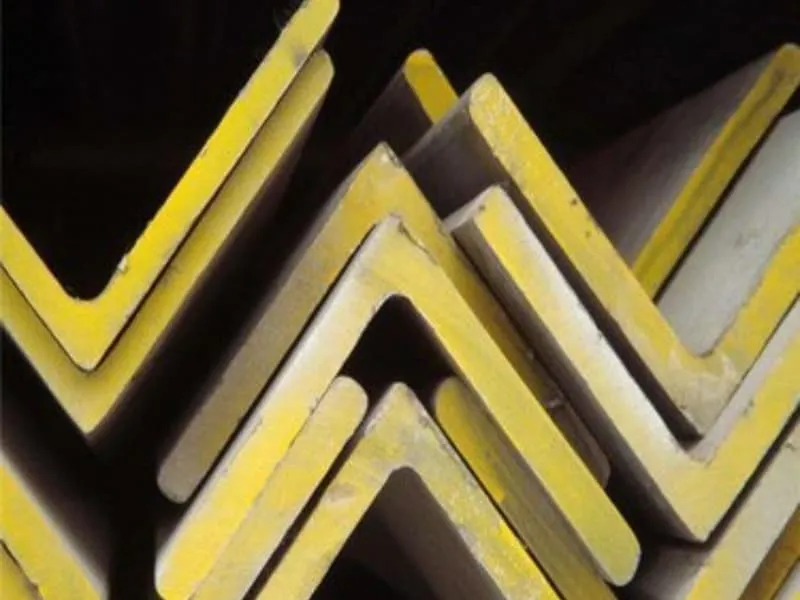
The price per kg for a 40x40x5 angle varies significantly based on material grade and certification. A common mild steel (MS) 40x40x5 angle may cost $0.70-$0.95 per kg. A certified marine-grade angle (e.g., AH36 or DH36) of the same dimensions will cost $1.10-$1.60+ per kg due to stringent chemistry control, normalization heat treatment, and classification society certification. Always confirm the grade and request a formal quote based on your required specifications and quantity.
The price per kilogram is a useful metric, but only when the underlying product is identical. For a 40x40x5 angle, the "product" is defined by much more than its shape.
Deconstructing the Cost of a 40x40x5 Angle
Two angles with identical dimensions can have completely different cost structures.
- Material Grade Cost: This is the biggest differentiator. The cost of producing a heat of AH36 steel is higher than producing a heat of ordinary mild steel.
- Processing and Certification Cost: The steps of testing, heat treating, and getting a surveyor’s stamp add fixed costs per ton.
- Market and Logistics: The base cost of steel raw materials fluctuates, and shipping from the mill to your port adds to the final "landed" cost per kg.
A Side-by-Side Cost Comparison
This table breaks down why the price differs and what each cost tier buys you.
| Cost Component | Impact on Mild Steel (MS) 40x40x5 | Impact on Marine Grade (AH36) 40x40x5 | Implication for Your Project |
|---|---|---|---|
| Base Steel Production | Produced from general-purpose steel billets in high-volume runs. Aim is low cost per ton. | Produced from a controlled chemistry heat with specific alloys for strength and toughness. Often requires normalization after rolling. | Marine grade steel has inherently better mechanical properties and through-thickness performance. |
| Quality Assurance & Testing | May have batch testing. Certificate is usually a simple Mill Test Certificate (MTC 2.2). | Mandatory testing of each heat for chemistry, tensile strength, and impact toughness. Must supply a Type 3.1/3.2 MTC with traceable heat number. | The marine grade certificate is a legal guarantee of performance. It is required for classification society approval of your vessel. |
| Certification & Traceability | Little to no premium for certification. Traceability is often to a batch, not a specific heat. | Includes the cost of mill audits and approval by classification societies (ABS, DNV, LR). Full traceability to a unique heat number is mandatory. | This traceability allows you to verify the material’s origin and is essential for insurance and liability in marine construction. |
| Market Positioning & Availability | Commodity product. High competition keeps margins low. Often available from stock. | Niche, performance product. Fewer approved mills. Often made to order, especially for smaller quantities. | You may pay a premium for availability and the assurance of a certified supply chain. The risk of using uncertified material is unacceptably high. |
When a client from Saudi Arabia or Mexico asks for this price, I always ask for context. If they need it for a ship’s interior non-structural cabinet, mild steel is fine. If it’s for a small stiffener on a hull plate, it must be marine grade. Providing a single price without this clarification is misleading. Our "competitive factory price" refers to the marine-grade product—we offer the best value within the correct, certified product category, not the absolute cheapest product on the market.
What is the MS angle 65 65 6?
You see this code on a drawing or a supplier’s list. It looks like a product SKU. Understanding this notation is the basic literacy of ordering steel. Misreading it leads to ordering the wrong material.
The "MS angle 65 65 6" refers to a Mild Steel equal angle with legs 65 millimeters long and a uniform thickness of 6 millimeters. The "MS" stands for Mild Steel, indicating a general-purpose, low-carbon steel grade like ASTM A36 or S235JR. It is a standard structural size used in construction and fabrication. For marine applications, you would need to specify a marine grade (e.g., AH36) in the same dimensions: 65x65x6mm.
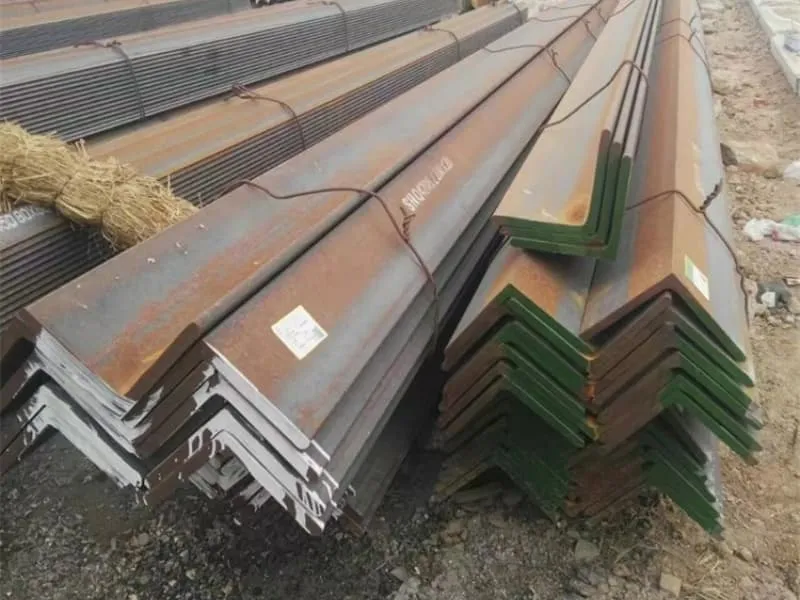
This notation is a compact technical description. Each part of the code "65 65 6" gives you essential information for identification, calculation, and ordering.
Decoding the Angle Designation
The three numbers always appear in the same order for equal angles.
- First Number (65): This is the length of the first leg in millimeters.
- Second Number (65): This is the length of the second leg. Since they are equal, this is an equal angle.
- Third Number (6): This is the thickness of the legs in millimeters.
Key Properties of a 65x65x6 Angle
Knowing the size allows you to look up or calculate its important engineering properties.
| Property | Description & Typical Value for 65x65x6 MS Angle | Why This Property Matters |
|---|---|---|
| Sectional Area | The cross-sectional area of the steel. For 65x65x6, it is approximately 7.55 cm² (or 755 mm²). | Used to calculate the weight per meter and the axial load capacity (tension/compression). |
| Weight per Meter | The linear weight. For mild steel, a 65x65x6 angle weighs about 5.93 kg/m. (Calculated: Area (m²) x Density (7850 kg/m³)). | Critical for estimating material tonnage, calculating shipping costs, and determining structural dead load. |
| Moment of Inertia (Ix, Iy) | A measure of the section’s resistance to bending. For this angle, Ix = Iy ≈ 34.5 cm⁴. | Engineers use this value to calculate how much the angle will deflect under a load. It determines suitability as a beam. |
| Radius of Gyration (r) | A measure used in buckling calculations. For this angle, r ≈ 1.99 cm. | Essential for designing compression members (struts, columns) to prevent sudden buckling failure. |
The critical takeaway for marine procurement is the prefix "MS." In a shipyard, if a drawing says "65x65x6 angle," the detailer might assume mild steel. The project specification must override this and state "65x65x6mm Angle, Grade AH36" or similar. This small detail makes the difference between a commodity construction item and a classified marine structural component. Our clients in Thailand and the Philippines are very careful about this; they send us detailed material specifications that explicitly call out the marine grade to avoid any ambiguity in the supply chain.
What is the weight of a 50x50x3mm angle?
You need to calculate shipping costs or the load on a supporting structure. The weight is not a guess; it is a precise value derived from the angle’s geometry and the density of steel. An accurate weight is fundamental for logistics and engineering.
The theoretical weight of a 50x50x3mm mild steel angle is approximately 2.33 kilograms per linear meter. This is calculated using its cross-sectional area and the density of steel (7850 kg/m³). In practice, the actual weight may vary slightly due to manufacturing tolerances and the radius at the heel (inner corner). For marine-grade angles of the same size, the weight is identical; the difference is in the material properties, not the density.
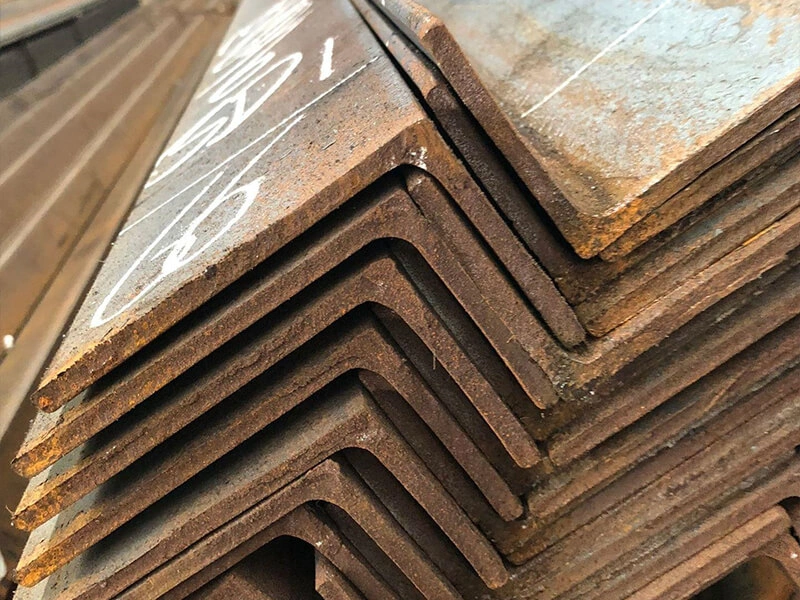
Weight is a function of volume and density. For a standard shape like an angle, we can use a formula or a standard table. Understanding how it’s derived helps you verify information and calculate for non-standard lengths.
How to Calculate the Weight Yourself
You can perform this calculation with basic math. It’s a powerful skill for double-checking supplier data.
- Find the Cross-Sectional Area: For an equal angle, a simplified formula is: Area = (Leg1 + Leg2 – Thickness) Thickness. For 50x50x3mm: (50 + 50 – 3) 3 = 97 * 3 = 291 mm².
- Convert and Apply Density: Convert mm² to m² (291 / 1,000,000 = 0.000291 m²). Multiply by density: 0.000291 m² * 7850 kg/m³ = 2.284 kg/m. This is close to the standard table value of ~2.33 kg/m, which accounts for the rounded inner corner.
Practical Applications of Knowing the Weight
This single number is used in multiple critical project phases.
| Project Phase | How the Weight per Meter is Used | Example with 50x50x3mm Angle |
|---|---|---|
| Material Estimation & Costing | Multiply the weight per meter by the total length required to get the total order weight in kg. | You need 850 meters of 50x50x3 angle for various stiffeners. Total weight ≈ 850 m * 2.33 kg/m = 1,980.5 kg (≈ 2 tons). |
| Logistics & Shipping Planning | The total weight determines if you need a full container load (FCL) or less-than-container load (LCL) and calculates freight charges. | Your 2-ton order of angles, plus other items, helps determine the total cargo weight for booking shipping space. |
| Structural Load Calculation | The self-weight of the steel is part of the "dead load" the supporting structure must carry. | When designing a deck that will have these angles welded to it, the engineer adds their weight (kg/m²) to the total load. |
| Lifting & Handling Planning | Crane operators and riggers need to know the weight of bundles to select the correct lifting gear. | A bundle of 50 pieces, each 6 meters long, weighs: 50 6m 2.33 kg/m = ~699 kg. They will choose slings rated for over 700 kg. |
In the real world, mills and suppliers publish standard weight tables for all common sizes. When we prepare a quotation for Marine Angle Steel, we always include the estimated total weight based on these standard values. This transparency is part of good communication. For a buyer like Gulf Metal Solutions, who values clear and fast response, getting a quote with a clear breakdown of sizes, quantities, weights, and a total tonnage helps them make quick, rational decisions for their projects. Knowing how to calculate or verify these weights makes you a more informed and less vulnerable buyer.
Conclusion
Marine angle steel standards provide predictable dimensions and weights. Success lies in specifying the correct marine grade within these standards, understanding the true cost drivers, and using accurate weight calculations for budgeting and logistics.