
You receive a shipment of angle steel for ship frames, but the pieces are visibly bowed or twisted. Trying to fit them causes hours of rework, burning your schedule and budget. This common problem has one root cause: failure to control straightness tolerance.
To check the straightness tolerance of angle steel, follow these steps: First, refer to the relevant standard (e.g., EN 10056-1, ASTM A6) for the allowable tolerance, typically a maximum deviation (e.g., 0.15% of length). Then, place the angle on a flat surface or stretch a taut string along its length. Measure the maximum gap between the steel and the reference line/surface with a feeler gauge or ruler. Compare this measurement to the calculated tolerance limit for the piece’s length.
You now know the basic inspection method. But to use it effectively, you must understand the rules you are checking against and the reasons behind them. Straightness is not an abstract idea; it is a defined, measurable specification that impacts fabrication. Let’s explore the standards, methods, and causes to make you an expert in this critical quality parameter.
What is the standard for straightness tolerance?
You suspect an angle is bent, but is it bent enough to reject? Without a defined standard, any argument with a supplier is subjective. The standard provides the objective, legally referenced rule that separates acceptable from defective.
The standard for straightness tolerance in angle steel is defined in international material specifications. For hot-rolled steel angles, the most common reference is EN 10056-1 (European Standard). It specifies the straightness tolerance as a maximum deviation of 0.15% of the length for angles up to 12 meters, with a minimum allowance (e.g., 3mm). Other standards like ASTM A6 (American) have similar but not identical limits, often based on the weight per foot of the section. The applicable standard should be stated in your purchase order.
Standards exist to create a common language between buyer and seller. They balance the need for precision with the realities of industrial manufacturing.
Key International Standards and Their Rules
Different regions and applications may reference different documents, but the principle is the same.
- EN 10056-1: This is a widely accepted global benchmark for structural steel sections, including angles.
- ASTM A6/A6M: This is the American standard for general requirements for rolled structural steel.
- JIS G 3192: This is the Japanese standard for dimensions, weight, and tolerances for hot-rolled steel sections.
A Comparison of Straightness Tolerance Rules
This table outlines the typical tolerance rules from these major standards.
| Standard | Typical Straightness Tolerance Rule | How to Calculate the Allowable Deviation | Notes & Application |
|---|---|---|---|
| EN 10056-1 | Maximum deviation ≤ 0.15% of the length (L). Minimum permissible deviation is 3 mm for L ≤ 5m, and 5 mm for L > 5m. | For a 10-meter angle: 0.15% of 10,000mm = 15mm. This is greater than the 5mm minimum, so the allowable bow is 15mm. | This is the most commonly referenced tolerance in international trade for structural angles. It applies to both legs of the angle. |
| ASTM A6 | Tolerance varies based on the weight per foot of the section. Heavier sections have tighter tolerances. For many common angles, the tolerance is 1/8 inch per 5 feet (≈ 3.1mm per 1.5m). | For a 20-foot (6.1m) angle: (6.1m / 1.5m) * 3.1mm ≈ 12.5mm allowable bow. You must check the specific table in ASTM A6 for the exact weight class. | Commonly used in North America and for projects specifying ASTM material. The calculation is less straightforward than a simple percentage. |
| JIS G 3192 | Similar principle to EN. Straightness tolerance is generally 0.15% of the length or 5mm, whichever is greater. | For an 8-meter angle: 0.15% of 8000mm = 12mm. This is greater than 5mm, so the allowable bow is 12mm. | Often referenced in projects across Asia. The values are very close to EN standards. |
A vital point from my experience: The standard must be agreed upon in the contract. When we supply Marine Angle Steel to a project in Qatar that follows DNV rules, the straightness tolerance is often explicitly stated in the project’s technical specification, which overrides the general EN standard. For a buyer, simply knowing "EN 10056-1" is powerful. It allows you to put a clear, numerical requirement in your purchase order: "Straightness tolerance to comply with EN 10056-1 (0.15% of length)." This removes ambiguity and gives you a solid basis for inspection and potential claim.
How to inspect straightness?
You have the standard and a tape measure. Now you need a reliable, practical method. A poor inspection technique will give you false results, leading you to accept bad steel or reject good steel.
To inspect the straightness of angle steel, use the "String Line Method" or the "Surface Plate Method." For the String Line Method, stretch a taut wire or nylon string along the length of the angle. Measure the maximum perpendicular gap between the string and the leg’s edge with a ruler or feeler gauge. For the Surface Plate Method, place the angle on a verified flat surface and check for rocking; use feeler gauges to measure gaps under the leg.
Inspection is about creating a reliable reference and taking accurate measurements. The method you choose depends on the equipment available and the required precision.
Two Practical Field Inspection Methods
You don’t always need a laser scanner. These two methods are robust and widely used in shipyards and fabrication shops.
- The String Line Method: This is ideal for long lengths and checking overall bow (sweep).
- The Surface Plate/Table Method: This is better for checking twist and local straightness over shorter sections.
Step-by-Step Inspection Guide
Follow this detailed guide to perform a correct inspection.
| Inspection Method | Required Tools | Step-by-Step Procedure | What to Measure & Record |
|---|---|---|---|
| String Line Method (For Bow/Sweep) | Strong string or wire, two stands or clamps, a ruler or feeler gauge set, a tape measure. | 1. Support the angle at two points near its ends to avoid sag. 2. Stretch the string taut along the entire length, touching one end of the angle’s leg. 3. Move along the length and find the point with the largest gap between the string and the leg’s edge. 4. Measure this maximum gap perpendicular to the string. |
Maximum Deviation (d): The largest gap you measure in millimeters. Length (L): The total length of the piece you are checking. Compare (d) to the allowable tolerance from the standard. |
| Surface Plate Method (For Twist & Local Straightness) | A large, certified flat surface (granite table, heavy steel plate), feeler gauges, spirit level (optional). | 1. Clean the surface and the angle’s legs. 2. Place the angle on the flat surface. 3. Press down on one end. Check if the other end rocks. If it rocks, there is twist or local curvature. 4. Try to insert feeler gauges under the heel (corner) or leg along its length. Note the maximum thickness of gauge that fits. |
Gap Measurement: The thickness of the largest feeler gauge that can be inserted under the leg, indicating local deviation from flatness. This checks for "hollowness" or twist across the section. |
| Visual Inspection for Obvious Defects | Marking paint/chalk. | Before detailed measurement, sight along the length of each leg. Mark any visible humps, dips, or twists with chalk. This helps locate problem areas for focused measurement. | Location of Defects: Mark the sections that appear worst. This guides where to take your precise measurements with the string or surface plate. |
In a busy shipyard in Thailand or the Philippines, the string line method is the most practical for long sections arriving on a truck. I’ve seen quality inspectors do this in minutes. They reject a bundle on the spot if the bow exceeds the tolerance, because they know it will cause fit-up problems during panel assembly. This is part of the "quality inconsistency" pain point our client Gulf Metal Solutions faced. A supplier that controls straightness at the mill and during packaging (using proper supports) delivers steel that is ready for fabrication, not rework. As a buyer, you can and should perform this simple check upon receipt to validate the supplier’s quality claims.
What is straightness tolerance?
The term "tolerance" itself can be confusing. It is not the ideal condition, but the permitted deviation from it. Understanding this definition is key to applying the standards correctly.
Straightness tolerance is the maximum permissible deviation of a longitudinal element (like an angle leg) from a perfectly straight line. It is not the average bend, but the single largest gap measured over the full length. In engineering drawings, it is often symbolized by a straight line inside a frame. For hot-rolled steel angles, this tolerance compensates for inherent minor distortions from cooling and handling, ensuring the product is fit for its structural purpose without requiring excessive corrective force during fabrication.
Straightness tolerance is a geometric dimensioning and tolerancing (GD&T) concept. It defines a tolerance zone within which the entire edge must lie.
Visualizing the Tolerance Zone
Imagine two perfectly straight, parallel lines running the length of the angle. The actual edge of the steel must fall between these two lines.
- The Tolerance Zone: The space between the two parallel lines. The distance between them is the tolerance value (e.g., 15mm for a 10m angle).
- The Actual Edge: The real, physical surface of the angle leg. It can waver, but it cannot cross outside the boundary lines.
Key Characteristics of Straightness Tolerance
This table clarifies important aspects often misunderstood.
| Characteristic | Explanation | Practical Implication for Angle Steel |
|---|---|---|
| It is a Maximum Value | The tolerance defines the worst-case allowable deviation. The entire length must be within the zone. A single local hump that exceeds the limit makes the piece non-conforming, even if the rest is straight. | You measure the largest gap, not an average. One bad section fails the whole piece for precision work. |
| It is Independent of Length | The tolerance value depends on length (e.g., 0.15% of L), but the concept is the same. A longer piece is allowed a larger absolute deviation because it is harder to produce and handle perfectly straight. | A 5mm bow on a 3m angle might be unacceptable (exceeds tolerance), but the same 5mm bow on a 12m angle is likely well within tolerance. |
| It Applies to the Feature | For an equal angle, straightness applies to each leg individually. An angle can have a straight leg but be twisted; these are different tolerances. | You should check both legs. One leg could be within tolerance while the other is bent, affecting the angle’s usability. |
| It is About Usability, Not Perfection | The tolerance is set so that the steel can be used in fabrication (cut, welded, bolted) without causing assembly problems or compromising structural integrity. | Steel within tolerance can be installed without force. Steel outside tolerance requires heat straightening or may create residual stresses in the final structure. |
This definition matters when you have a dispute. If a supplier says, "A little bend is normal," you can respond with the specific tolerance from the agreed standard. It moves the discussion from opinion to fact. In our business, we know the mills’ processes are designed to meet these tolerances. When we offer SGS inspection support, one of the things they check is dimensional compliance, including straightness, against the purchase order and the relevant standard. This provides an objective, third-party record that the steel delivered meets the defined tolerance for straightness.
What are the factors that determine the straightness tolerance of a material?
Why is one standard 0.15% and not 0.10%? The tolerance is not arbitrary. It is a compromise determined by several physical and economic factors. Knowing these helps you understand the limits of what you can reasonably demand.
The factors determining straightness tolerance are: 1) Manufacturing Process Capability (rolling mill precision, cooling bed design), 2) Material Properties (residual stress from uneven cooling), 3) Handling and Storage (improper support causes permanent set), 4) The Product’s Intended Use (structural vs. decorative), and 5) Economic Feasibility (tighter tolerances drastically increase cost and reduce yield). Standards are set at a level that is consistently achievable by modern mills for general structural use.
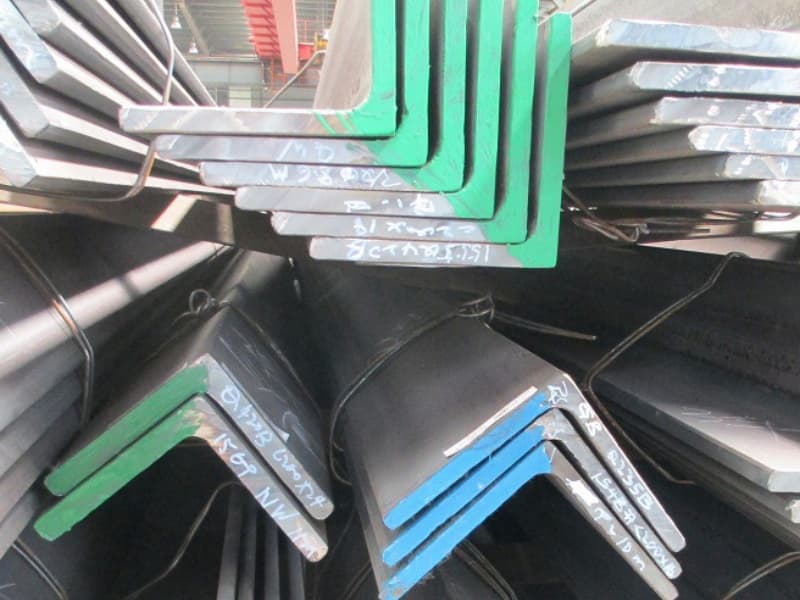
Tolerance is the buffer between ideal design and practical production. Each factor pushes or pulls on the size of that buffer.
The Five Key Influencing Factors
These factors interact to set the practical limit on how straight rolled steel can be.
- Manufacturing (Rolling & Cooling): This is the primary source of deviation. The steel is plastic at high temperatures and can sag or twist as it cools.
- Material Science (Residual Stress): Inhomogeneous cooling creates internal stresses that can cause the steel to warp over time, even after it leaves the mill.
- Post-Production Handling: This is where good steel can be ruined before it reaches you.
- Functional Requirements: A handrail has different straightness needs than a critical engine foundation.
- Cost and Yield: Tolerances that are too tight lead to high rejection rates, raising the price for everyone.
How Each Factor Impacts the Final Product
The table below details how these factors work and what they mean for you as a buyer.
| Determining Factor | How It Affects Straightness | Reason Behind Industry Tolerance Levels | What Buyers Can Control |
|---|---|---|---|
| Rolling Mill Process | Worn rolls, uneven pressure, or misalignment can imprint a curve into the hot steel. The design of the cooling bed (straight vs. roller) is critical for maintaining straightness as the steel solidifies. | Modern mills with advanced cooling beds can achieve the 0.15% tolerance consistently. Older or less maintained equipment may struggle, leading to higher variation. | Source from reputable, certified mills. Our long-term cooperation with such mills is a direct strategy to minimize this risk. |
| Residual Stresses & Cooling | The outer surface cools and contracts faster than the core. This can create internal stresses that cause bowing (camber) or twisting. All hot-rolled products have some residual stress. | The standard tolerance accounts for this inherent, unavoidable phenomenon. Normalizing heat treatment can reduce these stresses, which is part of why marine grades are often normalized. | Specify normalized delivery for critical applications. This process relieves internal stresses and improves straightness stability. |
| Handling & Storage | The #1 cause of damage after the mill. Lifting with a single point, throwing bundles, or storing long angles without proper support will bend them beyond the mill’s tolerance. | The mill’s responsibility ends once the product is properly packaged and leaves their gate. Damage in transit or at the buyer’s yard is a separate issue. | Inspect upon receipt. Use proper lifting (spreader beams, multiple slings). Store flat on adequate supports. The excellent packaging Gulf Metal Solutions noted is our first defense against handling damage. |
| Intended Application | A frame for a ship’s hull requires good straightness for easy fit-up and welding. A concrete reinforcing bar has a much larger straightness tolerance. | Standards like EN 10056 are written for structural sections. They set a tolerance suitable for bolted and welded construction. | Ensure the standard you reference (e.g., EN 10056) matches your application. Don’t apply a decorative metal tolerance to a structural component. |
| Economic Trade-off | To achieve a tolerance of 0.05%, a mill would need to slow production, perform more straightening, and reject more pieces. This cost would be passed on as a significant price premium. | The 0.15% tolerance represents the "best value" point where quality is sufficient for most structural uses without making the product prohibitively expensive. | For most marine projects, standard tolerance is adequate. If you need tighter tolerance (e.g., for a machine guide rail), you must specify it and expect to pay more. |
Understanding these factors makes you a smarter buyer. You know that straightness is not just a mill issue. When you receive steel, you must handle it with care to preserve its condition. You also know that demanding an extremely tight tolerance without a genuine need will increase your costs. Our role is to source from mills that consistently hit the standard tolerance and to package and advise on handling to protect that straightness all the way to your fabrication line. This end-to-end control is what delivers the "stable quality" that builds long-term partnerships with results-driven clients.
Conclusion
Checking angle steel straightness requires knowing the standard, applying a correct inspection method, understanding what tolerance means, and recognizing the factors that influence it. This disciplined approach ensures the steel you fabricate with is precise, workable, and fit for purpose.