
You import bulb flat steel from China, but the certificates mention unfamiliar standards like "GB/T." You worry: does this steel meet international project specifications? Confusion over Chinese standards can stall your project and create legal risks. I have seen buyers reject good steel simply because they didn’t understand the standard system.
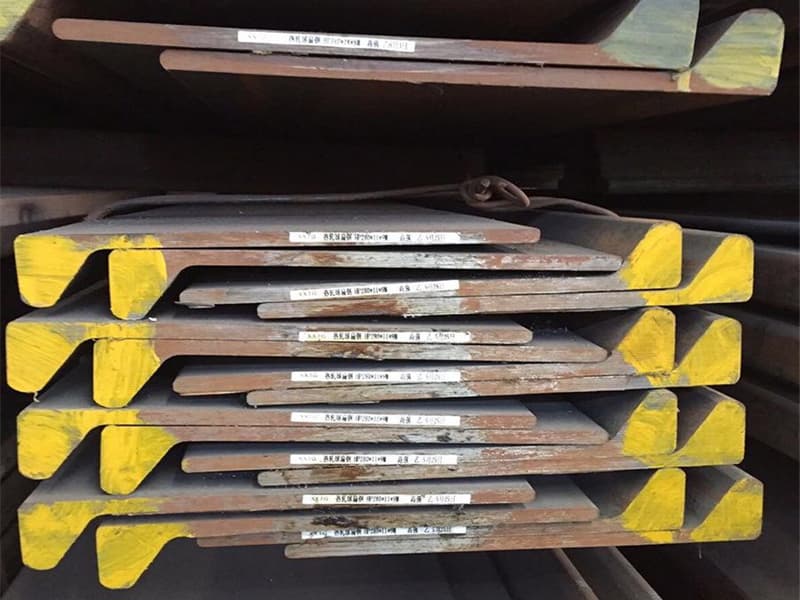
Bulb flat steel production in China follows national standards (GB/T) and can also meet international classification society rules (ABS, DNV, LR). The primary dimensional and technical standard is GB/T 3107-2008 for bulb flats. For material grades, mills use GB/T 712-2022 for shipbuilding steel, which has direct equivalents to international grades like AH36. Crucially, Chinese mills approved by classification societies produce bulb flats that meet both GB standards and the specific requirements of the society, making them globally acceptable.
The Chinese standard system is comprehensive, not a barrier. To source confidently, you need to decode this system. This starts with understanding the broader framework of steel standards in China, then zooming in on the specific codes you will encounter for bulb flats.
What are the steel standards in China?
Navigating the Chinese steel market feels complex because of the many "GB" codes. These are not random numbers. They are a structured system for defining quality. Knowing this structure turns confusion into clarity.
Steel standards in China are a hierarchical system published by the Standardization Administration of China (SAC). The core are the "GB" (Guo Biao) standards. "GB/T" are recommended national standards, while "GB" (without /T) are mandatory. These standards cover everything from chemical composition (GB/T 699, GB/T 1591) to dimensional tolerances (GB/T 702) and testing methods. For export-oriented mills, production also aligns with international standards like ISO, ASTM, and EN to meet global buyer requirements.
The Chinese system is logical. Standards are categorized by their purpose, making it easier to find the right one for your product.
The Structure of Chinese Steel Standards
Think of the standard code as an address that tells you what the document is about.
- Prefix (GB, GB/T, YB): Indicates the authority and nature of the standard.
- Document Number: A unique identifier for the standard.
- Year of Issue: The last part (e.g., -2022) shows the revision year. Always look for the latest version.
Types of Standards and Their Uses
This table explains the different categories of standards you will encounter.
| Standard Prefix | What It Means | Typical Examples & Purpose | Relevance to Export Buyers |
|---|---|---|---|
| GB (Mandatory National Standard) | "Guo Biao" – National Standard. Compliance is legally required for safety, health, and environmental protection. | GB 712: The mandatory version for shipbuilding steel plates (superseded by GB/T 712-2022). | These set the baseline legal requirements. Most product standards are now GB/T (recommended). |
| GB/T (Recommended National Standard) | "T" stands for "Tui Jian" (Recommended). These are technical and quality standards widely adopted by industry. | GB/T 1591: High strength low alloy structural steels. GB/T 3107: Dimensions and properties of bulb flats. GB/T 714: Bridge steel. | This is what you will see most often. They define the product you are buying. Reputable mills strictly adhere to these. |
| YB (Professional/Industry Standard) | "Ye Biao" – Industry Standard. Set by specific industrial sectors, often more detailed than GB. | YB/T 4155: Hot rolled bulb flats for shipbuilding (a more specific, industry-focused standard). | May be referenced by mills specializing in certain products. It can indicate higher specialization. |
| Q/B (Enterprise Standard) | "Qi Biao" – Enterprise Standard. A company’s internal standard, often stricter than national standards. | A mill’s own Q/B standard for ultra-high toughness steel. | Indicates a mill with advanced capability. Their product may exceed GB/T requirements. |
For an international buyer, the key is to specify the exact GB/T standard you require in your purchase order. When we work with clients in Saudi Arabia or the Philippines, we clarify if their project requires a specific GB/T standard or an international equivalent. Most of our partner mills are equipped to produce to multiple standards (GB/T, ASTM, EN, JIS) from the same production line, giving you flexibility. The existence of GB/T standards is a sign of a mature, regulated industry, not an obstacle.
What is the GB steel standard?
You receive a certificate with "GB/T 712-2022." Is this a material grade or a test method? The "GB" label itself is broad. You need to know what a specific GB standard actually governs to judge the product.
A "GB steel standard" is a document issued by the Chinese government that specifies requirements for a type of steel product. It defines technical parameters such as chemical composition, mechanical properties (yield strength, tensile strength, impact toughness), dimensional tolerances, test methods, and inspection rules. It is the authoritative rulebook that Chinese steel mills follow to ensure product consistency and quality. For example, GB/T 712-2022 governs the grades and properties of steel for shipbuilding.
A single GB standard typically focuses on one aspect: either a material grade, a product shape, or a test method. They are the building blocks of a product specification.
Components of a Typical GB/T Product Standard
Opening a GB/T standard, you will find specific sections that matter to you as a buyer.
- Scope: Defines what products or materials the standard applies to.
- Normative References: Lists other standards it depends on (e.g., testing standards).
- Classification and Designation: Explains the grade naming system (e.g., A, B, D, E, AH32, DH36).
- Technical Requirements: The core of the document—chemical composition, mechanical properties, and non-destructive testing requirements.
- Test Methods: Specifies how to test the steel to verify it meets the requirements.
- Inspection Rules: Defines sampling frequency, acceptance criteria, and certification.
How a GB Standard Applies to Bulb Flat Steel
Let’s trace how multiple GB standards come together to define a single bulb flat.
| GB Standard Number | Purpose for Bulb Flat Steel | What It Specifies | Why It Matters to You |
|---|---|---|---|
| GB/T 3107-2008 | The main product standard for bulb flats. | Dimensions, weights, sectional properties (area, moment of inertia), and permissible dimensional tolerances for hot-rolled bulb flats. | This tells you if the physical shape (height, flange width, bulb size) is correct. It is the dimensional rulebook. |
| GB/T 712-2022 | The material grade standard for shipbuilding steel. | Chemical composition and mechanical property requirements for various grades (General Strength A, D, E and Higher Strength AH32, DH36, EH40, etc.). | This tells you if the steel’s strength and toughness are correct. When you order "DH36 bulb flat," you are invoking this standard for the material. |
| GB/T 2975-2018 | The standard for sampling mechanical test pieces. | Rules for where to cut tensile and impact test samples from the steel product. | Ensures test results are representative and comparable. A proper Mill Test Certificate follows this. |
| GB/T 229-2020 | The standard for Charpy pendulum impact test. | The precise method for conducting the toughness (impact) test, which is critical for marine grades. | Guarantees the toughness value on the certificate (e.g., 40J at -20°C) is measured in a recognized, repeatable way. |
Therefore, a certified bulb flat meeting "GB/T 3107-2008 and GB/T 712-2022 DH36" means its shape is controlled by one standard and its material properties by another. This layered approach is similar to how ASTM A131 defines ship steel material and a separate ASTM standard defines shapes. When we provide SGS inspection support, the inspectors verify compliance against all the standards cited in the purchase order. This multi-standard verification is what gives a rational buyer like Gulf Metal Solutions confidence in the "stable quality" from a Chinese supplier.
What is the China equivalent of ASTM A36?
Your design calls for ASTM A36, but the Chinese supplier proposes a "Q235B" grade. Is this a direct substitution, or a compromise? Accepting the wrong equivalent can weaken your structure.
The closest Chinese equivalent to ASTM A36 steel is Q235B as defined in standard GB/T 700-2006. Both are general-purpose mild carbon steels with a minimum yield strength of 235 MPa. However, they are not identical. Key differences exist in chemical composition limits (e.g., Phosphorus and Sulfur content) and mandatory impact testing. For structural applications, Q235B is generally acceptable. For critical or marine applications, you should use the more specific shipbuilding grades from GB/T 712, such as AH/DH/EH series, which have stricter controls and required impact toughness.
"Equivalence" is about matching the intended function, not just one property. For non-critical construction, Q235B works. For dynamic, loaded environments like ships, you need a different "equivalent."
Detailed Comparison: ASTM A36 vs. Q235B vs. Marine Grades
This table highlights why you must choose based on application.
| Property / Requirement | ASTM A36 (USA) | GB/T 700 Q235B (China) | GB/T 712 AH36 (China Marine) | Commentary on Equivalence |
|---|---|---|---|---|
| Minimum Yield Strength | 250 MPa (36 ksi) | 235 MPa (For thickness ≤16mm) | 355 MPa | Q235B strength is slightly lower. AH36 is significantly stronger. |
| Key Chemistry Difference | C, Mn, P, S limits. P≤0.04%, S≤0.05%. | C, Mn, Si, P, S limits. P≤0.045%, S≤0.045%. | Stricter limits on P, S, and micro-alloys (Cu, Cr, Ni). P, S typically ≤0.025%. | Q235B has slightly looser impurity limits. Marine grades are much cleaner. |
| Impact Toughness Requirement | Not required by default. Can be specified supplementary. | Not required by GB/T 700. | Mandatory. Charpy V-notch test at specified temperature (e.g., -20°C for DH grade). | This is the most critical difference. Marine steel must resist brittle fracture. |
| Common Applications | General construction, buildings, bridges, non-critical frames. | General construction, non-critical structural work in China. | Ship hulls, offshore structures, and other critical dynamic load applications. | Q235B is not suitable for primary marine structures. AH36 is the functional equivalent for shipbuilding. |
| Heat Treatment | Usually as-rolled. | Usually as-rolled. | Usually normalized to refine grain structure and ensure toughness. | Normalization is a key process for marine grades, adding cost but ensuring performance. |
The lesson is clear: For bulb flat steel used in shipbuilding, the equivalent of ASTM A36 is NOT Q235B. The shipbuilding equivalent is a grade from the GB/T 712 series (A, B, D, E, AH, DH, EH). When a client from Mexico or Romania asks for bulb flats, we always confirm the grade. If they say "A36," we explain the context and recommend the appropriate marine grade from GB/T 712 or its direct international counterpart (ABS AH36). This prevents the dangerous mistake of using construction-grade steel in a marine application. Our expertise is not just in selling steel, but in ensuring the steel is correct for your project’s demands.
What is the HS code for bulb flat steel?
You are preparing customs documents for import. The wrong HS code can cause delays, incorrect tariffs, or even seizure of your goods. The HS code is the global language for trade classification.
The Harmonized System (HS) code for bulb flat steel is typically 7216.50. The first six digits are international: 7216 covers "Angles, shapes and sections of iron or non-alloy steel, not further worked than hot-rolled, hot-drawn or extruded." The specific subheading "7216.50" is for "Other angles, shapes and sections." National subdivisions (8-10 digits) vary by country. For example, in the USA, it might be 7216.50.0090. Always verify the specific code with your freight forwarder or local customs authority based on the steel’s grade (alloy vs. non-alloy) and final destination country.
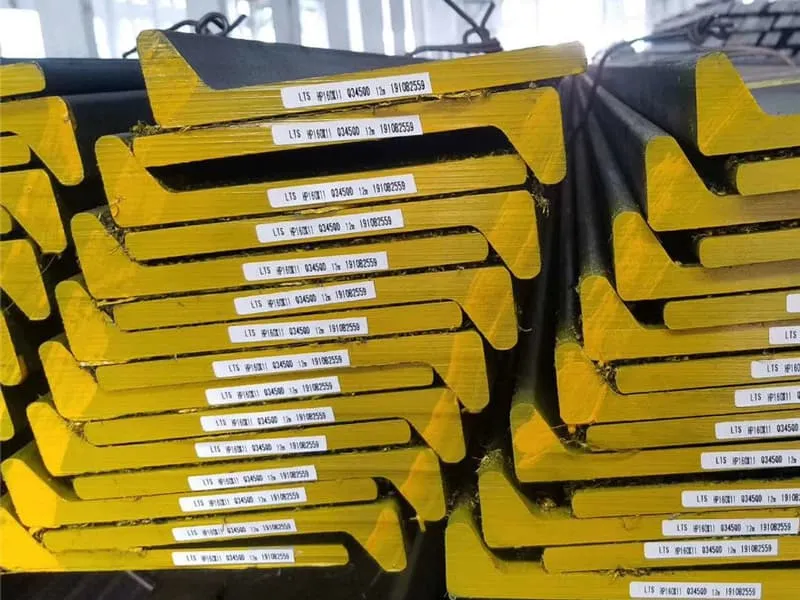
The HS code is not about the steel’s application (shipbuilding), but about its physical form and material composition. Getting it right is a crucial logistical step.
Understanding the HS Code Structure
The code is a hierarchical system that gets more specific from left to right.
- Chapter (72): Iron and steel.
- Heading (7216): Angles, shapes, and sections of iron or non-alloy steel, hot-rolled.
- Subheading (7216.50): "Other" shapes (which includes bulb flats, as they are not standard angles or H-beams).
- National Tariff Lines (e.g., 7216.50.0090): Country-specific codes that may differentiate by alloy content, coating, or other factors.
Key Factors in Determining the Correct Code
Customs authorities look at specific attributes of the product. Misclassifying these can lead to problems.
| Determining Factor | How It Affects HS Code Classification | Example for Bulb Flat Steel | Action for Buyers |
|---|---|---|---|
| Material: Alloy vs. Non-Alloy Steel | This is the primary split. Non-alloy steel (like standard carbon steel) falls under Chapter 72. Alloy steel (like many marine grades with specific added elements) may fall under Chapter 73. | A standard DH36 bulb flat, while a "high-strength low-alloy" steel, often still classifies under 7216 if the alloy elements are within limits for "non-alloy" classification. A stainless steel bulb flat would be in Chapter 73. | Provide the exact material grade to your forwarder. The chemical composition on the MTC determines this. |
| Form & Processing: Hot-Rolled | Code 7216 specifies "not further worked than hot-rolled." If the bulb flat is subsequently cold-formed, painted, or galvanized, the code may change. | Standard hot-rolled bulb flats for shipbuilding fall squarely under 7216.50. | Confirm with your supplier that the product is supplied as hot-rolled, without secondary processing that changes its classification. |
| Shape: "Other Sections" | Bulb flats are not standard angles, tees, or H-beams. They are specialized sections, hence they fall under the "other" category (7216.50). | This is the correct classification for the unique bulb flat profile. | In your commercial invoice and packing list, describe the goods clearly as "Hot-rolled bulb flat steel sections." |
| Destination Country’s Tariff Schedule | Each country has its own extended tariff lines (8-10 digits) for duty rates and import controls. | In China, the export code might be 7216500000. In Saudi Arabia, the import code might have a different suffix. | Work with a licensed customs broker in your country. Provide them with the supplier’s invoice and packing list for accurate classification. |
As an exporter, we include the correct HS code (typically 7216500000 for China export) on all our commercial documents. This facilitates smooth customs clearance at the origin port. However, the importer of record is ultimately responsible for classifying the goods in their own country. We advise our clients, like the project contractors in Thailand, to share our product description and material certificates with their broker to ensure a perfect match. This attention to logistical detail is part of the "shipping to port with customs clearance support" we offer—it prevents avoidable delays that can derail a project timeline.
Conclusion
Chinese bulb flat production is governed by rigorous GB/T standards for dimensions and materials, with clear equivalents to international grades. Understanding these standards and the correct HS code is essential for specifying the right product and ensuring smooth, compliant international procurement.