
You receive a shipment of angle steel. Some pieces have visible cracks along the legs, others are bent. These are not just cosmetic issues; they are defects that compromise the structural integrity of your entire marine project.
Common defects in marine angle steel include surface flaws (cracks, seams, pitting), dimensional inaccuracies (uneven legs, bow, twist), internal/metallurgical issues (laminations, poor impact toughness), and improper mechanical properties. These defects originate from the steelmaking, rolling, or handling processes and must be detected before fabrication.
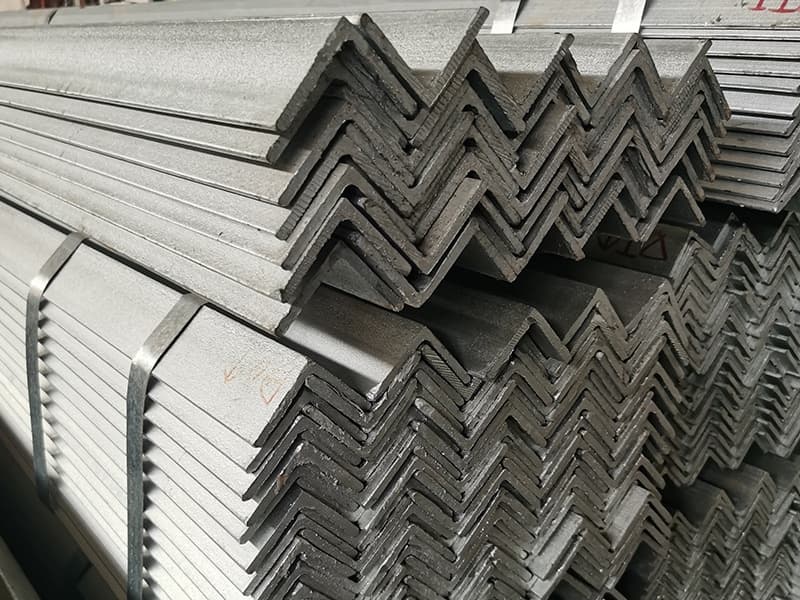
Defects in angle steel are predictable. They fall into specific categories that apply to all steel structures. Understanding these categories helps you inspect incoming material and identify problems early. Let’s start with the broad view of defects in any steel structure.
What are the types of defects in steel structures?
A steel structure fails from a defect, not from perfect material. These defects can appear at any stage, from the mill to decades in service. Categorizing them helps you know where to look and how to prevent them.
Defects in steel structures are categorized by their origin: material defects (from production), fabrication defects (from cutting/welding), erection defects (from assembly), and in-service defects (corrosion, fatigue, overload). For marine angle steel, material and fabrication defects are the primary concerns for procurement and construction quality control.
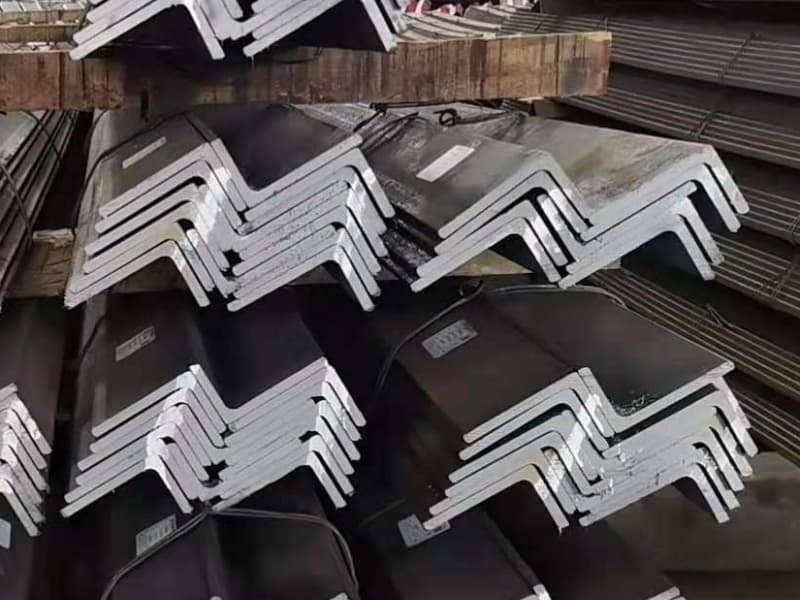
A Lifecycle Audit of Defects
To manage quality, you must map the entire lifecycle of the steel. Defects are introduced at specific points. Your goal is to catch material defects before they become part of your structure and to prevent fabrication defects through good workmanship.
1. Material Defects (The Supplier’s Responsibility)
These exist in the raw steel sections when delivered. They are our main focus as a material supplier.
- Internal/Metallurgical: Inclusions (non-metallic particles), laminations (internal separations), segregation (uneven chemistry). These weaken the steel internally and are often hidden.
- Surface: Cracks, seams (rolled-in folds), rolled-in scale, pits, excessive rust or mill scale.
- Dimensional/Geometric: Incorrect size (leg length, thickness), excessive bow (curvature along length), twist (torsion), camber, or out-of-square legs.
2. Fabrication Defects (The Workshop’s Responsibility)
These occur when the raw steel is cut, drilled, and welded.
- Cutting Defects: Notches, excessive heat-affected zone (HAZ), inaccurate dimensions.
- Welding Defects: Cracks (hot or cold), porosity (bubbles), lack of fusion, undercut (groove at weld edge), excessive spatter, distortion from heat.
- Mechanical Damage: Dents, gouges from improper handling.
3. Erection & Assembly Defects (The Site Team’s Responsibility)
These happen during final construction.
- Fit-up Problems: Members not aligning due to cumulative dimensional errors or field adjustments.
- Improper Connections: Incorrect bolt torque, cross-threading, missing components.
- Field Welding Issues: Poor conditions leading to defective welds.
4. In-Service Defects (The Owner’s/Maintenance Responsibility)
- Corrosion: General rust, pitting, crevice corrosion (especially in the angle’s root).
- Fatigue Cracks: Initiate from stress concentrators (like a weld toe or notch) under repeated loading (waves).
- Overload Damage: Permanent deformation from accidents.
For marine angle steel, the procurement focus is squarely on Material Defects. Catching a lamination or a deep seam before fabrication prevents a catastrophic failure later. Fabrication defects are also critical, as a bad weld on an angle can be the starting point for a fatigue crack.
This table connects defect types to their stage and inspection method:
| Defect Category | Example in Marine Angle Steel | Stage Introduced | How to Detect (Pre-Fabrication) |
|---|---|---|---|
| Material: Surface | Longitudinal seam along a leg, deep pitting. | Steel Mill (Rolling). | Visual inspection, possibly after light blasting or wire brushing. |
| Material: Dimensional | One leg is 2mm shorter than specified; piece has a visible bow. | Steel Mill (Rolling/Cooling). | Measuring tape, straight edge, square gauge. |
| Material: Internal | Lamination at the root (corner) of the angle. | Steel Mill (Casting). | Ultrasonic Testing (UT). |
| Fabrication: Welding | Crack at the weld where an angle is attached to a plate. | Fabrication Shop. | Visual Inspection, Dye Penetrant Testing (PT), Magnetic Particle Testing (MT). |
| In-Service: Corrosion | Severe rust and thinning in the inside corner where water was trapped. | Service Life. | Visual inspection, ultrasonic thickness gauging. |
Understanding this lifecycle view makes you a more effective buyer. You know that demanding proper Mill Test Certificates and pre-shipment inspection targets Material Defects. You also know that supervising fabrication targets the next major risk category.
What are the defects of steel frame?
You’ve sourced good angle steel, but the finished frame is weak, misaligned, or shows cracks. Often, the problem isn’t the raw material, but how it was turned into a structure. Frame defects are a result of both material and process failures.
Common steel frame defects include connection failures (poor welds/bolts), instability (buckling of members), excessive deflection (sagging), misalignment and fit-up problems, and corrosion at joints. Many originate from fabrication errors, poor design, or the amplification of small material defects during assembly.
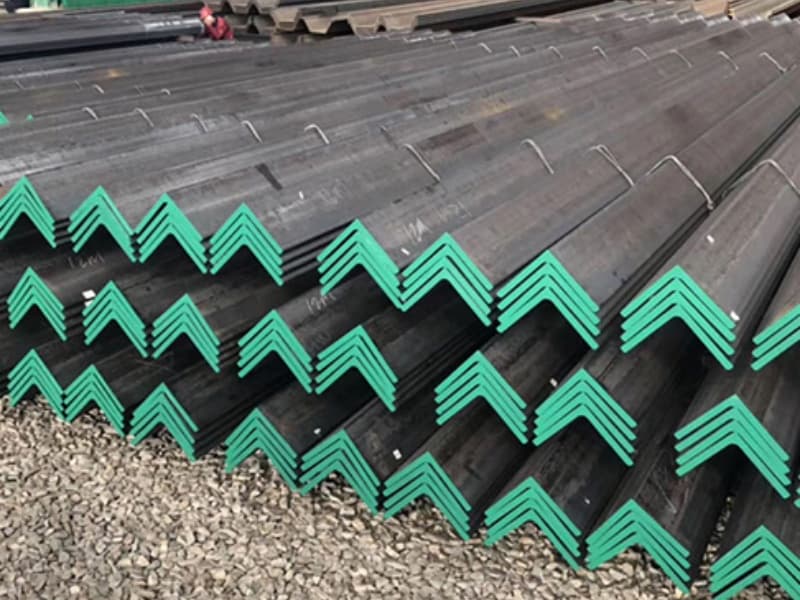
When Good Material Becomes a Bad Structure
A frame is an assembly of individual members. Defects in the frame often occur at the connections, which are the stress transfer points. They can also arise from how the members interact under load. Let’s analyze these frame-level problems.
1. Connection Defects: The Weakest Link
The frame is only as strong as its connections. For angles, which are often connected through one leg, this is critical.
- Welding Defects: Cracks, lack of fusion, or porosity at the welds attaching an angle to a gusset plate or another member. The sharp inside corner of the angle is a challenging area to weld properly.
- Bolting Defects: Undersized or low-grade bolts, insufficient torque, missing washers/nuts, elongated holes.
- Eccentricity: Angles are often connected eccentrically (force not through the center). If not accounted for in design, this induces unexpected bending moments.
2. Stability and Buckling Defects
Angle sections are not ideal beams or columns due to their open shape.
- Lateral-Torsional Buckling: When a single angle used as a beam bends, its compressed leg can buckle sideways and twist if not laterally restrained.
- Local Buckling: The thin leg of an angle can buckle locally under compression.
3. Excessive Deflection (Sagging)
The frame may not break, but it sags too much for its intended use. Angles have lower stiffness (moment of inertia) compared to I-beams of similar weight. Using an angle where stiffness is critical is a design defect.
4. Fit-Up and Alignment Defects
This is where material defects directly cause frame problems.
- Cumulative Error: If each angle has a small bow or twist, assembling many into a large frame creates significant misalignment.
- Forced Fit-up: Using jacks or force to make misaligned members fit for welding induces unknown, harmful pre-stresses into the frame.
5. Corrosion at Joints
Joints are corrosion hotspots. Moisture traps in crevices (like the angle root against a plate). Poor weld profiles or inadequate coating lead to hidden corrosion that weakens the connection.
How Marine Angle Steel Quality Influences Frame Defects:
The quality of the raw angle steel directly influences several frame defects:
| Steel Frame Defect | Link to Marine Angle Steel Quality | Prevention Strategy |
|---|---|---|
| Fit-Up Difficulties | Direct Link. Caused by dimensional inaccuracies (bow, twist) in the raw angles. | Source steel with tight dimensional tolerances (per class rules). Implement incoming inspection. |
| Weld Cracks at Connections | Indirect Link. Can be caused by poor steel chemistry (high Carbon Equivalent) or surface defects (seams) at the weld location. | Specify steel with guaranteed, weldable chemistry (e.g., AH36/DH36 with CEV limits). Inspect surface condition before welding. |
| Premature Corrosion at Joints | Indirect Link. Heavy mill scale or a pitted surface leads to poor coating adhesion around the welded joint. | Ensure steel has a surface suitable for coating (specify or require blasting before fabrication). |
| Unexpected Buckling | Material Property Link. The design assumes a minimum yield strength. If the steel does not meet the certified grade (e.g., DH36), it may buckle under lower loads. | Insist on valid Mill Test Certificates to verify mechanical properties. |
For a fabricator, receiving dimensionally accurate, weldable marine angle steel is half the battle. It allows for the production of frames that fit together correctly and have durable, reliable connections. This directly prevents the most common and costly frame defects.
What are the defects in TMT bar?
TMT (Thermo-Mechanically Treated) bars are for concrete reinforcement, not ship frames. But studying their defects is useful. It shows how specific production processes create unique flaw patterns, similar to how hot-rolling creates specific defects in angles.
Defects in TMT bars include surface flaws (rolling marks, cracks), dimensional issues (out-of-tolerance diameter, rib height), improper microstructure (due to faulty quenching), and mechanical property failures (low yield strength, poor bendability). Many originate from the controlled rolling and rapid quenching process.
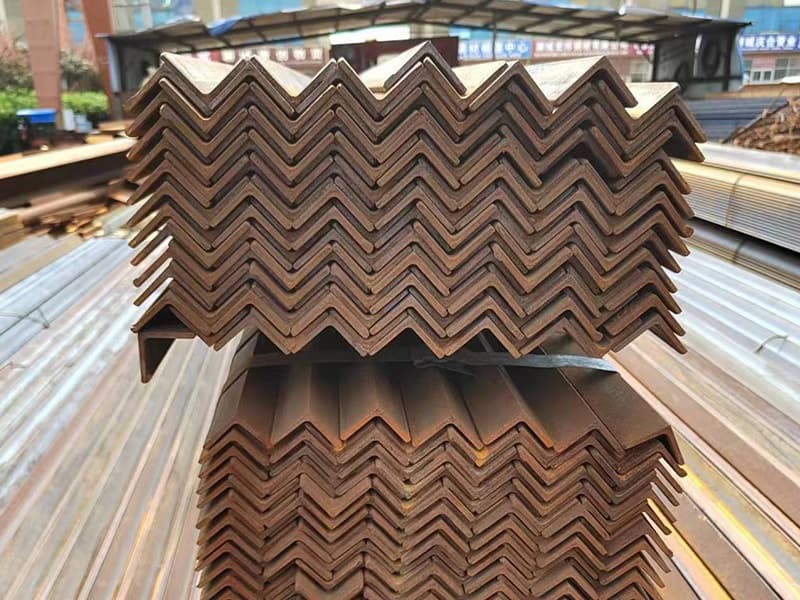
Learning from Another Process: The TMT Parallel
TMT bars are made by hot-rolling and then rapidly quenching the surface. This creates a hard outer layer and a softer core. Defects arise when this precise process goes wrong. Similarly, defects in hot-rolled angle steel arise from its specific rolling and cooling process.
Key TMT Defects and Their Analogies to Angle Steel:
- Surface Cracks and Seams: These are common in both. In TMT bars, they can form during rolling or from the thermal shock of quenching. In angle steel, they form from billet defects or improper rolling temperatures. The lesson: Surface inspection is critical for both.
- Dimensional Inaccuracies: For TMT, it’s diameter and rib geometry. For angle steel, it’s leg length, thickness, and straightness. The lesson: Both require verification against published tolerances.
- Improper Microstructure/Material Properties: This is the core failure.
- TMT Bar: If quenching is not controlled, the bar may not develop the correct hard martensitic rim and ductile ferrite-pearlite core. This leads to low strength or brittle behavior.
- Marine Angle Steel: If the rolling temperature or cooling rate is wrong, the steel may not develop the fine-grained microstructure required for good toughness (impact resistance). It may fail a Charpy test.
- Mechanical Test Failures: Both products must pass destructive tests.
- TMT Bar: Tensile test (yield strength, elongation) and bend test.
- Marine Angle Steel: Tensile test (yield, tensile strength) and Charpy Impact test at low temperature.
The Common Root: Process Control
The comparison highlights that for any hot-rolled product, process control is everything. A mill producing TMT bars or marine angles must control:
- Heating temperature
- Rolling reduction
- Cooling rate
- Alloy chemistry
A defect in the final product is a symptom of a breakdown in one of these controls.
Why This Matters for Angle Steel Buyers:
When you evaluate a supplier for marine angle steel, you are indirectly evaluating their mill’s process control. A supplier who cannot explain their mill’s process or who sources from random mills (like many TMT bar traders do) presents a high risk. A supplier like us, with long-term cooperation with specific, certified mills, provides assurance that the process is controlled and monitored, minimizing defects analogous to the bad TMT bars.
What are the defects of plates?
Marine angle steel is often welded to plates to form frames and brackets. If the plate itself has defects, the entire assembly is compromised. Plate defects share many similarities with section defects but have their own characteristics.
Common defects in steel plates include surface flaws (scale, pitting, scratches), shape defects (warpage, uneven thickness), edge defects (cracks, laminations), and internal/metallurgical issues (segregation, inclusions, laminations). Like angles, these originate from casting, rolling, and handling processes.
The Flat Product Perspective: A Different Set of Challenges
Plates are rolled from slabs. Their large, flat area and two-dimensional nature present unique defect risks that are important to understand, as plates and angles are used together.
1. Surface Defects
- Rolled-in Scale: Oxide scale forced into the surface during rolling, creating pits after blasting.
- Scratches and Gouges: From handling or roller marks.
- Pitting: Localized corrosion before delivery.
2. Dimensional and Shape Defects
- Warpage/Camber: The plate is not flat. It may have a bow or a twist.
- Uneven Thickness (Profile): The thickness varies across the width or length beyond allowed tolerances.
- Out-of-Square Sheared Edges.
3. Edge Defects
- Edge Cracks: Can form during rolling or shearing.
- Laminations at Edges: Internal separations exposed by cutting.
4. Internal Defects (Most Critical)
- Laminations: These are perhaps the most dangerous plate defect. They are internal separations, often parallel to the surface, caused by voids or inclusions in the original slab that did not weld shut during rolling. They are not visible.
- Inclusions: Clusters of non-metallic material (sulphides, oxides).
- Segregation: Non-uniform distribution of alloying elements, leading to weak spots.
Detection and Impact on Marine Construction:
- Surface & Dimensional: Detected by visual inspection and measuring.
- Internal (Laminations): Detected by Ultrasonic Testing (UT). Marine-grade plates for critical areas are often supplied with UT inspection reports.
- Impact: A lamination in a hull plate can delaminate under stress, causing a leak or reducing strength. A warped plate causes fit-up problems, just like a bent angle.
The Connection to Angle Steel Procurement:
The standards and inspection rigor applied to marine plates are the same needed for marine angle steel. Both require:
- Certification of chemical and mechanical properties.
- Control of surface condition.
- Dimensional compliance.
- For critical applications, non-destructive testing (UT for plates, possibly UT for the root of thick angles).
When you procure both plate and angle steel from a supplier, you should expect the same level of quality documentation and process control for both product forms. It indicates the supplier works with mills capable of producing to marine standards across their product range.
This holistic view of defects—from structures to frames to related products like TMT bars and plates—equips you with the knowledge to specify, inspect, and reject non-conforming marine angle steel. You move from seeing "a problem" to identifying a specific defect type, its likely cause, and its potential consequence.
Conclusion
Identify marine angle steel defects by category: material, fabrication, dimensional, and internal. Inspect surfaces and dimensions upon delivery, demand certified test reports, and understand how plate and frame defects are interconnected.