
Leading paragraph: Frustrated by late replies and inconsistent quality? You are not alone. Choosing the wrong marine angle steel supplier can sink your project’s budget and timeline before it even starts. Let’s fix that.
Snippet paragraph: To evaluate marine angle steel suppliers, you must check their production capacity, quality certifications, and communication efficiency. Always verify mill partnerships, request product samples, and confirm their ability to support third-party inspections like SGS. A reliable supplier offers stable quality and fast, clear responses.
Choosing a supplier is not just about the price. The real cost is hidden in delays, rejected shipments, and project stoppages. I have seen projects get stuck because of poor material. This guide will walk you through the key checks you must do. I will share the exact questions to ask and the red flags to watch for. This information comes from years of dealing with suppliers and helping clients like Gulf Metal Solutions avoid these very pitfalls. Keep reading to learn how to make a choice that protects your project.
How to check good quality steel?
Leading paragraph: A shiny surface can be deceiving. Poor-quality marine steel fails when it matters most. You need to know what to look for beyond the appearance to ensure your vessel’s safety and durability.
Snippet paragraph: You check good quality marine angle steel by inspecting its chemical composition, mechanical properties, and surface condition1. Key steps include reviewing mill test certificates (MTCs), checking for consistent dimensions and a clean, defect-free surface, and optionally conducting hardness or bend tests.
A Three-Pronged Approach to Quality Verification
Checking steel quality is not one single action. It is a process. You need to look at paperwork, physical attributes, and performance. Relying on only one method is risky.
1. The Paper Trail: Certificates are Your First Defense
The Mill Test Certificate (MTC)2 is the steel’s birth certificate. A trustworthy supplier provides this without hesitation. Do not accept just a "quality certificate" from the trading company. You need the original MTC from the producing mill. For marine applications, confirm the steel grade meets recognized standards like ABS, LR, DNV, or BV. The MTC should list:
- Chemical Composition3: Percentages of Carbon (C), Manganese (Mn), Silicon (Si), Sulfur (S), and Phosphorus (P). Sulfur and Phosphorus must be very low.
- Mechanical Properties4: Yield Strength (ReH), Tensile Strength (Rm), and Elongation (A). These numbers prove the steel can handle stress.
- Impact Test Results (Charpy V-Notch)5: This is critical for marine steel in cold environments. It shows the material’s toughness.
2. The Physical Inspection: See It and Measure It
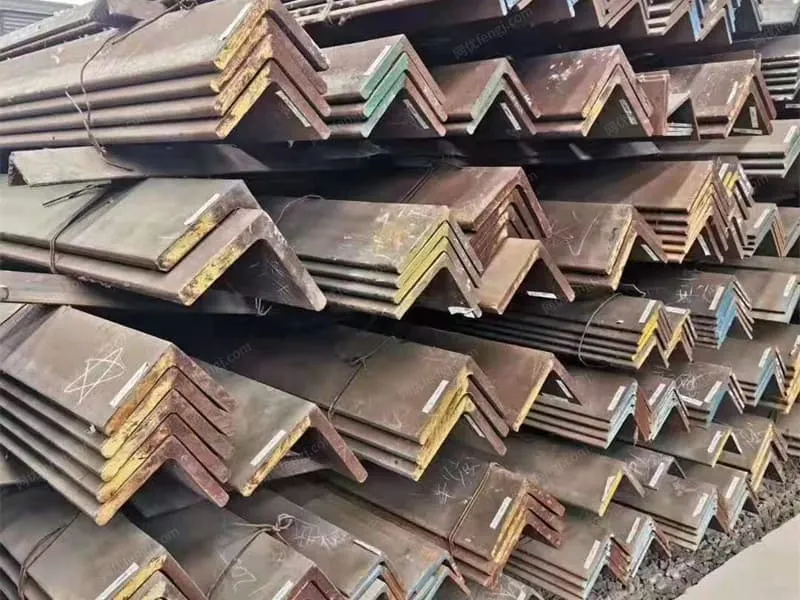
Once the paperwork checks out, inspect the material itself. Here is what a quality marine angle bar looks like:
- Surface: It should be smooth and uniform. Reject pieces with heavy rust, deep pits, cracks, rolling seams, or inclusions (foreign material trapped in the steel). Light, even mill scale is normal.
- Edges and Corners: The edges should be sharp and clean, not rounded or torn. The corner (where the two legs meet) should be well-formed.
- Straightness: Lay the angle bar on a flat surface. It should not have a noticeable twist or camber (bow).
3. The Performance Check: When in Doubt, Test It
For critical projects or new suppliers, consider simple tests. A hardness test with a portable durometer can check if the material matches its grade. A bend test, where a sample is bent to a specified radius, will reveal internal flaws like poor ductility. Many of our clients, especially large contractors, insist on a third-party inspection6 like SGS. They send an inspector to the mill or our warehouse to witness the testing and loading. We always support this. It builds immense trust. Gulf Metal Solutions valued this option highly, as it eliminated their fear of quality inconsistency.
| Verification Method | What to Look For | Why It Matters |
|---|---|---|
| Documentation | Original Mill Test Certificate (MTC)2, Compliance with ABS/LR/DNV standards | Verifies the material’s pedigree and technical compliance. It is your legal proof of quality. |
| Visual & Dimensional | Clean surface, no cracks/pits, sharp edges, correct and consistent thickness/width | Ensures the steel is free from manufacturing defects and will fit and perform as designed. |
| Performance Testing | Charpy Impact Test results, willingness to support SGS/third-party inspection6 | Proves the steel’s toughness and the supplier’s transparency. It is the ultimate quality assurance. |
How to measure steel angle size?
Leading paragraph: An error of a few millimeters can cause a costly fabrication mistake. Knowing how to measure marine angle steel correctly is a basic but essential skill for every project manager and inspector.
Snippet paragraph: You measure steel angle size by determining the leg lengths and the thickness. Use a caliper for thickness and a tape measure for leg length. Measure at multiple points along the bar to check for consistency. The key dimensions are leg length A, leg length B, and thickness t.
Beyond the Tape Measure: Ensuring Dimensional Accuracy
Measuring seems simple, but for structural components, precision is non-negotiable. The wrong size angle bar can misalign an entire section of a ship’s frame. Here is a detailed breakdown.
Understanding the Standard Nomenclature
A steel angle is defined by three primary dimensions: the lengths of its two legs and the thickness. It is commonly expressed as L A x B x t, where A and B are the leg lengths (in mm or inches), and t is the thickness. For example, L 100x100x10 means an equal leg angle with both legs 100mm long and 10mm thick.
The Right Tools for the Job
Do not rely on a simple tape measure for critical dimensions. You need:
- A Digital Caliper or Micrometer: This is for measuring thickness (t). Place the jaws across one leg, perpendicular to the surface. Take readings at both ends and the middle of a 6-meter bar. Thickness can vary slightly due to rolling tolerances.
- A Sturdy Tape Measure or Ruler: Use this for leg lengths (A and B). Measure from the outer corner to the edge of each leg.
- A Right-Angle Square: This helps check the true 90-degree angle between the two legs. Place the square in the corner. Any visible gap indicates an out-of-square angle, which is a fabrication defect.
The Process: Measure Systematically
Do not measure just one spot. To ensure the entire batch is uniform, follow this process:
- Step 1: Check Thickness. Measure the thickness at three points on each leg (near each end and the center) on at least three different bars from the batch. Record all values.
- Step 2: Check Leg Lengths. Similarly, measure the length of each leg at both ends of the bar.
- Step 3: Check Straightness. Place the angle bar on a level floor. Look for any obvious bending or twisting. You can also measure the gap between the bar and the floor along its length.
Why Tolerances Matter
Manufacturing has acceptable tolerances. A bar listed as 10mm thick might actually be 9.75mm or 10.25mm and still be within standard tolerance. The problem arises when the variation is outside these limits or is inconsistent within the same bar. Consistent undersizing is a red flag. It means the mill may be trying to save weight (and cost) at the expense of your structural integrity. Always ask your supplier for the standard tolerance chart (e.g., EN 10056 for European standards) and verify against it. We provide this data to all our clients upfront to avoid any confusion upon delivery.
| Dimension | How to Measure | Tool Needed | Tolerance Checkpoint |
|---|---|---|---|
| Leg Length (A, B) | From the outer corner to the tip of the leg. | Tape Measure / Ruler | Consistency along the bar’s length and across multiple bars in the batch. |
| Thickness (t) | Across the width of a single leg, away from the edges. | Digital Caliper / Micrometer | Measure at multiple points; ensure it meets the nominal size within standard rolling tolerances. |
| Squareness | Fit a right-angle square into the corner. | Right-Angle Square / Precision Square | No visible light gap should exist. An out-of-square angle complicates welding and assembly. |
How do you estimate the size of an angle?
Leading paragraph: Starting a new ship design or repair? Guessing the angle size leads to over-engineering or dangerous under-design. You need a logical method to estimate the right marine angle steel from the start.
Snippet paragraph: You estimate the size of a steel angle by analyzing the load it must carry. Consider the force (tension, compression, bending), the span length, safety factors, and the steel grade. Use structural engineering formulas or software to calculate the required section modulus and area, then select a standard size that meets or exceeds these values.
From Theory to Practice: The Estimation Workflow
Estimation is engineering, not guesswork. For marine structures, the stakes are high. An undersized angle can buckle. An oversized one wastes money and adds unnecessary weight to the vessel. Here is how the process works.
Step 1: Define the Load and Support Conditions
First, you must know what the angle bar will do. Is it a primary frame member supporting the hull? Is it a bracket for equipment? Or a stiffener for a bulkhead? Identify:
- Load Type: Is it mainly in tension (being pulled), compression (being pushed), or bending (a transverse force)?
- Load Magnitude: How much force, in kN or tons, will it experience? This comes from weight calculations, wave loads, and cargo loads.
- Span and Fixity: How long is the unsupported length of the angle? How is it connected at each end? A simply supported beam behaves differently from a fixed-end beam.
Step 2: Select a Material Grade
The steel grade determines its strength. Common marine grades like AH36 or DH36 have higher yield strength (355 MPa minimum) than ordinary mild steel (235 MPa). A higher grade means you might use a smaller, lighter angle to carry the same load. But it also costs more. The estimation must balance performance and economics.
Step 3: Perform the Calculation
This is where engineering principles come in. For bending members, the key property is the Section Modulus (Z). It measures the beam’s resistance to bending. You calculate the required Z based on the maximum bending moment (M) and the allowable stress (σ) of the steel: Z = M / σ.
For members in compression, the key is the Cross-Sectional Area (A) and the Radius of Gyration (r), which affects buckling resistance.
These calculations can be done manually using formulas from classification society rules (like ABS Steel Vessel Rules) or using structural analysis software.
Step 4: Choose from a Standard Size Table
Once you have your required Z or A, you consult a steel angle section table. These tables list all standard angle sizes (like L 80x80x8, L 100x100x10, L 150x90x12) and their geometric properties: cross-sectional area, weight per meter, section modulus, and radius of gyration.
You find the smallest standard size whose properties are greater than your calculated requirements. Always include a safety factor as per regulations.
A Practical Tip from the Field
For non-critical applications or quick budgets, experienced fabricators often use rules of thumb based on span. For example, a 3-meter span for a walkway handrail might use an L 50x50x5 angle. But this is only for estimation. The final design for ship structures must be approved by a naval architect or calculated according to class rules. We work with many project contractors who send us their calculated size requirements. Our role is to ensure the material we supply exactly matches those specified dimensions and grades.
| Estimation Factor | Description | Impact on Size Choice |
|---|---|---|
| Load Type & Magnitude | The force the angle must withstand (e.g., deck load, engine weight). | Higher loads require angles with greater section modulus (larger or thicker legs). |
| Span Length | The distance between supports. | Longer spans dramatically increase bending stress, requiring much stronger/heavier angles. |
| Steel Grade | The material’s yield strength (e.g., A36, AH36, DH36). | A higher-grade steel (AH36) can often allow for a smaller section size than a lower grade (A36) for the same load. |
| Safety Factor & Class Rules | Mandatory multipliers and regulations from classification societies. | Rules add conservatism, ensuring the final selected size is robust enough for marine service. |
What is the MS angle specification?
Leading paragraph: "MS Angle" sounds simple, but it hides important details. Using the wrong specification can mean your steel won’t pass surveyor approval. Let’s clarify what these specs really mean for your marine project.
Snippet paragraph: MS Angle specification refers to the standardized dimensions, tolerances, chemical composition, and mechanical properties for Mild Steel angles. Key specifications include IS 808 (Indian), JIS G 3192 (Japanese), ASTM A36 (American), and BS EN 10056 (European). For marine use, angles must also meet specific grade requirements from classification societies like Lloyd’s Register or ABS.
Decoding the Specification Sheet
A specification is a complete set of rules that the steel must follow. It is not just a size. Understanding the main components of a spec helps you communicate clearly with your supplier and avoid receiving off-spec material.
1. Dimensional Standards (The Shape and Size Rules)
This part defines the "L" shape. It lists all the standard sizes (leg lengths and thicknesses) and the allowed tolerances for them.
- Example – BS EN 10056-1: This European standard specifies the exact dimensions for equal and unequal angles. It tells you that for an L 100x100x10 angle, the leg length tolerance might be ±3mm and the thickness tolerance might be ±1mm.
- Why it matters: If your fabricator’s drawings are based on one standard (like JIS), and you receive material made to another (like ASTM), the slight dimensional differences can cause fit-up problems during welding and assembly.
2. Material Standards (The "What It’s Made Of" Rules)
This is the core of the specification. It defines the steel’s quality.
- Chemical Composition: Limits the amounts of carbon, manganese, sulfur, phosphorus, etc. "Mild Steel" typically has low carbon (e.g., max 0.23% for ASTM A36). Lower sulfur and phosphorus improve weldability and toughness.
- Mechanical Properties: Sets minimum values for Yield Strength, Tensile Strength, and Elongation. For instance, ASTM A36 requires a minimum yield of 36,000 psi (250 MPa).
- Example – ASTM A36: A very common general-purpose structural steel spec. It is widely accepted but is a general standard.
3. The Critical Marine Upgrade: Classification Society Grades
For marine angle steel, the generic "MS Angle" or "ASTM A36" is usually not enough. Ships must be built to the rules of a classification society (e.g., Lloyd’s Register, American Bureau of Shipping, DNV).
- These societies publish their own material specifications. For example, LR Grade AH or ABS Grade AH36. These are similar to ASTM A36 but have stricter requirements, especially for Charpy V-Notch Impact Testing at low temperatures. This ensures the steel won’t become brittle in cold seas.
- When you order, you must specify: "Marine Angle Steel, to LR Grade AH (or ABS AH36) standard." The Mill Test Certificate must confirm this grade and show the impact test results.
Connecting Specifications to Supplier Evaluation
A professional supplier knows these specifications inside out. They will ask you, "Which specification do you require?" If they don’t ask, that’s a warning sign. When Gulf Metal Solutions contacted us, their first question was about our ability to supply to specific project specs. We could immediately confirm our mills are certified to produce angles meeting ABS, LR, and other class standards. We then provided sample MTCs from past shipments for their review. This technical competence built the foundation of our partnership. Always ask your potential supplier for proof of compliance with the exact specification you need.
| Specification Type | Common Examples | What It Covers | Key Point for Marine Use |
|---|---|---|---|
| Dimensional Standard | BS EN 10056, JIS G 3192, IS 808 | Leg lengths, thickness, tolerances, straightness. | Ensures the physical shape fits the design drawings and allows for proper fabrication. |
| Material (Base) Standard | ASTM A36, S355JR, SS400 | Chemical composition, yield/tensile strength, elongation. | Defines the basic quality of mild steel. It is the starting point but often insufficient alone for ships. |
| Marine Classification Standard | LR Grade AH, ABS AH36, DNV NV A36 | All of the above, plus mandatory Charpy Impact Test requirements at specified temperatures. | This is the mandatory spec for marine structures. It guarantees toughness and safety for the marine environment. |
Conclusion
Choosing the right marine angle steel supplier is a technical process. Focus on verifying quality, understanding dimensions, estimating needs correctly, and insisting on the proper marine specifications. This disciplined approach protects your project from risk and ensures long-term reliability.
-
Surface condition is a key indicator of manufacturing quality and potential performance issues. ↩
-
Understanding MTCs is crucial for verifying steel quality and compliance with industry standards. ↩ ↩
-
Exploring chemical composition helps you grasp its impact on steel performance and durability. ↩
-
Knowing mechanical properties ensures the steel can withstand the stresses of marine environments. ↩
-
Charpy V-Notch tests are vital for assessing the toughness of steel in cold conditions. ↩
-
Third-party inspections provide an unbiased assessment, enhancing trust in steel quality. ↩ ↩