
You’ve ordered ABS-grade angle steel for a critical shipbuilding project, but how can you be sure the material delivered is the certified product you paid for? Counterfeit or misrepresented steel is a real and dangerous risk in international trade. I’ve helped clients uncover non-compliant materials before they were welded into a hull.
To identify genuine ABS L-shaped steel, you must verify three things: the original Mill Test Certificate (MTC) from an ABS-approved mill matching the steel’s heat number, the proper painted or stamped ABS grade marking (e.g., AH36) on the steel itself, and the material’s physical and chemical properties through independent inspection or testing. Documentation alone is not enough; it must match the physical product.
For our B2B clients in shipbuilding and marine fabrication, this is a matter of safety, compliance, and financial liability. Using uncertified steel can void insurance and lead to catastrophic failures. Let’s walk through a systematic identification process, starting with the broader issue of counterfeit steel.
How to identify fake steel?
The term "fake steel" can mean different things. It could be steel mislabeled as a higher grade, material from an uncertified mill, or even non-steel metal painted to look like steel. A distributor in Thailand once discovered a shipment of "AH36" angles that were actually a lower-grade commercial steel with painted markings.
You identify fake steel by cross-checking the material markings with the Mill Test Certificate (MTC)1, performing simple on-site tests like spark or magnet tests, checking for poor surface quality2 or inconsistent dimensions, and verifying the supplier’s authenticity by requesting mill accreditation documents. Always distrust prices that seem too good to be true for certified grades.
A Multi-Layer Verification Strategy
Relying on a single method is risky. You need a layered approach that combines paperwork, physical inspection, and supplier vetting3.
Layer 1: Documentary Red Flags
The paperwork is often where fakes are first revealed.
- Suspicious MTC: The MTC looks unprofessional, is on plain paper without a mill letterhead, lacks a proper mill stamp or signature, or has vague information. The chemical composition4 or mechanical properties might be typed in, not printed from a mill database.
- Missing Traceability: The most critical red flag is a missing or mismatched Heat Number/Ladle Number5. This number must be on both the MTC and painted on the steel bundles. If they don’t match, the MTC does not belong to that steel.
- Vague Supplier Details: The supplier cannot provide proof of their direct relationship with the named mill or the mill’s approval certificate from the classification society (ABS, LR, etc.).
Layer 2: Physical & Visual Inspection
Your eyes and simple tools are powerful detectors.
- Marking Quality: Genuine mill markings are usually stenciled with durable, high-temperature paint or hot-stamped. They are clear and consistent. Fake markings may be hand-painted, sloppy, uneven, or easily scratched off.
- Surface Inconsistencies: Look for excessive scale, uneven coloring, or surface defects that seem worse than typical hot-rolled steel. While not definitive, poor surface condition can indicate inferior production control.
- Dimensional Checks: Measure the leg length and thickness. Significant deviations from the stated size (beyond standard tolerances) can indicate a non-standard or poorly made product.
Layer 3: Simple On-Site Tests
- Magnet Test: All carbon and low-alloy steels are strongly magnetic. If a magnet doesn’t stick firmly, it’s likely not the claimed steel (could be stainless or another alloy).
- Spark Test (for experienced personnel): Grinding the steel creates sparks. Different grades produce different spark patterns (length, color, branches). A metalworker can often distinguish between low-carbon and higher-carbon steels. This requires training but is a quick field check.
- Hardness Test (Simple File Test): A standard file will "bite" into mild steel. If the file slides without cutting, the material may be much harder than claimed, indicating a different grade.
Common Fake Steel Scenarios & Detection:
| Scenario | What It Is | How to Detect It |
|---|---|---|
| Grade Substitution | Selling a cheaper grade (e.g., S235) as a higher grade (e.g., AH36). | Check MTC Chemistry: AH36 has strict limits. Compare against standard. Spark test may show difference in carbon. |
| False Certification | Steel from an uncertified mill, with a fake MTC. | Verify Mill Approval: Ask supplier for the mill’s ABS/LLOYDS approval certificate. Contact the mill to verify the MTC number. |
| Clad or Painted Markings | Painting grade markings on plain steel. | Scratch Test: Try to scratch the marking off with a key or knife. Genuine stamped marks cannot be removed. |
| Non-Steel Metal | Another metal (e.g., aluminum alloy) passed off as steel. | Magnet Test: Aluminum is not magnetic. Weight: Aluminum is much lighter for the same volume. |
For a rational buyer, the process starts long before delivery. It starts with choosing a supplier who offers transparent traceability and third-party inspection support, like we do for our clients. The next step is understanding what "pure steel" means in this context.
How to identify pure steel?
In industry, "pure steel" is a misleading term. All structural steel is an alloy of iron with carbon and other elements. The real question is about identifying correct or quality steel that meets its specified chemical composition. A project in Qatar required low-sulfur steel for welding, but the delivered material had high sulfur, leading to weld cracks.
You identify correct, quality steel (not "pure" steel) by reviewing the chemical analysis on the Mill Test Certificate (MTC). Key elements to check are Carbon (C), Sulfur (S), and Phosphorus (P) content. For marine grades like ABS AH36, these elements have strict maximum limits to ensure weldability and toughness. Independent laboratory analysis is the only definitive method to confirm composition. Visual tests cannot determine chemical purity.
Understanding "Purity" in the Context of Steel Grades
Steel is engineered, not purified. Its properties come from controlled additions, not their absence. "Quality" means the composition is within the specified range for the grade.
The Role of Key Elements:
- Carbon (C): The primary hardening element. More carbon increases strength but reduces weldability and ductility. Marine steels have controlled carbon content (e.g., often below 0.18% for good weldability).
- Manganese (Mn): Increases strength and improves hardenability. It helps remove oxygen during steelmaking.
- Sulfur (S) and Phosphorus (P): These are generally considered impurities.
- High Sulfur causes "hot shortness," making steel prone to cracking during hot working (rolling, welding).
- High Phosphorus increases strength but severely reduces toughness, especially at low temperatures, making steel brittle.
- Silicon (Si): Used as a deoxidizer. A small amount is always present.
Why Marine Steel Has "Tighter" Chemistry:
Grades like ABS AH36 are not "purer," but their chemistry is more precisely controlled.
- Lower S and P: Limits are very strict (e.g., P ≤ 0.025%, S ≤ 0.025%) to guarantee excellent weldability and impact toughness.
- Carbon Equivalent (CE): This is a calculated value (using C, Mn, Cr, Mo, V, etc.) that predicts the steel’s weldability. A lower CE means easier welding with less risk of cracks. The MTC should show the CE value.
How to Verify Composition:
- Trust but Verify the MTC: The first step is to scrutinize the MTC from a reputable, approved mill. Check that each element’s "Result" is within the "Requirement" column for the claimed grade (e.g., ABS AH36).
- Independent Lab Analysis (The Gold Standard): If you have serious doubts, you can send a small sample (a coupon) from the delivered steel to an independent metallurgical lab. They will perform spectroscopic analysis and give you a precise chemical breakdown. This is costly and time-consuming but definitive. We support this by facilitating sample cutting for SGS or other third-party labs.
- Portable XRF Analyzer: Some large inspection companies use handheld X-ray fluorescence devices. They can give an approximate chemical composition on-site in minutes. This is not as accurate as lab analysis but is a good screening tool.
Chemical Comparison: Generic vs. Marine Steel
| Element | Generic Structural Steel (e.g., S235) Typical | ABS Grade AH36 (Marine) Maximum | Why the Difference Matters |
|---|---|---|---|
| Carbon (C) | May be up to 0.22% | Often max 0.18% | Lower carbon in AH36 ensures better weldability for ship hulls. |
| Sulfur (S) | May be up to 0.045% | Max 0.025% (or lower) | Lower sulfur prevents weld hot cracking and improves transverse toughness. |
| Phosphorus (P) | May be up to 0.045% | Max 0.025% (or lower) | Lower phosphorus is critical for good low-temperature impact toughness. |
For a results-driven client, the proof is in the data. The MTC’s chemical table is non-negotiable evidence. Now, let’s apply this to the specific product in question: L-shaped steel.
What is L steel?
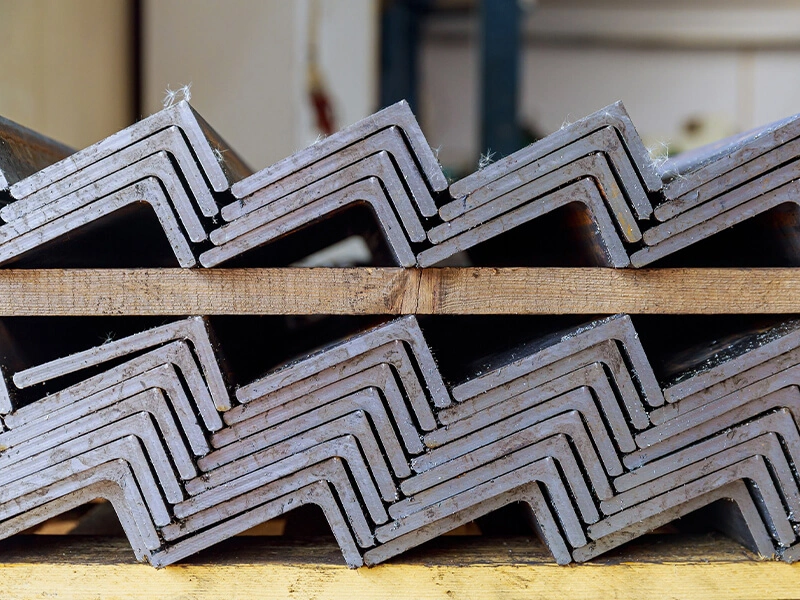
"L steel" is the common industry name for angle steel or angle bar. Its cross-section is shaped like the letter "L." It is a fundamental building block in steel construction. A fabricator in the Philippines once confused "L steel" with flat bar, ordering the wrong material for a bracing project.
L steel, or angle steel, is a long steel product with an L-shaped cross-section formed by two legs (webs) meeting at a 90-degree angle. It is used extensively for bracing, framing, supports, and stiffeners in structures. In marine contexts, it is made from specific grades like ABS A, B, D, or AH/DH series and is a critical component in ship frames, bulkheads, and offshore platforms. Its simplicity and strength make it versatile.
The Versatility and Specifications of Angle Steel
The L-shape is deceptively simple. Its geometry provides excellent strength in two directions while being easy to fabricate and connect.
Key Characteristics:
- Equal vs. Unequal Angles: An equal angle has legs of the same length (e.g., L100x100x10). An unequal angle has legs of different lengths (e.g., L150x90x12).
- Sizing: Defined by leg width (A & B) and thickness (t). Standard lengths are 6m, 9m, or 12m.
- Material: Can be made from various grades, from mild steel (A36) to high-strength weathering steel (A588) to marine grades (ABS AH36).
Primary Functions in Marine Construction:
- Stiffeners: The most common use. L angles are welded perpendicular to steel plates on ship hulls, decks, and bulkheads to prevent them from buckling under load (water pressure, cargo weight).
- Framing Members: They form the edges and skeleton of doors, windows, hatches, and smaller structural frames within the ship.
- Bracing: Used as diagonal braces in truss-like structures within the hull and superstructure to provide lateral stability.
- Brackets and Connections: Small pieces of angle are used as connection plates (gussets) to join beams and columns.
Why ABS Certification Matters for L Steel:
When an L angle is specified as "ABS," it means:
- The steel mill that produced it is approved by the American Bureau of Shipping.
- The chemical composition and mechanical properties of that specific heat of steel meet the strict ABS rules.
- It has undergone required impact testing (for grades B, D, E, and H-series) to prove toughness.
- It is traceable via a heat number back to a certified MTC.
Common ABS L Steel Grades for Shipbuilding:
| ABS Grade | Typical Use on Ships | Key Property |
|---|---|---|
| Grade A | Non-critical secondary structures, minor bracketry. | Basic strength, standard weldability. |
| Grade B | General hull framing, bulkhead stiffeners (standard). | Good toughness at 0°C, widely used. |
| Grade D | Hull framing in forward sections, areas subject to impact. | Improved toughness at -20°C. |
| AH32/AH36 | High-strength applications for weight reduction (longitudinals, frames). | Yield strength 315/355 MPa with Grade A toughness. |
| DH32/DH36 | High-strength applications in colder service environments. | Yield strength 315/355 MPa with improved Grade D toughness. |
For a supplier like us, providing the correct ABS L steel means ensuring the entire chain—from the approved mill to the marked product to the matching MTC—is intact. This brings us to the final, practical question: how do you confirm the material is even steel at all?
How to tell if something is made out of steel?
Before you even check the grade, you need to confirm the basic material is ferrous (iron-based). This might sound obvious, but in a mix of materials or with coatings, mistakes happen. A warehouse in Mexico received a pallet of "steel" brackets that were actually cast iron and shattered under load.
You can tell if something is made of steel by using a magnet (all carbon and low-alloy steels are strongly magnetic), performing a spark test (steel produces bright yellow sparks with branches), checking its density and weight (steel is heavy, ~7.85 g/cm³), or using a metal file (steel is hard but fileable). For a definitive answer, especially for alloys, professional chemical or spectroscopic analysis is needed.

Practical Methods for Material Identification
These methods range from simple field checks to advanced lab techniques. Use them in sequence, starting with the easiest.
1. The Magnet Test (Quickest and Most Reliable for Carbon Steel)
- Procedure: Use a strong neodymium magnet. Place it on the clean surface of the metal.
- Result for Steel: The magnet will be strongly attracted and may be difficult to pull off.
- Caveats:
- Austenitic Stainless Steels (e.g., 304, 316) are generally non-magnetic or only slightly magnetic. So, a magnet test alone cannot rule out stainless steel.
- Some other metals (like some nickel alloys) are also magnetic.
- Conclusion: If the magnet sticks strongly, it is very likely a ferrous metal (iron-based), which includes carbon steel, alloy steel, and cast iron. This is a good first pass.
2. The Spark Test (Requires a Grinder and Experience)
- Procedure: Touch the metal to a high-speed grinding wheel in a dark or shaded area. Observe the spark stream.
- Spark Characteristics of Mild Steel: Long, straight straw-colored sparks with few forks.
- Spark Characteristics of High-Carbon Steel: Shorter, brighter white sparks with many branches (star bursts).
- Spark for Cast Iron: Very short, red sparks that burst near the wheel.
- Limitation: Requires skill to interpret. Safety gear (glasses, gloves) is essential.
3. Visual and Physical Clues
- Color & Finish: Freshly cut or ground carbon steel has a bright silver-gray color that quickly rusts. Stainless steel stays silver. Aluminum is a duller silver and is much lighter.
- Weight (Heft): Steel is dense. Pick up a piece and compare it to a known steel object of similar size. Aluminum feels about one-third the weight.
- Chipping or Fracture: Cast iron is brittle and will fracture with a rough, grainy, dark gray surface. Steel is tougher and will deform before breaking; a broken surface is smoother and brighter.
4. Advanced/Definitive Methods
- Chemical Spot Test Kits: Small kits can distinguish between some metals (e.g., steel vs. aluminum) using reactive drops.
- Portable XRF Analyzer: Used by professional inspectors. It can identify the elemental composition on the spot, distinguishing between carbon steel, stainless steel, aluminum, etc.
- Laboratory Analysis: The only way to get a complete, accurate chemical breakdown.
Field Identification Flowchart:
| Step | Test | If YES -> | If NO -> |
|---|---|---|---|
| 1 | Strong Magnet Attraction? | It is very likely a ferrous metal (Carbon Steel, Alloy Steel, Cast Iron). Proceed to Step 2. | It could be Austenitic Stainless Steel, Aluminum, Copper, etc. |
| 2 | File Test: Does a file cut into it easily? | Likely mild/low-carbon steel. | Very hard to file: could be hardened steel, tool steel, or cast iron. Check spark test. |
| 3 | Visual: Is it heavy for its size and rusting? | Confirms carbon steel. | Lightweight and doesn’t rust: likely aluminum. Silver and doesn’t rust: could be stainless. |
| 4 | Final Check: Does the MTC and marking confirm it’s the specified ABS-grade carbon steel? | You have likely identified genuine ABS L steel. | Major red flag. The material’s identity does not match the order. |
For a client who values stable quality, this final verification is part of the incoming inspection process. Combining these simple physical tests with the documentary checks (MTC, markings) creates a robust shield against receiving counterfeit or incorrect materials. It ensures that the "L-shaped steel" they plan to order is exactly what they will integrate into their critical marine projects.
Conclusion
Identifying genuine ABS L-shaped steel requires a multi-step approach: verifying authentic documentation (MTC with heat number), checking proper physical markings, confirming basic material as ferrous steel, and using supplier transparency and third-party inspection as your safety net.
-
Understanding MTCs is crucial for verifying steel quality and authenticity, ensuring you make informed purchasing decisions. ↩
-
Surface quality is a key indicator of production control and material integrity, helping you spot potential fakes. ↩
-
Effective supplier vetting ensures you partner with reliable sources, reducing the risk of receiving fake or substandard steel. ↩
-
Understanding chemical composition helps you ensure the steel meets required specifications and performance standards. ↩
-
These numbers are vital for traceability and quality assurance in steel products, helping you avoid counterfeit materials. ↩