
An offshore platform stands in the middle of the ocean. It faces hurricanes, saltwater corrosion, and massive structural loads for decades. A single material failure here is not just expensive. It can be catastrophic for lives, the environment, and your company’s future.
For offshore oil & gas projects, you need marine steel certified to specific classification society grades like API 2W, 2Y, or ASTM A131. This steel must offer exceptional yield strength (often 355-500 MPa), superior low-temperature toughness for Arctic conditions, and high resistance to fatigue and corrosion in a harsh seawater environment.
The demands on offshore steel are extreme. The margin for error is zero. Understanding the exact specifications and why they matter is the first step to a safe and successful project. Let’s dive into the specific steel types, properties, and materials that build these industrial giants.
What type of steel is used in the oil and gas industry?
The oil and gas industry uses many types of steel. A pipeline, a refinery vessel, and an offshore platform each need different things. But for offshore structures—the focus here—the steel must be a special breed. It is stronger, tougher, and more reliable than standard construction steel.
The oil and gas industry uses carbon-manganese steels, low-alloy steels, and stainless steels. For offshore structural applications, the primary choice is high-strength, low-alloy (HSLA) steel plates1 and sections. These are governed by standards like API (American Petroleum Institute) 2H, 2W, 2Y2, and classification society rules (ABS, DNV3) for fixed and floating platforms.

We can categorize offshore steel by its application and the standards it meets. Each standard is a recipe for performance under specific conditions.
Categories and Standards of Offshore Structural Steel
Offshore steel is not a single product. It is a family of products designed for different jobs on a platform.
1. Steel for Primary Structure: Jackets, Decks, and Modules
This is the skeleton of the platform. It carries all the weight.
- API Standards: These are king in the Gulf of Mexico and many global projects.
- API 2W: Standard for steel plates for offshore structures. Grades like 2W50, 2W60 indicate minimum yield strength in ksi (50 ksi ≈ 345 MPa, 60 ksi ≈ 415 MPa). This steel is optimized for welded connections and good toughness.
- API 2Y: Standard for steel plates for Arctic offshore structures. Grades like 2Y50, 2Y60. This steel has even more stringent toughness requirements for very low service temperatures.
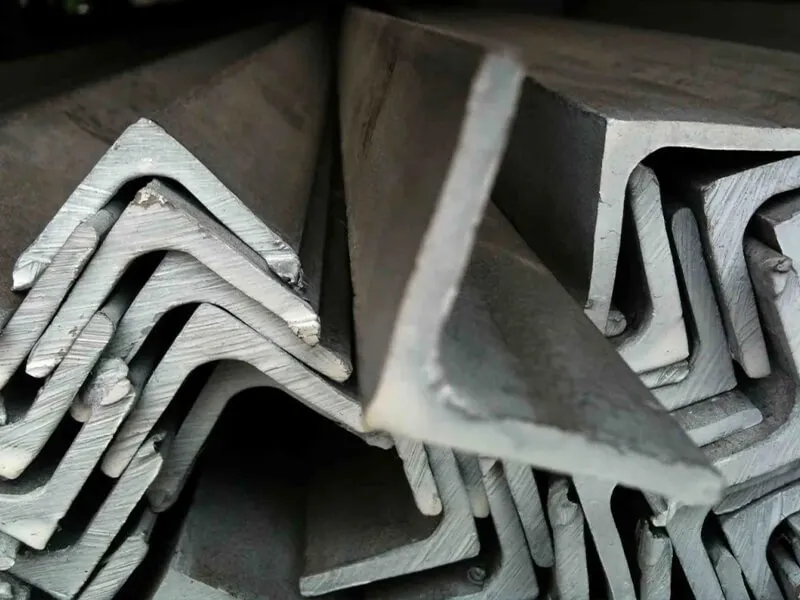
- Classification Society Grades: Similar to shipbuilding, platforms can be built to ABS, DNV3, or BV rules. Grades like ABS EH36, DH40 or DNV NV F36, F40 are common. These offer high yield strength (355, 390 MPa) with guaranteed toughness. The L-shaped angle steel and bulb flats for bracings and stiffeners must match these plate grades.
2. Steel for Special Applications
- Arctic Grades: For projects in the Barents Sea or Alaska, steels like API 2Y or ABS/EH420 are essential. They are tested for impact toughness at temperatures as low as -60°C to prevent brittle fracture.
- FPSO (Floating Production Storage and Offloading) Hulls4: These are essentially converted oil tankers or purpose-built vessels. They use standard marine grades (AH32/DH36) for most of the hull, but critical areas may use higher grades.
- Line Pipe Steel: This is a separate category for subsea pipelines. It uses high-strength, high-toughness steels like API 5L X65, X705, often with heavy wall thickness.
3. Key Selection Factors
Choosing the right type involves a balance:
- Design Temperature: This is the single most important factor after strength. It dictates the required Charpy V-notch impact test6 temperature.
- Section Thickness: Thicker sections are more prone to internal defects and require more stringent quality controls (like ultrasonic testing). They also need steel with good through-thickness (Z-direction) properties.
- Welding and Fabrication: Offshore structures are almost entirely welded. The steel must have a low Carbon Equivalent (Ceq) for good weldability to avoid cold cracking.
Here is a comparison table for common offshore structural plate steels:
| Standard / Grade | Minimum Yield Strength | Key Application | Notable Property |
|---|---|---|---|
| API 2W Grade 507 | 345 MPa (50 ksi) | General platform decks, jackets in moderate climates. | Good weldability, balanced toughness. |
| API 2Y Grade 608 | 415 MPa (60 ksi) | Highly stressed nodes, legs of platforms. | Higher strength for weight reduction. |
| ABS EH36 / DNV NV F36 | 355 MPa | FPSO hulls, primary structures. | High strength with excellent low-temp toughness. |
| API 2Y Grade 50 | 345 MPa | Arctic platform structures. | Exceptional toughness at -40°C to -60°C. |
When supplying steel for projects in Qatar, Saudi Arabia, or the North Sea, we must provide material with this exact certification. A contractor cannot use generic S355 steel; they need steel with an API 2W or ABS EH36 certificate that matches the project specifications. This traceability and compliance are non-negotiable.
What are the properties of marine grade steel?
Marine grade steel is not just "steel that goes near water." It is a material engineered with a specific set of properties to survive a specific set of attacks. Think of it as armor for structures that live in the ocean.
Marine grade steel possesses three core property groups: high mechanical strength1 (yield & tensile), exceptional toughness2 at low temperatures (verified by impact tests), and good weldability3 with controlled chemical composition. It also often features improved corrosion resistance4 compared to standard structural steel.

These properties are not nice-to-haves. They are mandatory requirements written into international codes. Each property addresses a specific failure mode in the marine environment.
The Essential Property Trio and How They Are Achieved
Let’s break down each core property and explain why it matters for offshore oil and gas.
1. Strength: The Ability to Carry Load
An offshore platform holds thousands of tons of equipment. It is hit by waves and wind.
- Yield Strength (ReH): This is the stress at which steel begins to deform permanently. For marine grades, this starts at 235 MPa (Grade A) and goes up to 500 MPa or more for special grades. High yield strength allows designers to use thinner, lighter sections, which is crucial for reducing the weight of topsides.
- Tensile Strength (Rm): This is the maximum stress before breaking. There is always a required minimum ratio between yield and tensile strength to ensure ductility.
2. Toughness: The Ability to Absorb Energy and Resist Cracking
This is arguably the most critical property for safety. Steel can become brittle in cold temperatures.
- The Threat of Brittle Fracture: In cold water, a small crack or weld defect can suddenly spread through the structure like glass breaking. This caused the catastrophic failure of many Liberty ships in WWII.
- Charpy V-Notch Impact Test5: This is the standard test. A sample with a machined notch is cooled to a specified temperature (e.g., -20°C, -40°C) and struck with a pendulum. The energy absorbed (in Joules) to break it is measured.
- Offshore Requirement: For North Sea or Arctic platforms, the required test temperature can be -40°C or lower, with very high energy absorption values. This guarantees the steel will not fail in a brittle manner during a winter storm.
3. Weldability: The Ability to Be Joined Safely
A platform has thousands of kilometers of welds. Bad welds are weak points.
- Carbon Equivalent (Ceq)6: This formula (C + Mn/6 + (Cr+Mo+V)/5 + (Ni+Cu)/15) predicts the hardness of the heat-affected zone after welding. A high Ceq means high hardness and a risk of hydrogen-induced cold cracking.
- Control of Elements: Marine grade steels have strictly limited amounts of Carbon, Sulfur, and Phosphorus. Lower carbon improves weldability. Low sulfur and phosphorus improve toughness. Elements like Ni (Nickel) and Cu (Copper) are sometimes added in small amounts to improve toughness and corrosion resistance4.
4. Supplementary Properties for Offshore
- Fatigue Resistance: Offshore structures are subject to millions of wave cycles over their life. The steel must have a high fatigue endurance limit. This is influenced by steel cleanliness (low inclusions) and good surface quality.
- Corrosion Resistance: While not stainless, marine steels often have slightly better corrosion resistance4 than standard steel. This comes from alloying elements like Copper and Nickel, and from controlled rolling processes that create a finer, more protective mill scale.
- Through-Thickness (Z-Direction) Properties: For thick plates at highly restrained connections (like node joints on a jacket), the steel must have guaranteed ductility in the thickness direction to prevent lamellar tearing.
For a fabricator, receiving steel with guaranteed properties means predictability. It means every plate of ABS DH36 we ship to a yard in Thailand will behave the same way during cutting, welding, and in service. This "stable quality" is what our client Gulf Metal Solutions valued, as it allows them to fabricate components with confidence for their offshore projects in the Gulf.
What materials are used for offshore structures?
An offshore structure is a complex assembly. It is not made from just one material. Steel is the primary material, but different forms and grades of steel are used for different parts. Other materials play supporting but critical roles.
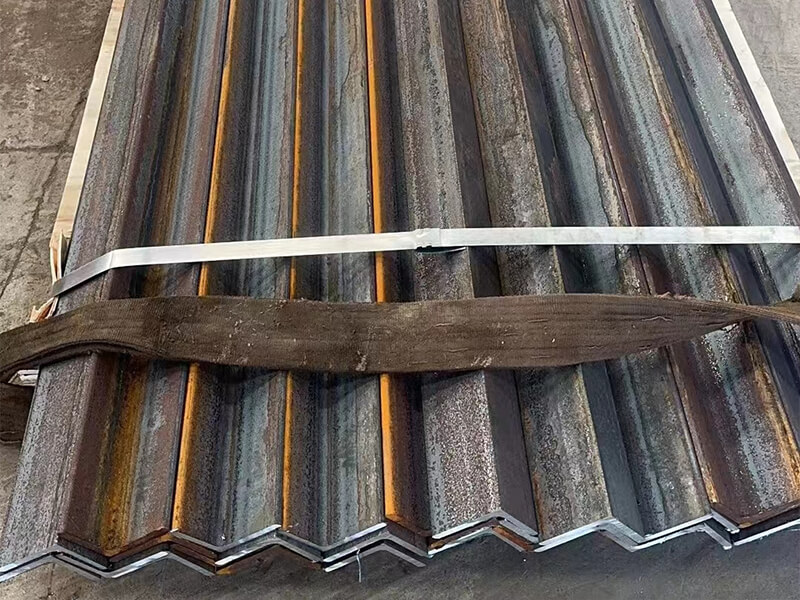
The primary material for offshore structures is steel, used as rolled plates, sections (like L-angles, bulb flats, I-beams), and tubulars. Complementary materials include concrete (for gravity bases, topsides), aluminum alloys (for lightweight decks), specialized coatings (for corrosion protection), and elastomers (for seals and bearings).
This material selection is a careful engineering compromise between strength, weight, durability, and cost. Let’s look at the role of each major material category.
The Material Palette for Building at Sea
We can think of the structure in layers: the foundation, the skeleton, the skin, and the protection system.
1. Structural Steel1: The Skeleton and Skin
This forms 80-90% of the structure’s weight.
- Plates: Thick steel plates (from 10mm to over 100mm) are used for leg cans, node joints, deck plating, and hulls of floating structures. These are the high-grade API 2W/2Y or ABS EH/DH plates we supply.
- Sections: These give shape and stiffness.
- Tubulars (Pipes): These are the most common sections for jacket legs and bracings. They are efficient in resisting compression and bending from any direction. They come in various diameters and wall thicknesses.
- Rolled Sections: L-shaped angle steel is extensively used for secondary bracing, walkway supports, and ladder frames. Bulb flats are used as longitudinal stiffeners on deck plates and module walls. I-beams and H-beams are used for primary deck girders and topside support frames.
- Forgings and Castings: Used for critical, complex-shaped components like large flanges, node connectors, and pedestals for crane mounts. These are made from specially heat-treated steel.
2. Concrete2: Mass and Durability
- Gravity-Based Structures (GBS): These massive platforms use concrete for the base caisson. The concrete provides weight to hold the platform on the seabed and has excellent durability in seawater.
- Topsides: Sometimes used for firewalls or blast walls due to its fire resistance.
- Hybrid Structures: Steel jackets with concrete piles or concrete transition pieces.
- Use: For non-load bearing walls, ceilings, and panels on the living quarters (topside modules). The goal is to reduce weight high up on the structure, which improves stability.
- Trade-off: Aluminum is lighter than steel but has lower strength and a much lower melting point, which is a concern for fire safety.
4. Corrosion Protection Systems4: A Material in Its Own Right
Steel cannot survive naked in seawater. A system of materials protects it.
- Coatings: High-performance epoxy, polyurethane, or zinc-rich paints are applied to all surfaces. The coating is the first line of defense.
- Cathodic Protection5 (CP): This is an electrochemical system. Sacrificial anodes made of zinc or aluminum alloy are attached to the steel. They corrode instead of the steel, "sacrificing" themselves. For large structures, Impressed Current Cathodic Protection5 (ICCP) systems use an external power source.
5. Other Specialized Materials
- Fire Protection: Intumescent coatings or ceramic fiber blankets protect structural steel in case of fire.
- Elastomers6: Used for seals in watertight doors, bearings, and flexible joints.
The table below summarizes the material application:
| Material | Form/Type | Primary Use in Offshore Structure | Reason for Use |
|---|---|---|---|
| Structural Steel1 | Plates, Tubulars, L-Angles, I-Beams | Primary load-bearing frame, hull, decks, bracings. | High strength, good toughness, weldability, cost-effective. |
| Concrete2 | Reinforced, Pre-stressed | Gravity base caissons, piles, secondary structures. | Mass for stability, durability in water, fire resistance. |
| Aluminum Alloy | Sheets, Extrusions | Living quarter walls, non-structural cladding. | Light weight to reduce topside mass. |
| Zinc/Aluminum | Anodes | Cathodic Protection5 system. | Sacrificial corrosion protection for submerged steel. |
| Epoxy/Polyurethane | Coating | Surface protection on all steel. | Barrier against water, oxygen, and salts. |
Our business is squarely focused on the first category: supplying the certified marine steel plates and sections—especially the versatile L-angles and bulb flats—that form the essential bones and sinews of these structures. A reliable supply of these materials is the starting point for any offshore project from Mexico to Malaysia.
What is the difference between marine steel1 and stainless steel2?
This is a fundamental question with a simple answer at its core. People see "marine" and think it means "stainless." It does not. They are different materials designed for different primary purposes. Confusing them leads to wrong choices, project failures, and wasted money.
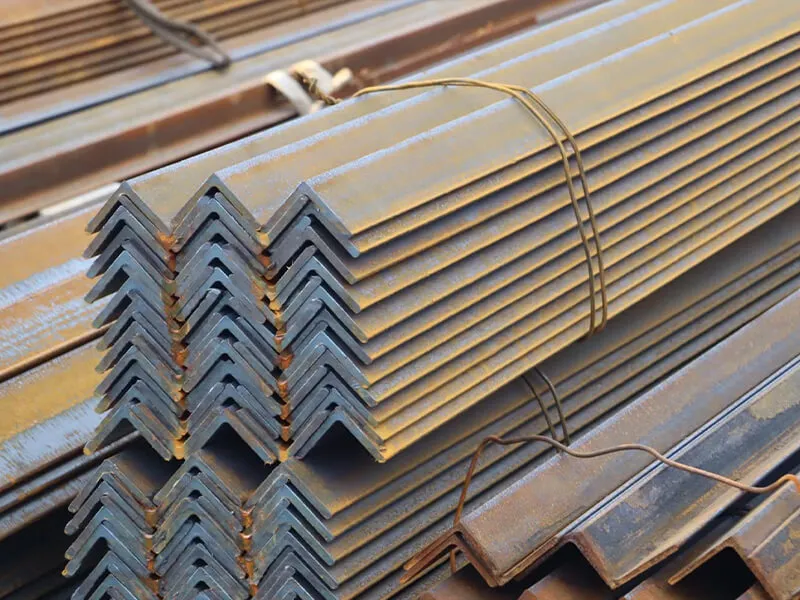
The main difference is corrosion resistance3 and cost. Stainless steel (e.g., 316) relies on a chromium oxide layer for high corrosion resistance3 without painting. Marine steel is carbon steel with enhanced properties (strength, toughness) but requires paint and cathodic protection to resist corrosion in seawater. Marine steel is far stronger structurally and more cost-effective for large structures.
We need to compare them head-to-head across several dimensions to understand their distinct roles in offshore projects.
A Side-by-Side Comparison of Two Different Worlds
Let’s use a typical marine structural steel (like ABS DH36) and a common offshore stainless steel2 (316L) for this comparison.
1. Core Purpose and Mechanism
- Marine Steel: Its primary purpose is structural load-bearing4. It is designed to be strong and tough. It accepts that it will corrode if left unprotected. Therefore, a protection system5 (coatings + cathodic protection) is an integral part of its design. The steel and its protection are a package.
- Stainless Steel: Its primary purpose is inherent corrosion resistance3. The chromium (min. 10.5%) forms a passive, self-repairing layer that prevents rust. Its structural properties are secondary, though adequate for many non-primary applications.
2. Key Property Comparison
- Yield Strength: This is critical for structural design.
- Marine Steel (DH36): 355 MPa minimum.
- 316L Stainless Steel: Typically around 170-205 MPa (Annealed condition).
- Verdict: Marine steel is significantly stronger. You would need a much thicker section of stainless to match the load capacity of a marine steel1 beam, which is economically unfeasible.
- Corrosion Resistance:
- Marine Steel: Low. Will rust rapidly if the coating system fails.
- 316L Stainless Steel: Very High in marine atmospheres and splash zones. Excellent resistance to pitting and crevice corrosion in chloride environments.
- Cost:
- Marine Steel: Relatively low cost per ton. The total "installed cost" includes painting and anodes.
- 316L Stainless Steel: Typically 4-6 times more expensive per kilogram than marine carbon steel.
3. Fabrication and Welding
- Marine Steel: Standard welding procedures apply. Pre-heat might be needed for thick sections. It is the industry standard, so welders are very familiar with it.
- Stainless Steel: Requires different welding wires, techniques, and more careful heat control to prevent "sensitization" (chromium depletion) which can reduce corrosion resistance3 near the weld. It also has higher thermal expansion, which can lead to more distortion.
4. Application in Offshore Oil & Gas
Their uses are complementary, not interchangeable.
- Use Marine Steel (with protection) for:
- The entire jacket structure (legs, bracings, nodes).
- Deck primary and secondary structure.
- Hull of FPSOs, barges.
- Piping (inside, if carrying hydrocarbons; outside, if coated/protected).
- Use Stainless Steel (typically 316L/ duplex) for:
- Critical small-bore instrumentation tubing.
- Components in constant seawater immersion where coatings are impractical (e.g., some pump internals, shafting).
- Cladding: Thin sheets of stainless can be explosion-bonded to carbon steel plate for process equipment (like separator vessels) to provide corrosion resistance3 on the inside while the carbon steel provides structural strength.
Here is a definitive summary table:
| Aspect | Marine Structural Steel (e.g., ABS DH36) | Stainless Steel (e.g., 316L) |
|---|---|---|
| Primary Function | Structural Strength | Corrosion Resistance |
| Corrosion Mechanism | Requires external protection (paint, anodes). | Inherent protection (passive oxide layer). |
| Typical Yield Strength | High (355+ MPa) | Moderate (170-205 MPa) |
| Relative Cost | Low (Baseline) | Very High (4-6x) |
| Typical Offshore Use | Jackets, decks, primary hull structure. | Instrument lines, specific equipment, clad plate. |
For an EPC (Engineering, Procurement, Construction) contractor, this distinction is vital. They will procure thousands of tons of our certified marine plate and L-angle steel for the platform’s frame. They might only procure a few hundred kilograms of 316L stainless for specific fittings. Understanding this difference ensures the project’s budget and structural integrity are maintained. It also clarifies why we, as a marine steel1 supplier, focus on providing the high-strength, certified carbon steel that forms the backbone of the industry.
Conclusion
Offshore oil & gas projects demand steel with certified strength, extreme low-temperature toughness, and reliable weldability. Understanding the specific API/Class grades, the critical material properties, and the clear distinction between marine carbon steel and stainless steel is essential for specifying, procuring, and building safe, durable offshore structures.
-
Explore the applications of marine steel to see its importance in structural integrity and cost-effectiveness. ↩ ↩ ↩ ↩ ↩ ↩ ↩
-
Learn about stainless steel’s unique properties and why it’s preferred in specific marine environments. ↩ ↩ ↩ ↩ ↩ ↩
-
Understanding corrosion resistance is crucial for selecting the right materials for marine applications. ↩ ↩ ↩ ↩ ↩ ↩ ↩ ↩ ↩
-
Discover the significance of structural load-bearing in ensuring safety and durability in marine structures. ↩ ↩ ↩ ↩ ↩ ↩
-
Understanding protection systems is essential for maintaining the longevity of marine steel structures. ↩ ↩ ↩ ↩ ↩ ↩
-
Explore the role of Elastomers in ensuring watertight seals and flexibility in offshore applications. ↩ ↩ ↩
-
Find out how API 2W Grade 50 steel is used in constructing resilient offshore platforms. ↩
-
Explore the unique properties of API 2Y Grade 60 steel that make it suitable for Arctic conditions. ↩