
You manage four different suppliers for plates, angles, bulb flats, and special sections. One shipment is late. Another has inconsistent quality. Your project manager is angry, and your production line stops. Coordinating multiple suppliers is a hidden cost that destroys your profit margin.
A one-stop supplier for marine steel consolidates your procurement, providing plates, sections, and profiles from certified sources. This simplifies logistics, ensures consistent quality across all materials, reduces administrative overhead, and gives you a single point of contact for technical support and problem-solving.

Managing multiple suppliers creates complexity and risk. A one-stop partner turns this fragmented process into a streamlined system. Let’s examine the tangible benefits and answer common questions that arise when considering this sourcing strategy.
Who is the biggest supplier of stainless steel?
You need stainless steel for marine fittings. You want to source from a major producer for quality assurance. But knowing the "biggest" mill doesn’t help you buy a few tons of 316L1 angle. They won’t sell to you directly. This is the core dilemma for most buyers.
The world’s biggest supplier of stainless steel is China’s Tsingshan Holding Group2, based on crude stainless steel production volume. Other global giants include Acerinox (Spain), Outokumpu (Finland), and Yusco (Taiwan). However, these mills typically sell through large distributors and service centers, not directly to end-users for small or medium project volumes.
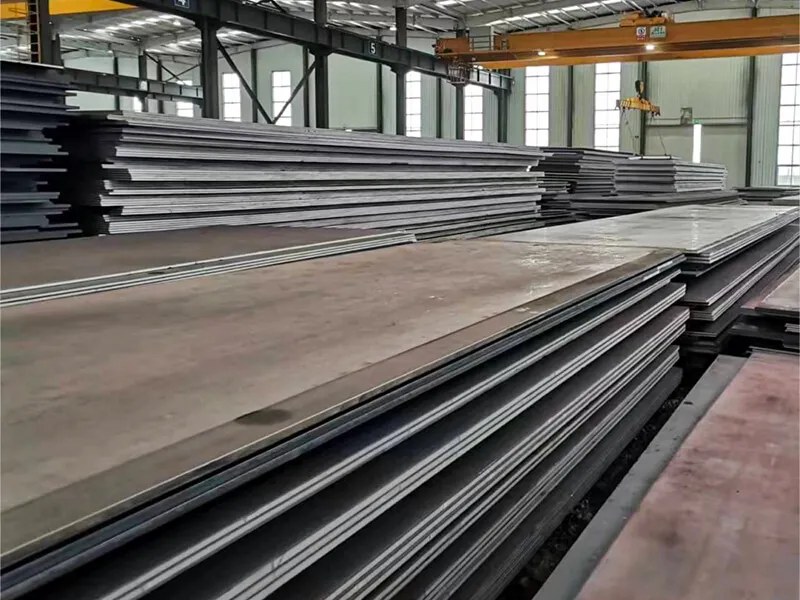
The size of a mill matters for scale and technology, but it does not define your access to quality material. Your practical choice is not "which mill," but "which supplier can reliably provide me with certified material from a reputable mill?" This is where a specialized one-stop supplier3 adds value.
From Mill to Yard: The Role of the Intermediary Supplier
The supply chain for specialty steels like marine-grade stainless4 is multi-layered. Understanding this helps you appreciate the role of a one-stop supplier3.
The Supply Chain Layers:
- Integrated Mill (e.g., Tsingshan, Outokumpu5): Produces raw coils and plates in massive quantities. They have minimum order quantities (MOQ) often in the hundreds of tons. Their direct customers are large service centers and major OEMs.
- Service Center / Major Distributor: Buys in bulk from mills, processes the material (slitting, cutting, leveling), and sells smaller quantities. They may still have high MOQs for specific items.
- Specialized Stockist / Export Supplier (Our Role): This is our level. We focus on a niche—marine and offshore materials. We maintain relationships with mills and large distributors to source specific grades (like 316L1, Duplex) in project-friendly quantities. We handle international logistics, documentation, and provide technical support.
Why You Need a Supplier, Not Direct Mill Access:
- Volume: Your project may need 5 tons of 316L1 plate and 2 tons of angles. A mill will not entertain this order.
- Product Mix: You need a variety of products (plate, round bar, angle). Mills specialize in forms (e.g., coil, plate). A supplier aggregates products from different sources.
- Value-Added Services: Mills do not provide small-batch cutting, edge preparation, detailed certification packages for export, or consolidated shipping. A good supplier does.
The One-Stop Advantage for Stainless:
A marine-focused one-stop supplier3 does not just sell stainless. They understand its application. They know that for seawater, you need 316/L, not 304. They can provide the full material package: 316L1 plate for a platform deck, 316L1 round bar for fasteners, and 316L1 angle for brackets, all from traceable sources. They ensure the chemistry is correct and can arrange PMI (Positive Material Identification6) testing.
Consider this comparison:
| Sourcing Method | How to Get 5 tons of 316L1 Angle & Plate | Challenges |
|---|---|---|
| Direct from Mill | Nearly impossible. MOQ too low. No mixed products. | High barriers to entry, no support services. |
| Multiple Distributors | Find one for plate, another for angles. Manage two POs, two shipments, two quality checks. | Coordination headache, inconsistent quality/certification, higher admin cost. |
| One-Stop Marine Supplier | Single inquiry. Supplier provides quote for both items from their network. Single PO, combined shipment, unified certification. | Simplified. Single point of accountability, consistent quality control, optimized logistics. |
Our value is being that knowledgeable intermediary. We know which mills produce reliable 316L1 for marine use. We package it with other marine carbon steels you need, delivering a coherent material solution. This is true one-stop service.
Is 304 stainless steel1 ok for marine use?
A supplier offers you 304 stainless at a much lower price than 316. It looks the same. You might be tempted to save money, especially for a non-critical part. This decision could cost you far more in replacements and reputation down the line.
For marine environment2s, 304 stainless steel1 is generally not recommended. It lacks sufficient resistance to chloride-induced pitting3 and crevice corrosion, which are prevalent in saltwater and salt spray. 316/L stainless steel, with its added Molybdenum (Mo), is the standard choice for marine applications as it significantly improves corrosion resistance in chloride-rich conditions.
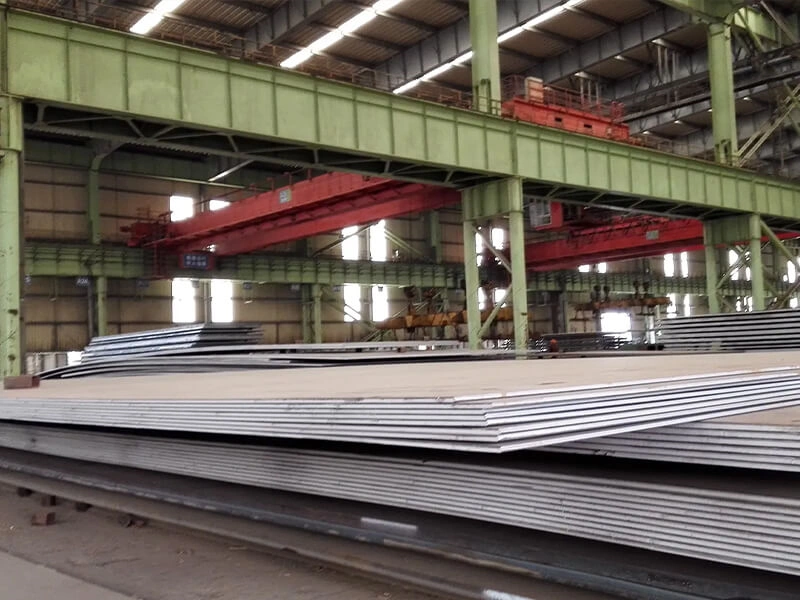
The difference is not subtle in the long run. Using 304 in a marine setting is a classic example of a false economy. Let’s examine the specific failure modes and the environments where this choice matters most.
The Chloride Challenge: Why 316/L is the Marine Standard
The marine environment2 is a severe test for metals. The presence of chloride ions (from salt) is the primary aggressor. Both 304 and 316 are "stainless" because they form a passive chromium oxide layer. But chlorides can break down this layer.
The Role of Molybdenum (Mo):
- 304 Stainless: Composition is ~18% Cr, 8% Ni. Molybdenum content is 0% (or trace).
- 316 Stainless: Composition is ~16% Cr, 10% Ni, 2-3% Molybdenum.
Molybdenum dramatically strengthens the passive film, making it much more resistant to attack by chloride ions. This raises the steel’s Pitting Resistance Equivalent Number (PREN)4.
Where 304 Will Likely Fail in Marine Service:
- Splash Zone & Atmospheric Exposure: Salt spray deposits on the surface. In sheltered areas where the spray can concentrate (e.g., under fittings), 304 will develop surface rust and, eventually, pitting corrosion.
- Crevice Conditions: Anywhere two surfaces meet (under a washer, inside a threaded fitting, at a weld), a crevice exists. Crevices create oxygen-depleted zones where chlorides concentrate. 304 is highly susceptible to crevice corrosion5 in these situations.
- Warm Seawater: Corrosion rates increase with temperature. 304 performs even worse in tropical waters or near heat sources.
When Might 304 Be Considered (With Caution)?
Only in very benign, well-maintained conditions:
- Interior, climate-controlled spaces on a ship, far from any saltwater ingress.
- Purely decorative trim that is regularly cleaned and can be easily replaced.
Even then, specifying 316/L is a safer, more durable choice.
The One-Stop Supplier’s Duty:
A responsible supplier acts as your first line of defense against this mistake. When you ask for "stainless for a marine project," we should immediately guide you toward 316 or 316L. We provide the technical data to back this up. Our product offering for marine projects focuses on 316/L, not 304, because we understand the application.
Here is a clear decision guide:
| Application on a Marine Structure | Recommended Material | Why Not 304? |
|---|---|---|
| Deck handrails, ladders, fittings | 316/L Stainless Steel | Constant exposure to salt spray and rain. Crevices at weld points. |
| Brackets in bilge or machinery space | 316/L Stainless Steel or Hot-dip Galvanized Carbon Steel | Damp, salt-laden atmosphere. Potential for splashing. |
| Fasteners (bolts, nuts) for exterior use | A4/ASTM A193 B8M Class 2 (316) | Critical for integrity. Prone to crevice corrosion5. |
| Interior cabinet hinges or dry storage racks | 304 might be acceptable, but 316 is still better. | Minimal corrosion risk, but humidity can still be present. |
By choosing a one-stop supplier familiar with marine specs, you get this guidance built-in. You avoid the costly error of specifying or accepting the wrong material.
What is the best marine steel?
You are designing a new vessel. You search for the "best" steel. But the best steel for the hull bottom is different from the best for the deck, which is different from the best for the ballast tank. There is no single winner.
There is no universal "best" marine steel. The optimal choice depends on the specific application, location on the vessel, and required properties. For primary hull structures, high-strength, low-alloy steels like ABS AH36, DH36, or EH361 offer the best balance of strength, toughness, and weldability. For corrosion resistance without coatings, stainless steels (316L) or duplex steels2 are best for specific components.
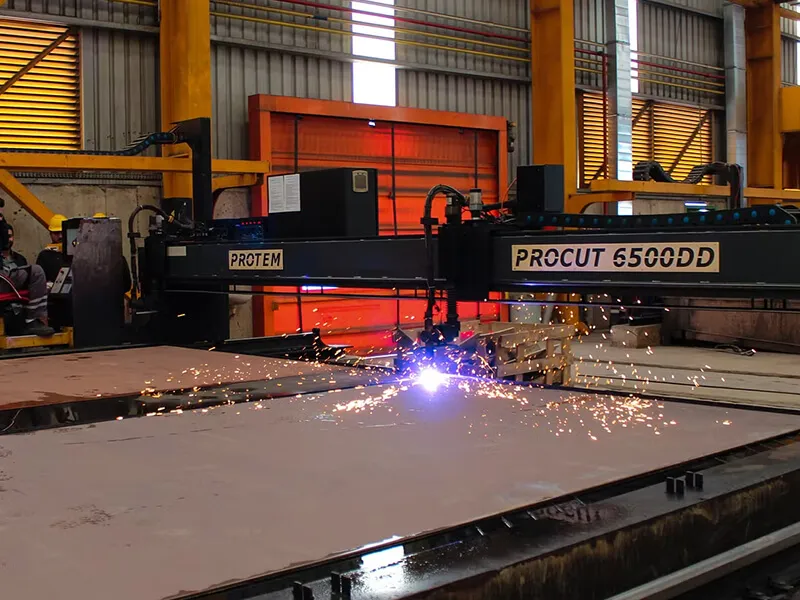
The question should be reframed: "What is the best marine steel for this specific purpose?" A one-stop supplier excels at answering this question because they see the entire material picture for a project. Let’s break down the purpose-driven selection.
The "Best" Steel is Fit-for-Purpose: An Application Matrix
Selecting steel is an optimization exercise. You balance strength, toughness, weldability, corrosion resistance, and cost. Different parts of a ship have different priorities.
1. For Primary Hull Strength & Global Stiffness:
- Priority: High yield strength, good toughness at low temperature, excellent weldability.
- "Best" Choices: Normal Strength (Grade A, B) and High Strength (AH32, DH32, AH36, DH36, EH36) steels certified to shipbuilding rules (ABS, LR, DNV). EH grades offer the highest toughness for critical areas like the sheer strake.
- Why they are best: They are engineered for this exact purpose. Their chemistry is controlled to prevent brittle fracture in cold seas and to allow efficient welding in shipyard conditions.
2. For Severe Corrosion Environments (Ballast Tanks, Waterline):
- Priority: Corrosion fatigue resistance, resistance to pitting under wet/dry cycles.
- "Best" Choices:
- Coated AH/DH steels with a high-performance coating system.
- Corrosion-Resistant Alloy (CRA) clad steel3 where a layer of stainless steel is bonded to carbon steel.
- Special "Tank Steel" grades with enhanced corrosion performance from some mills.
3. For Non-Structural Corrosion Resistance (Fittings, Fasteners):
- Priority: Maximum pitting and crevice corrosion resistance.
- "Best" Choices: 316/L Stainless Steel, Duplex Stainless Steels (2205), Nickel Alloys (Inconel 625)4 for the most severe services.
4. For Weight-Sensitive Applications (High-Speed Vessels, Superstructures):
- Priority: High strength-to-weight ratio.
- "Best" Choices: Higher-strength steels (AH40, EH40), Aluminum alloys, or composite materials.
The Role of a One-Stop Supplier in Selection:
A supplier who only sells plate cannot give you this holistic advice. A one-stop supplier who offers plates, sections, and knows about corrosion alloys can help you build a complete bill of materials.
| Ship Area / Component | Primary Challenge | Recommended "Best" Steel Type | Typical Product Form from Supplier |
|---|---|---|---|
| Bottom Shell | Slamming impact, hydrostatic pressure. | AH36/DH36 Plate5 | Heavy plate, often in wide widths. |
| Deck | Tensile stress from hull bending. | AH36/EH36 Plate | Plate, often with specific flatness requirements. |
| Frames & Stiffeners | Providing local stiffness to plating. | AH36 Bulb Flat, Angle | Long sections (bulb flats, angles). |
| Ballast Tank Internals | Severe corrosion, fatigue. | AH36 with certified primer OR Special grade plate | Pre-primed plate or specially treated steel. |
| Deck Fittings & Railings | Atmospheric and splash zone corrosion. | 316L Stainless Steel Round Bar, Angle, Pipe6 | Stainless sections and profiles. |
We work with clients to fill out this matrix. For a shipyard in Thailand, we might supply AH36 plate for the hull, AH32 bulb flats for stiffeners, and recommend a source for 316L handrail material. This integrated approach ensures every part of the structure gets the "best" steel for its job.
Who makes the best quality steel in the world?
You want absolute top quality for a critical component. The names Japan1 and Germany2 come to mind. But "best quality" is subjective. Is it the cleanest steel? The most consistent? The best for deep-sea pipelines? The answer changes with the definition of "best."
There is no single producer of the "best quality" steel globally. Different countries and companies excel in specific domains. Japan1 (e.g., Nippon Steel) and Germany2 (e.g., Dillinger) are renowned for exceptional consistency and high-tech specialty steels. South Korea3 (POSCO) is a leader in advanced shipbuilding steels. Top-tier mills in China4 (e.g., Baowu) produce world-class steel at a massive scale and competitive cost.
Chasing a mythical "best" mill can be a distraction. The practical question is: "Which mill can consistently produce steel that meets my project’s specific quality standard, and can I access it reliably?" A one-stop supplier provides that access.
Beyond Nationality: Accessing Certified Quality
The debate about which country makes the best steel often overlooks the procurement reality. For a project, you need a certificate of conformity5, not a flag of origin.
What Defines "Quality" for Marine Steel?
For our industry, quality is defined by conformance to specification. The "best" steel perfectly and consistently meets the requirements of ABS Rule 26, DNV GL Offshore Standard, or EN 10225. This is measured by:
- Mechanical test results (yield, tensile, impact toughness) within specified ranges.
- Chemical composition within tight limits.
- Dimensional tolerances (flatness, thickness).
- Sound internal and surface quality (verified by UT, MT).
- Full traceability and proper certification.
Mills Capable of This "Quality":
Many mills worldwide can achieve this. Their business models differ:
- Japan1ese/European Premium Mills: They often command a price premium for their brand reputation and consistency. They excel in the most demanding niche applications.
- Korean/Chinese Top-Tier Mills (e.g., POSCO, Baowu): They operate at the frontier of technology and scale. They are the primary suppliers to the global shipbuilding industry because they reliably meet classification society rules at a competitive price.
The Procurement Bottleneck and the One-Stop Solution:
You, as a buyer for a shipyard in the Philippines or a fabricator in Saudi Arabia, likely cannot buy directly from Nippon Steel or POSCO for a 500-ton order. You need an intermediary.
- A One-Stop Supplier’s Value: We build relationships with these top-tier mills (often in China4 and Korea for marine grades). We understand their quality systems. We place aggregated orders that meet their MOQ. We then distribute that certified quality steel in project-sized quantities to you.
- Guaranteeing Quality: Our role is to ensure the mill’s quality is transferred to you intact. We do this through proper handling, preservation, and by providing the original Mill Test Certificate (MTC)7 with each shipment. We also offer third-party inspection8 (SGS/BV) to give you an independent quality verification.
Consider this access comparison:
| Buyer’s Goal | Direct from "Best" Mill | Through a One-Stop Marine Supplier |
|---|---|---|
| Get 200 tons of certified AH36 plate. | Very difficult. MOQ and logistics are prohibitive. | Standard service. Supplier sources from a certified mill, provides full MTCs, arranges shipping. |
| Get a mixed order: plates, bulb flats, angles. | Impossible. Mills specialize in product forms. | Core competency. Supplier provides a consolidated package from their network of mills. |
| Verify quality independently. | You would have to hire your own surveyor at the mill. | Supplier can arrange and facilitate third-party inspection8 at the loading port. |
| Resolve a quality claim. | You are a very small customer to a giant corporation. | You have a direct relationship with a dedicated account manager. |
Our client feedback highlights this: "The product quality is stable." This stability comes from our partnership with certified mills. We don’t claim to make the best steel. We provide you with reliable access to consistently high-quality steel from producers who do. That is the practical meaning of "best quality" for a project manager.
Conclusion
Choosing a one-stop supplier for marine steel simplifies procurement, ensures material compatibility, provides expert guidance on grade selection, and delivers reliable access to certified quality from top-tier mills.
-
Explore this link to discover Japan’s leading steel manufacturers and their specialties. ↩ ↩ ↩ ↩ ↩ ↩ ↩ ↩ ↩ ↩ ↩ ↩ ↩ ↩
-
Learn about Germany’s top steel companies and their reputation for quality and consistency. ↩ ↩ ↩ ↩ ↩ ↩
-
Find out how South Korea’s steel industry excels, especially in shipbuilding. ↩ ↩ ↩ ↩ ↩ ↩
-
Discover the scale and capabilities of China’s top steel producers and their global impact. ↩ ↩ ↩ ↩ ↩
-
Understand the importance of certification in ensuring steel quality and compliance. ↩ ↩ ↩ ↩ ↩
-
Explore the specifics of ABS Rule 2 and its significance in marine steel quality. ↩ ↩ ↩
-
Learn about MTCs and their role in verifying the quality of steel products. ↩
-
Discover how third-party inspections ensure quality assurance in steel sourcing. ↩ ↩