
The steel arrives with a certificate. It looks official, but the numbers seem off. You accept it. Months later, a weld cracks. The investigation finds the steel chemistry didn’t match the spec. The certificate was useless, and now your project is in crisis.
To check certificates for marine steel, you must verify the certificate type (e.g., MTC 3.1), confirm it’s original from the mill, cross-check chemical and mechanical test results against your project specifications, ensure full heat number traceability, and validate the issuing mill and inspector stamps. Never accept a generic or untraceable document.
A certificate is not just paperwork. It is the legal and technical proof of the material’s identity and capabilities. Accepting a bad certificate is like accepting a fake passport for a critical employee. Let’s learn to read these documents like an expert.
What is a MTC 3.1 certificate?
You receive a certificate labeled "EN 10204 3.1". Your supplier says it’s the best. But what does "3.1" actually mean, and why is it so important for marine steel? Confusing certificate types is a common source of quality risk.
A MTC 3.1 certificate is a formal, inspection certificate issued by the steel manufacturer (the mill). It declares that the products supplied comply with the order requirements. Crucially, it is based on specific testing of the actual products shipped and includes the test results. The mill takes full responsibility for the stated compliance.
The number "3.1" is not random. It comes from the European standard EN 10204, which defines types of inspection documents. This standard is widely used globally. Understanding the hierarchy is key to knowing what you’re getting.
Decoding EN 10204: The Hierarchy of Trust in Certificates
EN 10204 defines different levels of supplier declaration and verification. The type of certificate directly reflects the level of assurance you have. For marine applications, only the highest levels are acceptable.
The Main Certificate Types under EN 10204:
-
Type 2.1: Certificate of Compliance (Non-Specific Inspection)
- Who issues: The manufacturer (mill).
- What it states: The products comply with the order. It is based on the mill’s general quality control system, not on specific tests for that batch.
- Level of Assurance: Low. It’s a promise, not proof. Common for non-critical materials.
-
Type 2.2: Test Report (Non-Specific Inspection)
- Who issues: The manufacturer (mill).
- What it states: Provides test results (chemical, mechanical). However, these results are from the mill’s general production data, not necessarily from the specific batch you received.
- Level of Assurance: Medium. It shows typical properties but lacks batch traceability.
-
Type 3.1: Inspection Certificate (Specific Inspection)
- Who issues: The manufacturer’s (mill’s) authorized inspection representative, who is independent of the manufacturing department.
- What it states: It certifies that the products have been tested specifically for this order/delivery. The test results on the certificate are from samples taken from the actual batch of material supplied.
- Level of Assurance: High. This is the standard requirement for pressure equipment, marine, and offshore structural steel. It provides full traceability.
-
Type 3.2: Inspection Certificate (Specific Inspection by Third Party)
- Who issues: An independent, third-party inspection organization (e.g., surveyor from DNV, ABS, Lloyd’s Register, or SGS) nominated by the purchaser.
- What it states: Similar to 3.1, but the verification and testing are witnessed or performed by the independent party.
- Level of Assurance: Very High. This is often required for critical projects. The purchaser pays extra for this independent validation.
Why MTC 3.1 is the Marine Standard:
For marine steel profiles, you need to know that the AH36 angle bar you are welding meets the toughness requirements. A 2.1 certificate cannot prove that. A 3.1 certificate, with its specific test results tied to a heat number, can.
| You Need This Information… | Can a 2.1 Certificate Provide It? | Can a 3.1 Certificate Provide It? |
|---|---|---|
| What is the actual yield strength of this plate? | No. It only says it meets the standard. | Yes. It lists the actual tensile test result. |
| What is the impact toughness of this batch at -20°C? | No. | Yes. It lists the actual Charpy V-notch test values. |
| Can I trace this material back if a problem occurs? | No. | Yes. The unique heat number provides full traceability. |
When you procure from us, we provide MTC 3.1 certificates (or equivalent from other standards) as a matter of course for marine grades. It is not an extra; it is part of the product. This is what buyers like Gulf Metal Solutions expect for project-based distribution.
What is a steel certificate?
You hear "mill cert," "MTC," "certificate of conformance," and "test report." They are often used loosely. But in a technical specification, the wrong word can lead you to accept an inadequate document. Precision matters.
A steel certificate is an official document that provides verified information about the properties and quality of a batch of steel. It is issued by the manufacturer or an independent body. It acts as a "birth certificate" for the steel, detailing its chemical composition, mechanical properties, heat treatment, and confirming it meets a specific standard or order requirement.
A certificate serves multiple audiences: the quality inspector, the design engineer, the welding engineer, and the regulatory body. Each needs different information from it. Let’s break down its core components and functions.
The Anatomy of a Steel Certificate: More Than Just a Paper
A proper certificate is a structured data package. It should allow you to reconstruct the material’s history and verify its fitness for purpose.
Core Components of a Valid Certificate:
- Header Information:
- Manufacturer’s name and logo.
- Certificate number and date of issue.
- Purchaser’s name and order number.
- Applicable standard (e.g., EN 10025-2, ASTM A709, ABS Rules).
- Product Description:
- Product form (Plate, Bar, Section).
- Grade (e.g., S355J2+N, AH36).
- Dimensions (Thickness, Width, Length).
- Quantity and weight.
- The Heart: Traceability and Test Data
- Heat Number / Melt Number / Cast Number: This is the single most important piece of data. It is the unique identifier for the molten steel batch from which your material came. All test results are linked to this number.
- Chemical Composition: A table listing the percentages of Carbon (C), Manganese (Mn), Silicon (Si), Phosphorus (P), Sulfur (S), and other alloying elements. You check this against the standard’s limits.
- Mechanical Properties: Results of tensile tests (Yield Strength, Tensile Strength, Elongation) and often Charpy V-Notch Impact tests (energy absorbed at specified temperatures).
- Statement of Compliance & Signatures:
- A clear statement that the material conforms to the specified standard and order.
- Authorized signature and stamp from the mill’s inspection department or the third-party surveyor.
The Two Main Functions of a Certificate:
- Proof of Conformance: It is your objective evidence that the steel you received is the steel you ordered. It is a contract document.
- Data for Fabrication: The chemical composition (especially Carbon Equivalent) is vital for the welding engineer to develop or select a welding procedure. The mechanical properties assure the design engineer.
Common Problems with Certificates to Watch For:
- Generic Certificate: No heat number, no specific test results. It just says "Grade AH36." This is worthless.
- "Edited" Certificate: A certificate where the purchaser’s name or order number has been clearly typed over a previous one. This suggests the certificate is being reused, breaking traceability.
- Mismatched Information: The grade on the certificate doesn’t match the grade on the material tags or the packing list.
- Illegible Copies: A poor-quality fax or scan where stamps, signatures, or numbers are unreadable. Always ask for a clear, digital original.
A professional supplier provides clear, original, traceable certificates without being asked. We ensure the certificate package matches the shipment exactly. This diligence prevents paperwork problems that can halt work at your receiving dock.
What are the three types of certification?
Your project requires "certified steel." But certification can mean three different things: the material certificate, the mill’s approval to make the steel, and the quality system certification of the supplier. Confusing them is a critical error.
For marine steel, the three key types of certification are: 1) Product Certification (Mill Test Certificate), 2) Mill Approval/Acceptance Certification by a Classification Society (like ABS, DNV), and 3) Quality Management System Certification of the supplier or mill (like ISO 9001). Each serves a distinct purpose in the assurance chain.
These three certifications form a pyramid of confidence. The MTC is at the top for your specific batch. The mill approval supports the MTC’s credibility. The quality system is the foundation that makes the first two possible. Let’s explore each layer.
The Assurance Pyramid: Product, Producer, and System
Relying on only one type of certification leaves gaps in your quality defense. A complete procurement strategy checks all three.
Layer 1: Product Certification (The MTC – What you get with the steel)
This is the certificate for the specific batch you bought, as discussed. It answers: "Does this piece of steel meet the spec?"
Layer 2: Mill Approval / Type Approval (The mill’s license to produce)
This is certification of the manufacturer’s capability, not a specific product.
- What it is: A Classification Society (e.g., American Bureau of Shipping – ABS, Det Norske Veritas – DNV) audits a steel mill. They approve the mill’s processes, quality controls, and testing facilities to produce steel to the society’s rules (e.g., for hull structural steel).
- What you get: An approval certificate or a listing in the society’s register of approved manufacturers. The mill is then allowed to apply the society’s stamp to their MTCs and sometimes to the steel itself.
- Why it matters: It means the mill’s entire production system is deemed competent. It gives you confidence that any MTC they issue is credible. When you buy "ABS AH36," you are implicitly buying steel from an ABS-approved mill.
Layer 3: Quality Management System (QMS) Certification (The operational framework)
This is certification of the management system.
- What it is: An audit against an international standard like ISO 9001. It certifies that the organization (mill or supplier) has a documented process for managing quality, addressing non-conformities, and continuously improving.
- What you get: An ISO 9001 certificate for the company.
- Why it matters: A QMS provides the consistent framework within which proper MTCs are generated and mill approvals are maintained. It’s a sign of a professional, organized operation.
How They Work Together:
A simple analogy: Building a car.
- ISO 9001 certifies the car factory has good assembly line processes.
- ABS Approval certifies that this factory is specifically authorized to make ship engine parts.
- The MTC 3.1 is the test report for the specific engine installed in your ship, proving it meets all power and durability specs.
Verification Checklist for Buyers:
| Certification Type | What to Ask For / Check | Why You Need It |
|---|---|---|
| Product (MTC) | Original EN 10204 3.1 or equivalent. Verify heat number matches material markings. | Proof your specific batch is correct. |
| Mill Approval | Ask: "Is your source mill approved by [ABS/DNV/LR] for the grade I’m ordering?" Request a copy of the mill’s approval certificate. | Confidence in the source’s technical capability and authority to produce to the standard. |
| QMS (Supplier) | Check if the supplier holds ISO 9001 or similar. It’s often on their website or brochure. | Indicates a professional, process-driven supplier less likely to make administrative errors. |
Our business is built on this pyramid. Our partner mills hold ABS/DNV approvals. They operate under ISO 9001 systems. They issue valid MTC 3.1 certificates. We, as a supplier, facilitate this chain of trust and deliver the final certificate to you intact.
How to check material test certificate?
You have the MTC in hand. Now what? Just filing it away is a mistake. You must actively check it. A five-minute review can prevent a five-month delay caused by using the wrong material.
To check a Material Test Certificate (MTC), follow a systematic review: 1) Verify it’s an original 3.1-type certificate. 2) Check the heat number matches the markings on the steel. 3) Compare chemical analysis against the standard’s limits. 4) Confirm mechanical test results (yield, tensile, impact) meet requirements. 5) Ensure all mandatory stamps and signatures are present.
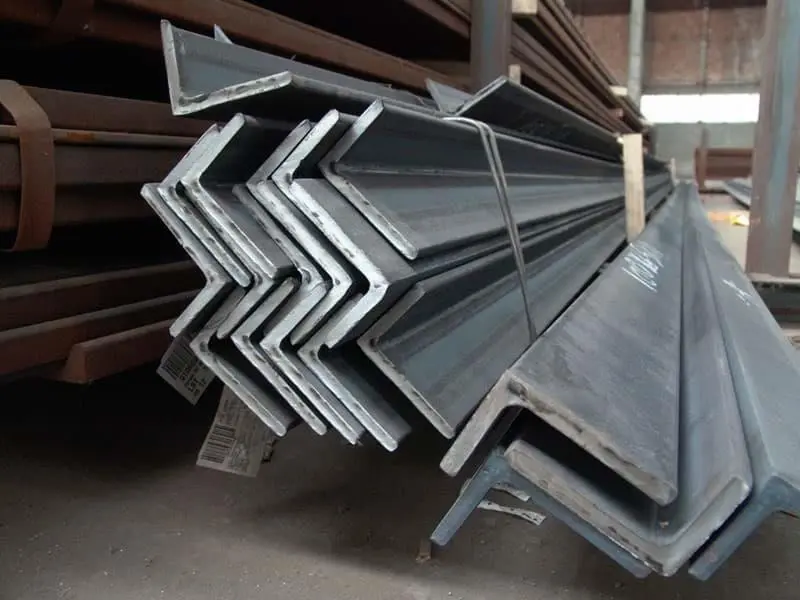
Checking a certificate is a skill. It’s not about reading every word, but knowing the critical data points and red flags. Let’s create a step-by-step verification protocol you can use on your next delivery.
The Practical Verifier’s Guide: A Step-by-Step Protocol
Treat the MTC like a crucial engineering drawing. Your review should be methodical. Here is a workflow you can adopt.
Step 1: Authenticity and Type Check.
- Look for the standard reference: "EN 10204 3.1" or equivalent wording.
- Check for the mill’s original stamp/logo and an authorized signature. A photocopy without a raised stamp or a scanned signature is less trustworthy.
- Ensure the certificate number is unique and the date is recent (should align with production date).
Step 2: Traceability Match.
- Find the Heat Number / Cast Number on the certificate.
- Go to your delivered steel. Each plate or bundle of sections should have a paint stencil or tag showing this same heat number, along with the grade and dimensions.
- This physical match is non-negotiable. If the numbers don’t match, the certificate does not belong to that steel. Stop and query it immediately.
Step 3: Chemical Composition Verification.
- Locate the chemistry table. Key elements to check for marine carbon steel:
- Carbon (C), Manganese (Mn): Affect strength and weldability.
- Sulfur (S), Phosphorus (P): Must be low (typically below 0.025%). High levels cause brittleness and weld problems.
- Calculate the Carbon Equivalent (CE): Use the formula CE = C + Mn/6. For good weldability in shipbuilding, CE should often be below 0.40-0.43 for thicker plates. Compare this calculated value to any CE limit in your project specification.
Step 4: Mechanical Properties Verification.
- Tensile Tests: Check Yield Strength (ReH or Rp0.2) and Tensile Strength (Rm). They must be at or above the minimum specified in the standard (e.g., for AH36, Yield ≥ 355 MPa) but also within any maximum limits.
- Impact Tests (Charpy V-Notch): This is critical for marine steel. Check:
- Test Temperature: Was it tested at the right temperature (e.g., 0°C for Grade A, -20°C for D grade, -40°C for E grade)?
- Impact Energy: The value (in Joules) must meet or exceed the standard’s requirement (e.g., often 34J or 41J average). Check the results for multiple samples.
Step 5: Dimensional and Order Compliance.
- Verify the product dimensions (thickness, width, length) on the certificate match your purchase order and the actual goods.
- Check the steel grade on the certificate matches what you ordered (e.g., AH36, not A36).
Red Flag Checklist:
If you see any of these, investigate immediately:
| Red Flag | Potential Problem | Action |
|---|---|---|
| No Heat Number | Impossible to trace. Certificate is generic. | Reject the certificate and the material. |
| Heat number on certificate doesn’t match material marking. | Certificate is for different steel. Material is uncertified. | Stop. Do not use the material. Contact supplier. |
| S or P content > 0.030% for marine grade. | Steel is impure, prone to brittleness. | Question the material’s suitability. |
| Impact test values are below required minimum. | Steel may be brittle at operating temperature. | Reject the batch. This is a safety-critical failure. |
| Certificate is a poor copy, stamps are unclear. | May be forged or altered. | Request a clear, original copy from the mill via your supplier. |
For our clients, we simplify this. We provide a complete, clear, and traceable certificate package. We expect you to check it, and we are ready to answer any questions. This transparency builds the trust that long-term partnerships are made of, as seen in the feedback from our clients in the Middle East and Asia.
Conclusion
Checking marine steel certificates requires verifying their type, ensuring traceability between document and material, and critically reviewing chemical and mechanical test data against project specifications.
Tags: Mill Test Certificate Check, EN 10204 3.1, Steel Traceability, Material Certification, Quality Documentation Review