
Your shipyard client demands ABS-certified steel. Your offshore contractor insists on DNV standards. A European buyer asks for BV approval. These are not just different names. They are different rulebooks for the same material. Choosing the wrong one can stop a multi-million dollar project. Understanding the differences between ABS, BV, and DNV standards is not academic. It is a practical necessity for sourcing, procurement, and project success in the global maritime market.
ABS (American), BV (Bureau Veritas), and DNV (Det Norske Veritas) are major classification societies. Each publishes its own rules for marine steel, covering chemical composition, mechanical properties, and testing. While their core goals for safety are aligned, differences exist in specific grade names, approval processes, and technical emphasis, which can impact material selection and supply chain logistics.
Many people think "class-approved steel" is a single, universal product. This is a dangerous misunderstanding. As a supplier working with mills certified by all these societies, I see daily how their unique requirements shape production and delivery. Let’s move beyond the acronyms and compare what these standards really mean for your steel order.
What does DNV stand for in marine?
DNV is a name you see on certificates for some of the world’s most advanced ships and offshore platforms. But what does it represent? DNV stands for Det Norske Veritas1. This is Norwegian for "The Norwegian Truth." It started in 1864 in Oslo. Its original purpose was to classify and insure Norwegian merchant ships. Today, DNV is a global giant in risk management and quality assurance. In the marine world, DNV is not just a classifier. It is often seen as a leader in technical innovation, especially for complex and harsh environment projects.
In marine, DNV stands for Det Norske Veritas, a leading international classification society. It sets technical standards (DNV Rules) for ships and offshore structures. DNV is known for its strong focus on safety, risk management, and advanced materials technology for harsh environments like the North Sea and Arctic.
DNV’s reputation for technical depth is well-earned. To understand its position, we should look at its key characteristics and how it compares to others in practice.
DNV’s Identity: The Technical Specialist
DNV has carved out a specific niche. It is often the preferred class for technically demanding projects. We can break down its approach into several distinct areas.
1. Historical Roots in Harsh Environments
DNV grew from the Norwegian maritime community. Norway’s coastline is treacherous, and its offshore oil and gas industry operates in the challenging North Sea. This environment forced DNV to develop very robust rules from the beginning. Their standards for materials, especially for low-temperature toughness2 and fatigue resistance3, are considered among the most stringent. When a project involves an LNG carrier (operating at -163°C) or a floating production storage and offloading (FPSO) unit in the North Sea, DNV’s rules are frequently specified. Their standards for steel in such applications are detailed and leave little room for ambiguity.
2. Integration of Risk Management and Digitalization
DNV has expanded beyond traditional classification. It strongly promotes risk-based approaches4 and digital class services.
- Risk Management: DNV’s rules often incorporate probabilistic methods. This means they assess risk based on statistical data and engineering models, not just prescriptive rules. This can influence steel selection by allowing for optimized designs with the right material evidence.
- Digitalization: DNV is active in digital twins5 and data-driven ship management. They have rules for cybersecurity and software systems on ships. For steel, this translates to an emphasis on traceability6 and data integrity. A DNV material certificate is part of a digital thread that may follow the steel component for its entire lifecycle.
3. Comparison with ABS and BV in Key Steel Areas
The differences are sometimes subtle but important for mills and suppliers.
| Aspect | DNV’s Typical Emphasis | Comparison Point (ABS / BV) |
|---|---|---|
| Standard Reference | Uses its own DNV Rules7 and often references EN (European) standards (e.g., EN 10225). This is logical given its European base. | ABS heavily references its own rules and ASTM (American) standards. BV, being French, also uses EN standards but has its own rulebook. |
| Grade Designation | Uses a system like NV A, NV D, NV E for ordinary to extra-high strength, or adopts EN grades like S355G2+N. | ABS uses A, B, AH, DH, EH. BV uses A, B, D, E, AH, DH, EH or references EN grades. |
| Approval Process | Known for a rigorous and detailed technical review of mill submissions. Their surveyors are deeply technical. | ABS process is also strict but can be more standardized. BV’s process is similarly rigorous, with a strong global network. |
| Market Perception | Seen as the "go-to" for offshore, gas carriers, and complex/high-tech vessels. Strong in Europe and for specialized projects globally. | ABS is dominant in the Americas and very strong in general cargo shipbuilding worldwide. BV has a very strong presence in France, Southern Europe, and parts of Asia. |
From a supplier’s perspective, sourcing DNV-approved steel requires working with mills that have passed their specific audit. These mills need to maintain production records and test procedures that satisfy DNV’s technical scrutiny. When a client in Qatar or Romania requests DNV-grade plate8 for an offshore module, we know the documentation must be impeccable. The mill test certificate must precisely match DNV’s required format and data points. DNV’s name, therefore, stands for a legacy of rugged safety evolved into modern, data-assured technical excellence.
What is ABS grade steel?
You receive a drawing. The material callout says "ABS Grade AH361". This is one of the most common specifications in global shipbuilding. But what does it mean? ABS grade steel is not a brand of steel. It is steel that has been manufactured, tested, and certified to meet the specific material rules published by the American Bureau of Shipping2 (ABS). When you buy "ABS grade steel," you are buying a promise. The promise is that the steel’s properties are guaranteed to meet or exceed the minimum values defined in the ABS Rulebook for that particular grade.
ABS grade steel is structural steel produced and certified in compliance with the American Bureau of Shipping’s rules. It is defined by grades (like A, AH36, EH40) that specify minimum yield strength, tensile strength, chemical composition, and toughness. The steel must be produced at an ABS-approved mill and accompanied by an ABS-approved test certificate.
The ABS grading system is a language of its own. It is precise, widely accepted, and forms the backbone of commercial shipbuilding. To truly understand it, we need to decode the system and see how it works in the real world.
Deciphering the ABS Grade Code: A System of Strength and Application
The ABS grade tells you the steel’s strength and its intended service condition at a glance. Let’s break down the components.
The Anatomy of an ABS Grade: AH36L
- First Letter (A/D/E): Historically indicated the steel’s quality or strength level. ‘A’ was for ordinary strength. Today, for hull structural steel, the first letter combined with the following ‘H’ primarily indicates the strength series.
- The ‘H’ (Optional but Common): This is the critical letter. ‘H’ stands for "High Strength." The absence of ‘H’ means it is ordinary strength steel (e.g., Grade A, Grade B). The presence of ‘H’ means it is a high-strength steel3, which allows for thinner, lighter structures.
- The Number (32, 36, 40, etc.): This indicates the minimum yield strength4 in kilograms-force per square millimeter (kgf/mm²). This is a traditional unit still used in the system.
- 36 means a minimum yield strength4 of 36 kgf/mm².
- To convert to the more modern unit Megapascals (MPa): 36 kgf/mm² ≈ 355 MPa.
- So, AH36 has a guaranteed yield strength of at least 355 MPa.
- Suffix (L, N, etc.): This indicates special service conditions.
- ‘L’ stands for Low Temperature. It means the steel is tested for impact toughness5 at a specified sub-zero temperature (e.g., -40°C). It resists brittle fracture in cold environments.
- Other suffixes might indicate normalized rolling (‘N’) or thermo-mechanical control processing (‘TM’).
Why the ABS System is So Pervasive
The ABS grade system is dominant for several practical reasons:
- Clarity and Simplicity: The code "AH36" instantly communicates key information: High Strength, 355 MPa yield. Everyone in the industry understands it.
- Global Acceptance: ABS is one of the largest classification societies. Its rules are accepted by flag states, ports, and insurers worldwide. A ship built with ABS-grade steel has a globally recognized passport.
- Alignment with Major Shipbuilding Regions: ABS has a very strong presence in shipbuilding hubs in Asia (China, South Korea, Japan) and the Americas. Many standard ship designs are based on ABS rules.
The Supplier’s Reality with ABS Grades
For us, an order for "ABS AH36" is a clear instruction. We follow a strict process:
- Source from Approved Mills: We only procure from steel mills that hold a valid ABS Certificate of Approval for Material Manufacturers. This means ABS surveyors have audited the mill’s quality system and production process.
- Ensure Proper Certification: The mill must provide an ABS Material Test Certificate6 (MTC) for the specific heat (batch) of steel. This certificate lists the actual chemical analysis and mechanical test results. It is signed off by the mill’s quality department and references the ABS approval.
- Physical Marking: The steel plates or sections are physically stamped with the ABS logo, the grade (e.g., AH36), the heat number, and the mill’s identification. This allows for visual verification at the shipyard.
When Gulf Metal Solutions in Saudi Arabia ordered ABS-grade plates from us, their primary need was this chain of trust. They needed the ABS MTC to present to their client and the class surveyor at the project site. Our role was to ensure this chain was unbroken and the documentation was flawless. "ABS grade" is therefore a contractual and technical package7, not just a material description.
What are the standards for ABS steel?
When we talk about "standards for ABS steel," we are talking about a detailed rulebook. The ABS Rules for Materials and Welding1 are this book. These rules do not just say "steel must be strong." They define exactly how strong, what it is made of, how it is made, how it is tested, and how it is documented. These standards cover the entire journey of the steel, from the furnace in the mill to its final stamped form on the dock.
The standards for ABS steel are defined in the ABS Rules, particularly in Part 2 "Materials and Welding." These rules specify requirements for chemical composition (carbon, manganese, sulfur limits), mechanical properties (yield/tensile strength, elongation), testing procedures (tensile, Charpy impact), heat treatment, and mandatory certification/marking from ABS-approved mills.
These standards are comprehensive. To grasp their scope, we should look at the key categories they govern. This understanding helps you know what you are really buying.
The Pillars of ABS Material Standards: A Detailed Framework
The ABS rules for steel are built on several interconnected pillars. Each pillar ensures a specific aspect of quality and performance.
1. Chemical Composition Standards2
ABS sets strict limits on the elements in the steel. This controls the steel’s inherent properties.
- Carbon (C): Affects strength and weldability. Higher carbon means stronger but harder to weld. ABS sets maximum limits for each grade.
- Manganese (Mn): Increases strength and toughness. ABS specifies a minimum and maximum range.
- Sulfur (S) and Phosphorus (P): These are impurities. They can make steel brittle. ABS sets very low maximum limits (e.g., 0.035% max for S and P for many grades).
- Carbon Equivalent (Ceq): This is a calculated value (using a formula) that predicts the steel’s weldability. ABS sets maximum Ceq values to ensure the steel can be welded safely without cracking.
The specific limits differ for Grade A, AH32, AH36, etc. A mill’s chemical analysis report must prove compliance with these exact limits.
2. Mechanical Property Standards3
These are the "performance" standards. They are verified by destructive testing.
- Yield Strength (ReH)4: The stress at which the steel begins to deform permanently. ABS defines the minimum value (e.g., 355 MPa for AH36). The tested value must be at or above this.
- Tensile Strength (Rm)5: The maximum stress the steel can withstand while being stretched. ABS defines a range (e.g., 490-620 MPa for AH36). The tested value must fall within this band.
- Elongation (A): A measure of ductility—how much the steel can stretch before breaking. ABS sets a minimum percentage based on the test sample size.
- Impact Toughness (Charpy V-Notch)6: The steel’s resistance to brittle fracture. For grades with suffix ‘L’ or for thicker plates, ABS requires Charpy tests at specified low temperatures (e.g., -20°C, -40°C). The rules set the minimum energy absorption in Joules that the test samples must achieve.
3. Manufacturing Process and Testing Standards7
ABS rules govern how the steel is made and proven.
- Deoxidation Practice: Specifies whether the steel must be killed (fully deoxidized) using silicon or aluminum.
- Heat Treatment: Rules for whether the steel must be delivered as-rolled, normalized (N), or thermo-mechanically controlled processed (TMCP).
- Test Sampling and Frequency: Dictates exactly where test samples must be cut from a plate (e.g., from one end). It specifies how many tests are required per heat and per thickness range.
- Non-Destructive Testing (NDT)8: May require ultrasonic testing (UT) of plates over a certain thickness to check for internal defects.
4. Certification and Traceability Standards9
This is the administrative backbone that makes everything else credible.
- Mill Approval: The foundation. A mill cannot produce ABS steel without first passing ABS’s approval audit.
- Material Test Certificate (MTC)10: The key document. It must follow a specific ABS format and include all required data: grade, heat number, dimensions, chemical results, mechanical test results.
- Marking: Each piece must be stamped with the ABS logo, grade, heat number, and mill mark. This creates a physical link to the certificate.
For a supplier, navigating these standards is our daily work. When we offer "SGS inspection support," it is an additional layer on top of this. The third-party inspector verifies that the product and its ABS certificate match the order and that the markings are correct. This addresses the exact pain point Gulf Metal Solutions had with "quality inconsistency." The ABS standards provide the benchmark, and our service ensures the delivered product meets that benchmark without surprise.
What are the disadvantages of ABS material?
The previous sections show ABS standards as robust and widely accepted. This is true. But no system is perfect. It is critical to think critically. Are there downsides to specifying ABS-grade steel? The answer is not about the steel itself being inferior. The "disadvantages" are often about the system—its regional biases1, cost implications2, and potential rigidity when compared to other options like DNV or BV standards. Recognizing these points helps make more informed sourcing decisions.
Potential disadvantages of specifying ABS-grade material can include higher cost due to licensing fees, a perceived stronger alignment with American/ASTM practices which may not always be the optimal fit for projects based on European designs or standards, and, in some cases, a less flexible approach to alternative materials or innovative processes compared to some other societies.
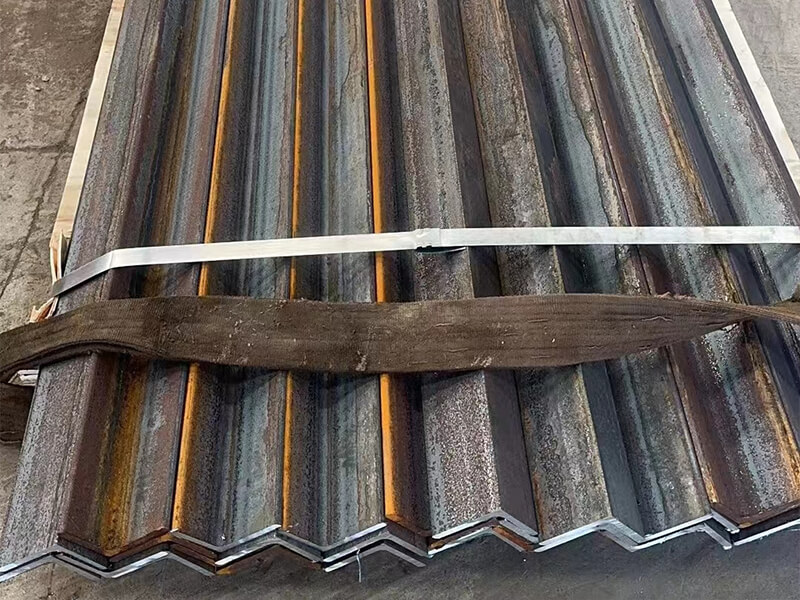
Labeling anything a "disadvantage" requires context. What is a drawback for one project might be irrelevant or even an advantage for another. Let’s examine the common criticisms in a balanced way.
A Critical Look: Trade-offs in the ABS Ecosystem
We can structure the discussion around practical project concerns: cost, global fit, and innovation.
1. Cost and Administrative Considerations
The ABS system is not free to operate. The costs are embedded in the supply chain.
- Mill Licensing Fees: Steel mills pay annual fees to ABS to maintain their approval certificate. They also pay for the surveyor’s time during audits and witness testing. These costs are factored into the price of ABS-grade steel. It can make ABS steel slightly more expensive than non-classed or differently classed steel from the same mill.
- Certification for Every Batch: Each heat of steel requires specific testing and certification. For small orders or odd-sized plates, this fixed administrative cost can be proportionally higher.
- Comparison: BV and DNV have similar fee structures. The cost difference is often marginal and depends more on the mill’s negotiation with each society. The real cost issue arises if you are forced to use ABS for a project in a region where BV or DNV-approved mills are more common and potentially more cost-competitive.
2. Regional and Design Standard Alignment
ABS rules have an American heritage. This can create friction in certain contexts.
- ASTM vs. EN Standards: ABS rules frequently reference ASTM (American Society for Testing and Materials) standards for testing methods and auxiliary materials. A European shipyard or designer working primarily with EN (European) standards may find this inconvenient. They might need to cross-reference or justify equivalence, adding engineering time. DNV and BV, being European, more naturally integrate EN standards3.
- Project Location: For a project destined for a European flag state or an owner with a strong preference for European standards, specifying BV or DNV might streamline approvals with local authorities. Insisting on ABS might add an extra layer of review.
3. Perception on Flexibility and Innovation
This is a nuanced point. ABS is a conservative organization, rightly so for safety. However, this conservatism is sometimes viewed as a lack of flexibility.
- Alternative Materials: Some industry professionals perceive DNV, with its strong offshore and gas background, to be slightly more forward-leaning in approving new high-tech materials (like advanced composites) or novel steel grades. ABS is absolutely rigorous but may adopt new approaches at a different pace.
- Rule Application: In highly complex, one-off projects (like a unique offshore wind installation vessel), some engineers feel DNV’s risk-based approach allows for more tailored technical dialogues. The ABS approach can be seen as more strictly prescriptive. Again, this is a matter of perception and specific project teams.
A Supplier’s Practical Perspective
For us, these "disadvantages" are simply factors we manage. Our job is to match the client’s requirement with the right mill source.
- If a client in the Philippines needs ABS-grade plate for a bulk carrier, it’s the perfect, cost-effective fit. The mills are set up for it.
- If a client in Romania needs steel for a dredger working under a European flag, they might specify BV. We then source from a BV-approved mill. The cost and process are similar.
- The key is to not assume one is universally better. The right choice depends on the project’s contract, the ship’s intended flag, the owner’s preference, and the shipyard’s experience.
The case of Gulf Metal Solutions4 is instructive. They are in Saudi Arabia and work on various international projects. They required ABS-grade material5 for that specific order because their end-client’s ship design and contract demanded it. Our ability to reliably provide it, with supporting SGS inspection, turned a potential "disadvantage" (the strictness of the system) into an advantage (guaranteed quality and smooth class approval). The main disadvantage would have been if we, as a supplier, were not adept at navigating the ABS certification process, causing them delays. In essence, the "disadvantage" lies not in the ABS material, but in choosing a supplier who doesn’t understand its standards thoroughly.
Conclusion
ABS, BV, and DNV standards all deliver safe, high-quality marine steel. The choice between them is less about technical superiority and more about project requirements, regional practices, and supply chain efficiency. The smart strategy is to understand their nuances and partner with a supplier who can navigate all three seamlessly.
-
Learning about regional biases can help you choose the right material for your project’s location and requirements. ↩ ↩ ↩ ↩
-
Exploring cost implications can reveal how ABS-grade steel affects your project’s budget and overall feasibility. ↩ ↩ ↩ ↩
-
Exploring EN standards can provide insights into European practices and their relevance to your project. ↩ ↩ ↩ ↩
-
Exploring Gulf Metal Solutions’ experience can highlight best practices in navigating ABS certification and sourcing. ↩ ↩ ↩ ↩ ↩
-
Understanding the pros and cons of ABS-grade material can help you make informed decisions for your projects. ↩ ↩ ↩ ↩
-
Discover how impact toughness is measured and its role in preventing brittle fractures in ABS steel. ↩ ↩ ↩
-
Understand the manufacturing and testing standards that guarantee the integrity of ABS steel products. ↩ ↩ ↩
-
Understand the importance of NDT in ensuring the quality and safety of ABS steel products. ↩ ↩
-
Find out how certification and traceability ensure the credibility and quality of ABS steel. ↩
-
Learn about the MTC and its role in verifying the compliance and quality of ABS steel. ↩