
Global shipyard order books are filling up again. This news sounds positive for the industry. But for you, a procurement manager, it means immediate pressure. You need to secure reliable supplies of specialized materials like bulb flat steel. A market recovery does not just mean more business. It means more competition, longer lead times, and potential price volatility for critical components.
Global shipbuilding recovery increases demand for specialized profiles like bulb flat steel, leading to tighter mill capacity, longer lead times, and potential price increases. To secure supply, shipbuilders and suppliers must strengthen strategic partnerships, plan procurement further in advance, and consider flexible sourcing strategies to navigate the recovering but constrained market.
The connection between a headline about shipbuilding growth and your next bulb flat purchase order is direct and urgent. To navigate this changing landscape, you need to understand the material itself, the global market forces at play, and how to adapt your strategy. Let’s start by defining exactly what we are talking about.
What is a flat steel1?
You hear the terms "plate," "sheet," and "flat steel1." They seem similar. In a busy shipyard, using the wrong term can cause confusion in orders and delays in deliveries. Bulb flats are a specific type of flat steel1 product. Understanding the category helps you communicate precisely with mills and suppliers, especially when demand is high and clarity is critical.
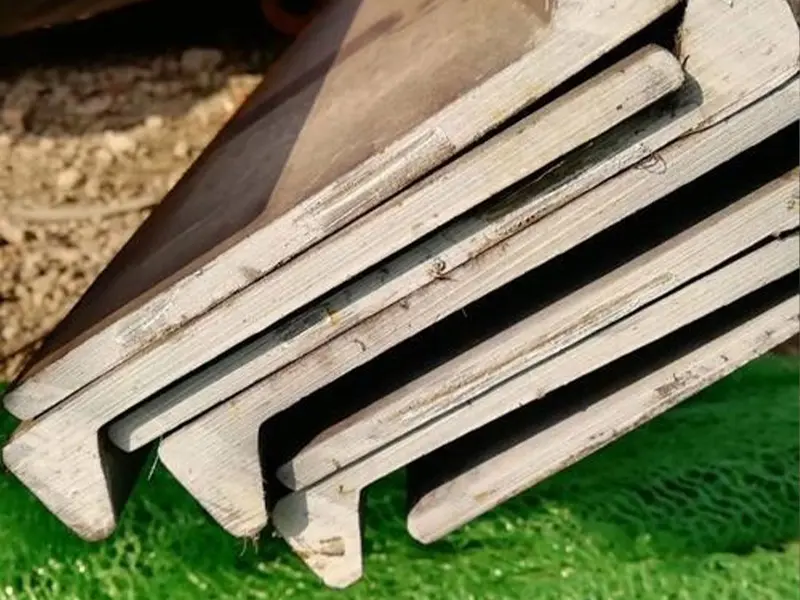
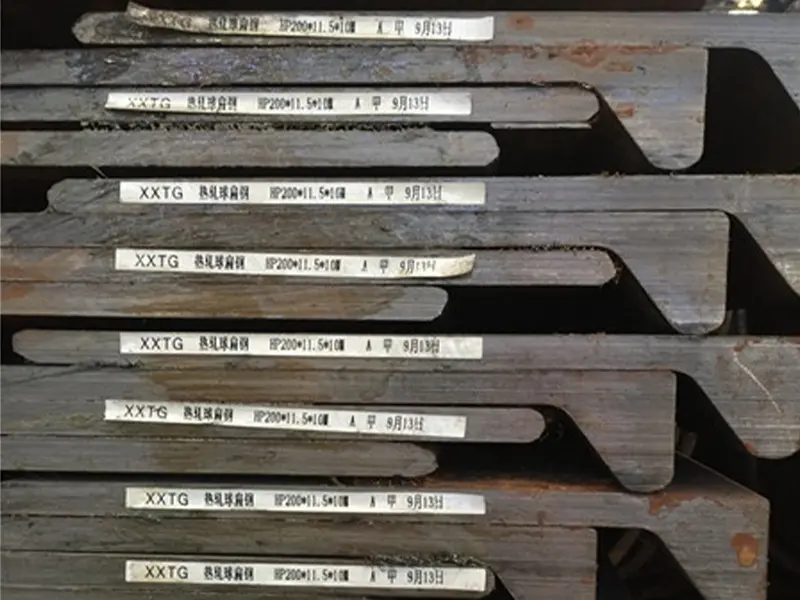
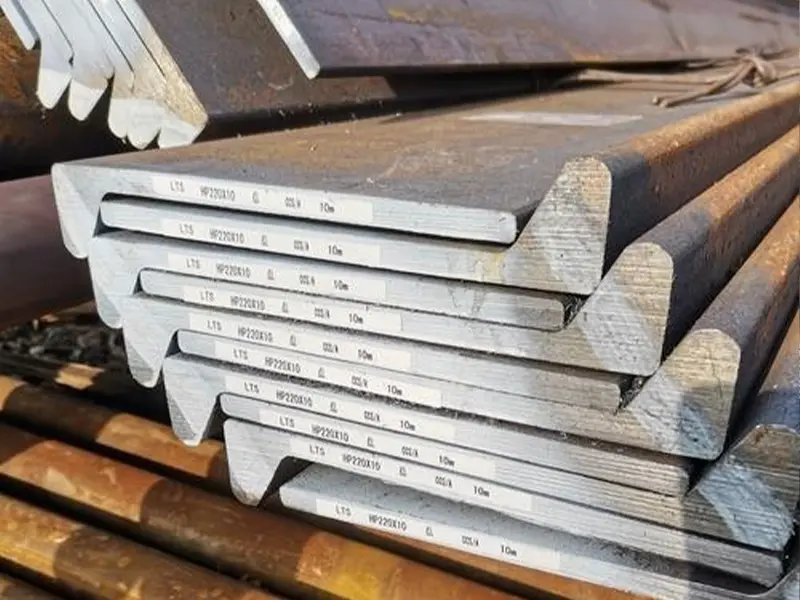
Flat steel is a broad category of steel products that are rolled into flat, wide shapes. The main types are steel plate2s (thick, for structural parts), sheets and coils (thin, for panels), and flat bars (long, narrow strips). Bulb flat steel1 is a specialized flat bar with a bulb (protrusion) along one edge, designed specifically for stiffening ship hulls and decks.
Navigating the Flat Steel Spectrum in a Tight Market
When global demand rises, knowing exactly what you need becomes a competitive advantage. Let’s break down the flat steel1 family and see where bulb flats fit.
1. The Three Main Families of Flat Steel.
- Steel Plate: This is thick flat steel1, typically over 3mm or 6mm in thickness. Plates are used for the main structural parts of a ship: the hull, the deck, bulkheads. They are heavy, strong, and often require certification from classification societies. In a recovery, plate mills are among the first to see order books fill.
- Steel Sheet/Coil: This is thinner flat steel1, often less than 3mm. It is supplied in coils or cut sheets. It is used for non-structural applications like interior paneling, ductwork, or casings on a ship. Its supply chain is different from plate and is less directly impacted by shipbuilding cycles.
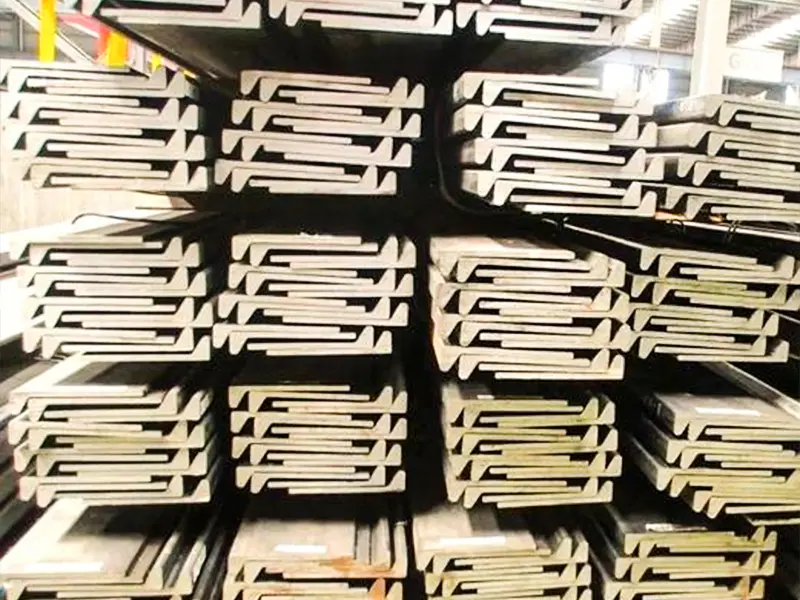
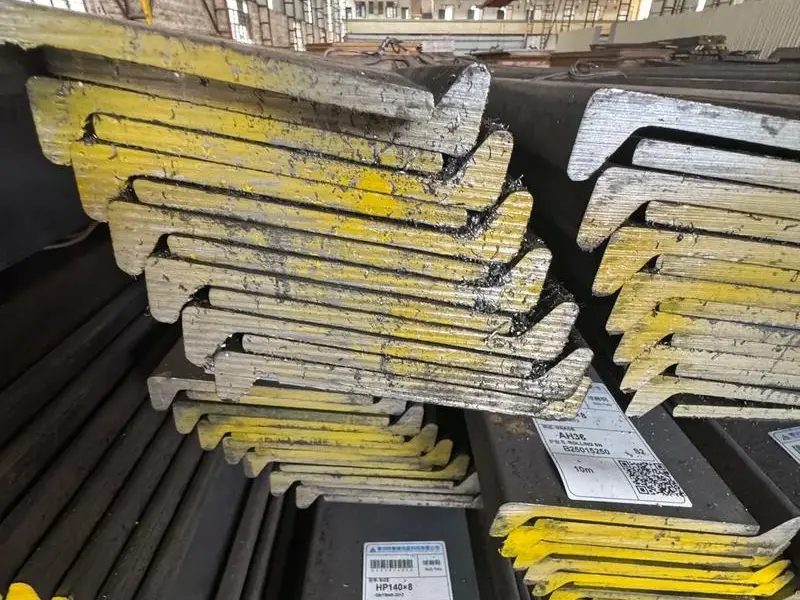
- Steel Flat Bar & Bulb Flat: This is a long, narrow strip of steel with a rectangular cross-section. A standard flat bar is just that—a flat rectangle. A bulb flat is a flat bar with a bulb (a rounded thickening) along one of its long edges. This bulb gives it much greater stiffness.
2. Bulb Flat: The Specialized Workhorse of Shipbuilding.
Bulb flats are not a general commodity. They are a purpose-engineered profile.
- How It’s Made: It is a "rolled section," meaning it is formed by passing heated steel through specially shaped rollers in a rolling mill. Creating the bulb requires a dedicated rolling pass.
- The Advantage of the Bulb: The bulb adds a large amount of material away from the center of the flat bar. This significantly increases its "section modulus" or resistance to bending. This allows a bulb flat to provide the same stiffening strength as a much heavier traditional angle or T-bar, saving weight on the ship—a crucial factor for efficiency.
3. The Supply Chain Implication.
Because bulb flats are a specialized, low-volume product compared to standard plates, not every steel mill produces them. They require specific rolling equipment and expertise. In a shipbuilding boom, the limited number of mills that produce certified marine bulb flats become bottlenecks. Their capacity gets booked quickly. This is why understanding the product category is step one. You are not just buying "flat steel1"; you are buying a capacity-constrained, specialized rolling mill slot.
My Insight from the Field
In early 2023, we saw a shipyard in Vietnam scrambling. They had a new order for bulk carriers but had not locked in their bulb flat supply. Their usual mill in Korea had a 9-month lead time. They contacted us. Because of our long-term cooperation with specific mills in China that specialize in bulb flats, we had access to allocated capacity. We could offer a 4-month lead time, which saved their schedule. The key was our partnership with those niche mills. This taught me that during a recovery, your supplier’s relationships with specialized mills3 are more valuable than ever. You are not just buying steel; you are buying access to limited production capacity.
Which country sells the cheapest steel?
Your project budget is tight. You search online for the cheapest steel. The answer seems simple: find the country with the lowest price per ton. But this search can lead you to the wrong supplier at the worst possible time. In a recovering market, the "cheapest" offer often carries the highest risk of failure, delays, or substandard quality.
There is no single "cheapest" country for steel. Price depends on raw material costs, energy prices, labor, government subsidies, and currency exchange rates. Countries like China, India, or Russia often offer competitive prices, but the total cost1 for marine-grade bulb flats must include reliability, certification, and logistics. During a supply crunch, the lowest initial price often leads to the highest final cost due to project delays.
The True Cost of "Cheap" Steel in a Seller’s Market
When demand outstrips supply, the dynamics change. Let’s analyze why the focus must shift from the cheapest country to the most reliable partner.
1. Factors That Influence National Steel Pricing.
- Raw Material Access2: Countries with their own iron ore and coking coal (like Australia, Brazil for ore; China, India for coal) have a cost advantage.
- Energy Costs3: Steelmaking is energy-intensive. Countries with low-cost electricity or natural gas (from hydro, nuclear, or subsidies) can produce cheaper steel.
- Labor Costs4: This is a factor, but less so for highly automated modern mills.
- Government Policy5: Subsidies, export taxes, or VAT rebates can artificially lower or raise the export price from a country.
- Currency Exchange Rates: A weak local currency makes a country’s exports cheaper on the global market.
2. The Marine-Grade Bulb Flat Premium.
For standard commodity steel (like rebar), the above factors heavily influence price. For marine-grade bulb flats, other factors dominate:
- Technical Capability: Can the mill produce the precise bulb profile to classification society standards?
- Certification6: Does the mill have approval from ABS, LR, DNV, etc.? This approval process is long and expensive, limiting the number of qualified suppliers globally.
- Consistency and Traceability: Each length of bulb flat must be traceable to a heat of steel with certified properties. This requires sophisticated quality control systems.
3. Table: Price vs. Cost in a Recovering Market.
This table shows the difference between the initial "price" and the total project "cost."
| Consideration | "Cheapest Country" Supplier | Reliable Partner in a Qualified Country |
|---|---|---|
| Initial Quoted Price | Very competitive, often EXW. | Higher, reflecting quality systems and mill reputation. |
| Material Certification6 | May be generic or lack proper class approval. | Guaranteed valid Class Certificate (ABS, LR, etc.) for every batch. |
| Production Slot Lead Time | Unreliable. May promise short times but fail to secure mill capacity. | More transparent. Based on actual allocated capacity in partner mills. |
| Quality Consistency7 | Variable. May change source mills to meet price, risking inconsistency. | High. Sourced from consistent, audited mill partners. |
| Logistics & Communication8 | Often poor. Slow responses, basic packaging, unclear shipping terms. | Managed. Proactive updates, robust packaging (as noted by Gulf Metal Solutions), clear Incoterms. |
| Total Project Cost Impact | High Risk. Potential for delays, rework, rejected materials, and unexpected logistics costs. | Predictable. Higher initial price offsets by schedule certainty and reduced risk. |
My Insight from the Field
A shipbuilder in the Philippines once chose a supplier from a country known for very low prices. The supplier offered bulb flats at 15% below our quote. Three months before the required delivery date, that supplier informed them of a "production delay" and asked for a 50% price increase to expedite. The shipbuilder was forced to pay it to avoid stalling their production line. The total cost1 ended up 30% higher than our original, reliable quote. They came to us for their next project. The buyer said, "Your price was the real price. Their price was just an invitation to a negotiation I couldn’t win." In a recovering market, reliability becomes a form of cost savings.
What is a flat product?
A procurement officer asks for "flat products1." A warehouse manager hears "flat products1." They might imagine different things. One thinks of plates for the hull. The other thinks of sheets for interior work. This confusion wastes time. In a fast-moving market recovery, precise terminology ensures your team and your supplier are aligned, speeding up the entire procurement process.
In steel industry terminology, a "flat product" refers to any steel that is initially produced in a flat form by rolling, as opposed to being formed into a specific shape (a "long product" like beams or bars). The main flat products1 are slabs (semi-finished), plates, hot-rolled coil/sheet, and cold-rolled coil/sheet. Bulb flats are a unique case, starting as a flat product but being further rolled into a specialized profile.
Understanding the Production Journey: Why It Matters for Supply
Knowing where bulb flats come from in the production chain helps you understand lead times and capacity constraints during a market upswing.
1. The Steel Production Flow: From Liquid to Product.
Steel is made, then shaped. The shaping stage defines "flat" vs. "long."
- Step 1: Ironmaking & Steelmaking: Iron ore is turned into liquid iron, then steel, in a blast furnace or electric arc furnace.
- Step 2: Casting: The liquid steel is cast into a solid, semi-finished form. For flat products1, this is usually a slab (a thick, wide rectangle).
- Step 3: Hot Rolling: This is the critical divergence.
- For Standard Flat Products: The slab is reheated and passed through a rolling mill to be flattened and thinned into plate or hot-rolled coil (HRC).
- For Bulb Flats and Other Sections: The slab is first rolled into a simpler shape called a bloom or a billet. This billet is then reheated and passed through a section rolling mill2 with special rolls that shape it into the bulb flat profile.
2. The Capacity Bottleneck in a Recovery.
During a shipbuilding boom, demand hits every stage, but the specialized stages feel it most.
- Slab/Plate Mill Capacity: High demand for ship plates consumes slab/plate mill capacity. This can indirectly affect bulb flat supply if the same mills provide the initial material.
- Section Rolling Mill Capacity: This is the direct bottleneck for bulb flats3. These mills are smaller, more specialized, and fewer in number. When their order books fill up, lead times4 extend rapidly. They cannot easily increase output like a high-volume coil mill might.
- The Domino Effect: Increased shipbuilding activity increases demand for plates and bulb flats3 simultaneously, putting pressure on different but connected parts of the production chain.
3. Why This Technical Knowledge is a Procurement Tool.
When a supplier tells you "lead time is 6 months," you can ask informed questions:
- "Is the delay at the section rolling mill2, or is it in getting the billet from the steelmaker?"
- "Are you using a dedicated mill for bulb flats3, or is it a mill that switches between products?"
The answers help you assess the risk. A dedicated mill is more reliable. A mill that switches may deprioritize your bulb flats3 if a larger order for a different product comes in.
My Insight from the Field
A client in Saudi Arabia (Gulf Metal Solutions) needed bulb flats3 for a tanker project. They were frustrated with the long lead times4 from their European supplier. We explained the situation: the European mill was a general section mill. It was prioritizing large orders for construction beams because that market was also hot. Our partner mill in China, however, is a specialist in shipbuilding profiles5 like bulb flats3 and angles. Its entire production schedule is dedicated to these marine products. This meant our lead times4 were more stable and predictable, even during the recovery. We secured their order because we could explain why we were more reliable, based on the production structure. Understanding "flat products1" and the subsequent rolling process allowed us to have that credible conversation.
What are steel flats1 used for?
You see "steel flats1" on a material list. This term is too broad. It could mean a simple flat bar for a bracket, or it could mean a critical bulb flat for the hull. Using the general term in orders or specifications is a major source of error. As the market gets busy, suppliers make assumptions. You must be specific to ensure you get the right material for the right job at the right time.
Steel flats, specifically flat bars2 and bulb flats3, are used for stiffening, framing, and bracing. Standard flat bars2 are for brackets, braces, and supports in general fabrication. Bulb flats are used almost exclusively in shipbuilding and offshore construction as longitudinal and transverse stiffeners on hull plates and decks, where their high stiffness-to-weight ratio is essential for structural integrity.
From General Purpose to Mission-Critical: Specifying for Supply Security
The usage dictates the required quality, certification, and urgency. Let’s categorize the applications to guide your procurement strategy4 during tight supply.
1. Standard Flat Bar Applications (Lower Criticality).
These uses are important but often do not require certified marine steel. They are easier to source in a pinch.
- Machinery & Equipment: Mounting brackets, base plates, and structural supports5 for onboard equipment.
- General Fabrication: Walkway supports, ladder frames, handrail posts, and non-critical platforms within the shipyard or on the vessel.
- Construction & Repair: Temporary bracing, repair patches, and tooling jigs. For these, standard ASTM A36 or equivalent flat bars2 are sufficient.
2. Bulb Flat Applications (High Criticality).
This is where supply chain focus6 must be sharpest during a recovery. Bulb flats are not interchangeable with standard flat bars2.
- Primary Hull Stiffening: This is their main job. They are welded vertically (transverse) or horizontally (longitudinal) to the inside of the hull plating. They prevent the large, flat plate from buckling under water pressure.
- Deck Stiffening: They perform the same function on decks, preventing deflection under heavy loads like containers or equipment.
- Bulkhead Stiffening: They provide rigidity to interior watertight walls (bulkheads).
- Key Requirement: For all these applications, the bulb flats3 must be of a certified marine grade7 (AH32, DH36, etc.). They are part of the primary classed structure. Their failure could compromise the ship’s safety.
3. Strategic Procurement Based on Application.
In a supply-constrained market, you must prioritize.
- Tier 1 (Critical): Bulb flats for hull/deck stiffening. Order these first, with the longest lead time. Use only certified suppliers with proven mill access.
- Tier 2 (Essential): Large flat bars2 for key brackets and supports that are part of the classed structure. These also need certification but may have more sourcing options.
- Tier 3 (General): Standard flat bars2 for non-critical yard and interior work. These can be sourced more locally or from a wider range of suppliers to free up capacity with your marine specialist.
My Insight from the Field
We worked with a shipyard in Thailand that was building two container ships simultaneously. Their material list had hundreds of line items simply labeled "FLAT BAR." This caused chaos. Their procurement team was overwhelmed, and some critical bulb flats3 were almost missed. We helped them reorganize their list. We created a simple coding system: "BF" for Bulb Flat (marine grade), "FB-M" for Flat Bar – Marine (certified for structural brackets), and "FB-G" for Flat Bar – General (A36, for yard use). This clarified priorities for their team and for us as their supplier. We could then focus our efforts on securing the "BF" and "FB-M" items well in advance, giving them certainty on the most critical path items. This simple step, born from understanding the different uses, made their supply chain more resilient during the busy period.
Conclusion
A shipbuilding recovery turns bulb flat steel from a commodity into a strategic resource. Success depends on technical knowledge, supplier partnerships for specialized mill access, and procurement strategies that prioritize critical applications.
-
Explore this link to understand the diverse applications of steel flats in various construction projects. ↩ ↩ ↩ ↩ ↩ ↩ ↩ ↩ ↩ ↩ ↩ ↩ ↩ ↩ ↩ ↩ ↩
-
Discover how flat bars are utilized in general fabrication and their significance in various projects. ↩ ↩ ↩ ↩ ↩ ↩ ↩ ↩ ↩ ↩
-
Learn about the critical role of bulb flats in shipbuilding and their importance for structural integrity. ↩ ↩ ↩ ↩ ↩ ↩ ↩ ↩ ↩ ↩ ↩
-
Learn about effective procurement strategies to ensure timely and quality material supply in construction. ↩ ↩ ↩ ↩ ↩
-
Discover the various applications of structural supports in construction and their importance for stability. ↩ ↩ ↩
-
Explore strategies to enhance supply chain focus and efficiency in construction and manufacturing. ↩ ↩ ↩
-
Understand the importance of certified marine grade steel in ensuring safety and compliance in marine applications. ↩ ↩
-
Learn about effective logistics and communication strategies to enhance your steel procurement process. ↩