
I still remember the panic in a buyer’s voice last year. His project in Qatar was ready to go, but the price for marine steel plate we quoted was 15% higher than just two months before. He asked me, "Zora, how do I stop this from hurting my business?"
To control cost fluctuation in marine steel plate procurement, you cannot stop the market from moving. Instead, you must change how you buy. The key is to move away from spot purchasing and build a strategy that uses volume commitments, flexible logistics, and deep supplier relationships to stabilize your final costs.
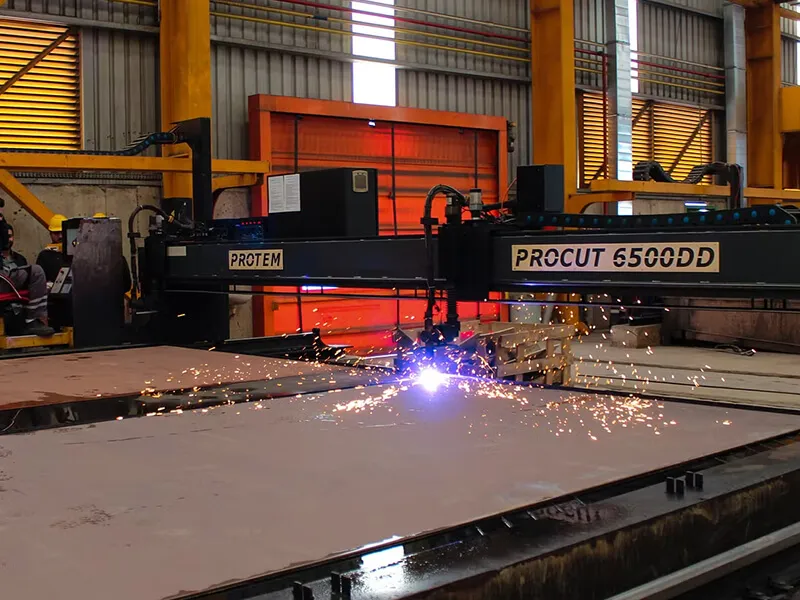
You see, many buyers make the same mistake. They treat steel like a commodity you pick up at a local market. They wait until a project is signed, then rush to find the lowest price for that specific order. But in a world where iron ore prices can swing 10% in a year [citation:2], this method leaves you exposed. You end up paying whatever the market demands on that day. My job, and the goal of this article, is to show you a better path. It’s about risk management, not just price shopping.
How to reduce costs in procurement?
When a new client from Mexico first contacts me, they often ask for our "best price" on 500 tons of marine steel plate. I understand why. They want to protect their margin. But if I only focus on that one number, I am not truly helping them reduce their total cost.
To reduce costs in procurement, you must look beyond the unit price of the steel. True cost reduction comes from optimizing the total cost of ownership1, which includes logistics, quality control, inventory holding, and the financial impact of delays or rework.
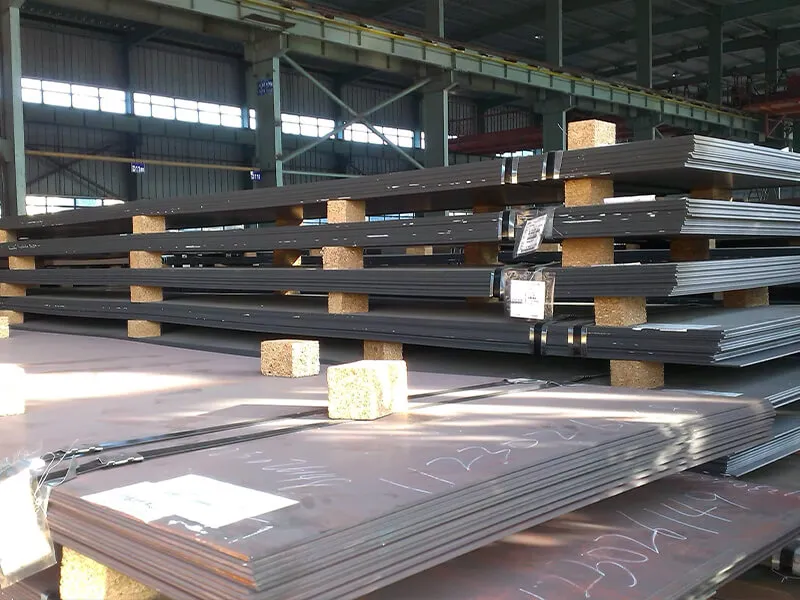
Let’s dive deeper into what "cost reduction" really means. For a project-based distributor like our client Gulf Metal Solutions in Saudi Arabia, the price per ton on the invoice is just the beginning. If that lower-priced steel arrives late, their workforce stands idle. If the surface finish is inconsistent, as they experienced before, their fabricators waste hours grinding and fixing it. That time is money.
So, how do we tackle this? We break down the procurement process into stages and find savings in each one.
1. Strategic Sourcing and Supplier Integration2
This is about changing the conversation with your supplier. Instead of a one-off transaction, we build a framework. For example, we offer flexible MOQs. This means a buyer doesn’t have to tie up all their capital in inventory at once. They can order for an immediate project while knowing the price and availability for the next phase. This reduces their inventory holding costs3.
2. Logistics and Supply Chain Optimization4
Freight costs can eat your profit. A supplier who understands this can help. Because we are based in Liaocheng, Shandong, we have access to major ports with efficient shipping routes. We work with our buyers to plan shipments. For Gulf Metal Solutions, we handled the shipping to Dammam port and even supported with customs clearance. This single point of responsibility removes hidden costs like demurrage or storage fees at the port.
3. Quality as a Cost-Saving Tool5
This sounds counterintuitive. High quality usually means higher cost, right? Not in the long run. Poor quality is the most expensive thing you can buy. If steel fails an SGS inspection, the cost of replacement, the shipping delay, and the project penalty are massive. That is why we offer third-party inspection support before shipment. It costs a little upfront, but it guarantees that the material meets the grade, whether it’s AH36 or ABS Grade A. It ensures the high corrosion resistance needed for an oil tanker is actually there. This certainty has real financial value.
Comparison of Cost Reduction Strategies
| Strategy | Focus Area | Long-Term Benefit |
|---|---|---|
| Strategic Sourcing | Supplier relationships, volume commitments | Stabilized prices, priority allocation |
| Logistics Optimization | Consolidation, route planning, documentation | Lower freight costs, no customs delays |
| Quality Assurance | Third-party inspection (SGS), mill certifications | Zero rework costs, project timeline security |
By focusing on these areas, we turn procurement from a cost center into a value driver. It is about spending smarter, not just spending less.
Why does the price of steel fluctuate?
I had a client from the Philippines call me once, very frustrated. He said, "Zora, last month the price was down, I waited. Now I need to buy, and it’s up again. Why can’t it just stay still?" I told him that steel is a living thing. It breathes with the global economy.
Steel prices fluctuate primarily because of the imbalance between global supply and demand. This is driven by factors like raw material availability1, energy costs, government policies on production and trade, and major economic shifts in key countries like China [citation:5].
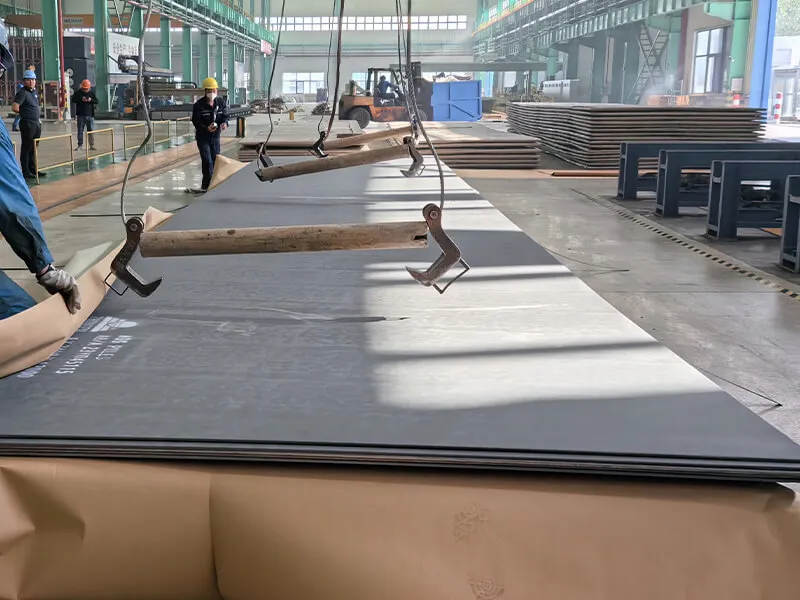
To really understand this, we have to look at the engine of the market. Think of steel production as a recipe. You need iron ore, coking coal, and energy (like scrap for electric arc furnaces) [citation:9]. If the price of iron ore fines jumps because of supply issues in Brazil or Australia, that cost feeds directly into the steel [citation:2]. In 2025, we saw Chinese iron ore fines prices drop by 10% year-on-year because China’s steel production slowed down due to their property crisis [citation:2]. Less demand for steel means less demand for iron ore, so prices fall.
Then, there is the human factor: policy. Governments can change the game overnight. India introduced a safeguard duty of around 12% on some steel imports in late 2025 [citation:3]. This made imported steel more expensive, so local Indian buyers turned to domestic sources. This sudden increase in demand for local steel pushed their domestic plate prices up by $52 per metric ton in just three weeks [citation:3]. In Europe, the Carbon Border Adjustment Mechanism (CBAM) created uncertainty, making buyers hesitant to import, which gave local mills more pricing power [citation:9].
Key Drivers of Steel Price Volatility
- Raw Material Costs: Fluctuations in iron ore and coking coal prices directly impact production costs. For example, Indian imported coking coal prices fell 21% in 2025 [citation:2].
- Macroeconomic Demand: The health of the construction and shipbuilding industries drives demand. China’s slowing economy reduced its steel demand, affecting global prices [citation:2].
- Trade Policies: Tariffs and duties change trade flows. US Section 232 tariffs caused US wire rod prices to spike 33% [citation:9].
- Geopolitics: Conflicts and sanctions disrupt supply chains. Russian pig iron faced sanctions, altering global supply routes [citation:2].
It is a complex web. But for a buyer, the reason for the fluctuation matters less than having a plan to deal with it. You cannot predict the next political move, but you can prepare your supply chain to be flexible.
Do raw materials have fluctuating prices?
Yes, absolutely. This is the foundation of the whole problem. I often explain it to my clients like this: a marine steel plate is a cake. If the price of flour, sugar, and eggs (the raw materials) keeps changing, the price of the cake will never be stable.
Raw materials are the primary source of price fluctuation in steel1. The costs of iron ore, coking coal, and scrap metal2 are themselves highly volatile, driven by global mining outputs, energy markets, and demand from major steel-producing nations like China and India [citation:2].
[^3] at a port waiting to be processed](https://cnmarinesteel.com/wp-content/uploads/2026/01/Marine-steel-plate-30.webp)
Let’s look at the numbers from just last year. In 2025, the price for Chinese imported iron ore4 fines (62% Fe) slid by 10% year-on-year [citation:2]. That sounds like a drop, but it was a drop caused by China’s crude steel production falling by 4% [citation:2]. The price didn’t just sit there; it moved down because the biggest consumer in the world bought less. On the other hand, look at coking coal. Indian imported coking coal prices decreased by 21% [citation:2]. This was partly due to China overproducing coal in the first half of the year, which flooded the global market and pushed prices down [citation:2].
Scrap metal, another key raw material, especially for Turkish and US mills, tells another story. Turkish imported HMS 80:20 scrap prices softened by 8% in 2025 [citation:2]. Why? Because weak demand for rebar meant mills were cautious about buying scrap. But prices didn’t just fall in a straight line. They had phases: a rebound early in the year due to US tariff uncertainty, a decline mid-year, and a modest recovery towards the end as mills rebuilt inventories [citation:9].
The link is direct. When the mining giant Rio Tinto negotiates prices with Chinese steel mills, that sets a benchmark. When a cyclone hits a major iron ore port in Australia, supply tightens and prices tick up. These signals travel down the supply chain. Within weeks, that increase is reflected in the price of a hot-rolled coil and eventually in the price of the marine steel plate we are quoting to you in Dammam or Manila. You cannot separate the finished product from its raw ingredients.
What is the reason for steel price increase?
A buyer from Pakistan asked me this recently. He saw prices ticking up and worried it was just suppliers like me trying to make more money. I had to explain that a price increase is usually a signal of stress or high demand somewhere in the chain, not just greed.
Steel prices increase primarily due to rising input costs1, such as more expensive iron ore or coking coal, or when demand outpaces available supply. Government policies2, like infrastructure stimulus or protective tariffs, can also artificially boost demand or restrict supply, leading to higher prices [citation:7].
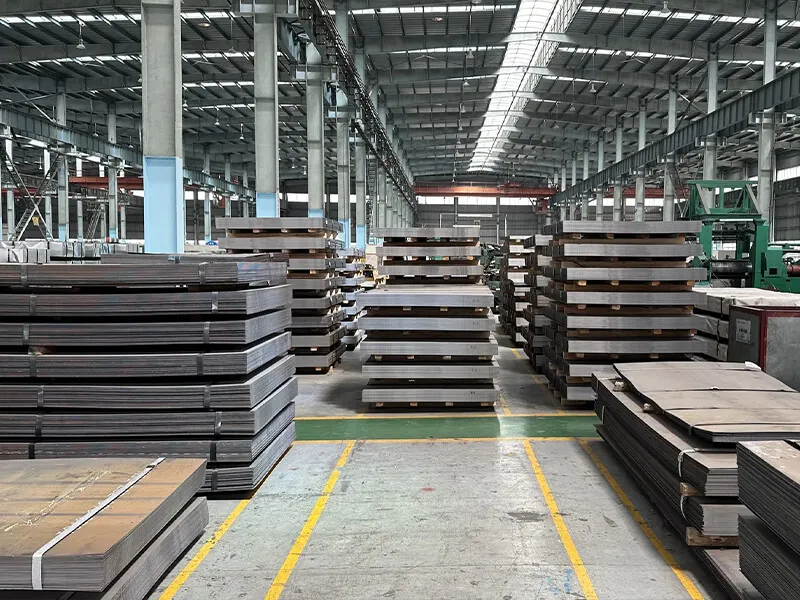
Let’s break this down systematically. A price hike isn’t magic. It’s economics.
Scenario A: The Cost-Push Effect3
This is the most common reason. If the cost to make steel goes up, the mill must charge more to survive.
- Energy Costs: Steelmaking, especially in electric arc furnaces, needs huge amounts of energy. If natural gas or electricity prices spike, production costs follow [citation:9].
- Raw Material Supply Crunch: If a major coking coal mine has a landslide and declares force majeure, supply drops. With less coal available, its price rises. Mills pass this on.
- Labor and Logistics: Increased freight rates or new labor wages at a port add to the final cost.
Scenario B: The Demand-Pull Effect4
Sometimes, the market just gets hotter.
- Government Stimulus: If a country announces a huge infrastructure program to build bridges and ports, the sudden surge in steel demand can outstrip what local mills can produce. Prices then rise to balance the market [citation:5].
- Supply Chain Disruptions: When the opposite happens—supply drops but demand stays steady—prices rise. We saw this in India recently with their safeguard duty [citation:3]. The duty cut off cheap imports (a drop in supply), but local shipbuilding and construction demand remained. This imbalance pushed local plate prices up significantly.
Scenario C: The Speculative Element
This is harder to track but real.
- Market Sentiment: If traders believe prices will go up next month because of a potential steel production cut in China, they will buy more today to stockpile. This increased buying activity itself pushes the price up today. It becomes a self-fulfilling prophecy [citation:5].
For a buyer, knowing why the price is increasing helps you decide what to do. If it’s a short-term raw material spike caused by a port strike, you might wait. If it’s a new government policy like a tariff that will last for years, you need to adjust your sourcing strategy immediately.
Conclusion
Controlling marine steel plate costs is not about predicting the future. It is about building a strong partnership with a supplier who offers stability, quality, and market insight.
-
Understanding rising input costs can help buyers anticipate price changes and make informed purchasing decisions. ↩ ↩ ↩ ↩
-
Exploring the impact of government policies on steel prices can provide insights into market dynamics and future trends. ↩ ↩ ↩
-
Learning about the Cost-Push Effect can clarify how production costs influence steel pricing and market behavior. ↩ ↩
-
Understanding the Demand-Pull Effect can help buyers recognize when demand surges and its implications for pricing. ↩ ↩ ↩
-
Discovering how quality impacts costs can lead to smarter purchasing decisions and long-term savings. ↩