
Have you ever received a technical specification from a shipowner that seemed to add extra requirements beyond the classification society rules? I see this all the time in my daily work with marine steel buyers.
Project-specific standards are additional technical requirements set by shipowners or contractors, going beyond basic class rules. They ensure the steel plate performs under unique operational conditions, and ignoring them can lead to project delays, cost overruns, or even structural failures.
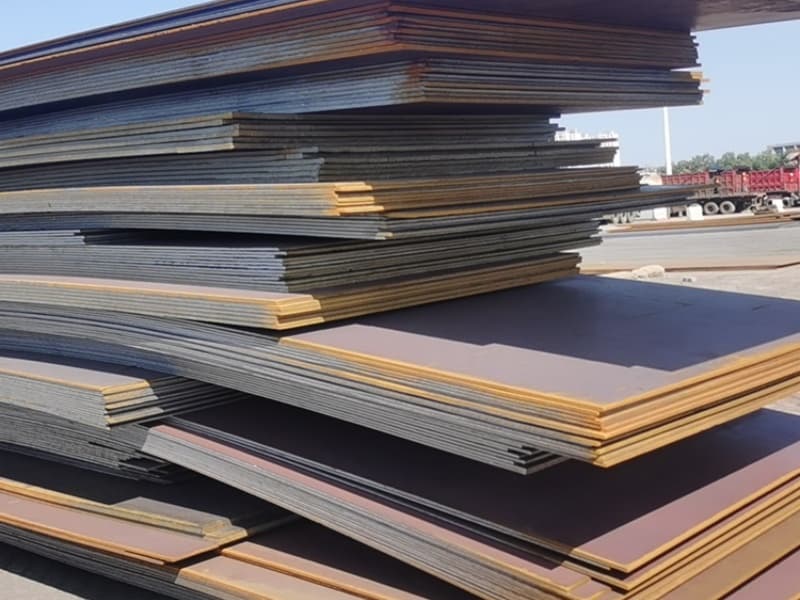
In my years of supplying marine steel to shipyards and fabricators across Vietnam, Mexico, Saudi Arabia, and beyond, I’ve learned that understanding these extra specifications is the difference between winning a contract and losing it. It’s also the key to building trust with clients like Gulf Metal Solutions in Dammam, who now rely on us for their most demanding orders. Let me walk you through four key areas where project standards often surprise buyers and how we navigate them together.
Beyond Class Rules: Deciphering Unique Owner’s Technical Specifications
Many buyers assume that meeting the requirements of a classification society like ABS, DNV, or Lloyd’s Register is enough to satisfy any project. But then a shipowner sends a 50-page technical appendix, and suddenly nothing is simple anymore.
Owner’s technical specs1 often include tighter tolerances2, specific chemical compositions3, or additional tests4 not found in class rules. They reflect how the vessel will actually be used, not just minimum safety standards. These requirements protect the owner’s investment over the 25-year life of the ship.
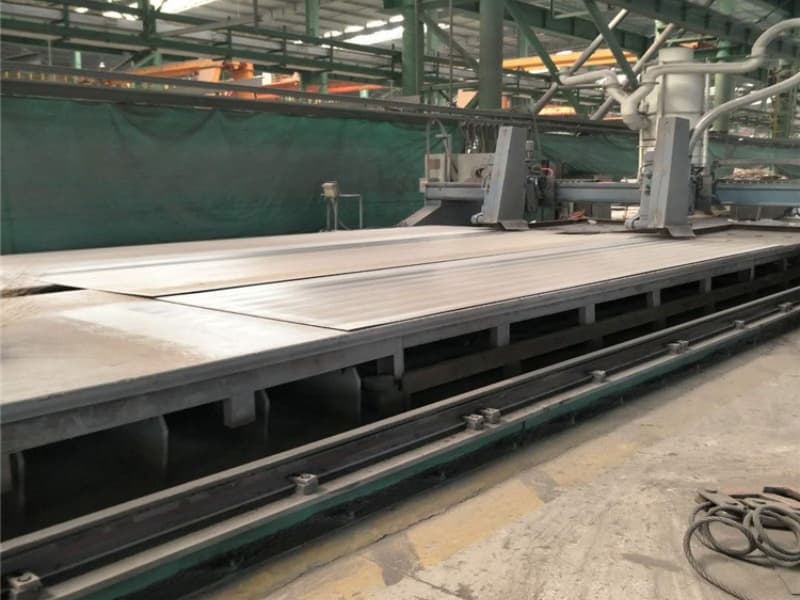
Why Owners Add Extra Requirements
Owners add these requirements for several reasons. First, they know their operational routes. A ship trading in Southeast Asia faces different corrosion risks than one in the Arabian Gulf. Second, they want consistency. If they have a fleet of vessels, they might standardize on certain steel grades to simplify maintenance. Third, they are protecting against future upgrades. A plate that meets today’s rules might be inadequate if the ship is later modified.
I remember a client from Qatar who needed plates for a new breed of LNG-powered container ships. The owner’s spec demanded a maximum carbon equivalent of 0.38%, while the standard grade allowed 0.41%. That 0.03% difference meant we had to adjust the mill’s melting practice and run extra tests. We did it, and the client now orders all their bulb flat steel from us as well.
Common Owner Specifications in Marine Steel Plates
To give you a clearer picture, here are the most frequent extra requirements we encounter and how they affect the steel plate.
| Requirement Type | Typical Owner Specification | Why It Matters |
|---|---|---|
| Chemical Composition | Tighter limits on phosphorus, sulfur, or carbon equivalent. | Improves weldability and reduces risk of cracking. |
| Through-Thickness Properties | Z35 requirement for plates above 40 mm. | Prevents lamellar tearing in highly stressed joints. |
| Surface Quality | No repairs by welding, only grinding allowed. | Ensures fatigue life in critical areas. |
| Dimensional Tolerances | Flatness less than half of ASTM A6. | Reduces fairing time in the shipyard. |
| Additional Testing | 100% ultrasonic inspection instead of sampling. | Guarantees internal soundness for high-pressure areas. |
How We Handle Owner Specs at Our Company
When a project comes with these extra demands, we don’t just say "yes" and hope for the best. We have long-term cooperation with certified mills that can adjust their processes. For example, if an owner wants Z35 plates, we know which mills can produce clean steel and which cannot. We also offer SGS inspection support before shipment. That’s exactly what Gulf Metal Solutions appreciated: we arranged third-party testing at our cost to prove every plate met their owner’s tough surface finish requirements. The result? They told us our packaging was the best they had ever received, and they are now planning to order L-shaped steel and bulb flats from us.
Special Duty, Special Steel: Selecting Plates for Ice-Class, LNG, and Chemical Tankers1
Imagine building a ship that must smash through Arctic ice, or a tank that holds liquefied gas at -162°C, or a vessel carrying sulfuric acid. Would you use the same steel plate for all three? Of course not. Yet I still meet buyers who try to substitute grades without understanding the consequences.
Ice-class ships need plates with high toughness at low temperatures, while LNG tanks require nickel-alloy steels for cryogenic service. Chemical tankers need corrosion-resistant steels. Each has its own set of project standards, and choosing the wrong one can lead to brittle fracture or rapid corrosion.
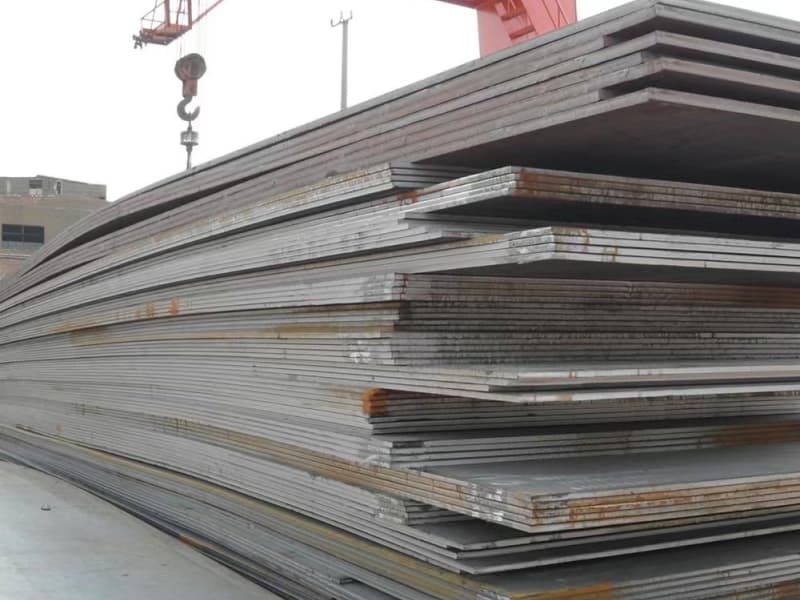
Matching Steel to Service Conditions
Let’s break down the three special duties one by one.
Ice-Class Vessels2
Ice-class notations like Ice1, Ice2, or Polar Class demand steel that remains ductile at sub-zero temperatures. The key property is Charpy V-notch impact energy at temperatures as low as -40°C or -60°C. But toughness alone is not enough. The steel must also have good strength to resist ice impact. Common grades are FH32, FH36, or even higher strength like FH40. We supply these from mills that have done polar projects before. One client in Romania built a research vessel for the Antarctic, and we provided the FH36 plates with full traceability.
LNG Carriers3
LNG tanks are a different world. The inner hull often uses 9% nickel steel or stainless steel, but the support structures and outer hull still need special attention. The main challenge is preventing brittle fracture at cryogenic temperatures. Project specs usually require impact testing at -196°C for nickel steels. For the outer hull, which might be exposed to cargo spills, some owners demand a certain level of toughness even if the steel is not in direct contact. We work with mills that produce these niche grades, and we coordinate with logistics to ensure the plates reach the yard in perfect condition.
Chemical Tankers1
Chemical tankers carry a variety of corrosive cargoes. The IBC Code sets minimum requirements, but owners often go further. They might specify stainless steel clad plates or special coatings. However, even for ordinary structural steel, the chemical composition matters. A low sulfur content reduces the risk of stress corrosion cracking. Some owners ask for corrosion tests in specific media. We have supplied plates for chemical tankers bound for Thailand and Myanmar, and we always verify the mill test reports against the owner’s corrosion allowance requirements.
A Practical Selection Guide
Here is a simple table to help you think about material selection for these special duties.
| Vessel Type | Critical Requirement | Typical Steel Grades | Project Spec Focus |
|---|---|---|---|
| Ice-Class | Low-temperature toughness | FH32, FH36, FH40 | Impact energy at -40°C or lower |
| LNG Carrier | Cryogenic resistance | 9% Ni, Austenitic stainless, or special low-carbon | Impact tests at -196°C |
| Chemical Tanker | Corrosion resistance | Stainless clad, or low-sulfur carbon steel | Resistance to specific chemicals |
Navigating the Tender Maze: How to Align Steel Grades with Contractual Obligations
Tendering for a marine project can feel like walking through a maze. You have the owner’s specification, the classification rules, the shipyard’s internal standards, and maybe a dozen addendums. One wrong turn, and you might quote a steel grade1 that doesn’t meet the contract, leading to penalties or rework.
To align steel grades with contract specs, you need to cross-reference the owner’s requirements with available grades, check for equivalencies, and document everything. It’s about bridging the gap between what’s written and what’s deliverable.
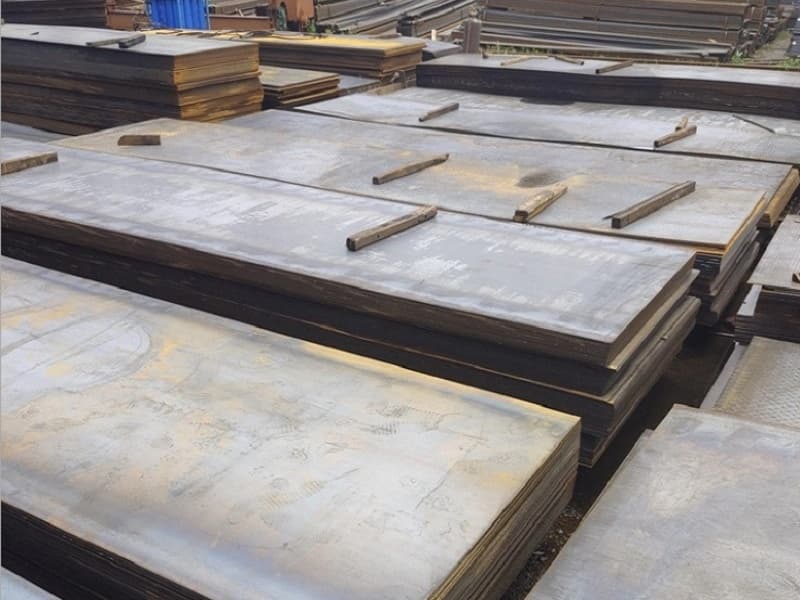
Step-by-Step Approach to Tender Alignment
When I work with clients like project contractors in Pakistan or Malaysia, I encourage them to follow a systematic process.
Step 1: Extract the Technical Requirements
First, read the specification carefully. Don’t just skim. Highlight every paragraph that mentions steel grade, testing, or certification. Often, the key information is hidden in notes or appendices. For example, one tender we handled for a Saudi client had a note buried on page 47: "All plates above 25 mm shall be supplied with Z35 properties." If we had missed that, the entire shipment would have failed.
Step 2: Match with Standard Grades
Next, compare the requirements with established grades from classification societies. Most owners accept equivalents if you can prove they meet or exceed the spec. But you must be careful. "Equivalent" does not always mean the same. A DH36 plate from one mill might have slightly different impact properties than another. We keep a database of mill certificates2 so we can quickly show owners that our plates are truly equivalent.
Step 3: Document the Compliance
Once you have a match, you need to document it. This means preparing a compliance statement3 that cross-references each owner requirement with the corresponding mill test result. We often do this in a table format. It makes the owner’s surveyor happy and speeds up approval.
Step 4: Handle Substitutions or Gaps
Sometimes there is no direct match. Maybe the owner wants a specific grade that is not commonly rolled. In that case, you have two options: propose an alternative with supporting data, or work with the mill to produce the exact grade. We have done both. For a Filipino client, we substituted a European grade with an equivalent Japanese grade after providing full mechanical test data. The owner accepted it, and the project stayed on schedule.
Common Tender Pitfalls and How to Avoid Them
Here are some issues I see repeatedly, and how we address them.
| Pitfall | Consequence | Our Solution |
|---|---|---|
| Assuming "or equivalent" is automatic | Rejection of plates at site | Provide documented proof of equivalence. |
| Ignoring dimensional tolerances4 | Rework or delay | Confirm flatness and thickness with mill before rolling. |
| Overlooking traceability requirements | Inability to trace plates to heat | Use mills with robust marking and recording systems. |
| Misunderstanding delivery condition | Wrong mechanical properties | Clarify if plates need normalizing, TMCP, or as-rolled. |
The NDT and Testing Protocol: What Project Specifications Demand Beyond the Mill
You have the steel plates at the warehouse. Mill certificates are in hand. But then the project inspector arrives and says, "We need ultrasonic testing1 on every plate, according to a standard you’ve never heard of." Panic sets in. I’ve seen this happen more than once.
Project specs often demand NDT2 like ultrasonic testing in accordance with specific standards, or additional mechanical tests3 on every plate. These go beyond mill certificates and require proper planning and certified facilities.
Understanding Common Additional Tests
Let’s look at the most frequent extra tests and why projects require them.
Ultrasonic Testing (UT)
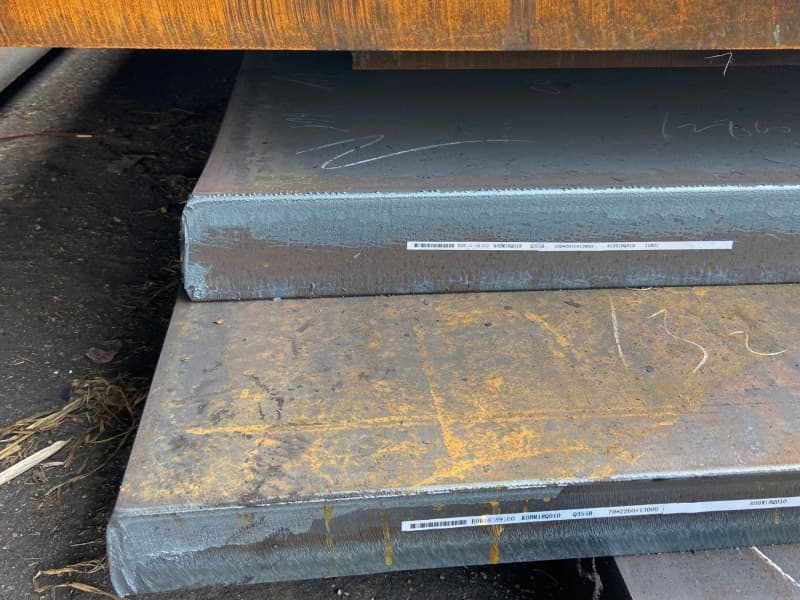
UT is used to detect internal flaws like laminations or inclusions. The mill might have done UT on a sampling basis, but projects often require 100% UT on certain plates, such as those in the sheer strake or bilge strake. The acceptance criteria might be stricter than the mill’s usual practice. For example, a project might demand UT in accordance with EN 10160 class S1 or E1, while the mill only guarantees class S2. We coordinate with third-party inspection4 agencies, like SGS, to perform UT at our warehouse or at the port. We’ve done this for shipments to Qatar and Malaysia, and the extra cost is usually small compared to the peace of mind.
Additional Mechanical Tests
Sometimes the mill’s testing frequency is not enough. A project might require one set of impact tests per heat treat lot, instead of per heat. Or they might want through-thickness tensile tests (Z-direction) on every plate above a certain thickness. These tests require cutting coupons from the actual plates, which takes time and planning. We schedule these tests early and share the results with the client before shipment. That way, if there is a problem, we can replace the plate without delaying the whole project.
Chemical Analysis Verification
Even with mill certificates, some owners ask for independent chemical analysis on a sample from each plate. This is common when the steel is destined for critical applications like pressure vessels. We have a network of laboratories that can perform OES analysis quickly. In one case for a Mexican client, the verification showed that one plate had slightly higher carbon than specified. We replaced it within a week, and the client appreciated our honesty.
How to Plan for Project Testing
To avoid last-minute surprises, follow these guidelines.
| Testing Requirement | Planning Action | Who Performs |
|---|---|---|
| 100% Ultrasonic Testing | Reserve time with an NDT company. | Third-party or mill, depending on spec. |
| Additional Impact Tests | Order extra coupons from the mill. | Mill or certified lab. |
| Third-party witness at mill | Coordinate with inspector for travel. | Owner’s representative. |
| PMI testing at site | Prepare portable analyzers. | Shipyard or contractor. |
Our Commitment to Testing Support
At our company, we understand that testing is not just a checkbox. It is proof that the steel will perform. That’s why we offer flexible support. If you need SGS inspection, we arrange it. If you want to visit the mill and witness tests, we help with logistics. We are not just a supplier; we are a partner in your project’s success. Gulf Metal Solutions noted that our rapid response and willingness to support third-party inspection4 set us apart from previous suppliers. That is exactly the feedback we aim for.
Conclusion
Project-specific standards are the hidden details that separate a successful marine project from a troubled one. By understanding owner specs, selecting the right steel for special duties, aligning grades with tenders, and planning for extra testing, you can avoid costly mistakes.
-
Explore how ultrasonic testing detects internal flaws, ensuring safety and compliance in projects. ↩ ↩ ↩ ↩ ↩
-
Understanding NDT is crucial for ensuring the integrity of materials in construction projects. ↩ ↩ ↩ ↩
-
Learn about mechanical tests to ensure steel quality and performance in critical applications. ↩ ↩ ↩ ↩
-
Find out how third-party inspections enhance quality assurance and compliance in construction. ↩ ↩ ↩ ↩