
Leading paragraph:
Modular shipbuilding is fast. But without the right steel, your blocks can warp, delay your project, and cost you money.
Snippet paragraph:
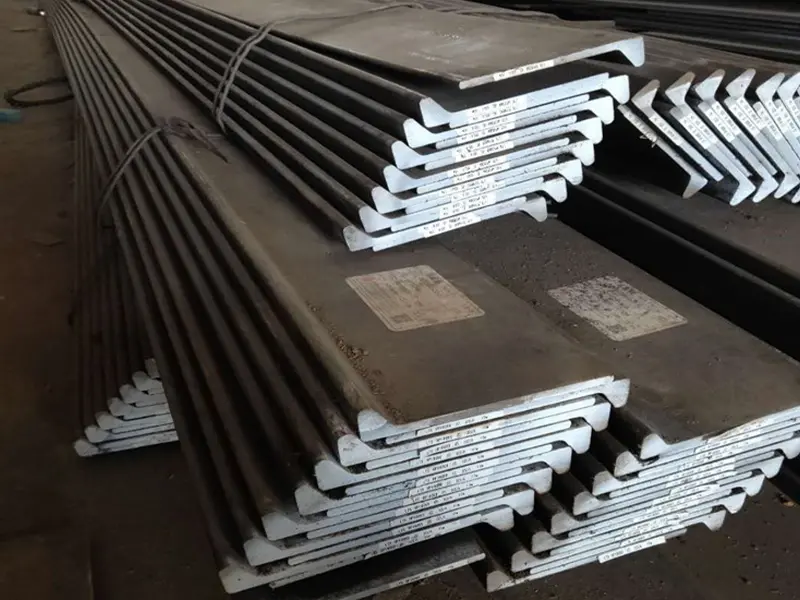
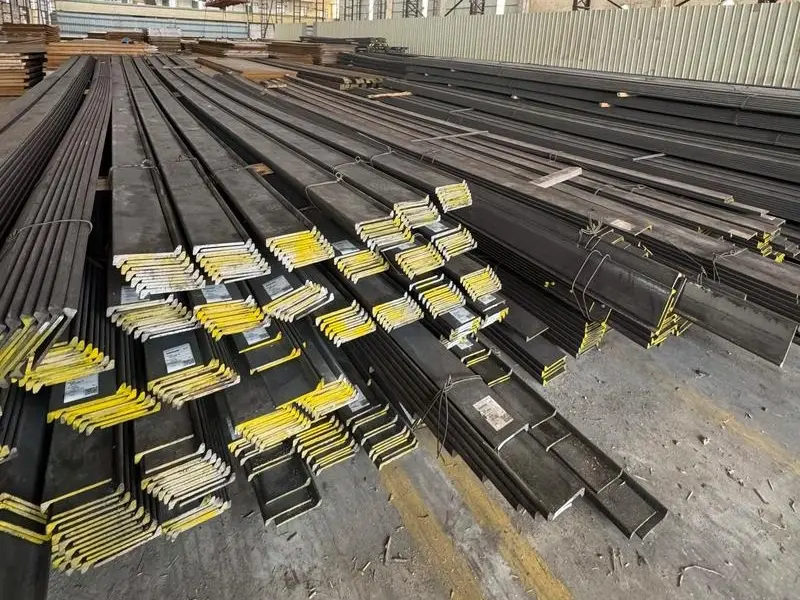
Bulb flat steel is used in modular ship construction because it offers superior strength-to-weight ratio for stiffeners. It reduces welding distortion and integrates perfectly with 3D modeling for precise block assembly.
Transition Paragraph:
I have spent years supplying marine steel to shipyards across the globe. I have seen how choosing the right profiles can make or break a modular project. Let’s look at how to get it right, from material selection to final inspection.
What Material Properties and Selection Criteria Matter for Bulb Flat Steel?
Leading paragraph:
Choosing the wrong steel grade1 is a common mistake. It leads to cracks, corrosion, and failed inspections. The stakes are high.
Snippet paragraph:
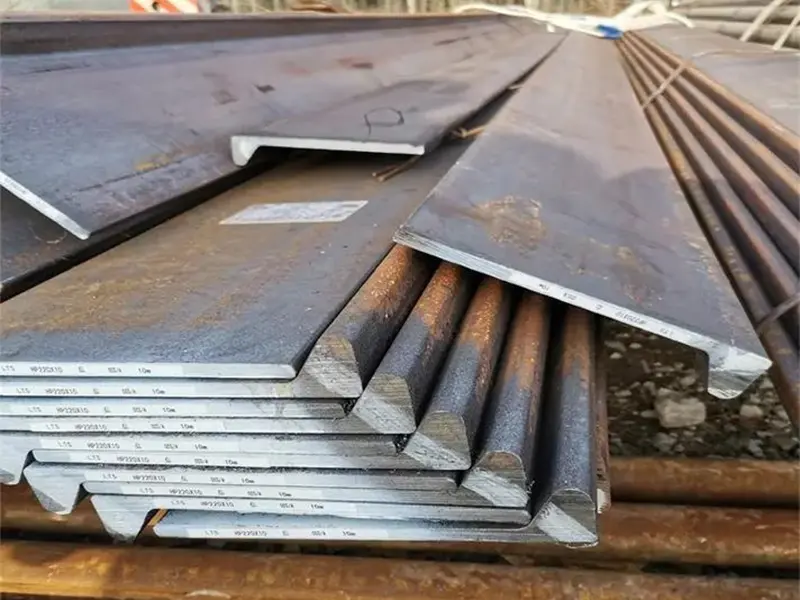
For bulb flat steel, key material properties include high tensile strength2 (usually Grade A, B, D, or E) and excellent weldability. Selection criteria depend on the ship’s design temperature and the specific stress points in the hull structure.
Dive deeper Paragraph:
When I talk to project managers, the first question is always about the material grade. They want to know if the steel can handle the job. It is not just about the shape. The chemistry of the steel matters.
I remember a client from a large shipyard in Vietnam. They had a project for a bulk carrier. They needed steel that could withstand the colder waters of the North Atlantic routes. We had to switch from standard Grade A to Grade D steel. Grade D has better impact resistance at low temperatures. That small change prevented potential brittle fractures later on.
Here is how I break down the selection process with my clients:
The Three Core Selection Criteria
| Criteria | What to Look For | Why It Matters |
|---|---|---|
| Steel Grade | Grades A, B, D, E, or AH32, DH32, EH36 for high-strength | Determines toughness and resistance to cracking in cold environments. |
| Dimensional Tolerance | Strict compliance with standards like JIS G 3192 or EN 10056 | Ensures the profile fits the 3D model. Poor tolerances cause gaps and misalignment during welding. |
| Surface Quality | No laminations, deep scratches, or rolling defects | Surface flaws become stress concentrators. They can lead to fatigue cracks over the ship’s lifespan. |
You also have to consider the mill certificate. I always tell my customers to ask for the original mill test certificate3 (MTC). This certificate proves the chemical composition and mechanical properties. Without it, you cannot trust the steel. For one of my regular clients in Saudi Arabia, we always provide third-party SGS inspection. They value that extra layer of proof. It gives them peace of mind that the material they receive matches what they ordered.
How Do Key Welding Techniques and Deformation Control Work in Block Assembly?
Leading paragraph:
Welding bulb flat steel is tricky. Too much heat, and your block looks like a banana. Too little, and the weld fails.
Snippet paragraph:
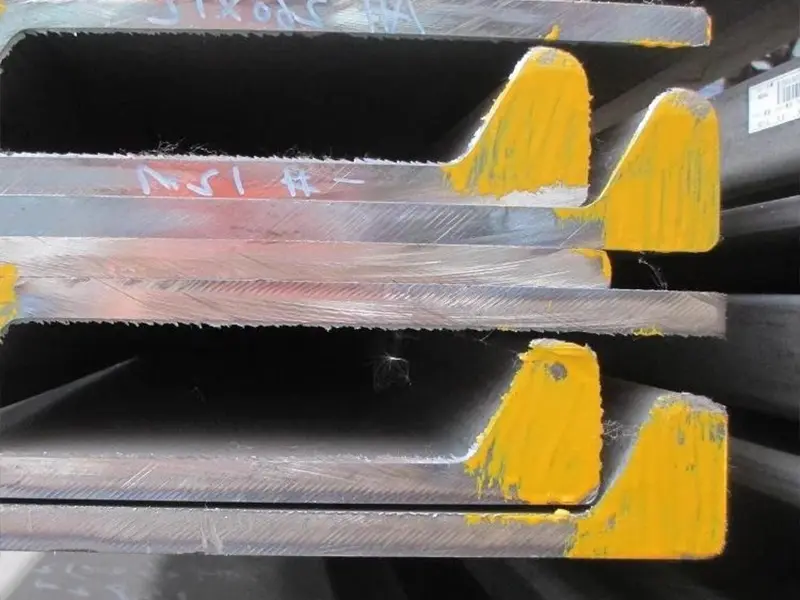
Key welding techniques1 for bulb flat steel include fillet welding and submerged arc welding. Deformation control relies on back-step welding sequences2, proper tacking, and using strongbacks to clamp the assembly3 during cooling.
Dive deeper Paragraph:
I have seen a lot of welding issues. In modular construction, the block is built on the ground. Then you lift it and join it to another block. If your block is warped, the fit-up on the dock becomes a nightmare. You end up spending hours with hydraulic jacks and torches to force things together.
The main problem is heat. When you weld the bulb flat profile to the panel, you are adding a lot of heat in a straight line. The metal expands. As it cools, it contracts. That contraction pulls the panel, creating distortion. If you weld from one end to the other without stopping, the stress builds up at the end. This causes a "hog" or a "sag" in the panel.
So how do we control this? It comes down to planning.
First, you use tack welds. These are small welds that hold the profile in place. They prevent the profile from moving as you lay down the main weld. I always tell my customers to space these tacks properly. Too many tacks create hard spots. Too few, and the profile will pop off.
Second, you use the right welding sequence. Instead of one long continuous weld, you break it into sections. You might start in the middle and weld outward. Or you use a back-step method. You weld a short section, then move back to start the next section ahead of the previous one. This distributes the heat more evenly.
Third, you use strongbacks. These are temporary steel bars welded across the panel. They act like clamps. They resist the pulling force of the shrinking weld. After the panel cools, you cut them off and grind the surface smooth. It is an extra step, but it saves hours of straightening work later.
I worked with a fabricator in Mexico on a series of container ships. They had a problem with panels warping during welding. We sent them a guide on using a balanced welding sequence. They paired that with stronger strongbacks. The distortion dropped by over 60% in the next batch. It was a simple fix that made their assembly process much faster.
How Is Integration of Bulb Profiles Achieved in 3D Modeling and Modular Segmentation?
Leading paragraph:
Your 3D model is perfect. But if the steel does not match it, you are building a different ship. Accuracy from the start is everything.
Snippet paragraph:
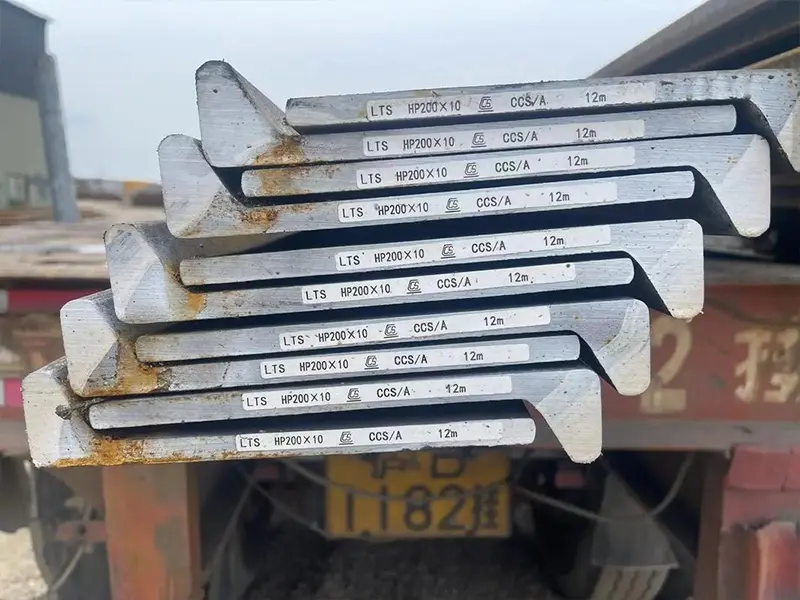
Integration of bulb profiles1 in 3D modeling involves using software like TEKLA2 or ShipConstructor to map every profile. Modular segmentation is planned around these profiles to ensure stiffener continuity and minimize complex joints during final assembly.
Dive deeper Paragraph:
Modern shipbuilding is digital. We do not build ships by eyeballing it anymore. Everything starts in a 3D model. The designer decides exactly where each bulb flat profile goes. They define the curve, the length, and the cutback at the end of the panel.
The challenge comes when you move from the model to the physical steel. The model expects perfect dimensions. If the steel profile has a deviation in its height or bulb size, it will not fit the model’s coordinates. This causes clashes in the assembly.
I always emphasize the importance of using profiles that meet international standards. For example, JIS G 31923 is a common standard for bulb flats. It defines the exact dimensions of the bulb and the web. When you use steel from a mill that follows this standard, your 3D model matches the physical world.
Modular segmentation is another area where bulb profiles matter. In modular construction, you break the ship into blocks. These blocks have boundaries. The designers try to place these boundaries in areas that are less critical. They also try to avoid cutting bulb flats right in the middle. Instead, they place the block split near a transverse frame or a bulkhead.
When I supply steel for a modular project, I ask the client about their block breakdown. Do they need long, un-spliced lengths for a particular module? If so, I make sure to source profiles in those specific lengths. Cutting and splicing a bulb flat in the middle of a panel creates a weak point. It also adds extra welding and inspection work. Avoiding that splice saves time and reduces the risk of failure.
In one project for a tanker in Qatar, the client was using TEKLA for their modeling. They needed precise cut lengths for each bulb flat profile. We provided the steel with laser-marked cut lines based on their nesting drawings. This made it easy for their workers to place the profiles exactly where the model said they should go. It reduced layout time by a significant margin.
What Quality Assurance Methods, Including NDT Testing and Dimensional Inspection, Are Required?
Leading paragraph:
You built the block. Now you have to prove it is good. A failed inspection means rework. Rework kills your profit.
Snippet paragraph:
Quality assurance for bulb flat steel in modular shipbuilding requires Non-Destructive Testing (NDT)1 like ultrasonic testing (UT)2 for welds. Dimensional inspection3 uses laser scanning4 or physical templates to verify alignment and profile spacing against the 3D model.
Dive deeper Paragraph:
I have a client in the Philippines. They are a large importer of marine steel. They told me a story about a previous supplier. The supplier sent them steel that looked fine on the outside. But when they started welding, they found laminations inside the plate. The laminations were hidden defects in the steel itself. The entire batch failed inspection. They lost weeks of work.
That is why quality assurance is not just about checking the welds. It starts with the steel itself. You need to inspect the incoming material. For me, that means checking the mill certificates against the material stamps. If there is any doubt, we arrange for third-party testing5 before the steel even leaves our warehouse in Shandong.
Here is the quality assurance process I recommend to all my clients:
1. Incoming Material Inspection
- Visual Check: Look for surface defects, rust pitting, and correct markings.
- Dimensional Check: Measure the web height, bulb height, and length. Ensure they match the standard.
- Positive Material Identification (PMI)6: Use a handheld device to verify the steel grade. This is critical for high-strength grades like AH36.
2. In-Process Inspection (During Assembly)
- Weld Inspection: This is where NDT comes in. For critical welds on bulb flats, you use ultrasonic testing (UT) or magnetic particle testing (MT). UT can find flaws inside the weld. MT is used for surface cracks, especially at the toe of the weld.
- Tack Weld Check: Make sure tack welds are not cracked before the final weld is laid.
3. Final Dimensional Inspection
- Spacing: The distance between bulb flats must match the design. If the spacing is off, the deck or hull plating will not fit.
- Alignment: The profile must be perpendicular to the panel. A tilt in the bulb flat creates a weak connection.
- Distortion: Use a straightedge to check for warping along the length of the panel. If the distortion exceeds the tolerance, you have to straighten it with heat or mechanical force.
I remember a project in Romania. The shipyard was building a series of bulk carriers. They had a tight schedule. They used a laser tracker to check the entire block after assembly. This tool creates a point cloud of the block and compares it to the 3D model. They found a few bulb flats that were out of position by a few millimeters. Because they caught it early, they were able to correct it before moving to the next assembly stage. If they had missed it, the error would have multiplied when joining the blocks.
For me, offering support for these inspections is part of the service. When I sell to a project contractor, I always offer to provide the material with SGS inspection support. This means the client gets an independent report before shipment. It reduces their risk and builds trust. They know that the steel they are getting is ready for the stringent quality demands of their classification society, whether it is DNV, LR, or ABS.
Conclusion
Modular shipbuilding demands precision. Choosing the right bulb flat steel, welding it correctly, and verifying quality at every step ensures your blocks fit perfectly.
-
Explore how NDT enhances quality assurance by detecting hidden defects, ensuring safety and reliability in materials. ↩ ↩ ↩ ↩
-
Find out how UT is utilized to detect internal flaws in welds, enhancing the integrity of structures. ↩ ↩ ↩ ↩
-
Learn about the critical role of dimensional inspection in maintaining product specifications and preventing costly errors. ↩ ↩ ↩ ↩
-
Understand how laser scanning technology aids in precise measurements and alignment, reducing errors in projects. ↩
-
Explore the benefits of third-party testing in providing unbiased verification and enhancing trust in material quality. ↩
-
Discover the significance of PMI in verifying material grades and ensuring compliance with industry standards.
x ↩