
Leading paragraph:
Shipyards face constant pressure from steel price swings and delivery delays. A single supply chain break can halt production for weeks.
Snippet paragraph:
Large shipyards secure their marine steel plate supply through a mix of long-term mill agreements, just-in-time delivery balanced with safety stock, digital tracking, and multi-source procurement with price hedging.
Transition Paragraph:
I have worked with shipyards across Vietnam, Saudi Arabia, and Mexico. Over the years, I have seen which strategies work and which fail when the market gets tough. Let me walk you through four key areas that make the difference.
How Do Strategic Sourcing and Long-Term Agreements with Steel Mills Stabilize Supply?
Leading paragraph:
Steel mills prioritize their biggest buyers when demand goes up. Spot buyers often get pushed to the back of the line.
Snippet paragraph:
Long-term agreements with steel mills1 give shipyards guaranteed production slots, fixed pricing formulas, and priority access during market tightness. These contracts form the backbone of a stable supply chain.
Dive deeper paragraph:
When I talk to procurement managers at large shipyards, they often tell me the same story. They get good prices during quiet months, but when the market turns, their orders get delayed. This happens because they buy on a spot basis.
Spot buying means you compete with everyone else for the mill’s remaining capacity. A steel mill will always serve its contract customers first. That is just how production planning works.
A long-term agreement changes your position. You become a partner, not just a customer. Here is what a proper agreement should cover:
Key Elements of a Strong Mill Agreement
| Contract Element | Why It Matters |
|---|---|
| Guaranteed Monthly Tonnage2 | Secures your production slot regardless of market conditions |
| Fixed Pricing Formula3 | Links price to raw material indices, not spot market volatility |
| Quality Specifications | Sets clear standards for grade, surface, and dimensional tolerance |
| Delivery Window Commitments | Defines penalties for late shipments |
| Inspection Rights | Allows third-party inspection before steel leaves the mill |
The best contracts I have seen run for three to five years. That timeline matches shipbuilding cycles. A large container ship can take 12 to 18 months to build. You cannot afford to worry about steel availability halfway through.
Some shipyards try to manage this in-house. They buy from traders and hope for the best. But I have seen too many cases where a trader takes orders from multiple buyers. When supply gets tight, they deliver to their highest-margin clients first. You do not want to be the low-margin client when your hull construction is waiting.
That is why I always tell my clients to build direct relationships with certified mills. It takes more work upfront. You need to audit the mill, negotiate terms, and manage the relationship. But once it is in place, you have a foundation that spot buyers simply cannot match.
How Do Just-in-Time Delivery and Safety Stock Work Together in Block Assembly?
Leading paragraph:
Running out of steel during block assembly1 creates expensive idle time. Holding too much inventory ties up capital and takes up valuable yard space.
Snippet paragraph:
Shipyards balance just-in-time delivery with safety stock2 by aligning mill delivery schedules to block assembly sequences. Critical plates arrive when needed, while a strategic safety stock covers unexpected delays.
Dive deeper paragraph:
Block assembly is where a ship comes together. You have teams welding, fitting, and painting in a carefully planned sequence. If a specific plate grade does not arrive on time, that block stops. Workers get moved to other tasks. Cranes sit idle. The whole schedule slips.
I learned this lesson early in my career. A client in the Philippines was building bulk carriers. They ran a tight JIT system. Every plate was scheduled to arrive exactly when needed. Then a typhoon hit the port. Their steel sat on a ship for ten extra days. Production stopped for a week.
After that, we changed their approach. The goal is not to eliminate inventory completely. The goal is to hold the right inventory in the right place.
Finding the Balance
| Inventory Type | Purpose | Typical Coverage |
|---|---|---|
| JIT-Delivered Material | Feeds the active production line | 3-5 days of consumption |
| Strategic Safety Stock | Covers port delays or quality issues | 2-4 weeks of critical grades |
| Buffer at Pretreatment | Ensures pretreatment line runs continuously | 3-7 days of untreated plates |
The trick is identifying which plates need safety stock. Standard grades like ABS Grade A are easy to source. You can find them from multiple mills. But high-strength grades like AH36 or EH40 have longer lead times. Those are the ones you stock.
I also see shipyards make a mistake with their safety stock location. They keep it all at the main warehouse. But if your pretreatment line is at a different facility, a port delay still stops production. You need to think about where the bottleneck is.
Some of my clients now hold a small buffer of critical plates3 right at the pretreatment line. It costs a bit more to move them there early. But it gives them three days of buffer. Three days is often enough to clear a customs delay or solve a trucking issue.
The other factor is communication with the mill. I work with mills that give me weekly production updates. I know exactly which plates are rolled, which are being tested, and which are on the truck. That visibility lets me adjust safety stock levels before a problem becomes a crisis.
How Does Digital Supply Chain Visibility from Mill to Pretreatment Line Improve Operations?
Leading paragraph:
Traditional supply chains rely on phone calls and emails. By the time you hear about a delay, it is already too late to adjust your production plan.
Snippet paragraph:
Digital supply chain visibility1 gives shipyards real-time tracking2 from steel production to pretreatment. This allows proactive management3 of delays, quality issues, and inventory levels before they impact production.
Dive deeper paragraph:
I remember a conversation with a buyer in Qatar. He showed me his system. It was a whiteboard with magnets. Each magnet represented a shipment. When a truck arrived, he moved the magnet. When a plate passed inspection, he wrote a note.
That system worked for him for years. But as his yard grew, the whiteboard could not keep up. He started missing delays. One shipment sat at the port for three days without anyone noticing.
Digital visibility solves this problem. It does not have to be expensive. You do not need a full ERP overhaul. You just need a few key data points shared in real time.
Critical Data Points for Visibility
| Data Point | Source | Action |
|---|---|---|
| Mill Production Status | Mill production system | Confirm plates are rolled and tested on schedule |
| Shipment Tracking | Logistics provider GPS | Know exactly when steel arrives at port |
| Inspection Results | Third-party inspectors | Flag quality issues before steel leaves the mill |
| Pretreatment Line Status | Yard production system | Match incoming steel to pretreatment capacity |
The biggest benefit I see is the shift from reactive to proactive management. When you have real-time data, you stop chasing problems after they happen. You start preventing them.
For example, if a mill reports that a batch of plates failed a mechanical test, you know immediately. You have time to reroute safety stock or expedite the next batch. If you wait for the shipment to arrive and then test it at the yard, you lose weeks.
I work with clients who share their production schedules with me. I share my mill tracking data with them. We use a simple shared dashboard. Nothing fancy. But it means we are looking at the same information at the same time.
One client in Malaysia uses this approach to manage their pretreatment line. They know exactly which plates are arriving each day. They plan their pretreatment schedule days in advance. The line runs at full capacity. No waiting for plates. No overtime to catch up.
Digital visibility also helps with documentation. I have seen shipments held up because the mill certificate did not match the physical plates. When you track the documentation alongside the steel, you catch these mismatches before the shipment leaves the mill. That saves weeks of delay and costly demurrage fees.
How Can Risk Mitigation Strategies Like Price Hedging and Multi-Source Procurement Protect Shipyards?
Leading paragraph:
Steel prices can swing by 30 percent in a single quarter. Relying on one mill leaves you exposed to their production problems and pricing demands.
Snippet paragraph:
Shipyards protect themselves through multi-source procurement1 across certified mills and financial hedging tools like fixed-price contracts2 or raw material-linked formulas. This combination stabilizes both supply and cost.
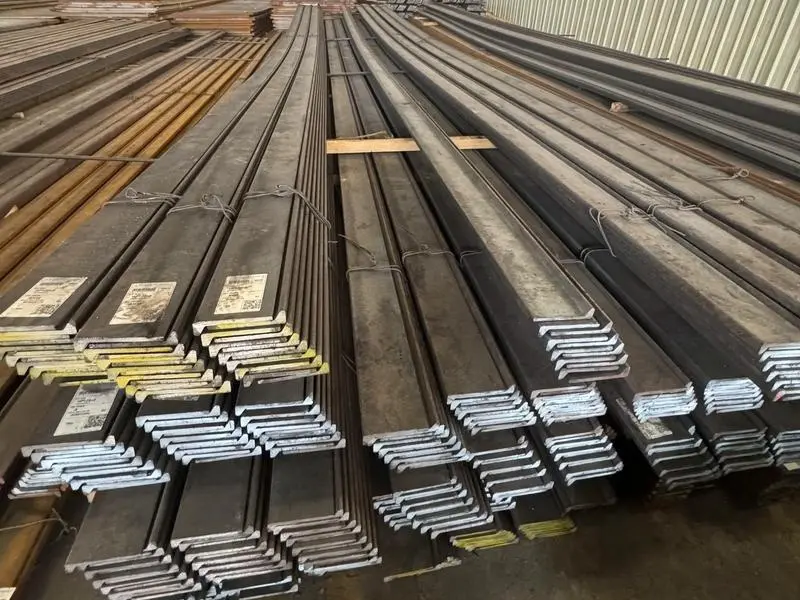
Dive deeper paragraph:
I have been in this business long enough to see two major steel price spikes. Each one caught some shipyards completely off guard. They had contracts with one mill. When prices went up, the mill asked for renegotiation. The shipyard had no leverage. They paid more or they stopped building.
That is the risk of single-source procurement. It works fine when the market is stable. But when conditions change, you have no alternatives.
Multi-source procurement means you have relationships with two or more certified mills. You do not split your volume equally every year. You maintain a primary supplier for most of your needs. But you keep a secondary supplier qualified and ready.
Building a Multi-Source Strategy
| Risk | Mitigation Strategy | Implementation |
|---|---|---|
| Mill Production Disruption | Qualified secondary supplier | Maintain approved vendor status with at least one backup mill |
| Price Volatility | Fixed-price contracts and hedging | Lock in pricing for a portion of annual volume |
| Geographic Concentration Risk | Mills in different regions | Source from mills in China, Korea, and other regions |
| Quality Consistency | Regular third-party audits | Inspect all suppliers against the same standards |
The secondary supplier does not need to be your cheapest option. You pay a bit more to keep that relationship alive. But when your primary mill has a furnace outage, you have somewhere to go. That continuity is worth the extra cost.
Price hedging works differently. In marine steel, you rarely use financial derivatives like futures. Instead, you use contract structures. A fixed-price contract locks in a price for a set period. A formula-based contract ties the price to raw material costs like iron ore or scrap.
I recommend a hybrid approach3. Fix the price for 60 percent of your annual volume. Let the rest float with the market. If prices go up, your fixed portion protects you. If prices go down, you benefit from lower costs on the floating portion.
One of my clients in Saudi Arabia used this approach during the last price cycle. They fixed prices for their container ship orders. Their competitors who bought spot paid 25 percent more. That difference went straight to their bottom line.
Multi-source procurement also protects you from quality problems. I have seen mills ship out-of-spec plates during high-demand periods. They are rushing to meet volume. Quality slips. If you have a second source, you can reject a bad shipment and pull from your backup. If you are single-sourced, you have to accept the plates or stop production.
I work with mills that have different strengths. Some are better at heavy plates for bulk carriers. Some specialize in high-strength grades for container ships. I match the mill to the project. That gives me better quality and more reliable delivery.
Conclusion
Large shipyards need a balanced strategy. Long-term agreements, smart inventory management, digital tracking, and risk mitigation work together to keep steel flowing.
-
Explore how multi-source procurement can enhance supply stability and reduce risks in shipyards. ↩ ↩ ↩ ↩
-
Understand the mechanics of fixed-price contracts and their role in stabilizing costs for shipyards. ↩ ↩ ↩ ↩
-
Explore the hybrid approach to price hedging and how it can optimize costs for shipyards. ↩ ↩ ↩ ↩