
 Leading paragraph:
You finally receive your bulb flat steel order, but the dimensions do not match your specification sheet. This single issue can delay your entire shipbuilding project.
Snippet paragraph:
Dimensional disputes in bulb flat steel orders occur when the buyer and supplier do not agree on the measurement method before shipment. The best way to avoid this is to confirm the exact measuring standard, tolerances, and inspection process in writing before you confirm the order.
Transition Paragraph:
I have been working in the marine steel industry for years. In that time, I have seen too many good business relationships break down over a few millimeters. These disputes are costly. They waste time. They create frustration. But the good news is that most of these issues are completely avoidable. Let me walk you through how we handle this at CN Marine Steel, so you can protect your next order.
What Causes Dimensional Disputes1 in Bulb Flat Steel Orders?
Leading paragraph:
You trust a supplier. You place a big order. Then the steel arrives, and your team says the dimensions are wrong. How did this happen?
Snippet paragraph:
The main causes are unclear communication on measurement points, the use of different national standards, and a lack of third-party inspection before shipment. Both sides assume the other is working to the same criteria.
Dive deeper paragraph:
Most dimensional disputes do not start with bad intentions. They start with small misunderstandings. I have learned this from working with clients in Saudi Arabia, Vietnam, and Mexico. When a project is urgent, everyone wants to move fast. But moving fast without clarity is dangerous.
Let me break down the three main reasons why these disputes happen.
1. Misunderstanding the Measurement Points2
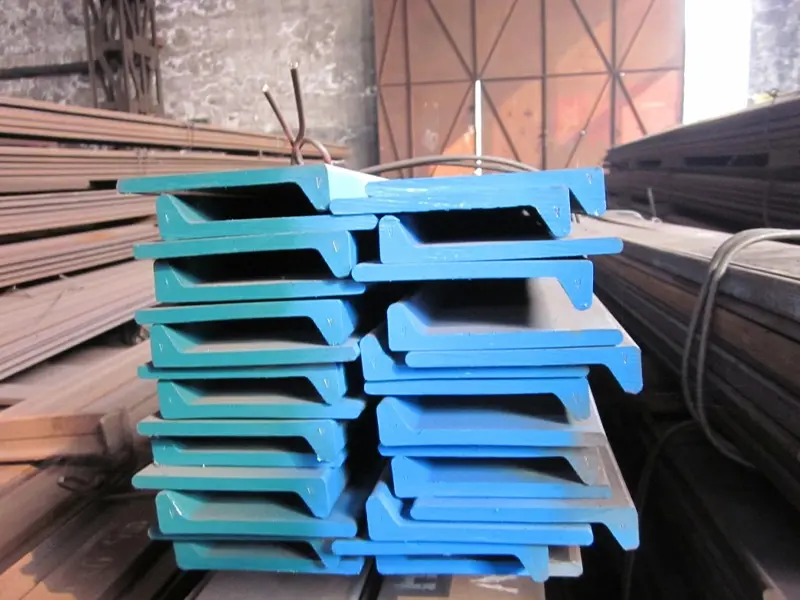
Bulb flat steel is not a simple rectangle. It has a bulb shape at the top and a flat web. Where do you measure the height? Is it from the bottom of the web to the top of the bulb? Or do you measure the web height only? I have seen contracts where one side assumed "height" meant total height, while the other assumed it meant web height. This difference can be 20mm or more on a large profile. That is not a small tolerance issue. That is a complete mismatch.
2. Using Different National Standards3
A buyer in the Philippines might use JIS (Japanese Industrial Standards). A supplier in China might be working to GB/T (Chinese National Standards). Both standards have different rules for tolerances and measurement methods. For example, JIS allows for a certain deviation on the bulb height. GB/T might allow for a different deviation. If you do not specify which standard to follow, each side will use their own. When the steel arrives, the numbers will not match.
3. Lack of Pre-Shipment Inspection4
This is the biggest one. I have worked with clients who only saw photos of the steel before it was packed. They did not ask for a detailed measurement report. They did not ask for a third-party inspector like SGS to check the dimensions before loading. When the steel arrived, they had no proof that the supplier sent the wrong size. It becomes a "he said, she said" situation. The supplier says the steel passed their internal QC. The buyer says it is wrong. The dispute drags on.
To make this clearer, here is a simple breakdown of the risks:
| Risk Factor | Description | Impact |
|---|---|---|
| Measurement Point | Not specifying if height is total or web height | Can cause up to 20mm variance, making steel unusable |
| Standard Mismatch | Using JIS vs. GB/T vs. ASTM without agreement | Tolerances differ, leading to false "out of spec" claims |
| No Third-Party Inspection5 | Relying only on the supplier’s internal report | No independent proof of dimensions at shipment |
| Unclear Tolerance6 | Not agreeing on acceptable deviation limits | Small variations become major arguments |
I remember a client from Malaysia. They ordered 300 tons of bulb flat steel. The supplier said they sent the right size. The client said the steel was 5mm too short. Neither side had a clear record of which standard they agreed on. The shipment sat at the port for three weeks. The client lost money on storage fees. The supplier lost a customer. All of this could have been fixed with one email before production started.
How to Align on Measurement Standards Before Placing the Order?
Leading paragraph:
You want to avoid that phone call where you are arguing about millimeters. The secret is to handle all the details before you pay the deposit.
Snippet paragraph:
To align on measurement standards1, you must define the specific standard (JIS, GB/T, ASTM2), the exact measurement points3, and the acceptable tolerances4 in your purchase agreement. Do this before production starts.
Dive deeper paragraph:
At CN Marine Steel, we treat the pre-order phase as the most important step. I know from experience that if we get this right, the rest of the order goes smoothly. If we rush this, problems always show up later.
Here is the process I follow with my clients. You can use this with any supplier.
1. Pick the Standard Together
Do not assume the supplier knows which standard you use. I always ask my clients: "Which standard do your local fabricators follow?" If they say JIS G 3350, I confirm that we will produce to that standard. If they say GB/T 9945, we use that. I put this in the proforma invoice5. I put it in the final contract. There is no room for guessing.
2. Define the Measurement Points
This is where we get detailed. For bulb flat steel, the critical dimensions are:
- Web Height (h): The straight part from the bottom to where the bulb starts.
- Bulb Height (b): The height of the rounded part at the top.
- Total Height (H): Web height plus bulb height.
- Web Thickness (t): The thickness of the flat part.
- Bulb Width (b1): The width of the bulb at its widest point.
I send a diagram to my client. I ask them to mark exactly which dimensions they want us to measure. I ask them to confirm the tolerance. Is +/- 0.5mm acceptable? Or do they need +/- 0.3mm? I record their answers in our system.
3. Confirm the Tolerances
Standards always include tolerances. But sometimes a project needs stricter tolerances than the standard allows. For example, JIS might allow a tolerance of +/- 1.5mm on web height. But if your bending machine needs a tolerance of +/- 1.0mm, the standard tolerance is not good enough. You must specify this. I always ask: "What is the maximum deviation your team can accept on the assembly line?" This question saves more arguments than anything else.
4. Put It in the Inspection Plan
Once we agree on the standard and tolerances, we build the inspection plan6 around it. We decide:
- Who will do the inspection? (Our QC team, a third-party like SGS, or both)
- When will the inspection happen? (During rolling, before cutting, or before loading)
- What report format will we use?
- How many samples will we check?
I send this plan to my client before production starts. They review it. They approve it. Now we have a roadmap. There is no confusion later.
I learned this method from a client in Qatar. He is a project contractor. He told me: "Zora, I don’t care if the steel is from China or Japan. I care that it fits my drawings. Tell me how you will measure it, and I will trust you." That conversation changed how I work. Now, I always provide a measurement plan before I accept a deposit. It builds trust from day one.
What Is the Correct Way to Measure Bulb Flat Steel Dimensions?
Leading paragraph:
You have the steel in your warehouse. Your quality team says it is wrong. The supplier says it is right. Who is correct? It depends on how you measure it.
Snippet paragraph:
The correct way to measure bulb flat steel is to use a calibrated caliper1 or micrometer at the specified points defined in the agreed standard. Measurements must be taken at least 100mm from the cut end to avoid deformation effects.
Dive deeper paragraph:
Even with a clear standard, measurement mistakes happen. I have seen clients use the wrong tools. I have seen them measure in the wrong location. I have seen them measure the steel after it has been damaged in transit. To avoid this, you need a standard operating procedure for measurement2.
The Three Critical Rules for Accurate Measurement
1. Use the Right Tool
You cannot measure steel dimensions with a standard tape measure. The tape is not precise enough. For web thickness and bulb height, you need a digital caliper3 or a micrometer. These tools give you accuracy to 0.01mm. For total height, you can use a steel ruler or a depth gauge, but it must be calibrated. I always ask my clients to confirm the calibration date of their tools. If the tool is not calibrated, the measurement is not valid.
2. Measure Away from the Cut Ends
This is a common mistake. When steel is cut with a plasma torch or a saw, the cut ends can distort. The heat can change the shape slightly. If you measure 10mm from the end, you might get a false reading. The correct practice is to measure at least 100mm (or 4 inches) from the cut end. This ensures you are measuring the true shape of the steel profile.
3. Take Multiple Samples
Do not measure just one piece and decide the whole batch is wrong. Steel production has natural variation. You should take a random sample. The standard practice is to check 10% of the pieces in a batch, with a minimum of 5 pieces. Measure each piece at both ends and in the middle. Then take the average. If the average is within the agreed tolerance, the batch is acceptable.
Here is a simple checklist you can give to your quality team:
| Step | Action | Tool | Location |
|---|---|---|---|
| 1 | Measure Web Thickness | Digital Caliper | 200mm from end, mid-web |
| 2 | Measure Total Height | Steel Ruler | 200mm from end, centerline |
| 3 | Measure Bulb Width | Digital Caliper | 200mm from end, widest point |
| 4 | Record All Measurements | Inspection Sheet | For 10% of the pieces |
| 5 | Compare to Agreed Standard | Contract/PO | Calculate average deviation4 |
A few years ago, I had a client in Thailand who rejected a shipment because he thought the web height was too short. He sent me photos of his measurement. He was measuring at the cut end. The steel was cut with a saw, and the burr from the saw made the steel look shorter. I asked him to cut 50mm off the end and measure again. When he did, the measurement was perfect. We saved the shipment. He was happy. But if he had not communicated with me, he would have returned the steel and lost weeks of time.
How to Handle a Dimensional Dispute When It Happens?
Leading paragraph:
Despite your best efforts, a dispute happens. The steel is on site. The numbers do not match. Your project is stopped. What do you do now?
Snippet paragraph:
When a dimensional dispute1 happens, stop all work immediately2, take clear photos with a measuring tool visible, and send the evidence to your supplier. Do not cut or use the steel until you agree on a resolution.
Dive deeper paragraph:
Disputes are stressful. I have been in the middle of them many times. The worst thing you can do is let emotions take over. I have learned a step-by-step process that helps resolve disputes quickly and fairly. This process has saved relationships for me and for my clients.
Step 1: Stop and Document
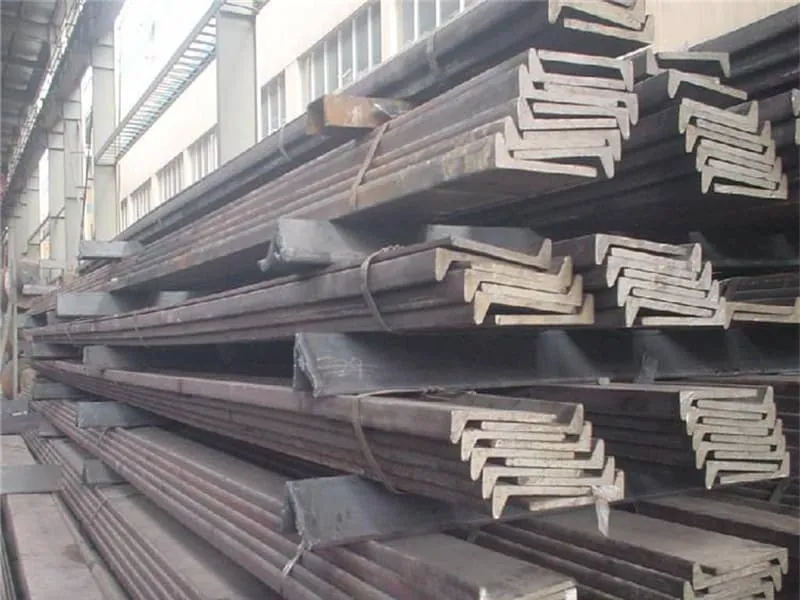
If your team finds a dimensional issue, stop processing the steel immediately. If you cut it, weld it, or bend it, you lose your right to claim it is non-conforming. The first thing I tell my clients to do is take photos. But not just any photos. You need to show the measurement in the photo. Place the caliper on the steel. Show the reading. Show the location of the measurement. Take a photo of the full length of the steel. Take a photo of the end with the heat number. This documentation is your evidence.
Step 2: Contact Your Supplier with Facts, Not Emotion
Do not send an angry email saying "Your steel is garbage." That will not help. Instead, send a professional email with the following:
- The heat number of the steel in question.
- The specific dimension that is out of spec.
- Photos showing the measurement and the location.
- The agreed standard and tolerance from your contract.
I have received emails like this. When I see clear photos and heat numbers, I can act immediately. I can check our production records. I can go to the mill and find the batch. If the client just says "it is wrong," I have nothing to work with.
Step 3: Request a Joint Verification
If the supplier disagrees with your measurement, the next step is to get a third party involved. This can be SGS, Bureau Veritas, or another independent inspection company3. Both sides agree to accept the third party’s measurement as final. This takes the argument out of it. It costs money, but it is cheaper than scrapping a whole order.
Step 4: Find a Fair Resolution
Once the facts are clear, you need to decide how to fix the problem. In my experience, there are three fair ways to resolve a dimensional dispute:
- If the steel is usable with minor rework: The supplier covers the cost of the rework. The client does not lose project time.
- If the steel is not usable: The supplier replaces the non-conforming pieces4 with express shipping. The supplier covers the shipping cost.
- If the steel is not usable and the project is delayed: This is the hardest. Both sides need to negotiate. Usually, a partial refund or a discount on the next order helps keep the relationship alive.
I had a situation with a client in the Philippines. The steel arrived, and 10% of the pieces had a web thickness that was 0.3mm over the tolerance. The client wanted to reject the whole order. I asked for photos. I saw the measurement. I agreed it was out of spec. Instead of arguing, I offered to pay for the local grinding cost to reduce the thickness. The client accepted. The project continued. A few months later, they placed a bigger order with us. That is how a dispute should end.
Conclusion
Dimensional disputes in bulb flat steel orders stop projects and cost money. You can avoid them by defining standards, measurement points, and tolerances before production, and by documenting everything.
-
Understanding best practices can help you navigate disputes effectively and maintain project timelines. ↩ ↩ ↩ ↩
-
Stopping work prevents further complications and preserves your rights to claim non-conformance. ↩ ↩ ↩ ↩
-
Independent inspections provide unbiased assessments, which can facilitate fair resolutions. ↩ ↩ ↩ ↩
-
Knowing how to handle non-conforming pieces can save costs and prevent project delays. ↩ ↩ ↩ ↩
-
Understanding the role of a proforma invoice can enhance clarity and prevent misunderstandings in transactions. ↩ ↩
-
A well-structured inspection plan is vital for maintaining quality control and meeting client expectations. ↩ ↩