
Pick the wrong steel plate. Your hull cracks. Your ship fails inspection. You lose millions.
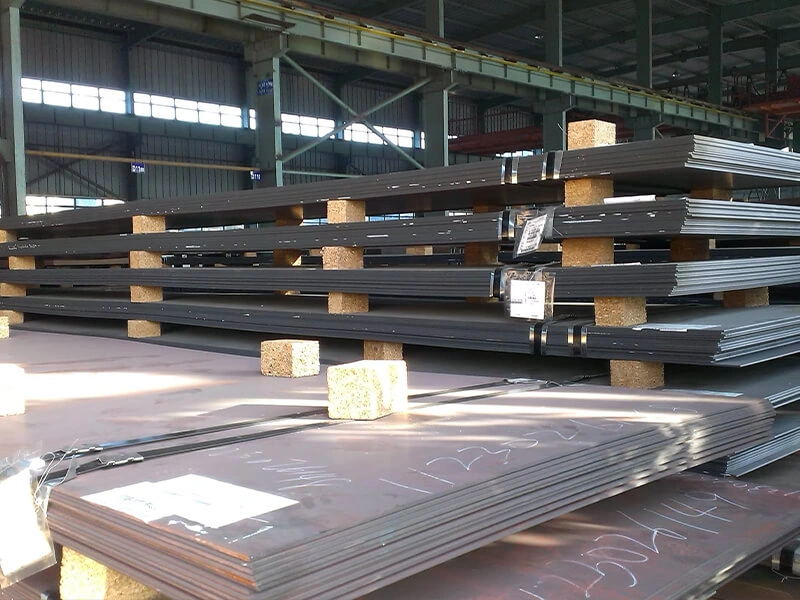
The right marine steel plate for large vessels depends on three things: the steel grade (AH36, DH36, or EH36), class society approval (ABS, DNV, LR), and the plate thickness that matches your design. You also need good weldability and impact toughness for cold waters. I have supplied steel for oil tankers and bulk carriers going to Vietnam, Mexico, and Saudi Arabia.
I know you want a simple guide. You do not want to read a 200-page class rule book. So let me break down what I have learned from 10 years of exporting marine steel to shipyards around the world.
What Steel Grade Is Best for Hull Construction of Large Vessels?
You see grades like A361, AH362, DH363, and EH364. Which one goes where on your ship? The wrong choice can sink your project.
For the hull of large commercial vessels, use AH36 for most of the structure. Use DH36 for the deck and the bottom in cold areas. Use EH36 for Arctic or very cold routes. Use ordinary A36 only for non-critical parts like internal brackets. I helped a buyer in Romania choose the right mix for a 50,000-ton bulk carrier. He saved 12% on steel cost5 without losing safety.
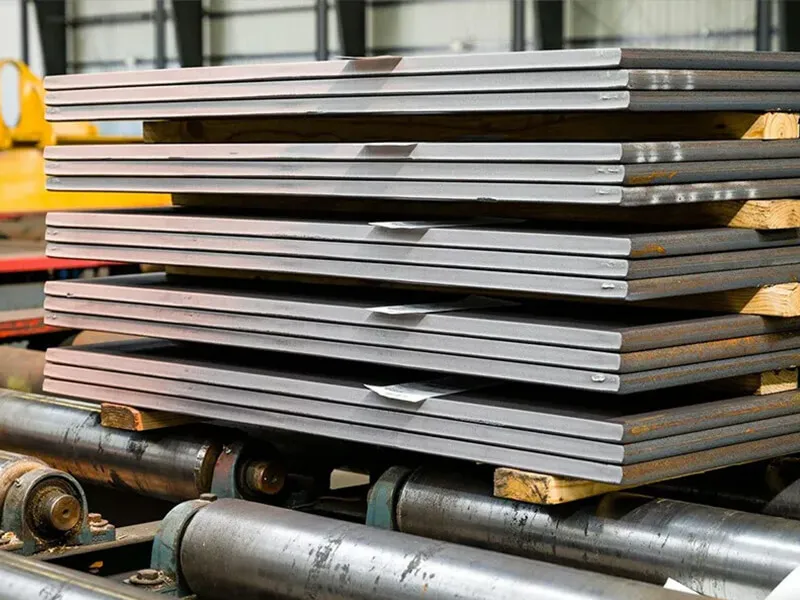
Let me explain each grade and where to put it on your ship.
I am Zora Guo. I export marine steel plates6 to shipbuilders in more than 15 countries. One of my buyers in Pakistan was building a 30,000-ton oil tanker. He asked me: "Why are there so many grades? Can I just use A36 for everything?" I told him no. That would be like using the same wood for a chair and for a bridge. The chair works. The bridge breaks.
So here is the simple breakdown.
Grade A36 – The basic one
This is the most common mild steel. Its yield strength is 235 MPa (megapascals). It is fine for low-stress parts. But it is not strong enough for the main hull of a large vessel. Use it for:
- Internal stiffeners
- Floor plates in engine rooms
- Non-structural brackets
Do not use it for the outer hull, the deck, or the bottom.
Grade AH36 – The workhorse
This is a high-strength steel. Its yield strength is 355 MPa. That is about 50% stronger than A36. Use AH36 for:
- The side shell (the outer hull)
- The bottom plates
- The main deck
- The longitudinal bulkheads
For most large commercial vessels, 70-80% of the steel will be AH36. I ship more AH36 than any other grade.
Grade DH36 – For cold areas
DH36 has the same strength as AH36 (355 MPa). But it has better impact toughness at low temperatures. AH36 works down to 0°C. DH36 works down to -20°C. Use DH36 for:
- The deck and topside plates on ships that sail to Northern Europe or North America in winter
- The bow area that hits cold water
Grade EH36 – For very cold routes
EH36 also has 355 MPa strength. But it works down to -40°C. Use EH36 for:
- Arctic vessels
- Icebreakers
- Ships that sail to Russia or Canada in winter
How to choose the right mix for your vessel
Look at your ship’s trading route. Here is a simple table:
| Route / condition | Recommended grade for main hull |
|---|---|
| Tropical waters (Southeast Asia, Middle East, Africa) | AH36 for hull, A36 for internals |
| Temperate waters (Mediterranean, China, Japan, US East Coast) | AH36 for hull, DH36 for deck in winter |
| North Atlantic / North Sea in winter | DH36 for hull and deck |
| Arctic or Baltic Sea in winter | EH36 for hull and deck |
I remember a buyer from Mexico. He was building a small cargo ship for local routes. The water is warm all year. I recommended AH36 for the hull and A36 for internal parts. He saved money and the ship works fine.
But another buyer from Romania was building a vessel that sails to the Black Sea in winter. That water can drop to near freezing. I recommended DH36 for the deck and the bow. He took my advice. Two years later, he told me his ship passed every inspection with no problems.
So my rule is simple: match the grade to the coldest water your ship will see. And never use A36 for the main hull of a large vessel. That is a disaster waiting to happen.
How to Verify Class Society Certification for Marine Steel Plates?
A supplier says "our steel is approved by ABS." But how do you know it is real? Fake certificates are common. You need to check.
To verify class society certification, ask for the mill certificate (EN 10204 Type 3.2)1. Then go to the class society’s website. Type in the certificate number. The system will tell you if it is real. Also check the heat number2 on the steel plate. It must match the certificate. I caught a fake certificate from a trader last year. The buyer almost lost $200,000.
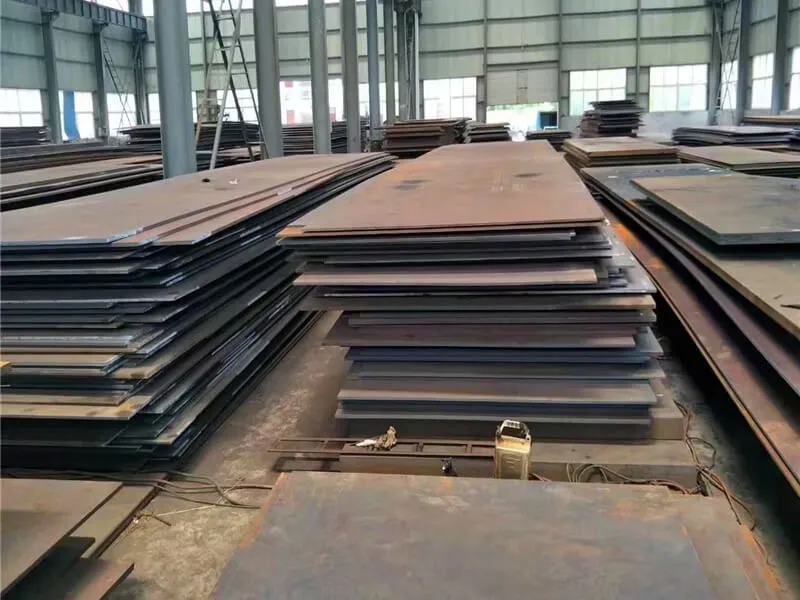
Let me show you exactly how to check, step by step.
I am Zora Guo. I have seen many fake certificates. A few years ago, a buyer from Thailand sent me a certificate from another supplier. He asked me: "Is this real?" I looked at it. The logo looked wrong. The font was different. I called the class society. They said: "We never issued that number." The buyer cancelled the order. He saved himself from a big problem.
So here is my verification system.
Step 1 – Ask for the right certificate
There are two types of mill certificates. Type 3.1 is signed only by the mill. Type 3.2 is signed by the mill and witnessed by a class society inspector. For marine steel plates on large commercial vessels, you need Type 3.2. This is the gold standard.
The certificate must show:
- The class society logo (ABS, DNV, LR, CCS, BV, NK, RINA)
- A unique certificate number
- The heat number of the steel
- The mechanical test results3 (yield, tensile, impact)
- The chemical composition4
- The inspector’s signature and stamp
Step 2 – Go to the class society website5
Every major class society has an online verification tool. Go to their website. Find the "certificate verification" or "document check" page. Type in the certificate number. The system will show you the original certificate.
If the number does not work, the certificate is fake. If the number works but the details (buyer name, steel grade, quantity) are different, that is also a problem.
Here are the links for the main class societies (you can search them):
- ABS – "ABS Certificate Verification"
- DNV – "DNV Veracity"
- LR – "LR Find My Certificate"
- CCS – "CCS Certificate Query"
Step 3 – Check the heat number on the steel plate
This step is easy to miss. But it is very important. Every steel plate has a stamp. The stamp shows the heat number and the grade. Walk to your steel yard. Look at the plate. Read the heat number. Then open the certificate. The heat number on the plate must match the heat number on the certificate.
If they do not match, reject the steel immediately. This is a clear sign of fraud. The supplier took steel from one batch and a certificate from another batch.
Step 4 – Call the class society office
If you are still not sure, call the local office of the class society. Give them the certificate number and the heat number. They can check their internal records. This takes 10 minutes. It gives you 100% peace of mind.
Step 5 – Use a third-party inspection company6
If you do not have time to do these checks, hire SGS, Bureau Veritas7, or Intertek. They will verify the certificate for you. They will also check the steel and the stamp. The cost is small compared to the risk of fake steel.
Here is a quick checklist for your purchase order:
| Check item | How to do it | Pass / Fail |
|---|---|---|
| Certificate type | Must be EN 10204 Type 3.2 | |
| Certificate number | Check online at class society website | |
| Heat number on certificate | Must match stamp on steel plate | |
| Inspector signature | Must be real and dated | |
| Steel grade | Must match your order (AH36, DH36, etc.) |
I remember a buyer from Saudi Arabia. He sent me a certificate from another supplier. The certificate looked perfect. But when I checked online, the number did not exist. He called the supplier. The supplier said "our system is down." That was a lie. He cancelled the order and bought from me instead. He told me: "Zora, your certificates always check out. That is why I trust you."
Why Does Weldability1 and Impact Toughness Matter for Commercial Ships?
You can buy the strongest steel. But if it cracks when you weld it, your hull will fail. And if it gets brittle in cold water, the ship can break in half.
Weldability matters because a large vessel has hundreds of kilometers of welds. Bad weldability means cracks and rework. Impact toughness2 matters because cold water makes steel brittle. A brittle hull3 can snap like glass. I have seen a bulk carrier lose its bow after hitting cold water with low-toughness steel. The repair cost was $3 million.
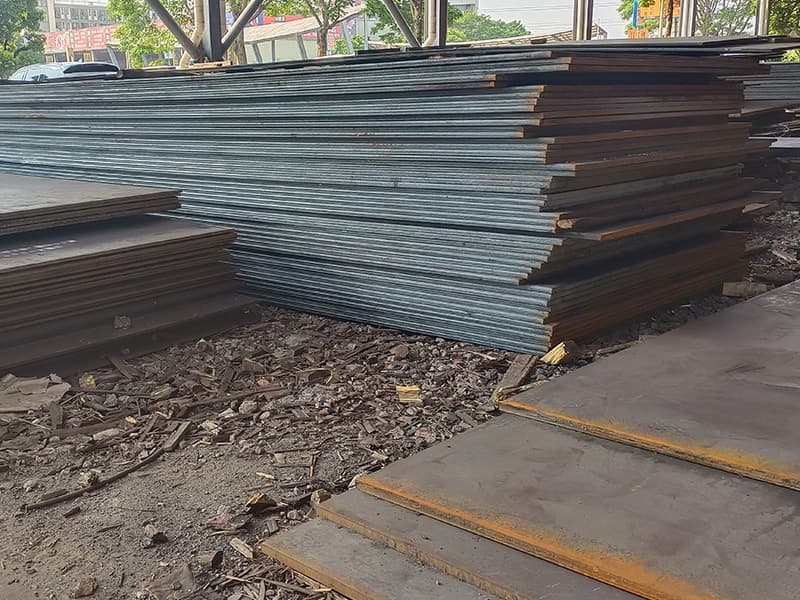
Let me explain these two properties in plain words.
I am Zora Guo. I have supplied marine steel plates4 for oil tankers, bulk carriers, and container ships. One of my buyers in Malaysia once asked me: "Why do you keep talking about CEV and Charpy? I just want steel." I told him: "Those numbers keep your ship from sinking."
So let me break it down.
What is weldability and why does it matter?
Weldability is how easily the steel can be welded without cracking. The main number to look at is CEV (Carbon Equivalent Value)5. CEV is a formula that adds up the carbon and other elements.
Lower CEV means easier welding. Higher CEV means the steel is harder to weld. It needs pre-heating and special procedures.
For marine steel plates:
- CEV below 0.40% – very good weldability
- CEV between 0.40% and 0.45% – good weldability (needs some care)
- CEV above 0.45% – poor weldability (needs pre-heating and slow cooling)
Why does this matter for your ship? A large commercial vessel has thousands of weld joints. Each weld is a potential weak point. If the steel has high CEV, the welds can crack. Cracks grow over time. Then the hull fails.
I remember a buyer from the Philippines. He bought cheap steel with high CEV (0.52%). His welders did not pre-heat. The welds cracked. He had to cut out all the welds and redo them. That cost him 200 extra labor hours and $15,000 in rework.
So always ask for the CEV number on the mill certificate. For AH36, good mills keep CEV below 0.42%.
What is impact toughness and why does it matter?
Impact toughness is the ability of steel to absorb energy without breaking. It is tested with a Charpy V-notch test6. A small notched piece is hit with a swinging hammer. The energy absorbed (in Joules) is the toughness.
For marine steel:
- AH36 – tested at 0°C, minimum 34 Joules
- DH36 – tested at -20°C, minimum 34 Joules
- EH36 – tested at -40°C, minimum 34 Joules
Why does this matter? Steel becomes brittle when cold. Think of a rubber band. At room temperature, it stretches. In the freezer, it snaps. The same thing happens to steel.
If your ship sails in cold waters, you need steel with good impact toughness at that temperature. In 2013, a bulk carrier broke in half in the North Atlantic. The investigation found that the steel had low impact toughness. The cold water made it brittle. The waves snapped the hull.
So how do you choose? Look at your ship’s route. Use this table:
| Minimum sea temperature | Grade needed | Test temperature |
|---|---|---|
| Above 10°C | AH36 | 0°C |
| 0°C to 10°C | DH36 | -20°C |
| Below 0°C | EH36 | -40°C |
The connection between weldability and toughness
Here is a secret. High strength and good toughness often fight against each other. To get high strength, mills add more carbon and alloys. That raises CEV and hurts weldability. To get good toughness at low temperatures, mills add nickel and refine the grain. That costs more.
So a good marine steel plate finds the balance. It has high strength (355 MPa), good toughness (34J at -20°C or -40°C), and reasonable CEV (below 0.42%).
I always tell my buyers: "Do not chase the lowest price. The mill will lower the nickel and raise the carbon. You will get brittle steel that cracks when you weld."
Here is a quick guide for your next purchase:
| Property | What to ask for | Why it matters |
|---|---|---|
| CEV (Carbon Equivalent) | Below 0.42% for AH36/DH36 | Easy welding, no cracks |
| Charpy impact at test temp | Minimum 34 Joules | No brittle failure in cold water |
| Yield strength | Minimum 355 MPa for AH36/DH36/EH36 | Hull stays strong under wave load |
How to Match Plate Thickness and Tolerances to Your Vessel Design?
You have a design drawing. It says 20mm plate. The supplier sends 19.5mm plate. Is that okay? Maybe. But you need to know the rules.
The plate thickness1 and tolerances2 must follow the class society rules3. For most large vessels, the minus tolerance is -0.3mm for plates under 20mm, and -0.5mm for plates 20mm to 40mm. Anything thinner than that is a rejection. I have seen a shipyard in Vietnam reject 50 tons of plates because the thickness was 0.6mm too thin. That cost the supplier $40,000.
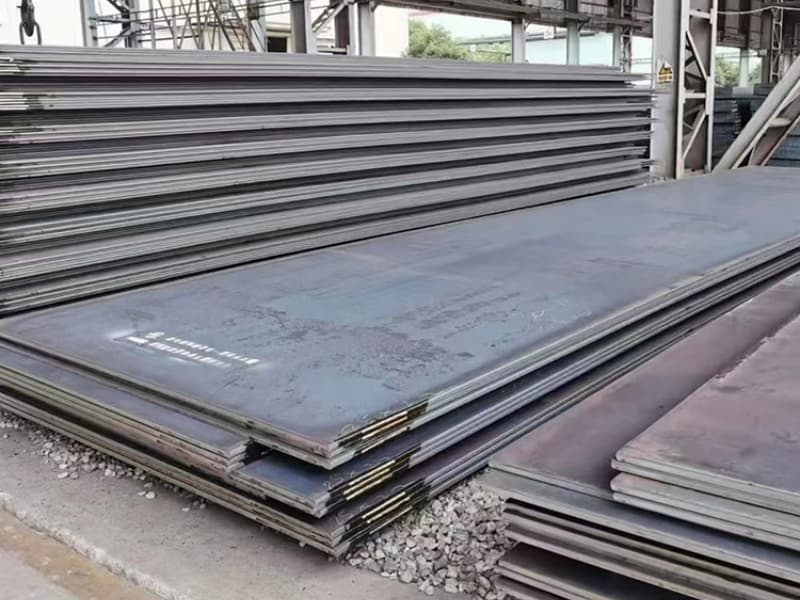
Let me explain how to check thickness and avoid problems.
I am Zora Guo. One of my buyers in Qatar once received a shipment of 25mm plates. The certificate said 25mm. But his inspector measured them. They were only 24.2mm. That is 0.8mm too thin. He called me upset. The supplier had used a cheaper, thinner plate to save money. The buyer rejected the whole shipment. The supplier had to send new plates by air freight. That cost a fortune.
So here is how you avoid this problem.
Know the standard tolerances
Most marine steel plates4 follow the tolerance rules of the class society. But the most common standard is EN 100295 or ASTM A6.
For plates used in large commercial vessels, here are the typical thickness tolerances:
| Nominal thickness (mm) | Minus tolerance (mm) | Plus tolerance (mm) |
|---|---|---|
| 5 to 10 | -0.3 | +0.5 |
| 10 to 20 | -0.3 | +0.6 |
| 20 to 30 | -0.5 | +0.7 |
| 30 to 40 | -0.5 | +0.8 |
| 40 to 50 | -0.6 | +0.9 |
What does this mean? If you order a 20mm plate, the actual thickness can be between 19.7mm and 20.6mm. Anything thinner than 19.7mm is non-conforming.
Measure the thickness correctly
Do not just measure one spot. Steel plates can have variations. Use an ultrasonic thickness gauge6 or a micrometer. Measure at least three points:
- 50mm from the edge at one end
- The center of the plate
- 50mm from the edge at the other end
Take the average of the three readings. If the average is below the minus tolerance, reject the plate.
Check the width and length tolerances
Thickness is not the only dimension. The width and length also have tolerances. For marine plates, the typical tolerance for width is +3mm / -0mm. That means the plate cannot be narrower than ordered. It can be wider, but not narrower. The length tolerance is usually +5mm / -0mm.
Why does this matter? If the plate is too narrow, it will not cover the design area. Your welder will have to add a filler piece. That is extra work and extra weakness.
Match the thickness to the vessel design
Your naval architect or class society will give you a minimum required thickness for each part of the ship. For example, the bottom plates of a large bulk carrier might need 25mm minimum. You order 25mm plates. But with the minus tolerance, you could get 24.5mm. That might still be above the design minimum. But you need to check.
Always ask your designer: "What is the minimum acceptable thickness7 including tolerance?" Then order a thickness that stays above that number.
For example, if the design requires 20mm minimum, order 20.5mm or 21mm plates. That gives you a safety margin.
Put the tolerance in your contract
Do not just say "thickness 20mm." Write: "Thickness 20mm with tolerance per EN 10029 Class A. Minus tolerance -0.3mm max. Any plate thinner than 19.7mm will be rejected and replaced at supplier’s cost."
This clear language protects you.
Here is a sample clause you can use:
| Item | Contract wording |
|---|---|
| Thickness | 20mm nominal, tolerance -0.3mm / +0.6mm |
| Width | 2000mm nominal, tolerance +3mm / -0mm |
| Length | 10000mm nominal, tolerance +5mm / -0mm |
| Measurement method | Ultrasonic gauge at three points per plate |
I have used this clause for shipments to Saudi Arabia and Malaysia. It works. The suppliers know exactly what to send. And you have clear grounds to reject bad plates.
Conclusion
Pick the right grade. Verify the certificate. Check weldability and toughness. Then match thickness to your design.
My Personal Insights (from 10+ years in marine steel export)
I am Zora Guo. My team in Liaocheng works only with certified mills. We provide EN 10204 Type 3.2 certificates for ABS, DNV, LR, and CCS. We also support SGS inspection before shipment. Whether you need marine steel plates for oil tankers, bulk carriers, or container ships, send me an email at sales@chinaexhaustfan.com or visit cnmarinesteel.com. Tell me your grade, thickness, and class society requirement. I will send you a quote with full traceability.
-
Understanding plate thickness standards is crucial for ensuring compliance and safety in vessel design. ↩ ↩ ↩ ↩
-
Exploring tolerances helps you avoid costly mistakes and ensures your materials meet design specifications. ↩ ↩ ↩ ↩
-
Class society rules are essential for compliance and safety in shipbuilding; learn more to protect your investment. ↩ ↩ ↩ ↩
-
Understanding marine steel plate specifications is key to ensuring your vessel meets safety and performance standards. ↩ ↩ ↩ ↩
-
The EN 10029 standard provides critical guidelines for steel plate tolerances; understanding it can save you from costly errors. ↩ ↩ ↩ ↩
-
Using an ultrasonic thickness gauge ensures accurate measurements, preventing issues with plate conformity. ↩ ↩ ↩ ↩
-
Knowing the minimum acceptable thickness is vital for safety and compliance in vessel design. ↩ ↩