
You step onto a ship. You do not see the steel. But it holds everything together.
Marine steel plate supports structural safety by providing the hull with strength to resist waves, the ability to bend without breaking, and the toughness to survive cold water impacts. It also stops cracks from spreading.
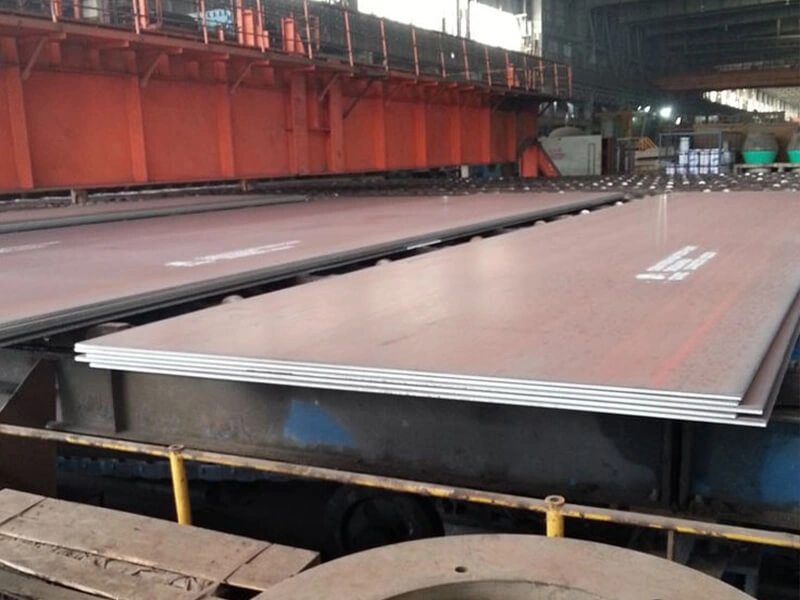
I have shipped marine steel plate to shipbuilders in Vietnam, Qatar, and Romania. They all ask the same question: “Will this steel keep my crew safe?” Let me answer that for you.
What is a marine steel plate1?
Some people think any steel plate can go on a ship. That is wrong. Marine steel plate is different.
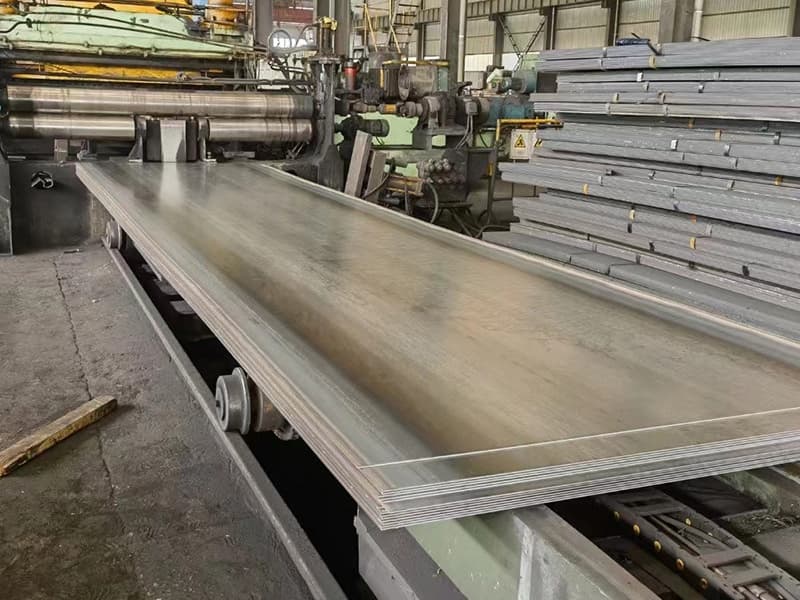
A marine steel plate is a flat rolled steel product made specifically for shipbuilding. It has strict rules for chemical content2, mechanical strength, and impact resistance. It also has approval from a classification society like ABS, DNV, or LR.
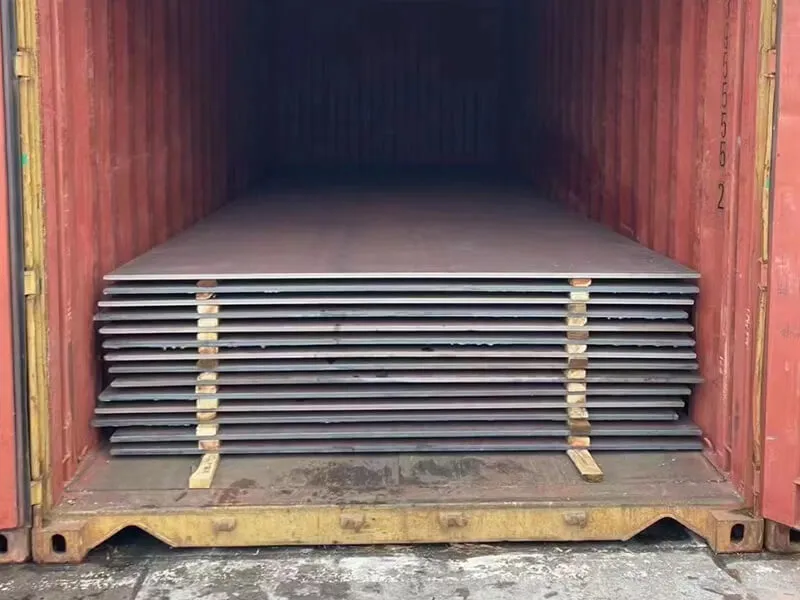
How is marine steel plate different from regular steel plate?
Let me give you a simple comparison. Regular steel plate is fine for buildings on land. The ground does not move. The temperature does not change much. But a ship faces waves, salt, and cold water.
Marine steel plate has lower carbon. That makes it easier to weld. It has more manganese. That gives it strength without making it brittle. It also has controlled levels of phosphorus and sulfur. Those two elements cause cracking.
Most important, marine steel plate is tested for impact at low temperatures. A ship in the North Sea can hit -20°C water. If the steel gets brittle, a small crack can grow into a big hole. Marine steel plate stops that.
Key differences in a table
| Property | Regular steel plate | Marine steel plate (Grade A, B, D, E) |
|---|---|---|
| Carbon | Up to 0.25% | Below 0.21% |
| Manganese | 0.50% to 1.20% | 0.80% to 1.60% |
| Phosphorus | Up to 0.050% | Below 0.035% |
| Sulfur | Up to 0.050% | Below 0.035% |
| Impact test | Not required | Required (27J to 34J at 0°C to -40°C) |
| Third-party stamp | Optional | Required for most ships |
What grades of marine steel plate do I see most?
The most common is Grade A. It is for general use. Thickness up to 25mm. Impact test at 0°C only for thicker plates.
Then Grade B. Similar strength but better impact. Then Grade D. Impact at -20°C. Then Grade E. Impact at -40°C. There are also higher strength grades like AH32, AH36, DH32, DH36, and EH36. Those have yield strength of 315 to 355 MPa instead of 235 MPa.
I once supplied Grade E plates to a customer building an ice-class vessel for Russia. The plates were 40mm thick. They had to pass impact tests at -40°C. The mill did extra testing. We sent samples to DNV. All passed. That ship now breaks ice in the Arctic.
Why is steel used as structural support in making buildings?
Wait, this is about ships. But the same idea applies. Ships are like floating buildings.
Steel is used as structural support because it is strong, stiff, and ductile. Strong means it holds heavy loads. Stiff means it does not bend too much. Ductile means it bends a little before breaking. That gives you a warning.
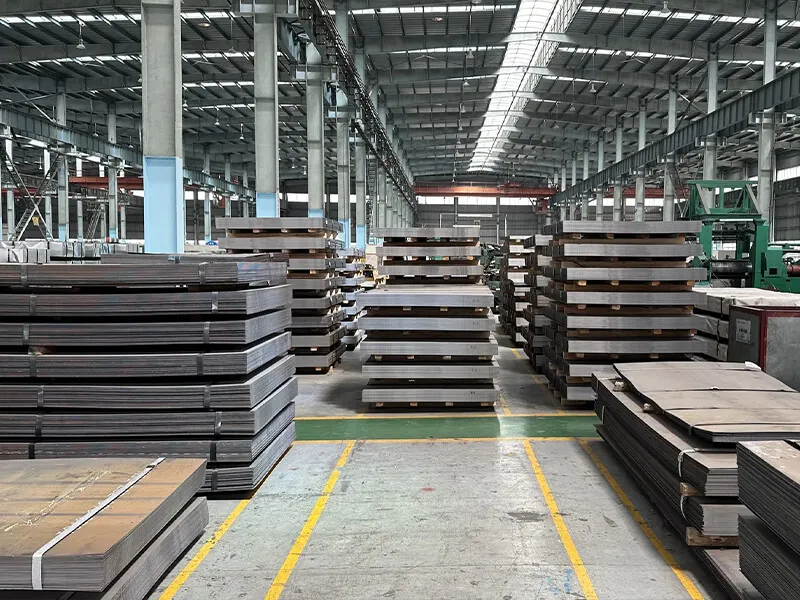
How does this apply to a ship?
Think of a ship as a steel box. The bottom is the keel and bottom plates. The sides are side shell plates. The top is the main deck. Inside, there are bulkheads (walls) and stiffeners (ribs).
All these parts are made of marine steel plate1. The plates are welded together. The welds must be as strong as the plate. That is why weldability2 is so important.
When a wave lifts the bow, the hull bends. The top plates go into tension (pulling apart). The bottom plates go into compression (pushing together). The steel must handle both. If the steel is too brittle, the tension side cracks. If the steel is too soft, the compression side buckles.
A simple load table
| Ship part | Type of load | What steel must do |
|---|---|---|
| Bottom plates | Compression from water pressure | Resist buckling |
| Deck plates | Tension from hull bending | Resist cracking |
| Bulkheads | Shear from sloshing cargo | Resist tearing |
| Stiffeners | Bending from wave impacts | Resist deformation |
Why not use aluminum or composites?
Aluminum is lighter but weaker. A ship made of aluminum needs thicker plates. That takes up space. Aluminum also cracks faster from repeated stress (fatigue). Composites are expensive and hard to repair.
Steel is cheap, strong, and easy to weld. Every port has steel welding equipment. That is why steel remains the number one material for ships over 100 meters.
What is the purpose of a steel plate?
A steel plate by itself is just a flat sheet. But when you weld many plates together, you get a hull.
The purpose of a steel plate in a ship is to form a continuous watertight skin1 that transfers loads from the water to the internal structure. Each plate shares the force with its neighbors. No single plate carries the whole load.
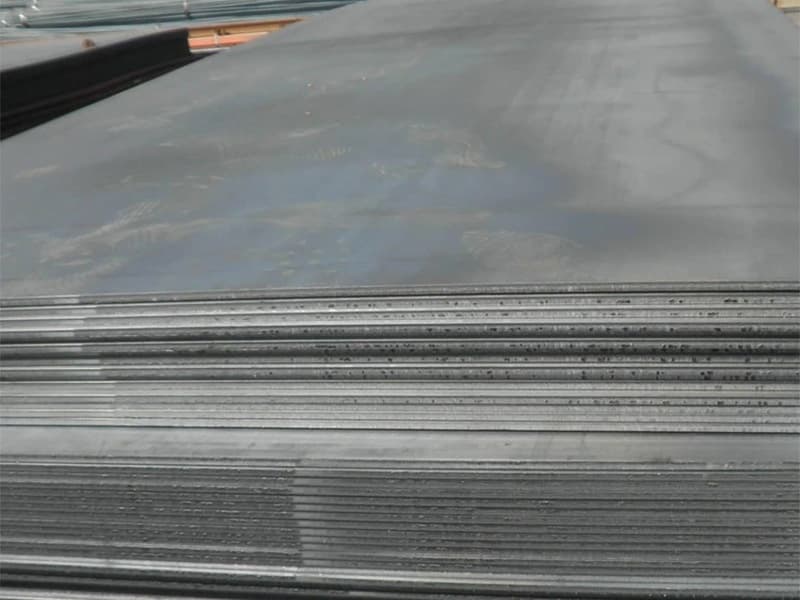
The load path2 explained
Let me walk you through a simple example. A wave hits the side of the ship. The force pushes on one square meter of the side shell plate. That plate pushes on the stiffeners behind it. The stiffeners push on the transverse frames. The frames push on the main girders. The girders push the force to the keel. The whole ship moves together.
If any plate in that chain fails, the load has to go somewhere else. That extra load may break the next plate. Then you have a chain reaction.
That is why shipyards are so strict about steel quality3. One weak plate can start a failure.
Different plate purposes in a ship
| Plate location | Main purpose | Thickness typical |
|---|---|---|
| Keel plate | Backbone of the ship | 20 to 50mm |
| Bottom shell | Resist water pressure and grounding | 15 to 30mm |
| Side shell | Resist wave impact and collision | 12 to 25mm |
| Main deck | Support cargo and resist hull bending | 10 to 20mm |
| Bulkhead | Divide compartments and stop flooding | 8 to 15mm |
| Inner bottom | Double bottom for ballast and fuel | 10 to 18mm |
What happens when a plate fails?
I heard a story from a ship surveyor. A small oil tanker had a crack in the bottom plate. The crack was only 50mm long. But the ship kept sailing. The crack grew. Sea water got in. The steel rusted from both sides. Six months later, the crack was 2 meters long. The ship had to go into dry dock.
That repair cost $200,000. If they had replaced the bad plate at the first sign, it would have cost $5,000. So the purpose of each plate is not just to be there. It is to stay intact.
Why is steel preferred in structural design?
Steel has been used for ships for over 150 years. There is a reason for that.
Steel is preferred in structural design because it has predictable behavior1, high strength-to-weight ratio2, excellent weldability3, and good fatigue resistance4. Designers know exactly how steel will react under load.
The four reasons steel beats other materials
Reason one: predictable behavior. Steel follows a stress-strain curve. You can calculate exactly how much it will stretch before it yields. You can calculate how much load it can take. No surprises.
Reason two: strength-to-weight. Steel is heavy. But it is also very strong. A steel plate can be 10mm thick and hold 250 MPa of stress. A concrete slab would need to be 200mm thick. So for ships, steel saves space.
Reason three: weldability. You can join steel plates with a simple arc welder. The weld, if done right, is as strong as the base metal. Try doing that with aluminum or composites.
Reason four: fatigue resistance. Ships face millions of small wave cycles. Each cycle puts a little stress on the steel. Steel can handle billions of cycles before cracking. This is called fatigue life. Marine steel plate is designed for a ship life of 20 to 30 years.
Comparison of shipbuilding materials
| Property | Marine steel | Aluminum alloy | Fiberglass composite |
|---|---|---|---|
| Strength (MPa) | 235 to 355 | 200 to 300 | 150 to 250 (directional) |
| Density (g/cc) | 7.85 | 2.70 | 1.50 to 2.00 |
| Strength/weight | 30 to 45 | 74 to 111 | 75 to 125 |
| Weldability | Excellent | Special skills needed | Not applicable |
| Repair ease | Easy (any port) | Difficult | Very difficult |
| Cost per ton | Low | High | Very high |
A real example from my work
Gulf Metal Solutions in Saudi Arabia builds parts for oil tankers. They use marine steel plate and angle steel. I asked their project manager why they do not switch to aluminum. He laughed.
He said: “Aluminum costs three times more. We need special welding machines. And if a steel plate gets a dent, we heat it and hammer it back. Aluminum cracks when you try that.”
So steel stays. It is not the newest material. But it is the most reliable material.
What does this mean for you as a buyer?
When you order marine steel plate, you are not just buying metal. You are buying safety, predictability, and ease of construction. Do not cut corners. Always ask for the classification society stamp. Always check the mill certificate. Always test if you are not sure.
A small extra cost on the steel is nothing compared to the cost of a failed hull.
Conclusion
Marine steel plate gives ships strength, toughness, and weldability. It is the proven choice for safety.
-
Understanding predictable behavior in materials like steel is crucial for ensuring safety and reliability in construction. ↩ ↩ ↩ ↩
-
Exploring the strength-to-weight ratio helps in selecting the best materials for efficient and safe structural designs. ↩ ↩ ↩ ↩
-
Weldability is key for construction efficiency; understanding it can lead to better design choices and cost savings. ↩ ↩
-
Learning about fatigue resistance is essential for understanding how materials perform under repeated stress, crucial for ship longevity. ↩