
Your project needs 5000 tons of marine steel plate. You worry about quality, delivery, and communication. Chinese suppliers can handle it.
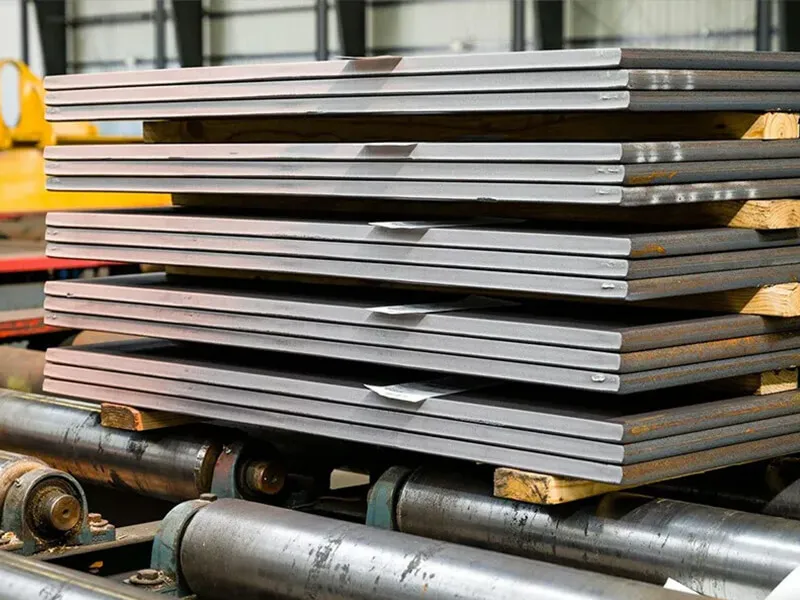
Chinese suppliers support large marine steel plate projects with full mill certifications, third-party inspection, custom rolling, phased delivery, and dedicated export support. They work as partners, not just sellers.
Transition Paragraph:
I am Zora Guo from cnmarinesteel.com. I have supplied marine steel plate to large projects in Saudi Arabia, Vietnam, and the Philippines. My customers ask me: “Can Chinese suppliers really handle big orders?” The answer is yes. Let me show you how.
Providing Full Mill Certifications and Third-Party Inspection?
leading paragraph:
You receive steel. The certificate looks fine. But you are not sure. One wrong batch can fail classification society inspection.
snippet paragraph:
Chinese suppliers provide original mill certificates1 with heat numbers. They also offer third-party inspection2 (SGS, BV, ABS). You get independent proof of quality before the steel leaves China.
[^3] report for marine steel plate](https://cnmarinesteel.com/wp-content/uploads/2025/10/Marine-steel-plate-43.jpg)
Dive deeper Paragraph:
Trust is the biggest concern for large projects. You cannot afford bad steel. One failed batch means cutting out sections of the hull. That costs time and money. Chinese suppliers understand this. That is why we provide full documentation.
What mill certificates include
A proper mill certificate shows:
- Heat number (unique ID for each batch)
- Chemical composition (C, Si, Mn, P, S, and alloy elements)
- Mechanical properties (yield strength, tensile strength, elongation)
- Impact test results (for low-temperature toughness)
- Mill name and approval stamps from classification societies
Each piece of steel is marked with the heat number. You can trace it back to the original batch. The classification society surveyor can check the number against the certificate.
Third-party inspection
Many Chinese suppliers, including my company, offer third-party inspection. You choose SGS, Bureau Veritas, ABS, or another approved inspector. The inspector comes to our warehouse. They check:
- Dimensions (thickness, width, length)
- Surface condition (no cracks, no heavy rust)
- Markings (heat numbers match certificates)
- Sampling for lab testing (if required)
You receive a report. If the steel passes, we ship. If it fails, we replace it. You do not pay for bad steel.
A real example
Gulf Metal Solutions in Saudi Arabia had quality problems before. Their previous supplier sent plates with poor surface finish. The paint did not stick. When they switched to us, we arranged SGS inspection for every batch. The inspector checked each plate. The customer saw the report before shipment. They told us: “The product quality is stable.” That is because we proved it.
My advice
Do not trust any supplier who refuses third-party inspection. At cnmarinesteel.com, I offer SGS inspection on every large order. The cost is small (usually $300-$500 per container). The peace of mind is big.
Custom Rolling for Non-Standard Sizes and Grades?
leading paragraph:
You need 23mm thickness. That is not a standard size. Local stockists do not have it. You think you cannot get it.
snippet paragraph:
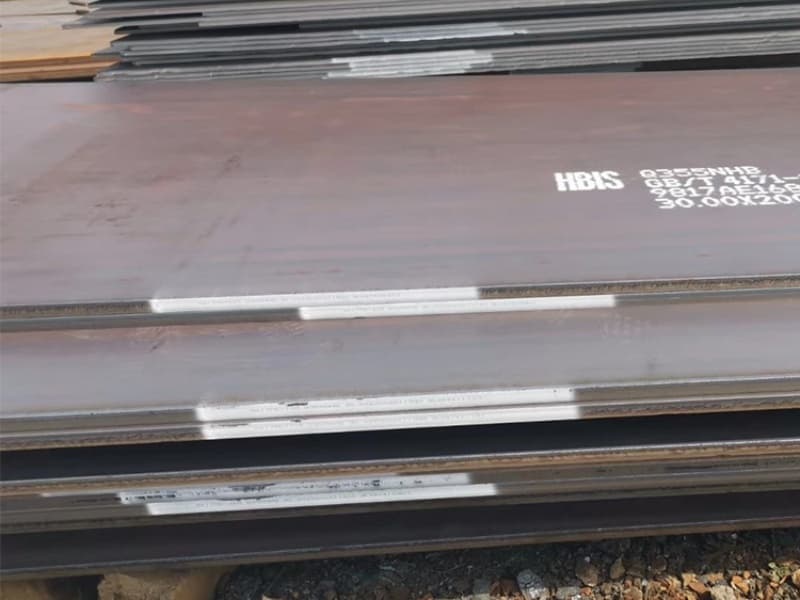
Chinese mills1 offer custom rolling for non-standard sizes and grades2. You specify the thickness, width, length, and grade. The mill rolls exactly what you need. Lead time is 4-6 weeks.
Dive deeper Paragraph:
Large marine projects often need special sizes. A tanker might need 18.5mm plate for a specific section. A bulk carrier might need 2.8m width instead of 2.5m. Chinese mills can do this. It is not a problem.
What can be customized
- Thickness: from 4mm to 150mm, any size
- Width: from 1.5m to 4.5m
- Length: from 3m to 18m
- Grade: A36, AH36, DH36, EH36, AH40, DH40, and others
- Special requirements: stricter tolerances, special edge preparation, specific coating
How custom rolling works
Step 1: You tell us your required dimensions and grade.
Step 2: We check with the mill. They confirm they can do it.
Step 3: The mill schedules a production slot. They set the rolling mill to your exact thickness.
Step 4: They cut the plate to your width and length.
Step 5: They test the plate. They issue a mill certificate with your specifications.
Step 6: We ship to you.
Minimum order for custom rolling
Most mills require a minimum of 50-100 tons per custom size. For very large projects (over 1000 tons), the minimum is not a problem. For smaller projects, you can combine multiple custom sizes into one rolling run.
Custom rolling vs stock comparison
| Aspect | Stock plate | Custom rolled plate |
|---|---|---|
| Availability | Limited to common sizes | Any size you need |
| Lead time | 1-3 weeks | 4-6 weeks |
| Minimum order | 5 tons | 50-100 tons |
| Cost | Lower (mass production) | Higher by 10-20% |
| Waste | More cutting waste | Less waste, exact sizes |
A real example
A customer in Malaysia needed 17mm thick marine plate for a specific bulkhead. No stockist had 17mm. They ordered 15mm and 20mm and tried to make it work. That caused fit-up problems. I suggested custom rolling. The mill rolled exactly 17mm. The customer ordered 120 tons. The plates fit perfectly. No grinding. No rework.
My advice
If your project needs non-standard sizes, do not settle for the closest stock size. The extra cutting and grinding cost more than custom rolling. Ask your Chinese supplier. I handle custom rolling every month. Send me your size list. I will get you a quote.
Phased Delivery to Match Your Shipyard’s Production Schedule?
leading paragraph:
You order 3000 tons of plate. It all arrives at once. Your yard is small. You cannot store it. Steel rusts. Workers get confused.
snippet paragraph:
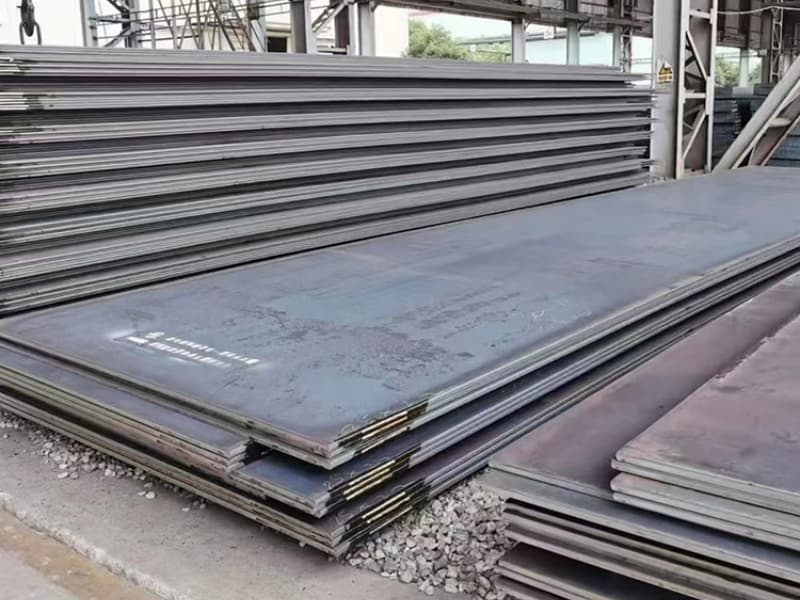
Chinese suppliers offer phased delivery1. They split your order into batches. Each batch arrives when your yard needs it. No crowding. No rust. No confusion.
Dive deeper Paragraph:
Large projects take months. Your yard builds in phases. The bottom plates go first. Then the side plates. Then the deck. Phased delivery matches this sequence.
How phased delivery works
You give us your production schedule2. For example:
- Month 1-2: Bottom assembly (need 800 tons)
- Month 3-4: Side shell (need 1000 tons)
- Month 5-6: Deck and upper structure (need 700 tons)
- Month 7-8: Finishing (need 500 tons)
We schedule deliveries:
- Batch 1: 800 tons, arrive by end of month 0
- Batch 2: 1000 tons, arrive by end of month 2
- Batch 3: 700 tons, arrive by end of month 4
- Batch 4: 500 tons, arrive by end of month 6
You store only what you need for the next 4-6 weeks. Your yard stays organized.
Benefits of phased delivery
- Less storage space needed
- Less rust (steel does not sit outside for months)
- Less material handling (move steel once, from truck to work area)
- Better cash flow3 (pay for steel as you receive it)
- Easier quality control4 (inspect batch by batch)
Phased delivery example
| Batch | Plate sizes | Grade | Tons | Arrival week | Used in production week |
|---|---|---|---|---|---|
| 1 | 20mm, 25mm bottom plates | AH36 | 800 | Week 0 | Week 1-8 |
| 2 | 15mm, 18mm side plates | AH36 | 1000 | Week 8 | Week 9-16 |
| 3 | 10mm, 12mm deck plates | A36 | 700 | Week 16 | Week 17-24 |
| 4 | 6mm, 8mm bulkheads | A36 | 500 | Week 24 | Week 25-32 |
A real example
A shipyard in Vietnam built three bulk carriers over 18 months. They ordered all steel from me. We set up a phased delivery plan with 12 batches. Each batch arrived exactly when they finished the previous batch. They never stored more than 300 tons. Their yard was clean. Their workers were efficient. They finished all three ships on time.
My advice
Do not accept one big shipment. Ask for phased delivery. A good Chinese supplier can do it. At cnmarinesteel.com, I create a delivery schedule with every large order. I update it every week. You always know when your steel will arrive.
Dedicated Export Support: Communication, Logistics, and Customs?
leading paragraph:
You order steel from China. Then the supplier stops answering emails. The steel is stuck at the port. You do not know why.
snippet paragraph:
Chinese suppliers for large projects provide dedicated export support1. A sales rep communicates in English. A logistics team handles shipping. A customs broker clears export. You get updates at every step.
Dive deeper Paragraph:
The biggest pain point for international buyers is not steel quality. It is communication2. Slow responses. Poor English. No updates. Then logistics problems. Missing documents. Customs holds. Chinese suppliers who serve large projects have solved these problems.
Dedicated sales rep
You get one person who knows your project. They speak English (or your language). They reply within hours, not days. They understand marine steel3. Gulf Metal Solutions told me: “Yichen was the first supplier to respond within two hours, and maintained this rapid response speed throughout the entire delivery process.”
Logistics coordination
Shipping 5000 tons of steel is complex. You need multiple containers or bulk vessels. You need to book space. You need to track the ship. A good supplier has a logistics team. They handle:
- Booking the vessel or container space
- Transport from mill to port
- Export customs clearance4
- Insurance
- Tracking and reporting
Customs clearance
Exporting steel from China requires documents: commercial invoice, packing list, bill of lading, mill certificates, inspection reports, and more. One mistake delays the shipment by weeks. A good supplier has a customs broker who knows the rules.
Support checklist
| Support area | What a good supplier provides | Red flag |
|---|---|---|
| Communication | English-speaking rep, reply within 24 hours | No reply for days |
| Updates | Weekly tracking report with photos | No updates until you ask |
| Logistics | Handles shipping, gives options | Asks you to arrange everything |
| Customs | Clears export, provides documents | Delays, missing papers |
| After-sales | Helps with claims, replaces damaged steel | Disappears after payment |
A real example
A customer in Qatar ordered 2000 tons of marine plate. His previous supplier took 5 days to reply to emails. The steel was delayed twice because of missing documents. He switched to my company. I assigned a dedicated rep. She replied within 2 hours every time. I sent weekly tracking updates. The steel arrived on time. He told me: “This is how business should be.”
My advice
Before you place a large order, test the supplier’s communication. Send an email. Ask a question. See how fast they reply. See if they understand your needs. If they are slow before the order, they will be worse after. At cnmarinesteel.com, I guarantee a reply within 2 working hours. That is my promise.
Conclusion
Chinese suppliers support large projects with certified quality, custom rolling, phased delivery, and dedicated support. Choose the right partner. Your project succeeds.
-
Understanding dedicated export support can help you choose suppliers who prioritize communication and logistics. ↩ ↩ ↩ ↩
-
Effective communication can prevent misunderstandings and streamline the export process. ↩ ↩ ↩ ↩
-
Understanding marine steel can help you make informed decisions for your projects. ↩ ↩
-
Learn about customs clearance to avoid delays and ensure compliance when exporting steel. ↩ ↩