
Your shipyard is growing. You win more contracts. But your steel supply cannot keep up. Delays happen. You lose money.
To scale bulb flat steel supply for a growing shipyard, you need to fix three things: remove supply bottlenecks, use long‑term agreements with multiple mills, improve inventory management, and add digital forecasting. This keeps steel flowing as you grow.
I am Zora Guo from cnmarinesteel.com. I have helped shipyards in Vietnam, Malaysia, and the Philippines scale their bulb flat steel supply. The problems are always similar. The solutions are not complicated. Let me walk you through them.
What Are the Key Bottlenecks That Limit Bulb Flat Steel Supply for Expanding Shipyards?
You order more steel. The mill says “lead time 12 weeks.” Your old supplier cannot handle the volume. You try a new mill. Their quality is not consistent. Your production stops.
The key bottlenecks for bulb flat steel supply are: limited mill production capacity for non‑standard sizes, long lead times 10‑16 weeks, inconsistent quality from smaller mills, and poor logistics planning. As shipyards grow, these problems get worse unless you fix them early.
Let me break down each bottleneck with real numbers.
Bottleneck 1: Limited Mill Production Capacity
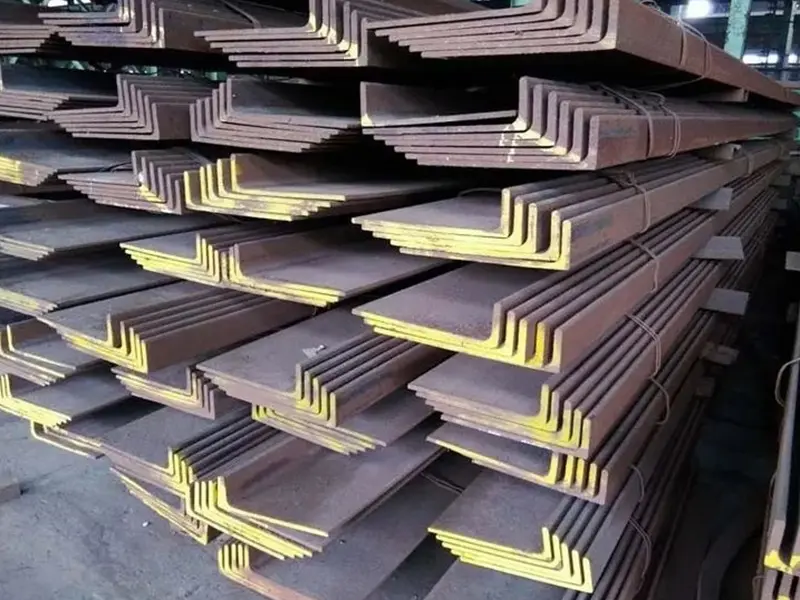
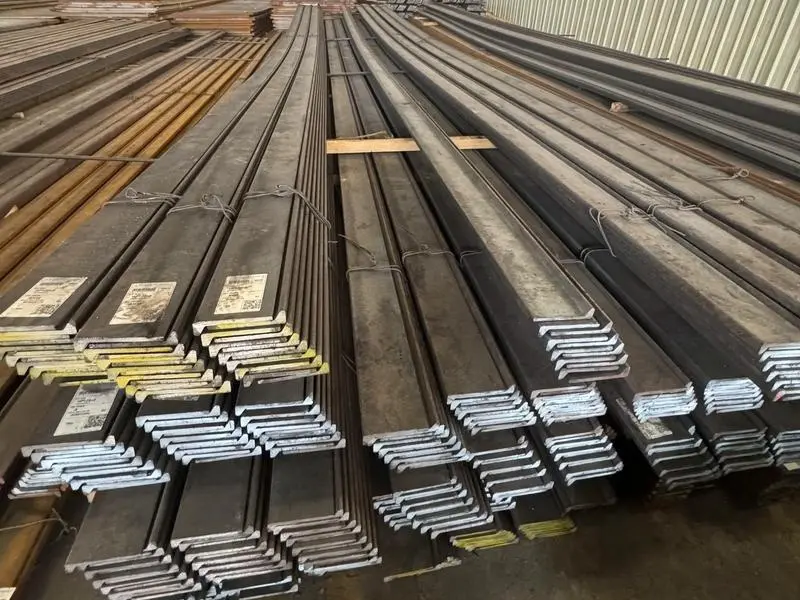
Bulb flat steel is not produced by every mill. It needs special rolling stands. Only larger, modern mills have them. In China, for example, fewer than 20 mills can produce class‑approved bulb flat. When many shipyards expand at the same time, those mills get booked.
What happens: A mill might have a monthly capacity of 8,000 tons of bulb flat. But they already have orders for 7,000 tons. Your new order of 2,000 tons would take them 4‑5 months to produce. Not because they are slow, but because the queue is long.
How to spot this: Ask a mill for their current backlog. If they say “we can roll your order next week,” they are not busy. If they say “8‑10 weeks for rolling alone,” they are near capacity.
Bottleneck 2: Long Lead Times
Even without a queue, bulb flat production takes time. Here is a typical timeline:
| Step | Time needed |
|---|---|
| Mill order confirmation | 1‑2 days |
| Steel slab procurement (if not in stock) | 2‑4 weeks |
| Rolling and heat treatment | 1‑2 weeks |
| Sampling and testing | 1 week |
| Cutting to lengths | 1‑3 days |
| Packing and loading | 2‑3 days |
| Sea freight (e.g., China to Southeast Asia) | 2‑4 weeks |
| Customs clearance | 1‑2 weeks |
| Total lead time | 10‑16 weeks |
For a growing shipyard, 16 weeks is a long time. You need to plan that far ahead. If you do not, you will have gaps.
Bottleneck 3: Inconsistent Quality
Smaller or less experienced mills may produce bulb flat that looks right but fails tests. Common problems:
- Incorrect shape – The bulb head is too flat or too pointed.
- Poor surface – Laminations or deep scratches.
- Wrong mechanical properties – Yield strength too low.
- Inconsistent length – Varies by 50‑100mm from what you ordered.
I once had a customer in the Philippines who bought from a new mill. The bulb flat looked fine. But when they welded it, the bulb head was so misshapen that the weld could not get a good grip. They rejected 40 tons. The mill took 3 months to replace it. That shipyard learned to pre‑qualify mills carefully.
Bottleneck 4: Logistics and Port Congestion
Even if the steel is ready, shipping can fail you. Port congestion in China or at your destination. Lack of containers. Vessel delays. These are outside your control, but you can plan for them.
Real example: In 2021, Qingdao port had a COVID lockdown. Vessels waited 2‑3 weeks. My customers who had buffer stock were fine. Those who ordered just‑in‑time stopped production.
How Can Long‑Term Frame Agreements with Multiple Mills Ensure Flexible and Reliable Supply?
You need steel every month. You cannot negotiate a new price and delivery every time. That is too slow. You need a long‑term plan.
Long‑term frame agreements (LTAs) lock in price, volume, and delivery slots with a mill for 12‑24 months. Using two or three mills under separate LTAs gives you flexibility. If one mill is slow, you shift volume to another. This ensures reliable supply even as you grow.
Let me explain how to set this up.
What a Good LTA Includes
| Clause | What to specify | Why it matters |
|---|---|---|
| Volume commitment | Minimum and maximum monthly tonnage | Mill reserves capacity for you |
| Price mechanism | Fixed price or formula based on billet cost | Protects from sudden spikes |
| Delivery schedule | Monthly or bi‑weekly releases | Matches your production cadence |
| Quality standards | Class society grade, tolerances | Avoids disputes |
| Penalties for late delivery | Discount or compensation | Encourages mill to prioritize you |
| Termination clause | Conditions to exit | Flexibility if your needs change |
How to Use Multiple Mills
Do not put all your eggs in one mill. Even a great mill can have a breakdown or a raw material shortage. Spread your volume across two or three approved mills.
Example split for a shipyard needing 600 tons per month:
- Mill A (primary): 400 tons/month, LTA for 12 months.
- Mill B (secondary): 150 tons/month, LTA for 12 months.
- Mill C (tertiary, spot only): 50 tons/month, no LTA but qualified.
If Mill A has a problem, you can ask Mill B to increase to 300 tons for 2‑3 months. Mill C covers the rest.
What one shipyard owner told me: “We used a single mill for 5 years. Then their furnace broke. We had no steel for 6 weeks. Now we have three mills. We pay a little more for the second mill, but the security is worth it.”
How to Qualify Multiple Mills
Qualifying a new mill takes time. Do it before you need them. Steps:
- Request their class approvals (ABS, DNV, LR).
- Order a small trial batch (50‑100 tons).
- Test the steel at your own lab or a third party.
- Check their lead time and communication.
- Sign a small LTA (e.g., 6 months, low volume) to test the relationship.
I have helped several shipyards qualify backup mills. The process takes 3‑4 months. Start early.
What Inventory and Warehouse Strategies Help Shipyards Scale Without Tying Up Too Much Capital?
You grow. You need more steel on hand to avoid shortages. But holding more steel means more money tied up. You need a smart inventory system.
The best inventory strategy for growing shipyards is a multi‑tier system: low‑turnover items on consignment (pay as you use), medium‑turnover items with min‑max buffers (2‑4 weeks of stock), and high‑turnover items on just‑in‑time from a local warehouse. This keeps capital low while ensuring availability.
Let me break down the three tiers.
Tier 1: High‑Turnover Sizes (Used weekly)
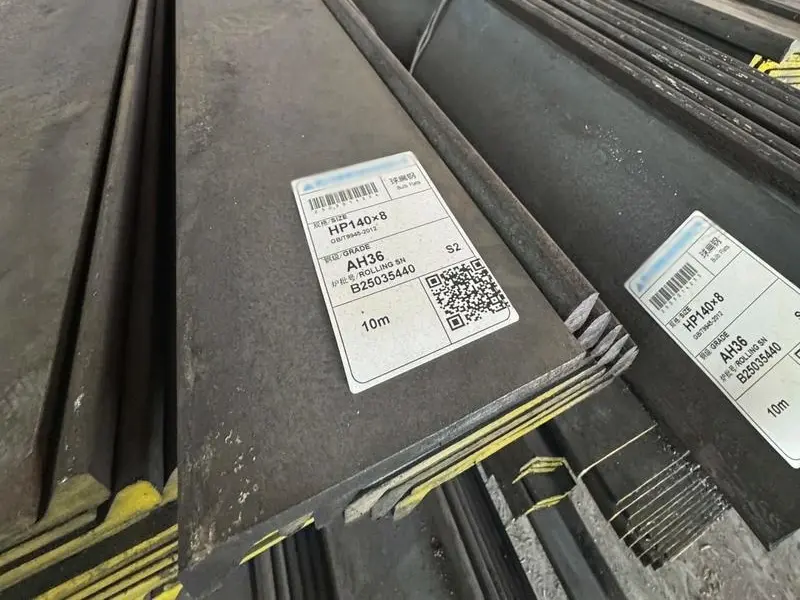
These are your most common bulb flat sizes, like HP160x7.5 or HP180x8. You use them every day. For these, set up a vendor‑managed inventory (VMI) or a consignment stock at your yard.
How VMI works:
- Your supplier keeps a stock of these sizes at your warehouse.
- You take steel as you need it.
- You pay only for what you use, usually monthly.
- The supplier restocks when the level drops below a set point.
Capital effect: You pay after using, not before. Your cash stays free.
Tier 2: Medium‑Turnover Sizes (Used every 2‑4 weeks)
These are sizes you use regularly but not daily. For these, use a min‑max buffer system.
Example:
- Min stock = 2 weeks of typical usage (e.g., 100 tons).
- Max stock = 4 weeks of usage (200 tons).
- When stock falls to 100 tons, order 100 tons to bring back to 200 tons.
Capital effect: You hold 2‑4 weeks of inventory. That is a reasonable amount.
Tier 3: Low‑Turnover Sizes (Used once a month or less)
These are odd sizes for specific projects. Hold only a minimal safety stock (e.g., 1‑2 weeks of expected usage). Or agree with your supplier to keep them at their warehouse with a short lead time (2‑3 weeks).
Alternative: Use a blanket order with phased delivery. Order 6 months’ total quantity, but ask for monthly releases. This keeps the steel at the mill or at your supplier’s warehouse, not at your yard.
Comparison of Capital Tied Up
| Strategy | Inventory on hand (days) | Working capital per $100k annual steel spend |
|---|---|---|
| Traditional (buy all upfront) | 90 days | $24,600 |
| Min‑max buffer (Tier 2) | 30 days | $8,200 |
| VMI / consignment (Tier 1) | 7 days | $1,900 |
By using tiered strategies, you can cut your inventory holding cost by 50‑70%.
A Real Example from a Malaysian Shipyard
This shipyard built 12 tugboats per year. They used bulb flat HP180, HP200, and HP220. They switched from buying all steel at once to a tiered system:
- HP180 (70% of use): VMI with their Chinese supplier. Pay 30 days after use.
- HP200 (20% of use): 3‑week buffer in their yard.
- HP220 (10% of use): Ordered per project, 6 weeks lead time.
Result: Their inventory holding cost dropped from $180,000 per year to $65,000 per year. And they never ran out of HP180.
Why Does Digital Demand Forecasting and Lead Time Optimization Matter for Bulk Bulb Flat Orders?
You guess how much steel you need next month. You guess wrong. You order too late. Or too early. This is common without data.
Digital demand forecasting uses your past usage and upcoming production schedule to predict future needs. Lead time optimization means you order at the right time – not too early (ties up cash) and not too late (causes shortage). Together, they reduce stockouts by 70% and lower inventory by 25‑35%.
Let me show you how to do this, even with simple tools.
Simple Forecasting Method (Using Excel)
You do not need expensive software. A good Excel model works.
Step 1: Gather data
- Past 12 months of usage, per size.
- Known upcoming orders (production schedule for next 6 months).
- Seasonality (e.g., you build more in dry season).
Step 2: Calculate average usage
= (Last 3 months usage + same quarter last year) / 2
Step 3: Add a safety factor
For variable demand, multiply by 1.2 (20% buffer). For stable demand, 1.1.
Step 4: Subtract current stock
Forecasted need = (average usage x forecast period) + safety – stock on hand.
Example:
- You use 500 tons of HP180 per month on average.
- Next 3 months you have two large ship orders = 700 tons per month.
- Safety factor = 1.15.
- Stock on hand = 400 tons.
- Forecasted need = (700 x 3 x 1.15) – 400 = 2,415 – 400 = 2,015 tons for 3 months.
Lead Time Optimization – When to Order
Lead time is the time from order to steel arriving at your yard. You need to place your order at exactly the right time.
Formula:
Reorder point = (Lead time in weeks x weekly usage) + safety stock
Example:
- Lead time = 12 weeks.
- Weekly usage = 120 tons.
- Safety stock = 2 weeks = 240 tons.
- Reorder point = (12 x 120) + 240 = 1,680 tons on hand.
When your stock drops to 1,680 tons, you place a new order. That new order will arrive just as you reach safety stock (2 weeks left).
Digital Tools to Help
| Tool | What it does | Cost |
|---|---|---|
| Excel with formulas | Basic forecasting, reorder alerts | Free (if you have it) |
| Google Sheets + add‑ons | Shared access, simple automation | Free to low |
| Inventory management software (e.g., Odoo, Zoho) | Automated reorder, demand planning, supplier portal | $50‑200/month |
| Supplier‑provided dashboard | Some large suppliers give you a login to see their stock and your usage | Often free with LTA |
What a Customer Achieved
A shipyard in Vietnam implemented a simple Excel forecast with reorder alerts. Before, they ran out of HP200 twice a year, causing 3‑4 day production stops each time (cost about $10,000 per stop). After forecast, they had zero stockouts in 18 months. They also reduced their average inventory from 2,500 tons to 1,800 tons – a 28% reduction. That freed up over $500,000 in working capital.
The procurement manager told me: “I thought digital forecasting was for big companies. But our Excel sheet took two days to build and has saved us months of headaches.”
Conclusion
Scale bulb flat supply by using multiple mills under LTAs, tiered inventory strategies, and digital forecasting. These steps remove bottlenecks and reduce capital tied up.