
You order marine steel plates for an export project. They arrive. Then you find defects. Your client rejects them. You lose money.
A proper quality control flow for export orders has four stages: raw material checks before rolling, in‑production monitoring of dimensions and properties, documentation and third‑party inspections, and final verification before packing. Each stage stops different defects from reaching your customer.
I am Zora Guo from cnmarinesteel.com. I have shipped thousands of tons of marine plates to shipyards across Asia and the Middle East. I learned that a clear QC flow is not just about catching bad plates. It is about giving buyers confidence. Let me walk you through the four stages we use for every export order.
What Raw Material and Mill Process Checks Are Performed Before Rolling Marine Steel Plates?
Quality starts before the first plate is rolled. If the raw steel slab is bad, the final plate will be bad. You cannot fix it later.
Before rolling, mills perform chemical analysis of the steel slab to verify elements like carbon, manganese, sulfur, and phosphorus. They also check slab surface and internal soundness. The slab is then heated to the correct rolling temperature. Any deviation in slab chemistry or heating leads to rejected plates later. These pre‑rolling checks catch problems early, when they are cheap to fix.
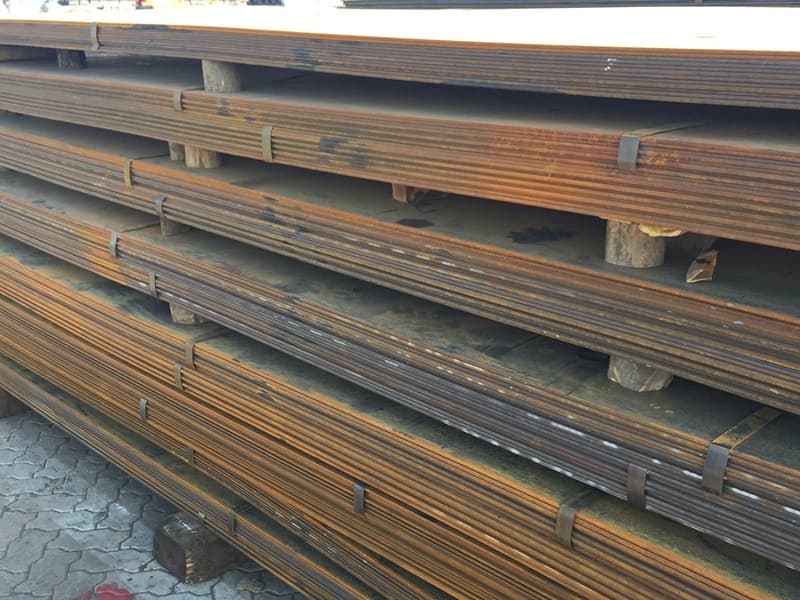
Let me explain what happens at this stage and why it matters for your export order.
Chemical Composition Verification
Every marine steel plate starts as a steel slab (or billet). The steelmaker takes a sample from each batch of liquid steel before casting. They test it with a spectrometer.
| Key elements and their targets for AH36 grade: | Element | Target (%) | Why it matters |
|---|---|---|---|
| Carbon (C) | 0.16‑0.18% | Too high reduces weldability | |
| Manganese (Mn) | 1.0‑1.3% | Gives strength and toughness | |
| Silicon (Si) | 0.2‑0.5% | Deoxidizer, increases strength | |
| Sulfur (S) | Below 0.025% | Too high causes cracking | |
| Phosphorus (P) | Below 0.025% | Too high causes brittleness |
If sulfur or phosphorus exceeds the limit, the entire batch is rejected or downgraded. A good mill will not roll sub‑standard chemistry for a class‑approved export order.
Slab Surface and Internal Quality
Before rolling, the slab is visually inspected for surface cracks, scabs, or pitting. These defects can roll into the plate surface. The slab may also be scanned with ultrasound to find internal voids or laminations.
What they look for:
- Transverse cracks – from improper continuous casting.
- Corner cracks – can cause edge laminations in finished plates.
- Internal porosity – bubbles trapped during solidification.
Heating and Rolling Temperature Control
The slab is heated in a reheat furnace to 1,150‑1,250°C. The temperature must be uniform. If too cold, the steel cracks during rolling. If too hot, grain size grows too large, reducing toughness.
Process checks at this stage:
- Furnace temperature recorders.
- Pyrometer readings at furnace exit.
- Rolling mill load monitoring (higher load means the steel is too cold).
Why Buyers Should Care
You do not see these pre‑rolling checks. But they affect the final plate. I always ask my mill partners for their furnace logs and slab inspection records. It shows discipline. A mill that skips these steps will ship bad plates.
I remember an order from a customer in Malaysia. The plates looked fine, but welding cracked. The problem was high sulfur in the slab. The mill had skipped pre‑rolling chemical verification. We replaced the order at our cost and changed mills. Now we check every batch.
How Are Dimensional Tolerances, Surface Defects, and Mechanical Properties Monitored During Production?
The slab becomes a long plate. It passes through roughing and finishing stands. This is where most defects appear. You need to catch them before the plate is cut and stacked.
During production, mills monitor plate thickness using laser or ultrasonic gauges every few meters. They also check width, flatness, and surface quality with automated cameras. Sample plates are cut from each heat for tensile and Charpy impact testing. Any plate outside class tolerances is rejected immediately. This real‑time monitoring stops 90% of defects from reaching the final product.
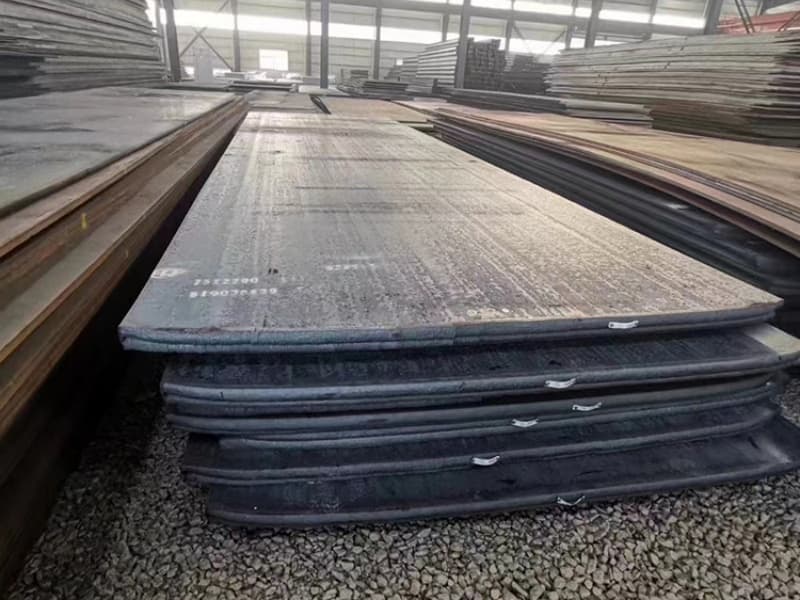
Let me break down the key in‑production checks.
Dimensional Monitoring
Thickness: A continuous gauge measures thickness across the plate width. The gauge is calibrated to class society standards. If thickness drops below the lower tolerance (e.g., -0.3mm for 12mm plate), an alarm sounds. The operator can adjust the rolling gap or reject that section.
Width and length: Measured by lasers or mechanical stops. Unequal leg or out‑of‑square plates are marked for trimming or rejection.
Flatness: Plates can warp into a wave (wavy edge) or a bow (center higher than edges). A flatness detector scans the plate as it exits the rolling stand. If the wave height exceeds 5mm per meter, the plate is rejected.
Surface Quality Inspection
Automated cameras scan the top and bottom surfaces at high speed. They detect:
- Scale pits – small holes from rolled‑in oxide.
- Laps and folds – folded metal from improper rolling.
- Scratches and gouges – from handling.
- Edge cracks – from slab corner defects.
Plates with deep defects are rejected. Shallow defects may be ground and re‑inspected.
Mechanical Property Testing
For every heat (batch of 100‑300 tons), sample plates are cut. These samples go to the mill’s lab for:
- Tensile test – Measures yield strength, tensile strength, and elongation.
- Charpy V‑notch impact test – Measures toughness at specified temperature (e.g., 0°C for AH36, -20°C for DH36).
- Bend test – Checks ductility.
Acceptance criteria (example for AH36):
- Yield strength ≥ 355 MPa.
- Tensile strength 490‑620 MPa.
- Elongation ≥ 21%.
- Charpy impact ≥ 34 Joules average at 0°C.
If any sample fails, the entire heat is rejected. The mill must re‑roll or downgrade the material (e.g., from AH36 to A grade). For export orders, we never accept downgraded material unless the buyer agrees in writing.
Real Example from a Mill in Liaocheng
We had an order for 500 tons of DH36 plates. During rolling, the thickness gauge showed that the first 50 meters were 0.5mm under tolerance. The operator stopped the line, adjusted the rolls, and rejected the first 20 plates. Those plates were scrapped. The rest of the order passed. The buyer never saw the bad plates. That is the value of in-production monitoring.
What Mill Certificate Documentation and Third‑Party Inspections (SGS, Class Surveyor) Ensure Export Compliance?
The plates are rolled and tested. Now you need proof. Without the right documents, your customer will not accept the shipment. A class surveyor may have to witness testing.
For export compliance, each plate must have a mill test certificate (MTC) showing heat number, chemical analysis, mechanical test results, and class society approval stamp. For many orders, a third‑party inspection (SGS, Bureau Veritas, or class surveyor) is required. The inspector witnesses sampling, testing, and dimensional checks. They then issue a report and sometimes stamp each plate. Without these, customs and the end customer will reject the steel.
Let me explain the documentation flow and third‑party involvement.
Mill Test Certificate (MTC) – What Must Be Included
A valid MTC for marine steel export must contain:
| Item | Details to verify |
|---|---|
| Heat number | Matches the plates (often stamped on each plate) |
| Steel grade | AH36, DH36, etc. |
| Dimensions | Thickness, width, length of the plates |
| Chemical composition | C, Mn, Si, P, S, plus others for higher grades |
| Tensile results | Yield, tensile, elongation |
| Charpy results | Temperature and energy absorbed |
| Class society stamp | ABS, DNV, LR, or BV approval (stamp of the society) |
| Mill name and date | Traceability to the producing mill |
Red flags on MTCs:
- No heat number or heat number not stamped on plates.
- Missing class society stamp.
- Test results copied from another batch (lack of unique identification).
- Typographical errors – they often indicate careless documentation.
Third‑Party Inspection – When and How
Many export contracts require a third‑party inspector. This is often SGS, Bureau Veritas, or a classification society surveyor.
What the inspector does:
- Reviews the mill’s internal test results.
- Witnesses sampling of additional plates for independent testing.
- Witnesses tensile and Charpy tests at an accredited lab.
- Measures a random sample of plates for dimensions and flatness.
- Visually inspects surface quality.
- Issues a report (e.g., SGS inspection certificate).
Cost: Typically $500‑1,500 per order, depending on quantity and location. Worth it for large or critical orders.
Class Society Surveyor – For Class‑Approved Material
If your project requires ABS, DNV, or LR approved steel, a surveyor from that society must be involved. They audit the mill’s processes and witness testing. The surveyor then stamps the MTC. Without that stamp, the steel is not class‑approved.
Note: Not all mills have class approval. Only mills that pay for annual audits and maintain quality systems can produce class‑approved plates. Always check the mill’s approval status before ordering.
Documentation for Customs and Client
Your export shipment needs a package that includes:
- Commercial invoice (with heat numbers and plate quantities).
- Packing list (detailed per bundle).
- Mill test certificates (one per heat).
- Third‑party inspection report (if required).
- Certificate of origin.
- Bill of lading.
A real story: A client in Qatar received 300 tons of plates. The MTCs were missing. Customs held the shipment for two weeks. The client had to pay storage fees. Now I always send digital copies of MTCs by email before the vessel arrives. The client forwards them to customs. Clearance is smooth.
How We Handle Documentation at cnmarinesteel.com
For every export order, we:
- Request the MTC from the mill before shipment.
- Check that all heat numbers match the plates (we photograph the stamping).
- Offer SGS inspection as an option (about 50% of clients take it).
- Send digital copies to the client within 24 hours of loading.
- Include a hard copy in the shipping package.
Our customer Gulf Metal Solutions in Saudi Arabia told us: “Your documents are always complete and clear. Other suppliers take days to send MTCs. You send them before the ship leaves port.”
How Is Final Quality Verified Before Packing and Shipment – Ultrasonic Testing, Marking, and Load Checks?
The plates are rolled, tested, and certified. But one more step remains before they go into the container or onto the ship. You need to check the actual plates you are sending.
Before packing, final quality verification includes ultrasonic testing (UT) for internal laminations, visual check of surface and edges, and verification of markings (heat number, grade, size). Each plate is measured again for thickness. Plates that pass are stacked, bundled, and strapped. The bundle is weighed and photographed. Load checks ensure that heavy plates are at the bottom of the container or hold to prevent damage. This final gate catches any damage that happened during handling.
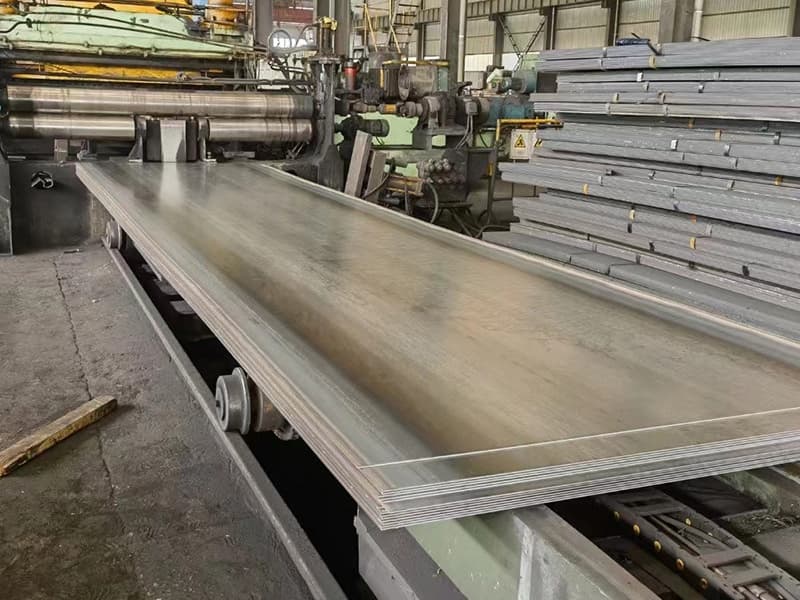
Let me walk you through the last QC steps before loading.
Ultrasonic Testing (UT) – Finding Hidden Laminations
Some defects are inside the plate, not on the surface. Laminations (layers that do not bond) can only be found with ultrasonic testing.
How UT works:
- A probe sends sound waves into the plate.
- If the wave hits a lamination, it reflects back early.
- The operator sees a spike on the screen.
When UT is required:
- For all class‑approved plates over 20mm thick.
- For plates that will be welded in high‑stress areas (e.g., bottom shell, deck).
- Often the class rules specify 100% UT for certain grades and thicknesses.
If UT finds a lamination, the plate is rejected. For small laminations at the edge, the mill may cut off the bad section. For larger ones, the plate is scrapped.
Final Marking – So You Can Trace Every Plate
Each approved plate is marked with:
- Heat number (stenciled or stamped).
- Steel grade (e.g., AH36).
- Class society stamp (ABS, DNV, etc.).
- Mill name.
- Dimensions (thickness x width x length).
Why marking matters: When the plate arrives at your yard, your inspector reads the heat number and matches it to the MTC. If the marking is missing or illegible, you cannot prove which plate is which. We always photograph the markings.
Load Checks – Preventing Transit Damage
Plates are heavy. If not loaded correctly, they can shift, bend, or scratch each other.
Loading rules:
- Thickest plates on the bottom, thinner on top.
- Use wooden dunnage (spacers) between layers.
- Strap bundles securely with steel bands.
- For containers, ensure the load does not exceed the container’s weight limit.
- For bulk vessels, distribute weight evenly to prevent ship listing.
Final Photograph and Weight Verification
Before the container door closes or the vessel sails, we take photos of:
- The top layer of plates (showing markings).
- The strapping and dunnage.
- The container number or hold number.
We also weigh the bundle or container. The weight must match the packing list within 2%.
A Real Example from a Shipment to Vietnam
A customer ordered 200 tons of AH36 plates for a newbuild hull. At final QC, we found that three plates had edge cracks from handling. We rejected them and pulled three replacement plates from stock. The customer never saw the bad plates. He later told me: “Your QC saved us from a welding nightmare. Cracks at the edge would have forced us to stop production.”
What Happens If a Plate Fails Final QC?
The plate is tagged with a red sticker and moved to a quarantine area. The quality manager decides:
- Reject completely – scrapped or returned to mill.
- Repair – grind out small surface defects, then re‑inspect.
- Downgrade – use for a lower grade application (with buyer’s agreement).
We never ship a plate that fails final QC. It is not worth risking our reputation.
Conclusion
Marine steel plate QC has four stages: raw material, in‑production, documentation, and final verification. Each stage protects you from different defects. A good flow means you get plates that pass class inspection and weld without problems.