
Every cut you make on marine L-shaped steel can turn into lost money if you do not plan ahead.
You can reduce material waste by optimizing cutting plans and nesting, sourcing mill lengths based on your most common frame spacing, applying DFM rules like fewer cutouts, and using good inventory traceability to reuse remnants before ordering new L-sections.
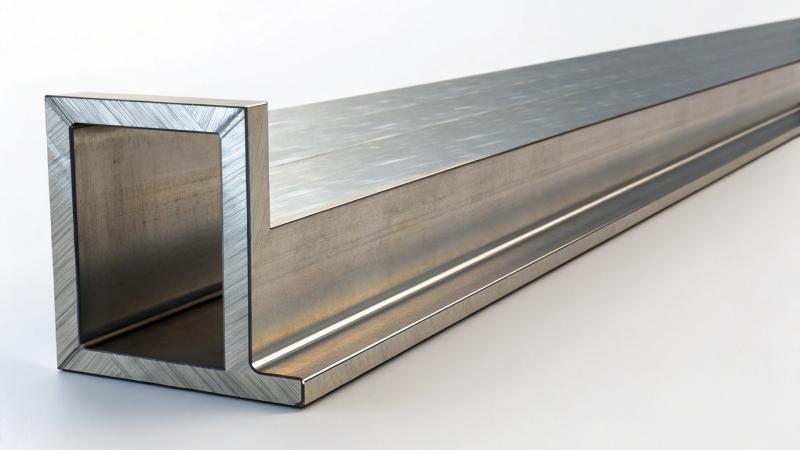
I have worked with many fabricators who threw away up to 15% of their marine L-shaped steel. That hurts your profit. But you can fix it without expensive tools. Let me show you how.
How to Optimize Cutting Plans and Nesting to Minimize Offcuts and Scrap?
Do you ever look at a pile of short leftover pieces and wonder where your material budget went?
The best way is to use nesting software or manual planning that fits multiple required lengths into one standard 12‑meter section. You can also group similar cuts together and cut longest pieces first.

I remember visiting a shipyard in Vietnam. They were cutting marine L-shaped steel without any plan. The worker just grabbed a new bar for each part. Their scrap pile was huge. After we talked about simple nesting, they saved almost 8% of their steel in the next month.
So what does good cutting optimization look like? It is not just about software. It is about thinking before you cut.
Three Simple Steps to Reduce Offcuts
| Step | Action | Typical Waste Reduction |
|---|---|---|
| 1 | List all required lengths for one project | 2-3% |
| 2 | Sort lengths from longest to shortest | 3-5% |
| 3 | Combine multiple short parts from one bar’s remainder | 4-6% |
Why longest first?
Imagine you need a 7m piece and two 2.5m pieces from a 12m bar. If you cut the 7m first, you have 5m left. From that 5m, you can get two 2.5m pieces with almost zero waste. If you cut the short pieces first, you might end up with a useless 2m leftover. That is a simple rule, but many shops ignore it.
Can free software help?
Yes. There are free nesting tools online. They are not perfect for complex shapes, but for straight cuts on L-shaped steel, they work fine. You just enter your cut list and the bar length. The software tells you the best order. I have seen small fabricators in Pakistan cut their waste from 12% down to 6% using only a free mobile app.
What about manual cutting without computers?
You can still do it. Use a whiteboard. Write down every cut length. Then use a simple method: try to make each bar’s leftover piece long enough for your next smallest required part. Train your cutting team to do this every morning. It takes five minutes. It saves kilograms every day.
A common mistake I see
People try to nest too tightly. They plan cuts that leave a 30cm remnant. That remnant is too short for anything useful. Instead, leave remnants that are at least 1m or 1.5m. Those can become brackets, small braces, or test pieces. Short useless scraps should be your enemy.
My personal rule
I tell my customers: “Measure twice, cut once, and plan before you measure.” That extra planning step is free. It does not cost any machine time. It only costs a few minutes of thought. And it directly lowers your material bill.
Why Sourcing Standard Mill Lengths Based on Your Most Common Frame spacing Reduces Waste?
Have you ever ordered 12m bars but your frames are 3.1m apart? That mismatch creates waste before you even start.
Because when your mill length is a multiple of your frame spacing, you can cut full sections without leftover scraps. For example, 12m is perfect for four frames at 3m spacing. That gives zero offcut length.
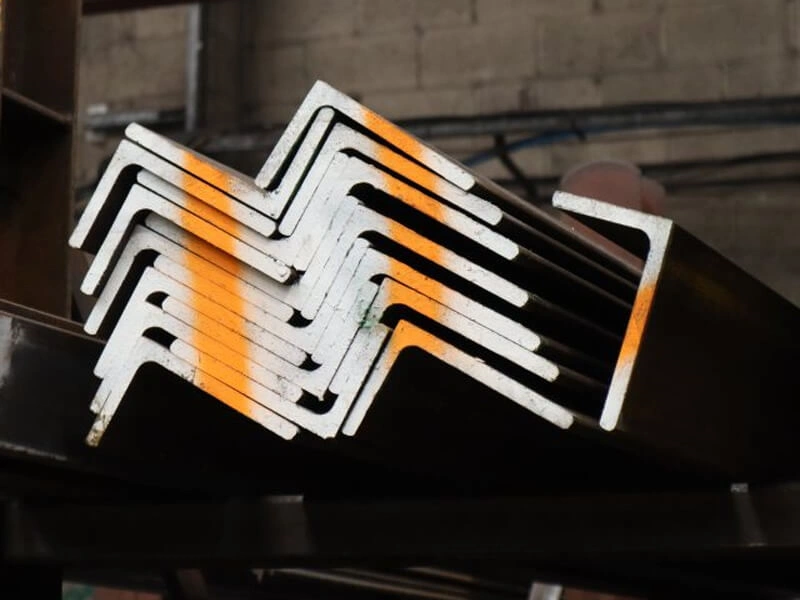
Let me give you a real example from a buyer in Saudi Arabia. He was building bulk carriers. His frame spacing was 2.4 meters. He ordered standard 12m L-shaped steel. 12 divided by 2.4 equals exactly 5 pieces per bar. No leftover length at all. His previous supplier sent random 11.8m or 12.2m bars. Those odd lengths always left a small remnant. He switched to ordering mill lengths matched to his spacing. His waste dropped from 9% to under 2%.
Why Most Buyers Get This Wrong
Most people think “longer is better” or “standard 12m is always fine.” That is not true. The best length depends on your design.
| Your Frame Spacing | Best Mill Length | Pieces Per Bar | Waste Length |
|---|---|---|---|
| 2.0 m | 12.0 m | 6 | 0 |
| 2.5 m | 12.5 m | 5 | 0 |
| 3.0 m | 12.0 m | 4 | 0 |
| 1.8 m | 10.8 m | 6 | 0 |
| 2.2 m | 11.0 m | 5 | 0 |
What if your spacing is not a perfect divisor?
Then you have two choices. First, adjust your spacing slightly. Can you change your frame spacing from 2.45m to 2.4m? That small change might save you 5% in steel costs. Second, order custom mill lengths. Many mills cut to order if you buy a full container. We do that for our customers regularly. You tell us your spacing. We cut L-shaped steel to the exact length you need. No waste at the cutting stage.
But isn’t custom length more expensive?
Sometimes the price per ton is the same. Sometimes it is 2-3% higher. But you save 5-10% in material waste. The math is simple: lower waste saves more money than the small extra cost. I have seen project contractors in the Philippines switch to custom lengths. They paid 2% more per ton but saved 8% in total steel usage. That is a net 6% saving.
A warning from my experience
Do not make the lengths too short. If you order 3m pieces for a 3m spacing, you lose flexibility. You cannot use a 3m bar for a different 2m job. Keep your standard lengths as multiples of the spacing. For 2.4m spacing, order 12m or 9.6m. Not 2.4m pieces. Short pieces are hard to store and easy to lose.
How to start
List your top three frame spacings from your last five projects. Then call your supplier. Ask if they can provide L-shaped steel in mill lengths that match those spacings. At Company Name, we keep a database of common spacings for shipbuilding. We help buyers choose the most waste‑free lengths. It is a free service. Use it.
How Can Design for Manufacturing (DFM) Rules (Fewer Cutouts, Simplified Connections) Lower Material Loss?
Every hole, notch, and custom angle you design seems necessary. But many of them are not. And each one creates waste.
DFM rules lower material loss because they reduce the number of cuts and custom shapes you need. Fewer cutouts mean you can use standard straight sections. Simplified connections mean you can use full-length L-sections without cutting out complex profiles.
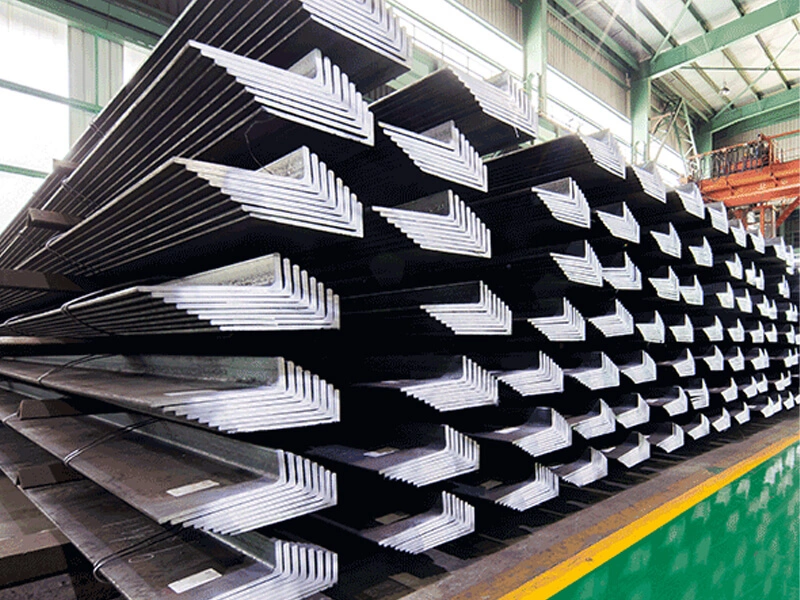
I worked with a manufacturer in Thailand. They were making brackets for oil tankers. Their design had six different cutouts on each L-shaped steel piece. Each cutout needed a separate setup. Each setup created a small leftover piece that could not be used elsewhere. We asked them: “Do all six cutouts really do something?” They checked and found four cutouts were from an old design that nobody changed. We removed them. The part became simpler, stronger, and used 18% less steel per piece.
The Real Cost of Over‑Design
Engineers often add features “just in case.” But in marine steel fabrication, every extra feature has a cost.
| Design Feature | Waste Created | Alternative |
|---|---|---|
| Extra bolt holes | Small offcut pieces | Use standard hole patterns |
| Custom notches | Unusable irregular scraps | Use standard L-section corners |
| Curved cutouts | Large irregular waste | Use straight cuts only |
| Multiple lengths for same joint | Many different remnants | Standardize one length |
How to apply DFM to L-shaped steel
First, simplify your connection details. Use standard gusset plates that fit onto the L-section without notching the L-section itself. That way you cut the plate, not the expensive L-shaped steel.
Second, reduce the number of different sizes. I see shipyards using L80x8, L90x8, L100x10, L120x12 all in one small area. Can you use L90x8 everywhere? Sometimes you can. That one change means you buy fewer variants. You can use remnants from one part to make another part. That is impossible when all sizes are different.
Third, avoid cutouts in the middle of a long L-section. Every middle cutout creates two remnants. Both are shorter than the original. They may be too short for anything else. Instead, design connections at the ends of the L-section. Then the leftover piece is still a full straight length that you can use elsewhere.
A counterintuitive truth
Sometimes adding a small extra piece of steel reduces overall waste. Let me explain. You have a 12m bar. You need an 8m piece and a 3m piece. That leaves 1m waste. But if you design the joint to use a separate small bracket instead of a cutout, you can use the 1m remnant as that bracket. The total steel used is the same, but the “waste” becomes a functional part.
My DFM checklist for every project
- Can I remove any cutout without affecting strength?
- Can I change all connections to use straight cuts only?
- Can I use the same L-shaped steel size for 80% of the project?
- Can I redesign joints so every remnant is at least 1m long?
Answer yes to three of these, and you will cut material loss by at least 10%.
What Inventory and Traceability Practices Help Use Remnant Pieces Before Ordering New L‑Sections?
Your leftover rack is full. But nobody knows what is there. So you order new steel. That is a common and expensive mistake.
Good inventory practices like color coding, a simple bin system, and a digital or paper log let you see all remnants at a glance. You then check that log before every new order. You use remnants first.
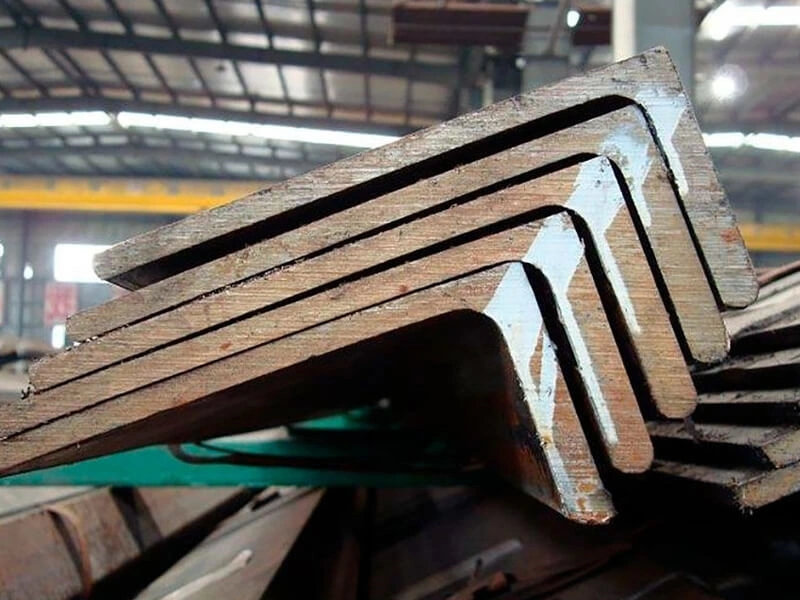
A customer in Qatar told me: “We have 20 tons of remnants. But we still order new steel for every job.” That is crazy. That is like having money in your pocket but going to the bank to borrow more. The problem was not lack of remnants. The problem was no system to find the right remnant quickly.
A Simple Traceability System That Works
You do not need expensive software. You need discipline.
| Step | Action | Tool Needed |
|---|---|---|
| 1 | Measure every remnant longer than 1m | Tape measure |
| 2 | Mark length and size on both ends | Permanent marker or paint |
| 3 | Store by length group (1-2m, 2-3m, 3-4m, 4m+) | Simple racks or bins |
| 4 | Log all remnants in a notebook or shared spreadsheet | Paper or free online sheet |
| 5 | Check log before cutting any new bar | 2 minutes per job |
How to make your team actually use it
Most workers will ignore the system if it is hard. So make it easy.
First, put the remnant rack next to the saw. Not in a corner. Not behind other materials. Right next to where they cut. Then they see remnants first.
Second, use color codes. Paint the ends of L-shaped steel. Red for 1-2m. Yellow for 2-3m. Green for 3-4m. Blue for 4m+. At a glance, you know what is there.
Third, assign one person to manage remnants. This is a small job. It takes 15 minutes at the end of each day. That person measures new remnants, logs them, and removes pieces that are too short (anything under 1m gets recycled). Give that person a small bonus if waste drops by 5% in a quarter. That bonus pays for itself many times over.
A personal story about a “useless” piece
We had a customer in Mexico. He needed a 2.1m L-shaped steel piece for a repair job. His team was about to cut a new 12m bar. That would create a 9.9m leftover. Then someone checked the remnant log. They found a 2.2m piece from three months ago. They used that. They saved a full 12m bar. That one check saved about $120 in material. Over a year, doing this 30 times saved $3,600. That is real money.
What about traceability for large projects?
For big shipbuilding projects, use a simple numbering system. Each remnant gets a unique ID like “L-90-2.4-01” (L-shaped, 90mm, 2.4m, piece 01). Write that ID on the steel and in your log. When a drawing calls for a 2.4m piece, you search for “L-90-2.4” in your log. If it exists, you use it first.
The biggest obstacle I see
Pride. Some cutting teams think using remnants is “cheap” or “slow.” They want fresh new bars. You need to change that culture. Show them the numbers. Explain that waste reduction means more profit. And more profit means better bonuses, better tools, and a stronger company. I have seen this mindset shift work in Malaysia and Romania. It starts with leadership.
Conclusion
Plan your cuts, match mill lengths to your spacing, simplify your designs, and track every leftover piece. That is how you cut waste and save money.