
You order steel for one project. Then for another. Separate orders. Small quantities. High prices.
Consolidating steel plate orders means combining multiple smaller orders into one larger order. This lowers per‑ton pricing, reduces freight costs, and helps you meet mill minimums. It saves 10‑20% of total steel spend.
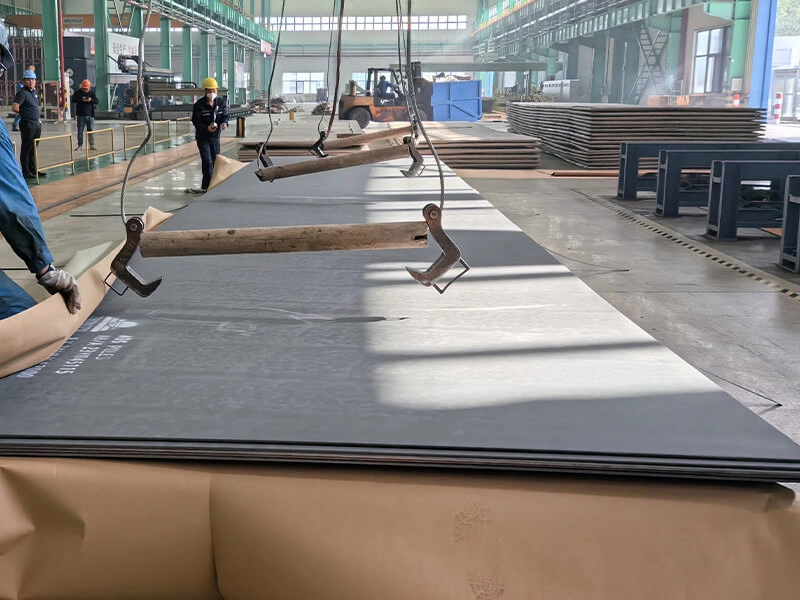
I am Zora Guo from cnmarinesteel.com. I have seen buyers place five small orders in one month. Each order had its own freight, its own small‑quantity premium, and its own paperwork. When they consolidated, they saved thousands of dollars. Let me show you how.
How Does Consolidating Orders by Grade and Thickness Lower Per‑Ton Pricing and Mill Minimums?
You need 50 tons of 12mm AH36 for Project A. You need 60 tons of 12mm AH36 for Project B. You order them separately. The mill sees two small orders. They charge a higher price. For a reference on bulk steel plate buying and MOQ price breaks, larger combined orders can lower unit cost.
When you consolidate orders by the same grade and thickness, the mill sees one larger order. Mills have price breaks – lower per‑ton pricing for higher volumes. For example, 100 tons might cost $800/ton, but 200 tons costs $770/ton. Consolidating also helps you meet mill minimums (MOQs). Many mills have a 50‑100 ton MOQ per size. By combining, you reach that MOQ and avoid extra fees or outright rejection.

Let me explain the numbers.
How Mills Price Steel
Mills have fixed costs per order: rolling setup, heat treatment, testing, paperwork. These costs are spread across the tonnage. A larger order spreads them thinner, so the per‑ton price drops.
| Example from a real mill price table: | Order size (tons per grade/thickness) | Price per ton (USD) |
|---|---|---|
| 20‑49 tons | $850 | |
| 50‑99 tons | $810 | |
| 100‑199 tons | $780 | |
| 200+ tons | $750 |
If you order 40 tons, you pay $850/ton. If you combine with another 60 tons (same grade/thickness) into a 100‑ton order, you pay $780/ton. Saving of $70/ton × 100 tons = $7,000.
Meeting Minimum Order Quantities (MOQs)
Many mills will not roll a special size for less than 50 tons. Even for standard sizes, they may charge a small‑order fee (5‑10% extra) for orders under 50 tons. For more background on minimum order quantity and steel lead times, small orders often face extra restrictions.
Example: You need 30 tons of L150x90x12 AH36. The mill’s MOQ is 50 tons. Without consolidation, you either pay a $2,000 small‑order fee or buy 50 tons (20 tons extra, costing $16,000). With consolidation, you combine with another project’s need for 40 tons of the same size. Total 70 tons – meets MOQ, no extra fee.
How to Consolidate Across Projects
Step 1: List all upcoming projects. Note the thickness, grade, and quantity for each.
Step 2: Group identical thicknesses and grades. Add up the total tons for each group.
Step 3: Order that total quantity in one order. Ask the mill to deliver in phases (e.g., first 50 tons for Project A, next 30 tons for Project B). Mills can usually do phased delivery for a consolidated order. For planning around phased deliveries and long lead items, see Procurement Strategies for Managing Long Lead Items and How Project Development Mitigates Supply Chain Challenges.
A Real Example
A contractor in Malaysia had three small projects over 6 months. Each needed 12mm AH36 – 30 tons, 40 tons, and 20 tons. He was going to order each separately. I suggested consolidating into a single 90‑ton order. The mill price dropped from $830/ton to $780/ton. He saved $4,500. He also saved three separate freight bills (more on that next). For background on steel price fluctuations and steel procurement lead-time management, consolidation can materially reduce both cost and schedule risk.
What Volume Discounts and Freight Savings Can You Achieve by Combining Multiple Project Requirements?
Small orders cost more to ship. A 20‑ton order might fill half a container. You pay for the whole container anyway. For more on freight consolidation and container shipping costs, combining shipments can reduce unit transport cost.
Volume discounts go beyond material price. Freight is cheaper per ton for larger shipments. A full container (25‑28 tons) costs about the same as a half‑full container. So splitting a 50‑ton order into two shipments costs nearly twice the freight of one 50‑ton shipment. Also, suppliers may offer a consolidated logistics discount for large, predictable volume. Combining orders reduces the number of shipments, saving thousands in freight.

Let me show you the math.
Freight Cost Breakdown
| For a shipment from China to the Middle East: | Shipment size | Container type | Freight cost (USD) | Cost per ton |
|---|---|---|---|---|
| 15 tons | LCL (less container load) | $2,200 | $147 | |
| 25 tons | 20ft container | $2,800 | $112 | |
| 50 tons | 40ft container | $3,800 | $76 |
If you send two separate 25‑ton orders, you pay 2 × $2,800 = $5,600 for 50 tons ($112/ton). If you consolidate into one 50‑ton order in a 40ft container, you pay $3,800 ($76/ton). Saving of $1,800 – 32%.
LCL vs. FCL
LCL (Less than Container Load) means your steel shares a container with other cargo. The freight rate per ton is much higher because of handling fees. For any order over about 20 tons, it is cheaper to use a full container. Consolidating smaller orders into a full container saves the LCL premium.
Supplier Volume Discounts
Many steel suppliers offer volume‑based discounts on the total order value, not just the material price. For example, a 5% discount on a $200,000 order is $10,000. If you split that into four $50,000 orders, you might get no discount at all.
What to ask your supplier:
- “Do you offer a volume discount for orders above X tons?”
- “Can we combine multiple project orders into one master order to reach that threshold?”
A Real Example
A buyer in Saudi Arabia had four orders over 6 months. Each was 25‑30 tons. He shipped each separately by LCL. Total freight cost: 4 × $2,500 = $10,000. I helped him consolidate into a single 110‑ton order. We shipped in two 40ft containers (55 tons each) at $4,000 per container – total $8,000. Plus, the mill gave a $20/ton volume discount. He saved $2,000 on freight and $2,200 on material – total $4,200. He told me: “Why didn’t I do this before?”
How to Balance Consolidation Benefits Against Inventory Holding Costs and Phased Delivery Needs?
You consolidate orders. But now you have all the steel at once. You need to store it. You tie up cash. You risk rust. For more on steel inventory management and just-in-time stocking, the goal is to reduce holding costs while keeping supply reliable.
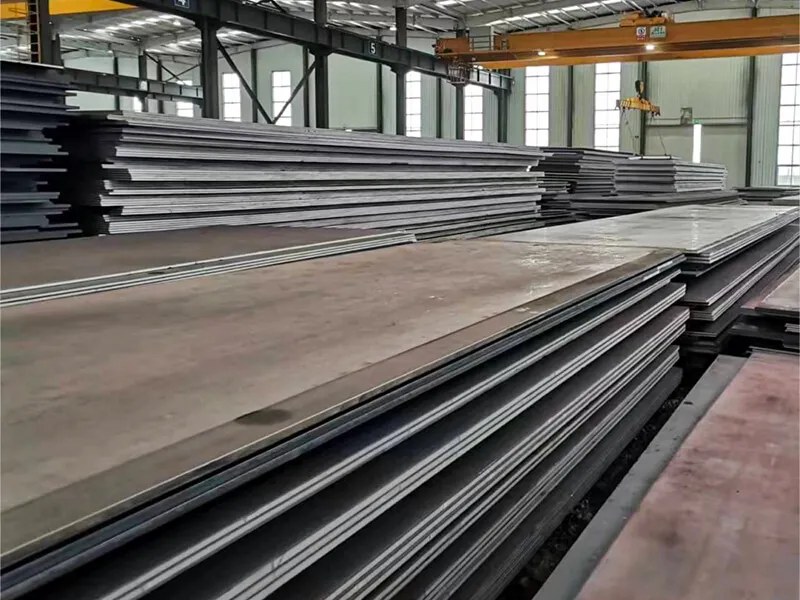
Consolidation is not always about taking delivery all at once. You can consolidate the order (one purchase order, one volume price) but ask for phased delivery. The mill or supplier holds the steel and ships it to you in batches matching your project schedule. This way, you get the volume discount and freight savings, but you only pay for steel as you receive it. Balancing consolidation with phased delivery requires a supplier who offers inventory storage or mill‑direct phased shipping.
Let me explain how to set this up.
The Inventory Holding Cost Problem
If you take delivery of 200 tons at once, you need:
- Storage space (maybe $5‑10 per ton per month)
- Protection from rust (covers, coating)
- Insurance on the inventory
- Working capital tied up (interest cost)
Example: Holding 200 tons for 4 months at 10% annual interest on $800/ton = 200 × 800 × 0.10 / 3 = $5,333 in interest alone.
The Phased Delivery Solution
You order 200 tons in one consolidated purchase order. The price is the volume price ($780/ton instead of $820/ton). But you ask the supplier: “Ship 50 tons per month for 4 months.”
Terms:
- You pay a deposit (say 30%) on the full order.
- You pay for each delivery when it ships.
- The supplier holds the remaining steel in their warehouse or at the mill.
Benefit: You get the volume discount without holding all the steel at once. The supplier may charge a small storage fee (e.g., $5‑10 per ton per month), but that is far less than the discount you gain.
When Consolidation Does Not Make Sense
Do not consolidate if:
- The different projects use very different thicknesses or grades (no volume savings).
- You cannot store the steel and have no supplier willing to do phased delivery.
- Your project timeline is very long (over 12 months) and steel prices might drop.
A Real Example
A shipyard in Vietnam needed steel for three tankers built over 9 months. They consolidated all AH36 12mm plates into a single 500‑ton order. The mill gave a $50/ton discount – saving $25,000. They arranged phased delivery: 150 tons at month 1, 150 tons at month 4, 200 tons at month 7. They paid for each batch on delivery. The mill stored the steel at no extra cost (because the order was large). They saved $25,000 and had no inventory holding cost.
What Role Does a Single‑Supplier Frame Agreement Play in Streamlining Consolidated Order Management?
You consolidate orders with one supplier. Then that supplier changes prices. Or they deliver late. You have no leverage.
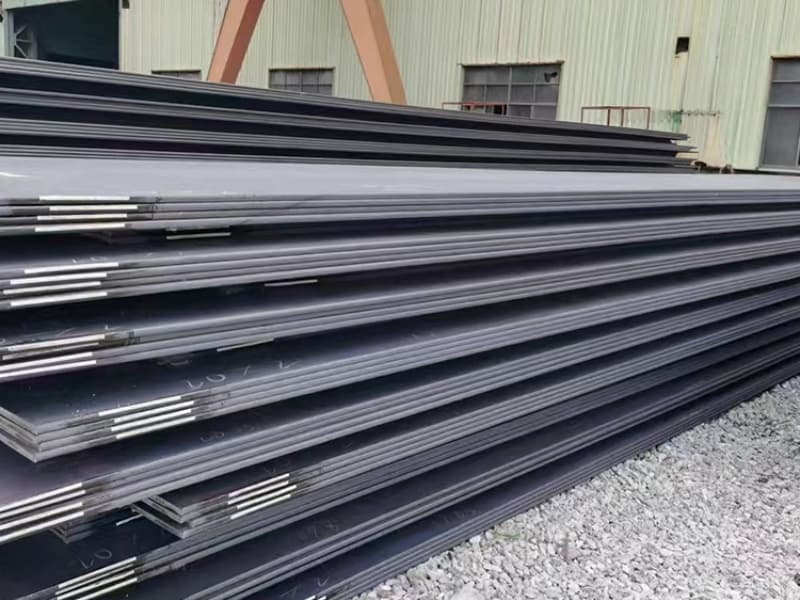
A single‑supplier frame agreement (also called a master supply agreement) formalizes your consolidated ordering. It sets fixed prices or a pricing formula for a period (e.g., 12 months). It defines delivery terms, quality standards, and penalties for late delivery. With a frame agreement, you can issue release orders against the consolidated master order. This streamlines paperwork, locks in pricing, and ensures supply priority. It is the ultimate tool for managing consolidated orders.
Let me explain the components.
What a Frame Agreement Includes
A good frame agreement for consolidated orders covers:
| Clause | What it specifies |
|---|---|
| Volume commitment | Minimum and maximum total tons over the agreement period (e.g., 1,000 tons in 12 months) |
| Price mechanism | Fixed price, or formula based on raw material index (e.g., billet price + $200 rolling fee) |
| Phased delivery | Supplier holds stock and ships on your release orders |
| Payment terms | Deposit, progress payments, or pay per shipment |
| Quality | Class society approvals, tolerances, third‑party inspection |
| Lead time | Maximum days from release order to delivery |
| Penalties | Discount for late delivery |
How It Streamlines Consolidated Ordering
Without a frame agreement: You send a purchase order for each project. Each PO is negotiated separately. Prices may change. Lead times vary.
With a frame agreement: You sign one master agreement. Then you send simple release orders: “Ship 50 tons of 12mm AH36 by Date X.” The price is already agreed. The supplier already has your consolidated volume commitment, so they prioritize your releases.
Benefits for Consolidation
- Price stability – You lock in the volume discount for the entire period.
- Supply security – The supplier reserves mill capacity for your consolidated volume.
- Administrative savings – One contract, one negotiation, one set of terms.
- Flexibility – You can adjust release quantities within the agreed total.
A Real Example
Our customer Gulf Metal Solutions signed a 12‑month frame agreement for 800 tons of marine steel (plates, L sections, bulb flats). The agreement fixed prices at $790/ton for AH36 plates. Spot market prices went up to $850/ton during that year. They saved $60/ton on 600 tons – $36,000. They also issued release orders every 4‑6 weeks. The supplier always delivered within 3 weeks. The buyer told me: “The frame agreement took away all our pricing uncertainty.”
Conclusion
Consolidate orders by grade and thickness to get volume discounts and lower freight. Use phased delivery to avoid holding inventory. Lock in terms with a single‑supplier frame agreement. This approach cuts total steel cost by 10‑20%.