
Your project needs steel from different class societies. One zone requires ABS. Another requires DNV. A third follows a national standard. Managing all of them is a challenge.
To manage different standards in one marine steel plate project, first map each standard to the specific hull zone, then use separate documentation and color coding for each certification, follow each standard’s testing and acceptance criteria, and coordinate with a single integrated supplier who can source from multiple approved mills. This keeps your project organized and class‑compliant.
I am Zora Guo from cnmarinesteel.com. I have supplied plates to projects that mixed ABS, DNV, and LR standards in one hull. It can be done, but you need a clear system. Let me walk you through it.
How to Identify and Map Different Standards (ABS, DNV, LR, National) to Each Plate Requirement in a Single Project?
You have a ship design. The bottom shell is ABS. The side shell is DNV. The deck is a national standard. If you mix them up, the class surveyor will reject your steel.
Start by creating a standard mapping matrix. List every structural zone (bottom, side, deck, bulkhead, superstructure). Next to each zone, write the applicable class society or national standard. Then, for each standard, note the required steel grade, thickness, and any special tests (e.g., Charpy temperature). Use color coding on your drawings and procurement documents – for example, red for ABS, blue for DNV, green for national standard. This mapping prevents confusion from the design phase all the way to the steel receipt.
Let me show you how to build this map.
Step 1: List Every Hull Zone
Common zones on a typical vessel:
- Bottom shell (keel area)
- Inner bottom
- Side shell (port and starboard)
- Deck (main deck, weather deck)
- Bulkheads (transverse and longitudinal)
- Tanks (ballast, fuel, cargo)
- Superstructure
Step 2: Determine the Applicable Standard for Each Zone
This is usually specified by the project’s classification society contract. Some zones may be "dual class" (e.g., both ABS and DNV). Others may follow a national standard (e.g., Chinese GB for a domestic vessel, or Russian Maritime Register for a vessel trading in Russian waters).
Step 3: Map to Steel Requirements
Each standard has its own grade designations and test requirements. For example:
| Standard | Grade equivalence for 355 MPa yield | Charpy temperature |
|---|---|---|
| ABS | AH36 / DH36 | 0°C / -20°C |
| DNV | NV A36 / NV D36 | 0°C / -20°C |
| LR | LR AH36 / LR DH36 | 0°C / -20°C |
| National (e.g., GB/T 712) | AH36 / DH36 | 0°C / -20°C |
The mechanical property requirements are nearly identical, but the certification process and stamping differ.
Step 4: Create a Color‑Coded Drawing
On your general arrangement or steel cutting plan, use a different color for each standard. For example:
- Red outline: ABS certified plates
- Blue outline: DNV certified plates
- Green outline: National standard plates
This visual cue helps your yard team and your supplier.
A Real Example
A shipyard in Indonesia built a vessel for operation in multiple jurisdictions. The owner required ABS for the bottom and side shell (global waters), but accepted a national standard for the superstructure (non‑critical). The yard created a color‑coded drawing. The procurement team ordered ABS plates from a mill with ABS approval, and national standard plates from a local mill. The two shipments were kept separate. No mix‑ups occurred.
What Documentation and Traceability Practices Prevent Mix‑Ups Between Plates Certified Under Different Class Societies?
You receive two shipments. One has ABS stamps. The other has DNV stamps. They look the same. Your team might grab the wrong plate.
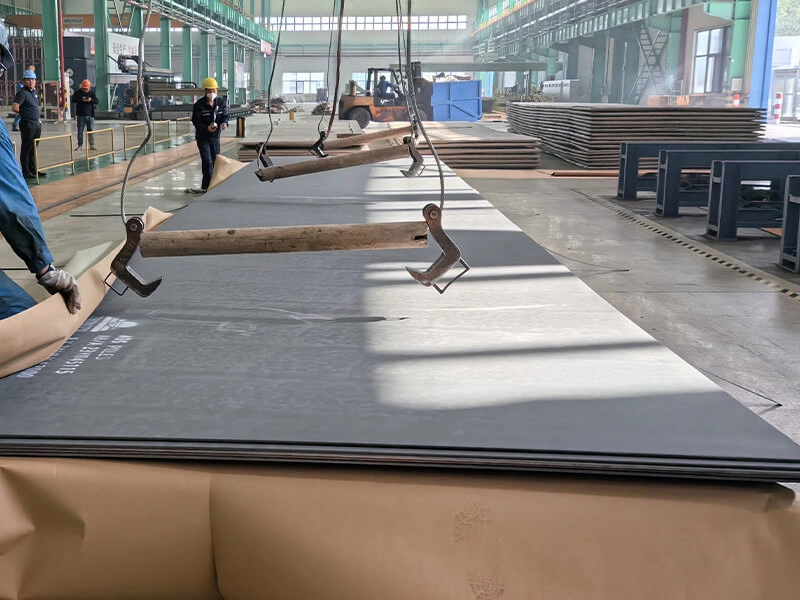
To prevent mix‑ups, use separate storage zones for each standard. Label each bundle with a large, color‑coded tag showing the class society. On the packing list, clearly separate bundles by standard. Each plate must have its class stamp (e.g., ABS, DNV) clearly visible. For traceability, keep a log that links each heat number to its standard. When a plate is cut, record which standard it belongs to. This traceability is essential for class audits.
Let me detail the practices.
Physical Segregation
- At the supplier’s warehouse: Ask your supplier to pack plates of different standards in separate bundles and, if possible, load them in separate containers or separate areas of the same vessel.
- At your yard: Designate dedicated storage areas for each standard. Use floor markings, signs, and barriers. Do not stack ABS plates on top of DNV plates.
Labeling and Marking
Each plate must be stamped or painted with its class society symbol. For example:
If the stamp is small, add a large paint mark in the corner. Use a different color for each standard.
Documentation Trail
Your packing list should show:
- Bundle number
- Class society
- Grade
- Heat number
- Quantity
For each heat number, the mill certificate must clearly state the class society approval and show the stamp.
Traceability Log
Create a spreadsheet that tracks every plate from order to installation. Columns include:
- Plate ID
- Heat number
- Class society
- Storage location
- Block/zone where used
- Date cut
- Welder who used it
This log is your proof to the class surveyor that you did not mix standards.
A Real Example
A project in Qatar required both ABS and DNV plates on the same vessel. The yard had a single storage area. Workers accidentally used an ABS plate where a DNV plate was required. The mistake was found after welding. The yard had to cut out and replace the section. The cost was $20,000. After that, they implemented physical segregation and color‑coded storage.
How to Handle Testing, Inspection, and Acceptance Criteria When Multiple Standards Apply to Different Hull Zones?
Each standard has its own test frequency, sample location, and acceptance values. You cannot use one test report for plates certified under a different society.
When multiple standards apply, you must follow each standard’s testing and inspection rules separately. For ABS plates, the mill certificate must be stamped by ABS. For DNV plates, the stamp must be from DNV. For national standards, the national authority’s stamp is required. Third‑party inspection (SGS, class surveyor) should be arranged per standard – one inspector for ABS plates, another for DNV plates, or one surveyor who is authorized for all. Acceptance criteria (e.g., thickness tolerance, Charpy values) also vary slightly. Do not mix test results. Keep separate files for each standard.

Let me clarify the key differences.
Testing Frequency
| Standard | Tensile tests per heat | Charpy tests per heat | UT requirement |
|---|---|---|---|
| ABS | 1 set per 50 tons | 1 set per 50 tons | For plates >20mm in critical zones |
| DNV | 1 set per heat | 1 set per heat | For plates >15mm in bottom/side |
| LR | Similar to ABS | Similar to ABS | Similar to ABS |
The differences are small, but they matter to the surveyor.
Charpy Impact Temperatures and Values
All major societies have aligned their Charpy requirements for common grades, but always check the specific rule edition.
For AH36:
- ABS: 34 J average at 0°C
- DNV: 34 J average at 0°C
- LR: 34 J average at 0°C
For DH36:
- ABS: 34 J at -20°C
- DNV: 34 J at -20°C
- LR: 34 J at -20°C
Third‑Party Inspection
If your contract requires third‑party inspection, the inspector must be authorized by the applicable class society. An ABS surveyor cannot approve DNV plates.
Solution: Hire a third‑party agency (like SGS) that can coordinate with multiple societies, or contract separate surveyors for each standard.
A Real Example
A repair yard in the Philippines received plates from two different class societies. They sent all plates to the same lab for testing. The lab mixed up the samples. The surveyors rejected the test reports. The yard had to retest all plates, paying twice. Now they use separate color‑coded sample bags for each standard.
How to Coordinate with Mills and Suppliers to Supply Plates with Diverse Certifications Without Delays or Cost Overruns?
You need ABS, DNV, and national standard plates. Most mills specialize in one or two certifications. If you order from three different mills, you get three separate shipments, three lead times, and three sets of paperwork.
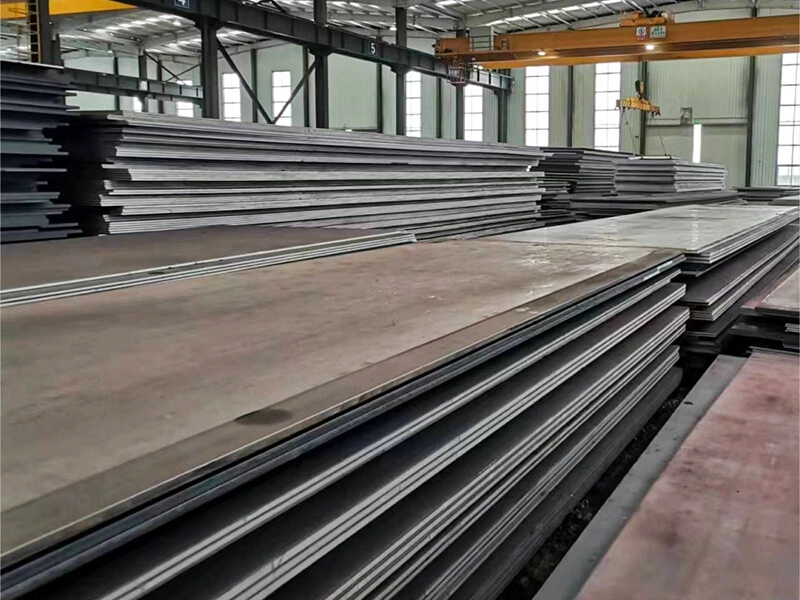
To avoid delays, work with a single integrated supplier who has relationships with multiple approved mills. The supplier can source ABS plates from one mill, DNV plates from another, and national standard plates from a third, but they consolidate everything into one delivery to you. This simplifies your purchase order, reduces freight costs, and gives you one point of contact. The supplier handles the coordination – they know each mill’s lead time and quality. For you, it looks like one order. This is the most efficient way to manage diverse certifications.
Let me explain the process.
The Traditional Way – High Risk
You issue separate POs to different mills:
- Mill A (ABS) – 200 tons, lead time 6 weeks, freight separate
- Mill B (DNV) – 150 tons, lead time 8 weeks, freight separate
- Mill C (National) – 100 tons, lead time 4 weeks, freight separate
You have three contracts, three delivery schedules, three shipping documents, and three quality levels. Coordination is a nightmare.
The Integrated Way – Efficient
You issue one PO to an integrated supplier. The supplier:
- Places orders with Mill A, B, and C on your behalf.
- Consolidates all steel at their warehouse.
- Ships everything in one or two containers.
- Provides a single set of documentation (packing list, MTCs organized by standard).
- Manages any delays or quality issues.
You pay a small service fee (typically 3‑5% above mill prices), but you save on freight, administrative cost, and risk.
Lead Time Coordination
The supplier will schedule production so that all steel arrives at the consolidation point around the same time. If one mill is slower, the supplier may air freight a small batch or adjust the delivery phasing.
A Real Example
A shipyard in Malaysia needed plates under three different standards for a single vessel. They tried to order directly from three mills. The ABS mill delivered on time. The DNV mill was two weeks late. The national mill delivered early. The yard had to store the early steel and wait for the late steel – tying up space and capital. The next time, they used an integrated supplier. The supplier held all steel at their warehouse until all three orders were ready, then shipped together. The yard received one shipment, on time, with all documents in order.
Conclusion
Map each standard to hull zones, use separate storage and color coding, follow each standard’s testing and inspection rules, and work with an integrated supplier to consolidate diverse certifications. This keeps your project organized and on schedule.