
Managing steel for big projects feels like a puzzle with too many pieces. Late deliveries, wrong grades, and endless emails can kill your budget.
The best way to simplify is to group similar plate grades and thicknesses, use one supplier for all products, set up just‑in‑time deliveries, and apply digital tracking tools. This cuts waste, errors, and delays.
You might think this sounds too simple. But I have helped contractors in Saudi Arabia and Vietnam save months of headaches. Let me break down how each step works in real life.
How to Consolidate Multiple Plate Grades and Thicknesses into Standardized Groups for Bulk Ordering?
Your project needs ten different grades and fifteen thicknesses. That is a nightmare to order and track.
Create three to five standard groups based on mechanical properties and thickness ranges. For example, group all mild steel plates for structural use into one category, and all high‑strength plates for heavy loads into another. Buy these groups in bulk.
Now let me go deeper. Many buyers think each part of the ship or tank needs a unique plate. That is often not true. Engineers over‑specify because they want to be safe. But you can challenge those specs without risking quality.
Three Steps to Build Your Standard Groups
First, list every plate required for all sub‑projects. Write down the grade (like AH36, DH36), thickness (8mm, 12mm, 20mm), and quantity. Then look for overlaps. You might see that AH36 and DH36 are very close in strength and weldability. In many cases, you can replace both with one grade that meets the higher standard.
Second, set thickness brackets. Instead of ordering 6mm, 7mm, 8mm, 9mm, and 10mm, ask your team: can we use 6‑8mm and 9‑11mm? Most fabrication shops can handle small variations. They just adjust cutting settings. The money you save on bulk ordering usually outweighs the extra material cost. For thickness and fabrication range context, see thickness classification and sheet metal bracket thickness.
Third, check with your mill or supplier. At CN Marine Steel, we keep stock of common groups like “standard structural” and “high‑corrosion resistant.” If you tell me your groups, I can tell you if we have a mill that produces them regularly. That means faster delivery and lower prices. For higher corrosion resistance in marine use, see shipbuilding steel plate options.
Real Example from a Vietnam Shipyard
One customer needed plates for three different oil tankers. The original spec had 22 unique combinations of grade and thickness. We sat down and grouped them into four categories. The shipyard saved 18% on material cost and cut ordering time from three weeks to three days. They also reduced the risk of ordering the wrong plate because the group names were easy to remember.
What to Avoid
Do not group plates with very different corrosion requirements. A marine grade for seawater should not be grouped with a standard grade for indoor use. Also, avoid mixing thicknesses that are too far apart, like 4mm and 20mm. The mill’s rolling process changes at different thicknesses, so you lose the benefit of bulk pricing.
Use this table as a quick guide:
| Original Spec | Proposed Group | Reason |
|---|---|---|
| AH36 8mm, 10mm, 12mm | Group A: AH36 8-12mm | Same grade, thickness close |
| DH36 8mm, 10mm | Group A: same | DH36 is slightly higher strength, but AH36 often works |
| S355J2 20mm | Group B: High-strength 15-25mm | Separate group for thicker plates |
| Corrosion-resistant 6mm | Group C: Marine grade thin | Do not mix with standard grades |
The key is to talk to your fabrication team. Ask them: “What tolerances can you accept?” Then negotiate with your supplier. Most will support grouping because it makes their production planning easier.
Why Does a Single‑Supplier Integrated Model Reduce Administrative Overhead and Communication Errors?
Juggling three Chinese suppliers plus one local stockist is exhausting. Each has different invoices, lead times, and quality standards. For background on integrated supply chains and vendor consolidation, fewer suppliers usually means less coordination work.
One supplier handles all plates, angles, bulbs, and sections. You sign one contract, get one delivery schedule, and talk to one sales rep. This removes the back‑and‑forth between multiple parties and stops information from falling through the cracks.

Below is my article in Markdown format, please help me fill in the missing links in it (if necessary, please search Google for the most appropriate linking resources).
Let me explain the real cost of multiple suppliers. When you buy marine steel plate from Supplier A, [marine angle steel](https://www Steelanglemarine.com/marine-angle-steel) from Supplier B, and bulb flat steel from Supplier C, you create a web of emails. One change in the project means you send three separate messages. And people forget things. I have seen customers order the wrong quantity because they mixed up which supplier delivered which month.
How the Single‑Supplier Model Works in Practice
At CN Marine Steel, we produce or source all your needed profiles: marine steel plate, marine angle steel, bulb flat steel, and L‑shaped section steel. You send one purchase order to me, Zora. I check our mill schedule and give you one delivery plan. If there is a delay in the port or a quality issue, you call one person. That person is me or my export team.
We also keep a shared record of your project’s requirements. When you say “I need to move the 20mm plate delivery from week 10 to week 12,” I update it once. Then all products follow the same change. No need to call three different factories and hope they all get the memo.
The Hidden Savings
Administrative overhead is not just about time. It is about mistakes. Each communication error can cost thousands of dollars in rework, air freight, or rejected materials. Here is a real example from our client Gulf Metal Solutions in Saudi Arabia. Before they found us, they worked with four different Chinese steel suppliers. One supplier sent the wrong grade of marine angle steel. Another forgot to include the test certificates. The project manager spent 15 hours per week just chasing information. After switching to our integrated model, that time dropped to two hours per week. They also had zero material mismatches in the next two quarters.
What to Look for in a Single Supplier
Not every supplier can handle all your needs. Ask these questions:
- Do you stock or have mill access to marine plate, angle, bulb flat, and L‑shaped steel?
- Can you provide third‑party inspection/SGS for all products on one certificate?
- Do you have a dedicated English‑speaking sales rep who stays with the whole project?
If the answer is yes to all three, you are safe. We offer all of these. Plus we support flexible MOQ, so you are not forced to buy more than you need just to meet one supplier’s minimum.
A Note of Caution
Do not choose a single supplier who is just a middleman. Make sure they have long‑term cooperation with certified mills. Otherwise, you will still face quality inconsistency. We work only with mills we have audited for years. That is how we guarantee the surface finish, mechanical properties, and dimensions.
How to Use Phased Deliveries and Just‑in‑Time (JIT) Scheduling to Avoid Excess Inventory and Rework?
Storing thousands of tons of steel plate on site ties up your cash and creates damage risk. It also takes up space that could be used for fabrication.
Break your total order into smaller shipments that arrive exactly when each project phase starts. Use a JIT schedule based on your production plan, not on the supplier’s convenience. This keeps inventory lean and stops plates from sitting outside and rusting.
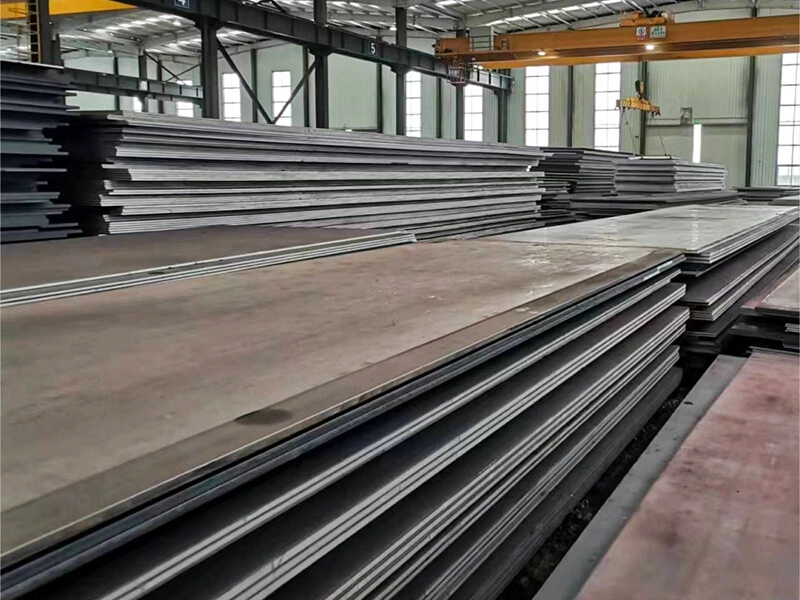
Most buyers think ordering everything at once saves money on shipping. But that is an old way of thinking. Today, freight costs are volatile. And the cost of rework from damaged or misplaced plates often outweighs any shipping discount. Let me break down how to do phased delivery right.
Three Rules for Phased Deliveries
First, map your project’s critical path. For a bulk carrier, the bottom shell plates are needed before the upper deck plates. So ask your supplier to ship bottom plates in month one, and deck plates in month three. This does not increase total shipping cost much if you consolidate multiple phases into one container or bulk vessel. We often ship to Dammam or Ho Chi Minh City with partial loads. The key is to plan with your supplier at the beginning.
Second, add buffer time. JIT sounds great, but a ship can be delayed by weather or labor issues. Always add two weeks of buffer between the scheduled delivery date and the date you actually need the steel. That way, if customs clearance is slow or a truck breaks down, you do not stop work.
Third, label each delivery clearly. Use color‑coded tags or digital QR codes that tell your team which phase and which sub‑project the steel belongs to. This stops workers from picking the wrong plate. At CN Marine Steel, we can print these labels for you before shipment. You just scan and install.
How to Avoid Rework from Inventory Damage
Excess inventory often sits outside for weeks. Rain, dust, and forklift traffic cause surface rust and dents. When you finally use that plate, you need to grind and repair it. That is rework. And rework eats your profit margin.
With phased deliveries, each batch arrives and gets used within days or weeks. There is no time for serious corrosion. We also package marine steel plate with extra anti‑rust oil and edge protectors. But even the best packaging fails if steel stays in a muddy yard for three months.
Real Data from a Project in Qatar
A contractor building offshore modules had to store 800 tons of steel plate because they ordered all at once. After six weeks in the open, 12% of the plates needed surface grinding. That cost them $15,000 in extra labor. Next project, they switched to phased deliveries from us. They stored only 150 tons at any time. The grinding cost dropped to almost zero. And they freed up half of their yard for other activities.
Working with Your Supplier on JIT
Not all suppliers can handle JIT. They need flexible mill schedules and reliable logistics. Ask your supplier:
- Can you hold part of my order in your warehouse and release it on my call?
- Do you have a fixed shipping schedule from Shandong to my port?
- What is the minimum lead time for an additional phase if my project speeds up?
We answer yes to the first two. For the third, we keep a buffer stock of common grades and thicknesses in Liaocheng. So if you need an extra 20 tons of AH36 plate with three days notice, we can usually do it. That is the benefit of working with a supplier who produces locally and has good mill relationships.
What Digital Tracking, Nesting, and Forecasting Tools Streamline Procurement Across Multiple Sub‑Projects?
You have three sub‑projects running at the same time. Each uses different plates. Without a digital system, you will lose track of what is used and what is still on order.
Use a cloud‑based inventory tracker that connects to your supplier’s system. Add nesting software to optimize cutting patterns. Then use a simple forecasting tool to predict future needs based on past usage. These three tools together reduce waste and prevent double‑ordering.
I know what you are thinking. "Zora, my team is not tech‑savvy. We use spreadsheets." That is fine. Even simple tools can work if they are connected. Let me show you what really matters.
Digital Tracking That Anyone Can Use
You do not need an expensive ERP. A shared Google Sheet can work if you set rules. One column for grade, one for thickness, one for sub‑project, one for location (warehouse or workshop). Your supplier can give you a read‑only view of their shipment status. We do this for our clients. We give them a link that shows which plates have been produced, which are on the truck to the port, and which are on the ship. No emails, no phone calls. Just data.
Better yet, use a free barcode system. Print a barcode for each plate bundle. Scan it when it arrives and again when it is used. This takes five seconds. But it stops your team from "losing" a plate and ordering a replacement that you do not need. I have seen customers save 8% on material cost just by scanning.
Nesting Software for Less Waste
Nesting means arranging cutting patterns on a steel plate to use as much material as possible. Without nesting, you can waste 15‑20% of every plate. With good nesting, waste drops to 5‑8%. On a $500,000 steel order, that is $35,000 to $75,000 saved.
You do not need to buy expensive software like SigmaNEST. There are free online nesting tools that work for simple shapes. If your parts are complex, hire a local freelancer to do the nesting for you. The fee is small compared to the steel you save. And remember: less waste means you order fewer plates. That simplifies your procurement.
Forecasting Tools to Predict Demand
Forecasting does not need to be fancy. Just track your weekly consumption of each plate grade and thickness. After four weeks, you will see a pattern. Use that pattern to tell your supplier what to produce next. We at CN Marine Steel can hold a rolling forecast for you. For example, you tell me: "For the next three months, I will need 50 tons of Group A plates every two weeks." I then reserve mill time for you. You do not pay for the steel until we ship. But the mill slot is locked, so you never face a shortage.
Combining the Three Tools in One Workflow
Here is how a good day looks: Your team scans a barcode when they use the last piece of a 12mm AH36 plate. The tracking system automatically updates your forecast. The forecast triggers a reorder to us. We send you a confirmation within two hours. At the same time, your nesting software shows you the best way to cut the new plates so you order exactly the right size. No guesswork. No rush orders.
I know this sounds like a dream. But we have implemented this with a client in Malaysia. Their procurement head used to spend 20 hours per week on tracking and reordering. After adopting these three simple tools, that time dropped to four hours. And they reduced their emergency orders by 70%.
A Word of Honesty
These tools only work if your team uses them. The biggest failure I see is when a manager buys software but does not train the crew. Start small. Pick one tool – tracking is the easiest. Use it for one month. Then add nesting. Then add forecasting. Go step by step.
Conclusion
Group your grades, use one supplier, schedule phased deliveries, and track everything digitally. That is how you simplify steel buying.