
Are you struggling to keep your shipbuilding steel costs under control as prices keep shifting?
Effective marine steel plate budget planning requires understanding market trends to 2032, managing price volatility and geopolitical risks, accounting for all true cost components, and applying strategic procurement with design optimization to reduce total expenses.
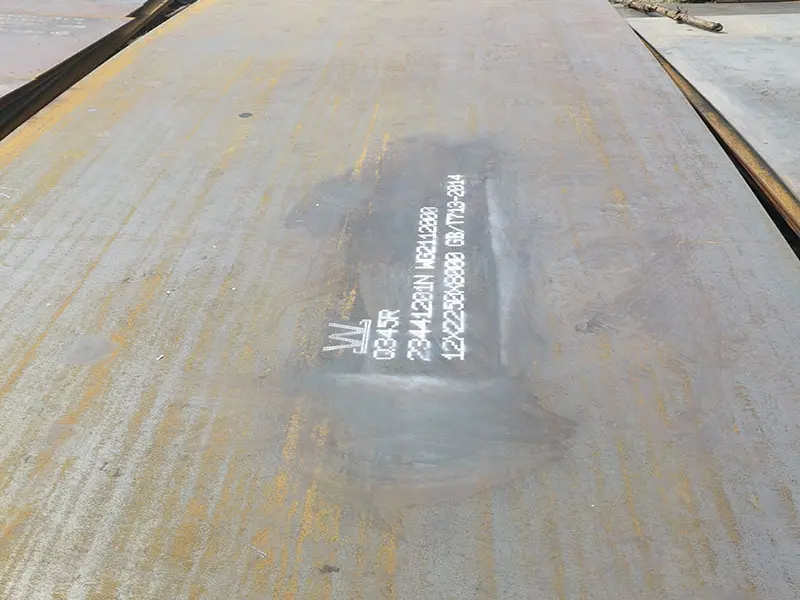
I have been in the marine steel business for years. I work with shipbuilders, project contractors, and large importers across Asia, the Middle East, and beyond. And I can tell you this: steel plate costs can make or break a shipbuilding project budget. Thick plates alone account for 20% to 30% of total shipbuilding costs[reference:0][reference:1]. That is a massive chunk of your budget. If you are not planning carefully, you are leaving money on the table.
Let me walk you through four key areas that will help you build a smarter steel plate budget.
What Are the Market Trends and Price Forecasts for Marine Steel Plates Through 2032?
Do you know where marine steel plate prices are heading over the next six years — and how that affects your budget?
The global ship plate market is expected to reach $42.2 billion by 2032, growing at a 5.1% CAGR[reference:2]. The shipbuilding steel plate market alone is projected to grow from $5.48 billion in 2024 to $7.5 billion by 2032[reference:3]. This sustained growth signals rising demand and continued price pressure on shipbuilders.
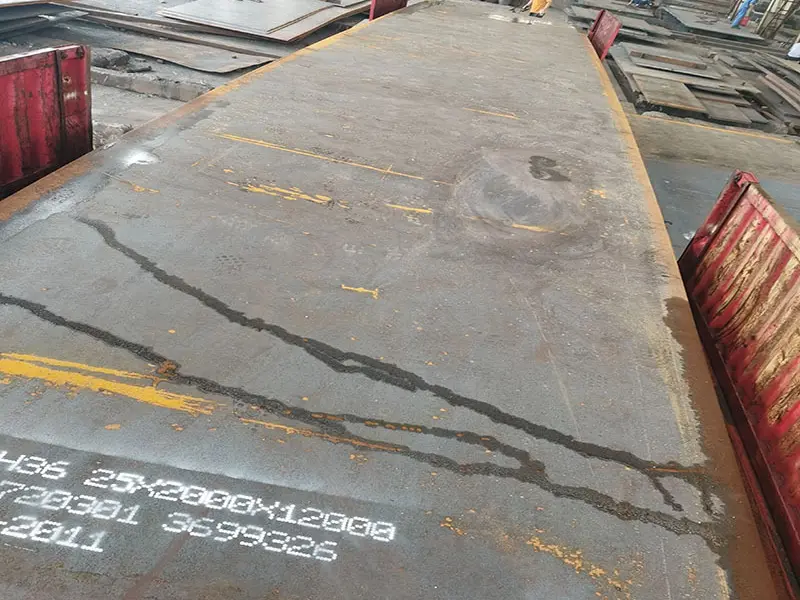
What do the numbers tell us about market growth?
Let me share the key data points you need to know. Multiple research sources point in the same direction: the marine steel plate market is growing steadily.
The global ship plate market size is expected to reach $42,230 million by 2032, with a market growth of 5.1% CAGR during the forecast period from 2026 to 2032[reference:4]. Another report from DIResearch shows that the global ship plate market will reach $34,690 million USD in 2025 and is projected to reach $89,121 million USD by 2032, with a CAGR of 14.43%[reference:5]. The shipbuilding steel plate market is expected to grow from $5.48 billion in 2024 to $7.5 billion by 2032, driven by a 4.01% CAGR[reference:6].
In China specifically, the ship plate market has changed rapidly in recent years[reference:7]. The global shipbuilding steel plate market is expected to grow at a CAGR of over 4% from 2024 to 2032[reference:8]. The global shipbuilding and marine engineering steel market was approximately 114.39 billion yuan in 2025 and is expected to reach 157.41 billion yuan by 2032, with a CAGR of 4.7%[reference:9].
What is driving this growth?
Three main factors are pushing the market higher.
Rising shipbuilding activity. Global shipbuilding orders remain strong. Container shipping lines are placing record vessel orders. LNG carriers are reaching peak construction cycles. More ships mean more steel plates.
Naval modernization programs. Many countries are investing in the modernization of their naval fleets, including the construction of new warships, submarines, and other naval vessels[reference:10]. This drives demand for specialized high-strength and corrosion-resistant steel plates[reference:11].
Offshore energy development. The growing demand for offshore energy, including offshore wind farms and oil and gas platforms, is creating demand for specialized steel plates used in the construction of offshore structures[reference:12].
How do these trends affect your budget?
Here is the bottom line. Demand is rising. Supply is not keeping pace everywhere. Prices will reflect that imbalance.
The Asia Pacific region is the world’s largest ship plate market, accounting for about 80% of the market share, followed by Europe and North America, which together account for about 10%[reference:13]. The top five global manufacturers account for about 50% of the market share[reference:14]. When a few players control so much of the market, any disruption to their operations affects everyone.
The future development of ship plates will revolve around four directions: higher strength grades to reduce hull weight and improve cargo efficiency; stronger corrosion resistance to adapt to polar routes and long-term offshore operating environments; more functional composite ship plates; and more environmentally friendly manufacturing processes to reduce carbon footprint[reference:15]. Each of these trends will affect pricing.
What should you do?
I tell my clients this: do not budget based on today’s prices. Budget based on where prices are heading. Factor in a 4-5% annual increase for standard grades. Allow more for high-strength and specialty grades. And build a contingency buffer into your budget. The shipyards that plan ahead will have the upper hand.
How Do Price Volatility and Geopolitical Factors Disrupt Your Steel Plate Budget?
Have you ever had your steel plate budget blown apart by a sudden tariff announcement or a spike in raw material costs?
Steel plate prices are highly volatile. Iron ore prices are up 22.5% and coking coal is up 47%[reference:16]. The U.S. has imposed 50% tariffs on steel from some countries[reference:17]. Chinese thick plates are 15-20% cheaper than domestic alternatives, creating complex sourcing decisions[reference:18].
What is driving steel price volatility right now?
Let me break this down for you. Multiple factors are pushing steel prices up and down.
Raw material costs. Steel mills are facing hiked prices of their own. Iron ore prices are up by 22.5% this year. Coking coal is also up by 47%[reference:19]. These increases get passed directly to you, the buyer.
Geopolitical tariffs. The United States has imposed a steep 50% tariff on Korean steel, sending shockwaves throughout the entire Korean manufacturing ecosystem[reference:20]. Concerns are spreading within the industry that "the shock to steel will spill over into shipbuilding"[reference:21]. The U.S. has also announced plans to raise tariffs for Canadian steel and aluminum from 25 to 50%[reference:22].
The China factor. Chinese thick plates are sold at a price 15-20% cheaper than domestic thick plates in many markets[reference:23]. This creates a dilemma for shipyards. If they use Chinese steel, they face tariff risks. If they use domestic steel, their costs go up significantly. If shipyards increase their usage of domestic steel, the expense burden will increase[reference:24].
Supply and demand imbalances. Steel demand growth is expected to remain robust, but softer steel prices may extend margin pressure for domestic steel mills[reference:25]. U.S. mills have experienced production outages, tightening steel supply and applying upward pressure to prices.
How does this affect your project budget?
Let me show you the real impact.
| Factor | Impact on Steel Plate Costs |
|---|---|
| Iron ore prices (+22.5%) | Higher mill production costs, passed to buyers |
| Coking coal prices (+47%) | Higher energy and production costs |
| U.S. steel tariffs (up to 50%) | Direct cost increase for affected imports |
| Chinese plate price advantage (15-20%) | Sourcing pressure and tariff exposure |
| Mill production outages | Tighter supply, higher prices |
The numbers tell the story. In South Korea, POSCO is set to finalise negotiations with yards for an increase by at least KRW100,000 ($79) per ton. This means the price of heavy steel plate will have doubled since 2020 to around KRW1.3m per ton[reference:26]. In Japan, Nippon Steel has been raising prices of heavy steel plates by more than $150 per ton this year. Chinese steel plate today costs around $800 per ton, up by around $250 per ton since April 2020[reference:27].
The Clarkson Newbuilding Price Index now stands at 158 points, up 26% since the November 2020 low, indicating the highest prices in nominal terms since 2009[reference:28]. Newbuilding prices surged about 50% between 2020 and 2024[reference:29].
What should you do about it?
I have seen shipyards lose millions because they did not plan for price volatility. Here is what I recommend.
Lock in prices where possible. Many shipbuilders use fixed-price contracts with mills. This protects them from short-term spikes. Shipbuilders are also using price-lock models to avoid raw material price fluctuations.
Build a contingency buffer. Add at least 10-15% to your steel budget for price volatility. If prices do not rise, you have a surplus. If they do, you are covered.
Diversify your sourcing. Do not rely on a single country or supplier. Have backup options. Monitor tariff developments closely.
Work with responsive suppliers. When prices shift, you need answers fast. Delayed responses cost money. Work with suppliers who communicate quickly and clearly.
What Are the True Cost Components of Marine Steel Plate Procurement Beyond the Unit Price?
Are you only looking at the price per ton — and missing the hidden costs that can add 30% or more to your total spend?
The true cost of marine steel plate procurement includes the unit price, logistics and shipping (up to 16% of total costs[reference:32]), scrap and wastage (5-9%[reference:33]), processing and fabrication, inspection and certification, and inventory carrying costs. Ignoring these components leads to severe budget overruns.
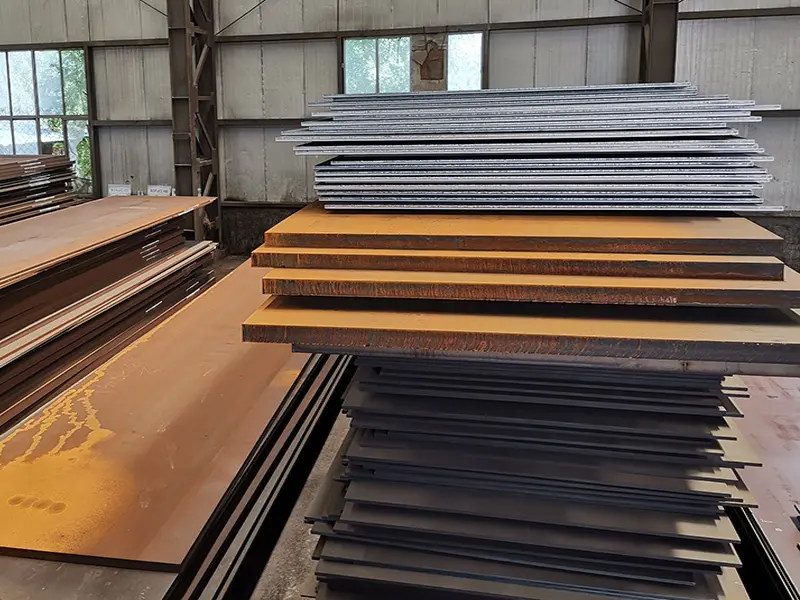
What are the hidden costs?
Let me walk you through the real cost structure. Most buyers focus on the price per ton. That is a mistake. Here is what you need to track.
Unit price. This is the obvious one. But it is only the beginning. The price per ton varies by grade, thickness, and quantity. General strength plates like Grade A are cheaper. High-strength plates like AH32, DH36, and EH40 cost more[reference:34]. The higher the grade, the higher the smelting costs, the stricter the non-destructive testing requirements, and the longer the delivery lead time[reference:35].
Logistics and shipping. External transport costs for ship hull construction are often "hidden" in material costs. Their share in total costs is 16% ($600,000) of delivery[reference:36]. Shipping costs for steel plates from Asian exporters to Middle Eastern and African markets have increased significantly. Insurance premiums and freight hikes are being reflected in new offers.
Scrap and wastage. The amount of scrap or wastage in shipbuilding may vary from 5% in very large tankers to over 9% for handy sized tankers[reference:37]. This is steel you pay for but do not use. If you are ordering 1,000 tons of plates, you might only use 910 to 950 tons. The rest is waste. That waste costs money.
Processing and fabrication. Steel plate costs do not stop at the mill gate. Cutting, welding, and forming add significant expense. AI-driven cost estimation can save about 20% for steel plates and 13% for steel stiffeners compared with actual case studies[reference:38]. The prefabrication fee for multi-purpose vessels is calculated at US $400.00 per ton[reference:39].
Inspection and certification. Marine steel plates require certification from classification societies. MTCs, third-party inspections, and testing all add to the cost. Shell plate renewal costs around $3,800 USD per ton[reference:40]. Manufacturing complete blocks costs around $3,500 USD per ton, with a 40% reduction in case of steel owner supply[reference:41].
Inventory carrying costs. Steel plates take up space. They need to be stored properly to prevent rust and damage. Steel stockyards are the first step of shipbuilding[reference:42]. Managing inventory in a limited space adds cost[reference:43].
How do these costs add up?
Let me give you a realistic breakdown.
| Cost Component | Typical Range | Notes |
|---|---|---|
| Unit price (plate) | Base cost | Varies by grade and thickness |
| Logistics | Up to 16% of total[reference:44] | Shipping, insurance, handling |
| Scrap and wastage | 5-9%[reference:45] | Higher for complex designs |
| Processing | US$400/ton[reference:46] | Cutting, welding, forming |
| Inspection | Variable | MTCs, third-party, testing |
| Inventory carrying | Variable | Storage, handling, rust prevention |
The total cost can easily be 30-50% higher than the unit price alone. I have seen buyers compare prices per ton and choose the cheapest supplier. Then they are shocked when the total invoice is much higher.
What should you do?
Calculate landed cost. Do not stop at the unit price. Calculate the full landed cost including shipping, insurance, customs, and handling.
Factor in wastage. Add 5-10% to your quantity to account for scrap. This is not optional. It is reality.
Plan your logistics. Work with freight forwarders who understand steel handling. Poor logistics planning can add 16% or more to your costs[reference:47].
Consider total cost of ownership. A slightly higher unit price from a reliable supplier can mean lower total costs. Consistent quality means less rework. Reliable delivery means fewer delays. Good communication means fewer mistakes.
How Can Strategic Procurement and Design Optimization Reduce Your Total Steel Plate Costs?
Are you still ordering steel plates the same way you did ten years ago — and missing opportunities to cut costs by 12-28%?
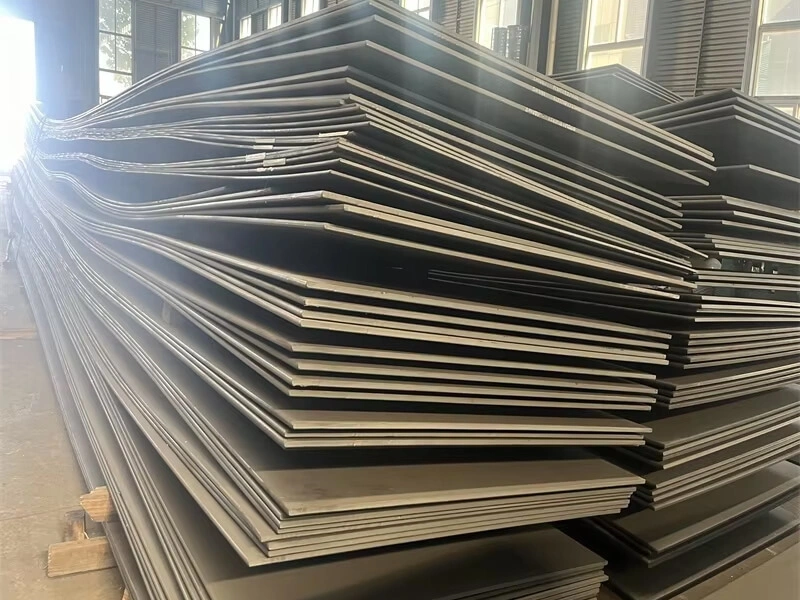
Strategic procurement and design optimization can reduce steel procurement costs by at least 5% and total fabrication and assembly costs by 12-28%[reference:48]. Material Requirement Planning (MRP) improves material planning accuracy and cost efficiency[reference:49]. Design optimization through nesting algorithms minimizes material waste and enhances efficiency[reference:50].
How can strategic procurement reduce costs?
Let me share what I have learned from working with successful shipbuilders.
Implement Material Requirement Planning (MRP). The implementation of MRP has proven effective in enhancing material planning accuracy and cost efficiency, serving as a strategic solution for inventory management systems in the shipbuilding industry[reference:51]. The POQ method is the most cost efficient for steel plate procurement[reference:52]. MRP helps you order the right quantities at the right time. This reduces inventory carrying costs and minimizes waste.
Consolidate your sourcing. Working with fewer, more reliable suppliers can reduce administrative costs and improve negotiating power. A lower price is less attractive if it creates idle labor, disrupted welding schedules, or coating bottlenecks[reference:53].
Use AI-driven cost estimation. AI-driven frameworks have demonstrated significant improvement in estimation accuracy compared to conventional methods. The program can save about 20% for steel plates and 13% for steel stiffeners compared with actual case studies[reference:54].
Build long-term relationships. Long-term contracts with fixed or index-linked pricing can protect you from price volatility. Many shipbuilders use price-lock models to avoid raw material price fluctuations[reference:55]. This is a smart move for large projects.
How can design optimization reduce steel consumption?
This is where the real savings are. Design optimization is not just about engineering. It is about cost control.
Nesting optimization. The optimization of the nesting system in shipbuilding focuses on the steel plate cutting process. Various nesting algorithms, including heuristic, genetic, simulated annealing, and hybrid algorithms, are essential for minimizing material waste and enhancing efficiency[reference:56]. Better nesting means less scrap. Less scrap means lower material costs.
Structural optimization. Stiffened ship panels can be optimized to achieve lighter structures with reduced welding paths[reference:57]. The number of different plates can be reduced from 489 to 351 through optimization[reference:58]. This reduces complexity and cost. Utilization of these portions of plates for such parts can reduce scrap, steel requirements, and handling[reference:59].
Weight reduction. Structural optimization can reduce steel weight significantly. Optimized masts have achieved a 50% weight reduction and a 36% decrease in body thickness[reference:60]. Corrugated bulkhead design can minimize steel weight using design variables such as the shape and size of the corrugation[reference:61].
Topology optimization. Topology optimization achieves an efficient distribution of material within the structural domain[reference:62]. Targeted material reduction in non-critical stiffeners significantly enhances structural efficiency while maintaining safety[reference:63].
What are the real savings?
Let me show you the numbers.
| Strategy | Potential Savings |
|---|---|
| Design optimization | 5% on steel procurement, 12-28% on total fabrication[reference:64] |
| AI-driven estimation | 20% on steel plates[reference:65] |
| Nesting optimization | Significant material waste reduction[reference:66] |
| MRP implementation | Improved accuracy and cost efficiency[reference:67] |
The research is clear. Design optimization can help lower material cost savings on steel procurement by at least 5% while also lowering construction savings in total steel fabrication and assembly costs by 12-28%[reference:68]. That is real money on a large shipbuilding project.
What should you do?
Invest in design optimization. Work with engineers who understand cost-effective design. Small changes in plate dimensions and layout can yield big savings.
Implement MRP. Do not guess your material requirements. Use a systematic approach to planning and ordering.
Use technology. AI and digital tools can help you estimate costs more accurately and optimize your cutting plans.
Partner with suppliers who understand your needs. Work with suppliers who offer flexible MOQ, third-party inspection support, and responsive communication. The right supplier can help you reduce total costs, not just unit price.
Conclusion
Marine steel plate budget planning requires tracking market trends to 2032, managing price volatility and geopolitics, accounting for all true cost components, and using strategic procurement with design optimization.