
You receive three marine angle steel quotations. The prices differ by twelve percent, and none of them tells you which grade, tolerance class, or certificate type you are actually buying. Pick the wrong one and your frames fail fit-up, your surveyor rejects the steel, and your hull section stalls.
Review a marine angle steel quotation by checking six things in order: grade and standard, section dimensions and tolerances, mass basis, certification and MTC type, fabrication and surface requirements, and commercial terms. Reject any quotation that leaves one of these six silent.
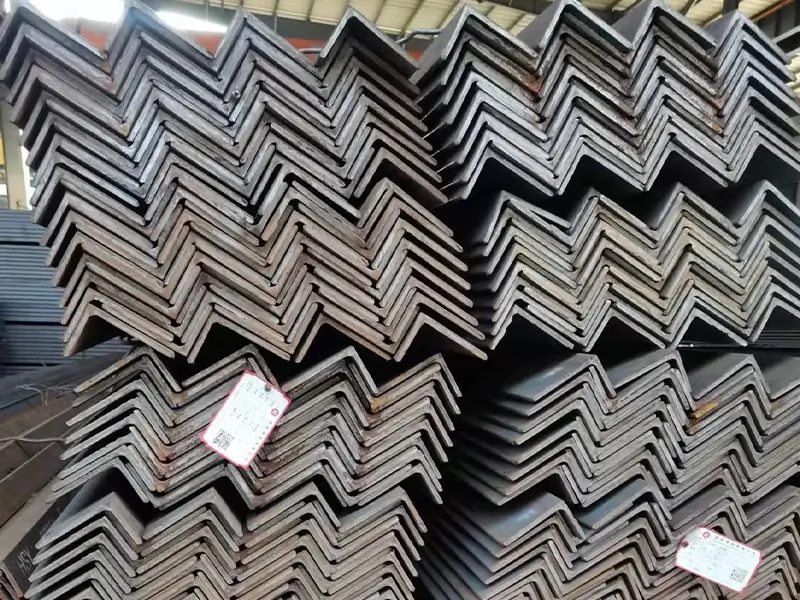
I review quotations every week at Yichen Steel, and the pattern never changes: buyers lose money not on the price line but on the lines that were never written. A quotation is not a price tag. It is a technical promise, and every missing sentence in it becomes a change order, a customs delay, or a rework bill later. So let me walk you through exactly how I would read your next marine angle steel quotation, line by line, the same way our Gulf Metal Solutions client in Saudi Arabia now does before he signs anything.
What Must a Marine Angle Steel Quotation State Before You Compare Prices?
Many buyers compare quotations on price alone, then discover the cheapest offer excluded the certificate, quoted a shorter length, or assumed a different mass basis. The comparison collapses, and the project schedule collapses with it.
A quotation must state the grade and standard (for example AH36 to the classification society rules), the section size with leg lengths and thickness, the standard lengths offered, the mass basis, the MTC type, and the Incoterm. If any of these is missing, the price is meaningless.
Fix the Specification Before You Read a Single Price
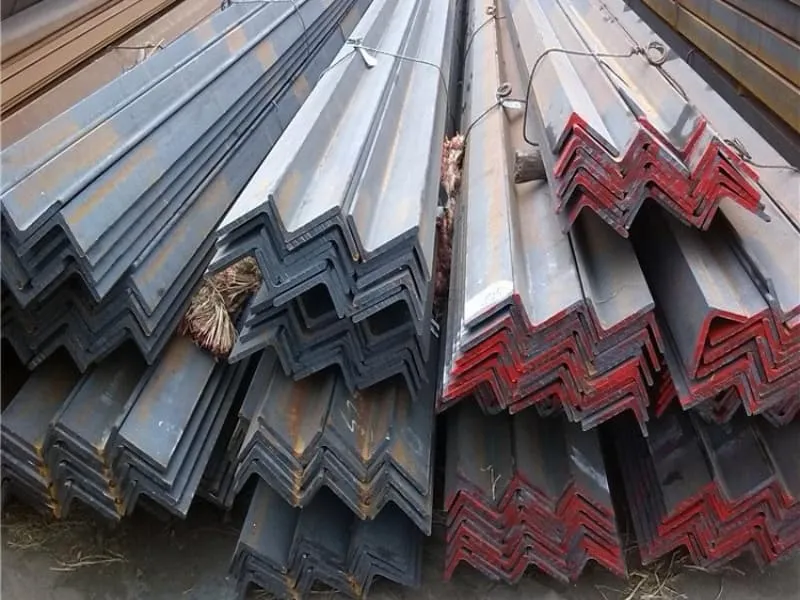
The first thing I do with any incoming enquiry is check whether the buyer has named the governing standard. Marine angle steel is rolled to classification society rules, and those rules cross-reference dimensional standards such as EN 10056, ASTM A6, or JIS G 3192. If your enquiry says only “angle steel 150×150”, you have not actually specified anything. Two suppliers can honestly quote that line at very different prices, because one assumed Grade A mild steel in 9-metre lengths and the other assumed AH36 in 12-metre lengths with a class certificate.
So before the quotation arrives, your enquiry should already state: the grade (A, B, D, AH32, AH36, DH36 and so on), the classification society (ABS, DNV, LR, BV, KR, or CCS), the section size including leg thickness, the standard length, the total tonnage, and the required MTC type. In my experience, an enquiry with these five lines attached gets a clean, comparable quotation within two hours. An enquiry without them starts a three-day email chain, and the answers are still fuzzy.
The Six-Line Checklist I Apply to Every Quotation
When I review a quotation on behalf of a buyer, I run it against this checklist. Every line must be answered in writing, in the quotation itself, not in a verbal promise afterwards.
| Line item | What must be stated | Why it matters |
|---|---|---|
| Grade and standard | AH36 per ABS rules, or the exact class notation | Yield, toughness and weldability all hang on this |
| Section size | Leg x leg x thickness, e.g. 150x150x12 mm | Thickness tolerance drives strength and weight |
| Lengths | 6 m / 9 m / 12 m, plus length tolerance | Affects fabrication yield and cutting plans |
| Mass basis | Theoretical weight or actual weighed weight | Angle is almost always invoiced on calculated mass |
| Certification | EN 10204 3.1 MTC with society stamp | 3.2 or nothing is a different product entirely |
| Terms | Incoterm, validity, payment, delivery window | Prevents the price moving before you sign |
One practical note from our loading bay: when a quotation omits the mass basis, ask immediately whether the price is on theoretical weight per the rolling standard or on actual weighed bundles. The gap is usually two to four percent, and on a 300-tonne order that is real money. I have seen disputes where both parties were convinced they were right, simply because neither wrote the basis down.
Response speed is part of the technical review too, even though it does not appear on the price sheet. A quotation that arrives in two hours with all six lines answered tells you the supplier has a real export desk and a real stock position behind it. A quotation that dribbles out over four days, one answer per email, tells you the supplier is asking the mill while you wait, which means they do not control the material. Our Gulf Metal Solutions client in Saudi Arabia told us the two-hour response was the reason he opened the conversation at all, and he kept a small scoring sheet of his own for every supplier he contacted. Copy that habit. The clock is data, and it is free.
Compare Like With Like, or Not at All
Once all six lines are stated, the comparison becomes honest. Build a side-by-side sheet and score every supplier on every line, then look at price last. The supplier who is slightly higher but confirms AH36, EN 10204 3.1, 12-metre lengths and third-party inspection access is almost always cheaper per usable tonne than the one who quietly offered a 2.2 test report and 9-metre mixed lengths. I tell buyers this: the quotation that answers the most questions is the safer one, even when it is not the cheapest one on the screen.
How Do You Verify Grades, Dimensions and Tolerances Inside the Quotation?
A quotation can name the correct grade and still hide trouble in the small print: a tolerance class you never approved, a thickness measured where it flatters the mill, or chemistry limits copied from the wrong standard edition. This is where technical review earns its salary.
Verify the quotation by checking the grade against the society grade table, the thickness and leg tolerances against EN 10056 or the class rules, the impact test temperature against the grade letter, and the chemistry limits against the current standard edition. Ask for every deviation in writing before the order.
The Grade Letter Is a Temperature Promise
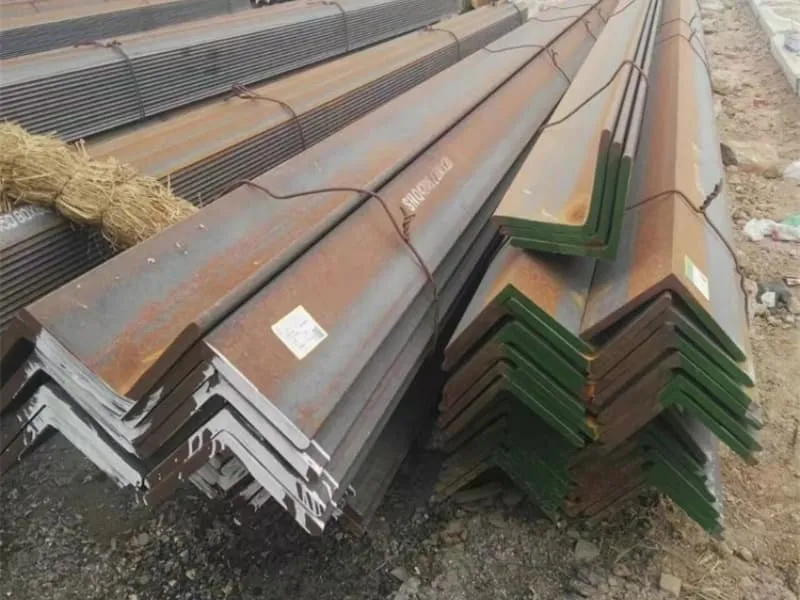
The suffix on the grade tells you the Charpy impact test temperature, and this is the single most common technical error I catch in quotations. AH36 is tested at 0 degrees Celsius, DH36 at minus 20, EH36 at minus 40, FH36 at minus 60. All of them carry a minimum yield of 355 MPa, so on a price sheet they look interchangeable. They are not. A vessel trading the Gulf can legally run AH36 in most structure; the same vessel trading the North Sea in winter needs DH36 as a floor, and often EH36 in exposed locations. If a supplier’s quotation says “equivalent to DH36” but offers AH36 pricing, that is not a discount, that is a grade substitution wearing a friendly coat.
The same logic applies to normal-strength grades A, B, D and E, which carry a 235 MPa minimum yield. I once had an enquiry where the buyer’s drawing list said “Grade D angle” but his material list said AH36. We stopped the order and asked his design office before quoting. The two documents were from different revisions. Catching that on the quotation stage cost one email; catching it after rolling would have cost a full production cycle.
Tolerances Are Contract Terms, Not Fine Print
Dimensional tolerances decide whether your frames fit the hull without rework. Quotations rarely volunteer a tolerance table, so you must ask which standard governs. Under EN 10056-2, leg width tolerance is roughly plus or minus 1.0 mm for legs up to 80 mm and plus or minus 1.5 mm above that; thickness tolerance runs about plus or minus 0.2 to 0.3 mm in the thin sizes, and class society rules set their own parallel limits. The out-of-square deviation on the legs is typically held within plus or minus 1 degree, because anything wider fights your welders at every frame station.
I keep a simple reference table on my desk for this, and I suggest you keep one too:
| Parameter | Typical tolerance to quote | Buyer check |
|---|---|---|
| Leg length | ±1.0 mm up to 80 mm leg, ±1.5 mm above | Calipers, three points per bar |
| Leg thickness | Around ±0.3 mm in thin sizes, wider as size grows | Measure mid-leg, not at the root |
| Out-of-square | 90 degrees ±1 degree | Angle gauge on both ends |
| Straightness | About 0.3–0.4% of length | Straightedge and feeler gauge |
| Mass per metre | Within a few percent of theoretical | Cross-check the invoice basis |
The real-world version of this table: a client in Vietnam once received angles whose leg lengths drifted up to 5 mm piece to piece against a plus or minus 2 mm tolerance. The mill had a rolling issue, the material was genuinely non-conforming, and the case was settled with replacement steel. But the settlement only worked because the quotation and the purchase order both named the governing tolerance standard. Without that line, “slightly out” becomes an argument instead of a fact.
Chemistry, MTC Type and the Certificate Chain
The third technical layer is documentation. Your quotation should promise a mill test certificate to EN 10204 type 3.1 as the default, with 3.2 class-society witnessed certification where the project requires it. Type 2.2 is a non-specific report and should never be accepted for hull structure. When the MTC arrives, the heat number on the certificate must match the stencil or stamp on the bars, the chemistry must sit inside the standard’s limits (watch sulfur and phosphorus, typically capped near 0.025 to 0.035 percent for hull grades), and the impact results must appear at the correct test temperature.
And here is the step most buyers skip: verify the society stamp is real. I stood with a surveyor in our warehouse last month while he chalked heat numbers off bundle tags onto his sheet, one by one, for a full container. Forty minutes. He told me the mills that object to being checked are the ones you should worry about, and I wrote that down because it is true. A quotation that promises “full certification” but will not name the issuing society and the MTC type has not promised anything yet.
There is one more chemistry angle worth a line in your enquiry: weldability. Hull structure is welded, heavily, in yard conditions, so the carbon equivalent of the angle matters as much as its strength. Ask the quotation to confirm a carbon equivalent limit, or at least confirm the chemistry will be reported on the MTC so your welding engineer can calculate it. If a supplier cannot answer that question in writing, the low price is buying you preheat trials and repair welds later. I would rather pay two dollars a tonne more for material my client’s welders do not have to fight.
Which Red Flags Should Make You Reject a Marine Angle Steel Quotation?
Some quotations should not be negotiated. They should be declined, politely and quickly, because the way a supplier writes a quotation predicts exactly how they will handle a quality problem two months from now.
Reject a quotation that cannot state the grade and society, omits the MTC type, quotes on the wrong mass basis, hides thickness tolerance, changes terms after confirmation, or arrives dramatically below every other offer without explanation. Each of these is a proven predictor of delivery trouble.
The Seven Red Flags I Treat as Stop Signs
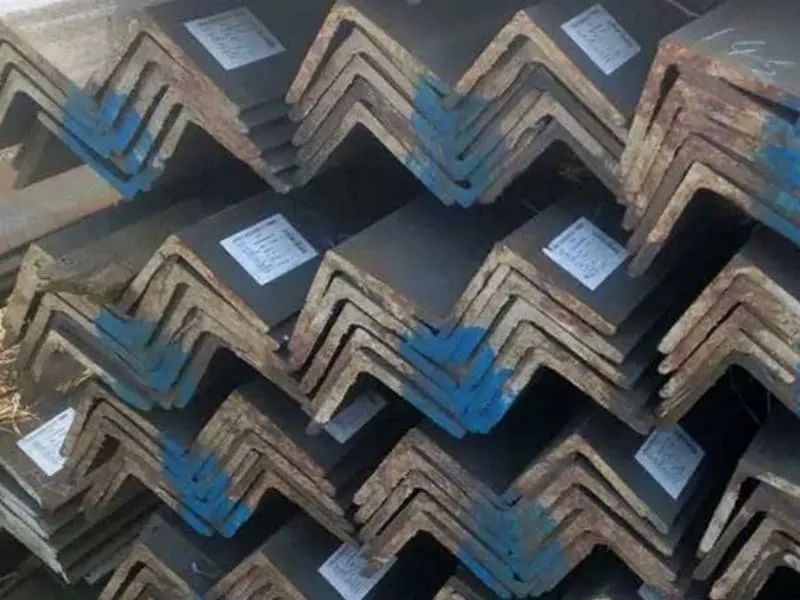
Over the years I have collected a short list of quotation behaviours that reliably predict trouble. None of them is proof of a bad supplier on its own, but two or more together are a strong signal to walk away.
- The grade is described as “shipbuilding quality” with no society notation and no grade letter.
- The MTC type is not stated, or a type 2.2 report is offered where 3.1 is standard.
- The mass basis is unclear, so the price cannot be compared per tonne honestly.
- Thickness or length tolerance is “per mill standard” with no standard named.
- The quotation is dramatically lower than every other offer, with no explanation of which requirement was dropped to get there.
- The validity period is missing while steel prices are moving, so the price can evaporate before you sign.
- Inspection access, loading photos, or packing details are refused or priced as an extra after you ask.
The last one matters more than buyers expect. We ship to Dammam and other ports where the client’s surveyor walks the yard before loading, and our whole Gulf Metal Solutions relationship started because we answered that request within two hours and never charged for the access. A supplier who hesitates at the inspection question is telling you something about the material, even if the quotation looks perfect otherwise.
Strong Quotation Versus Weak Quotation, Side by Side
When you put a compliant quotation next to a careless one, the differences are easy to score. This is the comparison table I build with clients during supplier selection:
| Review item | Strong quotation | Weak quotation |
|---|---|---|
| Grade line | AH36 per ABS rules, MTC 3.1 attached as sample | “ship plate angle, good quality” |
| Dimensions | 150x150x12 mm, EN 10056-2 tolerances named | “150 angle, 12 thick” only |
| Mass basis | Theoretical weight per standard, formula shown | Silent, or “to be confirmed” |
| Lengths | 12 m, tolerance ±50 mm stated | “as available” |
| Certification | EN 10204 3.1, society stamp, sample MTC offered | “certificate provided” undefined |
| Inspection | Third-party inspection welcome before shipment | Not mentioned until asked |
| Commercial terms | Incoterm, validity, delivery window all dated | Price only, no validity |
Notice that every row on the strong side is just writing things down. That is the entire trick. A quotation review is not a memory test and it is not a negotiation duel; it is a checklist applied consistently. If a supplier will not put six facts on paper before your money moves, they will not put them on paper after, either.
Turn the Review Into a Standard Routine
The buyers who never get burned are not the sharpest negotiators. They are the ones with a routine. Write the six-line checklist into your enquiry template, score every quotation against it, and keep the scored sheets with the order file so the MTC review at delivery starts from the same baseline. Our team at Yichen Steel sends a sample MTC with every first quotation precisely because we want to be scored, not guessed at. If you want a second pair of eyes on an incoming quotation, or a template to start from, write to me at sale@sdyichen.cn and I will share the checklist we use internally.
Conclusion
Review the grade, the tolerances, the mass basis, the certificate and the terms in that order, and let price be the last number you read. A quotation that answers every technical line is the cheapest offer you will ever receive.