
Your marine angle steel order arrives, the weighbridge reads differently from your calculation, and now your cost sheet and your supplier disagree. That gap can freeze payment and delay fabrication. Here is how to read it correctly.
Actual delivery weight differs from the estimated marine angle steel weight because theoretical weight assumes nominal dimensions, sharp corners and exact density, while real hot-rolled sections carry rolling tolerances, corner radii, roll wear, length deviations and surface coatings that shift the real mass by roughly 1 to 5 percent either way.
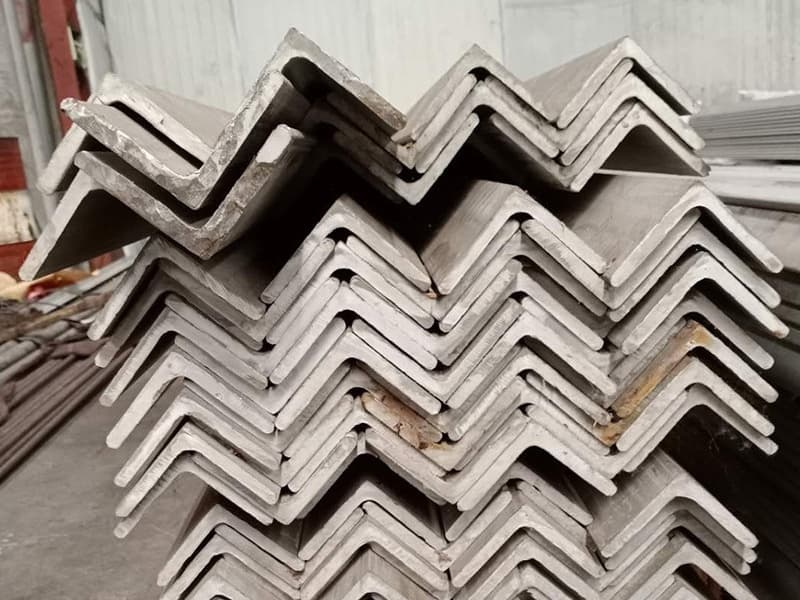
I weigh steel for a living. Not personally, of course, but I have stood on enough weighbridges at [Zora will replace] loading yards to know that the first question after any marine angle steel delivery is almost always the same: why does the number on my invoice not match the number in my spreadsheet? The short answer is that theoretical weight is a calculation, and actual weight is a measurement, and those two things never agree perfectly. The long answer fills the rest of this article, and by the end you will know exactly which differences are normal, which ones are warning signs, and how to write your next purchase contract so weight disputes never reach your finance department. If you are still deciding how much angle steel to order in the first place, our guide on how to calculate marine angle steel requirements for multiple ship sections is a good companion read.
What Makes Theoretical Marine Angle Steel Weight Different from Real Weight?
You quote a project using a weight table, order exactly that tonnage, and the delivered batch weighs differently. Suddenly your cost per ton is wrong. The gap comes from geometry, not from cheating.
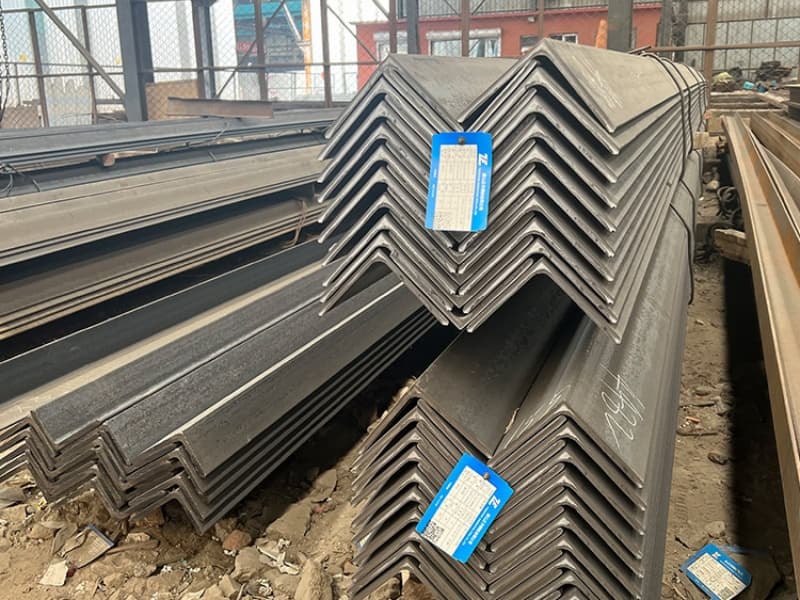
Theoretical weight is calculated from nominal dimensions and a fixed density of 7,850 kg/m3 using a simplified formula, but real hot-rolled marine angle steel has rounded corners, tapered toes, slight thickness variation and alloy-dependent density, so the true mass sits within about 1 to 3 percent of the calculated figure even before mill tolerances are applied.
The Formula Everyone Uses Is a Simplification
The weight of an equal-leg marine angle steel section is usually estimated with one line: weight per metre in kg equals leg A plus leg B minus thickness t, all multiplied by thickness t and by 0.00785. That last number is simply the density of carbon steel, 7,850 kg per cubic metre, folded into a unit conversion. Take a very common size, 75 x 75 x 6 mm. The sum is 75 plus 75 minus 6, which is 144. Multiply by 6 and you get 864. Multiply by 0.00785 and you get about 6.78 kg/m, which most published tables round to 6.8 or 6.9 kg/m. For 40 x 40 x 5 mm the same arithmetic gives roughly 2.94 kg/m. These numbers are clean, fast, and good enough for quotations. But they describe an angle with perfectly sharp inner and outer corners.
Where the Corners Go
A real hot-rolled angle has a fillet radius at the root where the two legs meet, and a slight taper at the toe of each leg. Those rounded surfaces change the true cross-sectional area. Depending on whether the mill rolls the section slightly full or slightly under, the real area can sit one to three percent on either side of the simplified rectangle calculation. Roll wear matters too. A set of rolls near the end of its life produces a section that drifts from nominal shape along the length of the bar, and a 12-metre length does not weigh exactly twelve times the weight of one perfect metre. I once weighed two bundles of the same 75 x 75 x 6 size from the same mill, weeks apart, and the per-metre figures differed by just over one percent. Both were inside tolerance. Both were correct.
Density Is Not Always Exactly 7,850
The constant 0.00785 assumes plain carbon steel. Marine angle steel is typically mild or high-strength low-alloy steel, and small alloying additions nudge the density slightly. The shift is small, well under one percent for the grades we ship, but when a buyer multiplies it across hundreds of tonnes it shows up on the invoice. The table below shows the theoretical weights we quote most often. Use them for estimating and comparing offers, never as a guarantee of what the scale will read.
| Marine Angle Steel Size (mm) | Theoretical Weight (kg/m) | Weight per 12 m Length (kg) | Typical Application |
|---|---|---|---|
| 50 x 50 x 5 | 3.77 | 45.2 | Light brackets, handrails |
| 63 x 63 x 6 | 5.71 | 68.5 | Secondary bracing |
| 75 x 75 x 6 | 6.78 | 81.4 | General frames and stiffeners |
| 100 x 100 x 10 | 14.85 | 178.2 | Primary structural framing |
| 150 x 100 x 12 | 22.84 | 274.1 | Unequal-leg frame applications |
What This Means for Your First Estimate
None of this makes theoretical weight useless. It makes it a baseline. When your estimated marine angle steel weight and the delivery weight differ by one or two percent, the steel is almost certainly fine. When the difference grows past about five percent, you have moved from geometry into tolerance territory, and that is the subject of the next section. One practical habit: calculate your order in metres first, then convert to tonnes. Metres are what you actually build with, and tonnes are what you actually pay for. Keeping both numbers visible makes every later discrepancy easy to explain.
How Do Mill Tolerances Change the Weight of Delivered Marine Angle Steel?
You accepted a weight table, but the mill never promised that table. Product standards give every dimension a permitted band, and weight drifts with it.
Hot-rolled marine angle steel is manufactured to tolerance classes, not to exact dimensions, so leg length, thickness, straightness and cut length all vary inside permitted bands, and under the EN 10056-1 framework the actual mass per metre may legitimately sit around 2.5 to 5 percent away from theoretical depending on the tolerance class and size ordered.
The Tolerances Hiding Inside a Normal Order
Product standards for hot-rolled equal and unequal leg angles, such as EN 10056-1, split tolerances into commercial quality and higher quality classes. Leg length on common sizes carries an allowance of roughly plus or minus 2 to 3 mm. Leg thickness carries roughly plus or minus 0.5 mm up to 1.5 mm depending on the nominal thickness, and thickness is the dimension that moves weight fastest. Straightness is limited to a small fraction of the bar length. Cut length typically carries an allowance of up to about 50 mm on standard lengths, and a shorter bar weighs proportionally less. None of these are defects. They are the normal signature of a hot-rolling process, and every serious mill ships inside them.
To see how quickly thickness moves weight, go back to 75 x 75 x 6. If the mill rolls the section at the thin edge of tolerance, say 5.5 mm effective, the per-metre weight drops by nearly nine percent against the simplified figure, partly offset by the corner material. If it rolls full at 6.5 mm, the weight rises the other way. Now multiply by a 500-tonne order. This is why I tell buyers that weight is a derived property: it is downstream of dimensions. If you want weight control, you are really asking for dimensional control.
| Source of Weight Difference | Typical Magnitude | Direction | Can a Buyer Control It? |
|---|---|---|---|
| Corner radii and toe taper | 1-3% | Either way | No, fixed by rolling process |
| Thickness within tolerance | up to ~5% on thin sections | Either way | Only by specifying tighter class |
| Leg length within tolerance | 1-2% | Either way | Only by specifying tighter class |
| Cut length deviation | up to ~0.5% | Usually shorter | Agree length tolerance in contract |
| Hot-dip galvanizing | adds measurable mass | Always heavier | Declare coating in the order |
| Alloy-related density shift | under 1% | Usually heavier | No, grade-dependent |
Measuring the Real Thing at Receipt
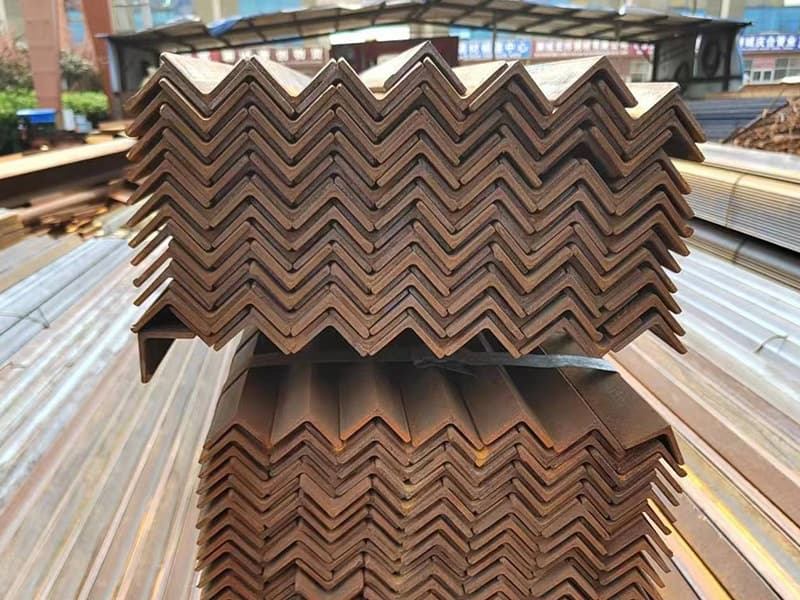
The defence against tolerance drift is a simple sampling routine, and it takes one worker less than an hour. Select a few random pieces from the delivery. Measure the actual length of each. Weigh them, individually or as a small bundle. Divide total weight by total length to get an actual kg/m figure, and compare it with the theoretical value for the ordered size. A deviation inside about plus or minus 2.5 to 3 percent is normal rolling behaviour. A consistent shortfall beyond that suggests the section is rolling thin, and that matters more for your structure than for your wallet, because a thinner leg means less section modulus than the drawing assumed. A consistent overshoot means you are paying for steel the designer never asked for, and your vessel gets heavier for nothing.
I watched a Philippine buyer run exactly this check on a 40 x 40 x 5 order a few seasons ago. Their measured figure came in marginally under theoretical, comfortably inside tolerance, and the data settled the matter in ten minutes. The same routine later helped them reject a shipment from another source that was genuinely underweight. Numbers in hand end arguments faster than any email chain ever will. For critical hull stiffening we also support third-party inspection before shipment, and our SGS-supported pre-shipment checks always include dimension and weight sampling, which is how our Gulf customers avoid discovering these things at their own gate.
Watch for the Coating
One more source of difference surprises buyers every year: galvanizing. A hot-dip galvanized angle carries a zinc layer that adds real, weighable mass, and the addition is large enough to show on a truck scale for a full load. If your quotation was priced on bare black angle and the delivery is galvanized, the weight difference is not a shortfall at all. Declare the surface condition in the order, and make sure the weight basis in your contract matches the product you are actually receiving. Mixing a bare-steel weight table with a galvanized delivery is one of the most common self-inflicted weight disputes we see.
Which Weight Basis Should Your Marine Angle Steel Contract Use?
Your contract says “price per ton”, but it never says which ton. Theoretical tonnes and weighed tonnes are different commodities, and the difference is money.
For small spot orders, theoretical weight billing is simple and acceptable; for large or recurring marine angle steel contracts, actual weighed weight certified at the loading port is the fairer basis, because it pays for the steel that physically arrives rather than the steel calculated on paper.
The Two Billing Models Compared
Theoretical billing prices your order from the nominal weight table. It is fast, it is documentable, and both sides can verify the arithmetic from a computer. But it silently transfers tolerance risk to whichever side it disadvantages that month. Actual weight billing prices the order from certified scale readings, taken at the mill or at the loading port, ideally witnessed by a third-party surveyor. It reflects reality, and it makes bundle-level packing data possible, which your logistics team will thank you for when they plan container loading. The honest trade-off is that theoretical billing is easier to administer, and weighed billing is easier to trust. The table below sets the two side by side.
| Aspect | Theoretical Weight Billing | Actual Weighed Weight Billing |
|---|---|---|
| Basis | Nominal dimensions x 7,850 kg/m3 | Certified scale readings |
| Verification | Both sides re-calculate | Weighbridge ticket, surveyor certificate |
| Tolerance risk | Held by buyer or supplier by default | Shared through agreed tolerance band |
| Logistics planning | Estimates only | Real bundle weights for stowage |
| Administration | Simple, fast | Slightly heavier documentation |
| Best suited to | Small spot orders, standard sizes | Large, recurring or project contracts |
How to Write the Weight Clause
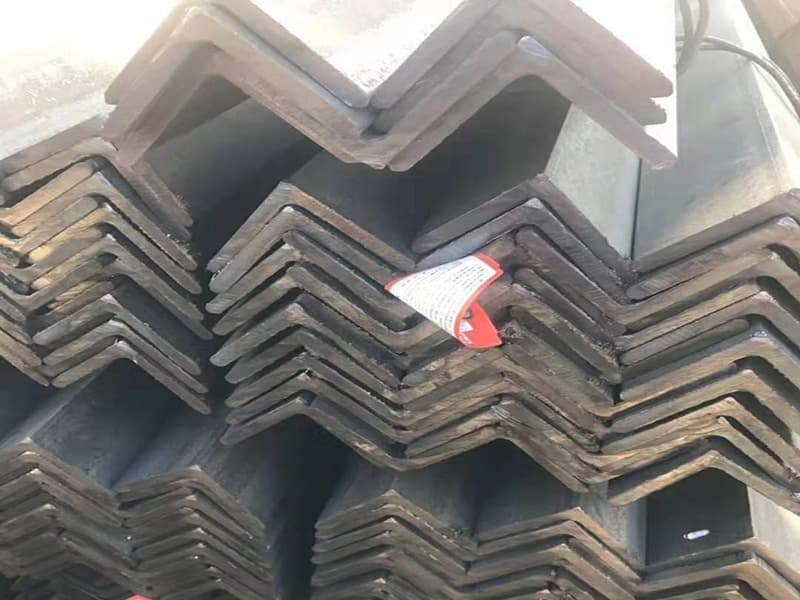
A workable clause needs four sentences. State the weight basis: theoretical or actual weighed. State the tolerance band that both sides accept as normal, for example that invoiced weight shall not deviate from certified weighed weight by more than an agreed small percentage. Name who weighs: mill scale, port scale, or independent surveyor, and who pays for the weighing. And state what happens on dispute: sample weighing at receipt against the theoretical table, with a defined threshold that triggers a joint check. I have read contracts that run pages on price validity and say nothing about weight basis, and I have never seen one of those end well. Our team at Yichen Steel puts the weight basis and tolerance band directly on the quotation, so the number you sign is the number you can verify. Buyers comparing offers across suppliers should insist on the same, and if you want a deeper checklist, see our article on how to check theoretical weight against a marine angle steel supplier’s quotation.
One more port-side habit worth borrowing: for a large consignment, ask for per-bundle weights on the packing list, not just a lump total. When the receiving crew knows each bundle should weigh a known amount, an underweight or overweight bundle is spotted in minutes with a mobile scale, and the claim is specific instead of vague. Specific claims settle. Vague ones rot in correspondence for months.
When a Difference Is a Red Flag
So when should a weight gap actually worry you? Worry when it is consistent, one-directional, and beyond the tolerance band. A delivery running three percent light on every bundle is a pattern, and patterns mean the section is rolling thin, the lengths are short, or the weighing is wrong. One of the three needs fixing, and only a dimensional sample check will tell you which. Worry, too, when the weight varies wildly between bundles of the same size, because that points to an inconsistent mill process that will also show up in your fit-up and welding. A weight difference inside the agreed band, varying in both directions, is simply steel behaving like steel. After years of loading marine angle steel for yards in the Gulf and Southeast Asia, that is the sentence I would carve above every weighbridge: differences explain themselves, patterns need investigating.
Conclusion
Theoretical weight is a calculation and delivery weight is a measurement, so small differences are normal. Control them with clear tolerance bands, a declared weight basis and simple sample weighing.