
Overordering marine angle steel is rarely a buying mistake. It is a planning mistake that lands on the invoice weeks later, when the offcuts are already rusting behind the shed.
To avoid overordering marine angle steel, convert each fabrication line into a nested bar count before pricing: sum cut lengths per size, fit them into 6, 9, or 12 m bars, add kerf and end trim, discard unusable remnants, then round up to whole bars. Order bars, not tonnage.
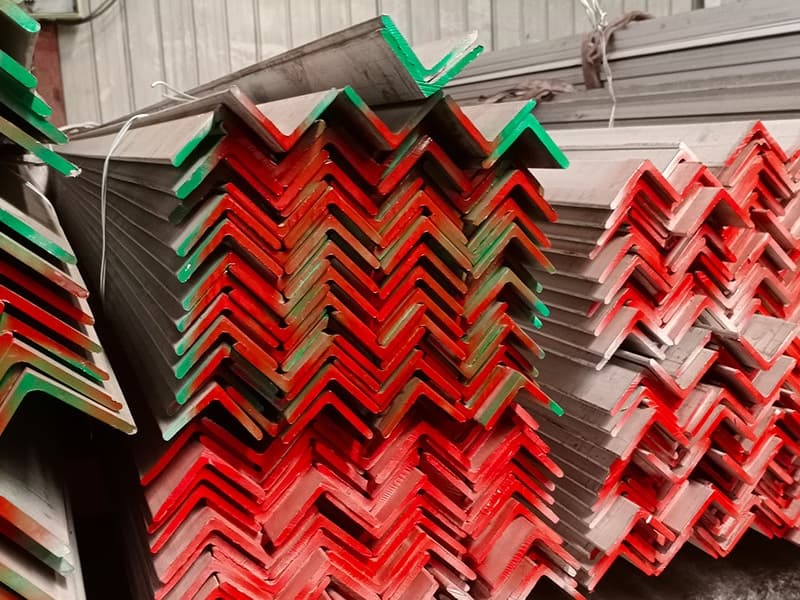
Most buyers I deal with are not careless. They are cautious, and caution has a price per tonne. When I open a purchase order and see a flat ten percent allowance bolted onto every line, I already know roughly where the money went. Not into the mill’s pocket. Into a corner of the yard that nobody will look at again until the next stock count.
The problem is not that allowances are wrong. The problem is that a percentage is the wrong shape for the job. Waste in angle steel is generated bar by bar, cut by cut. It does not scale with tonnage. A project that needs four bars and a project that needs four hundred can have completely different waste profiles, and the same percentage will be wrong for both.
This article walks through the actual arithmetic, the purchasing habits that inflate an order without anyone noticing, and the control that replaces the buffer.
Why Does a Flat Percentage Allowance Cause Marine Angle Steel Overordering?
A percentage feels safe. It is not. It scales with tonnage instead of with the shape of your cuts, so it over-buys the easy lines and starves the awkward ones.
A flat allowance causes overordering because waste is generated per bar and per cut length, not per tonne. Two projects with the same tonnage but different cut-length spreads need different quantities, so one percentage is too generous on some lines and too thin on others.
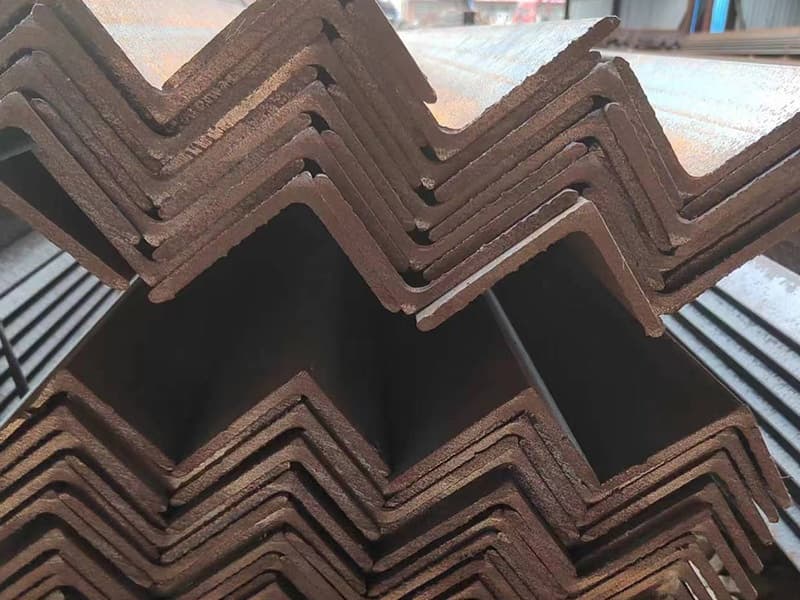
Where the Ten to Fifteen Percent Number Actually Comes From
I hear the same figure repeated in every market. Ten percent. Sometimes fifteen. Buyers quote it like a law of physics.
It is not. It is a yard-level budget coefficient, and it was calibrated for a specific kind of yard. Our own reading of the Chinese national standard GB/T 37535-2019, which covers steel utilisation evaluation for shipbuilding enterprises, is instructive here. That standard does not hand out a percentage. It tells yards to set their own selection rules based on their site, their equipment, and what the steel market can actually supply. It also tells them to finish nesting before ordering, and to choose the steel specification from the nesting result rather than from a rough estimate.
That is the opposite of a flat buffer. It is a bottom-up number.
The ten to fifteen percent figure survives because large yards use it as a whole-ship coefficient, then recover most of the loss through remnant reuse across a series. The same block design repeats on hull two, three, and four. A 900 mm offcut from hull one becomes a bracket on hull two. The coefficient is not really waste. It is float, and the yard has a system to reclaim it.
A forty-person fabricator doing one-off assemblies has no series to amortise against. Copying the shipyard coefficient moves tonnage onto the floor with no mechanism to recover it.
The Compounding Problem Nobody Audits
Here is how a ten percent allowance becomes seventeen.
The estimator applies eight percent to cover cutting loss. The procurement officer adds five percent because mills sometimes ship short. The site manager adds three percent because bars get damaged in handling. Each person is being reasonable inside their own scope. Nobody is looking at the total.
The allowances do not add. They multiply.
| Stage | Who Applies It | Stated Allowance | Cumulative Effect on Net Weight |
|---|---|---|---|
| Estimating | Estimator | +8% | 1.080× |
| Purchasing | Procurement | +5% | 1.134× |
| Site reserve | Fabrication manager | +3% | 1.168× |
| Total | — | “about 16%” | +16.8% on every line |
On a 120 tonne order that is roughly twenty tonnes of extra steel. At a typical marine angle price, that is not a rounding error. It is a piece of equipment the project did not buy.
The fix costs nothing. Pick one place in the chain where the allowance lives, and make every other stage work from the net nested figure. In our own quotations we now ask buyers to send the net cut list and let us show the bar count. When the bar count is visible, the second and third buffers disappear on their own, because there is nothing left to be vague about.
Waste Follows the Cut Distribution, Not the Tonnage
Think about two lines of the same size, L100 × 100 × 10, both totalling 1,200 metres.
Line A needs 200 pieces at 6,000 mm. That is a perfect fit on a 12 m bar, two pieces per bar, and the waste is only the kerf and the end trim.
Line B needs 240 pieces at 5,000 mm. Two pieces fit on a 12 m bar with 2,000 mm left over. That leftover is only useful if something else in the project can consume it.
Same tonnage. Same section. Completely different remnant profile. One percentage cannot describe both.
This is the part that gets lost in a bill of materials reviewed on a screen. The BOM shows total length. The mill ships total length. The waste happens in the gap between the two, and the gap is shaped like your cut list.
How Do You Convert a Fabrication List into an Exact Bar Count?
You stop ordering weight and start ordering pieces. The bar count is the real quantity. Tonnage is a derived number you calculate afterwards for the contract.
Convert a fabrication list into a bar count by computing kg/m for each section, summing cut lengths per size, nesting the longest pieces first into 6, 9, or 12 m stock bars, deducting kerf and end trim, and rounding up to whole bars. The bar count is what you order.
Start With the Correct Weight per Metre
For a quick desk check, the theoretical weight of an equal-leg angle is:
kg/m = [(A + B) − t] × t × 0.00785
where A and B are the leg lengths in millimetres and t is the thickness. For L100 × 100 × 10 that gives (100 + 100 − 10) × 10 × 0.00785 = 14.88 kg/m, which sits within about one percent of the mill table value. Close enough to plan with. Not close enough to argue with a mill certificate over.
| Section | Legs (mm) | Thickness (mm) | Desk Formula (kg/m) | Mill Table (kg/m) |
|---|---|---|---|---|
| L50 × 50 × 5 | 50 / 50 | 5 | 3.73 | 3.77 |
| L75 × 75 × 8 | 75 / 75 | 8 | 8.92 | 9.03 |
| L100 × 100 × 10 | 100 / 100 | 10 | 14.88 | 14.90 |
| L120 × 120 × 10 | 120 / 120 | 10 | 18.06 | 18.20 |
| L150 × 150 × 10 | 150 / 150 | 10 | 22.77 | 23.00 |
| L150 × 90 × 12 | 150 / 90 | 12 | 21.48 | 21.50 |
| L200 × 200 × 16 | 200 / 200 | 16 | 48.20 | 48.30 |
Use the desk formula to sanity-check a quotation. Use the mill table, or the actual certificate weight, for anything that goes into a contract.
Nest Longest First, Then Fill the Tails
Take one size group. Sort the cut lengths from longest to shortest. Place the long pieces first, because they constrain the layout most. Then fill the remaining space on each bar with shorter pieces. When a bar cannot take another piece above your minimum usable remnant length, close it and start a new one.
Here is a real-shaped example. One size, L100 × 100 × 10, grade A, 12 m stock bars.
| Bar | Pieces Loaded | Length Used | Kerf and End Trim | Remnant |
|---|---|---|---|---|
| 1 | 3 × 3,800 mm | 11,400 mm | ~50 mm | ~550 mm |
| 2 | 6,000 + 5,200 mm | 11,200 mm | ~45 mm | ~755 mm |
| 3 | 2 × 5,800 mm | 11,600 mm | ~40 mm | ~360 mm |
| 4 | 4,000 + 4,000 + 3,500 mm | 11,500 mm | ~50 mm | ~450 mm |
| Total | 9 pieces | 45,700 mm | ~185 mm | ~2,115 mm |
Four bars cover the line. Total delivered length is 48 metres, and 45.7 metres becomes finished parts.
Now run the same line the way most buyers actually do it. Net weight is 45.7 m × 14.88 kg/m = 680 kg. Add ten percent, and the order becomes 748 kg. Divide by 14.88 and you need 50.3 metres. Divide by 12 and you need 4.19 bars. Round up, and you buy five bars.
Five bars instead of four. Sixty metres instead of forty-eight. The “ten percent” allowance just became twenty-five percent on the floor, and the extra bar is not a mistake in the arithmetic. It is a mistake in the unit. You cannot buy 4.19 bars.
That single rounding step is the largest source of quiet overordering I see in orders under about fifty tonnes.
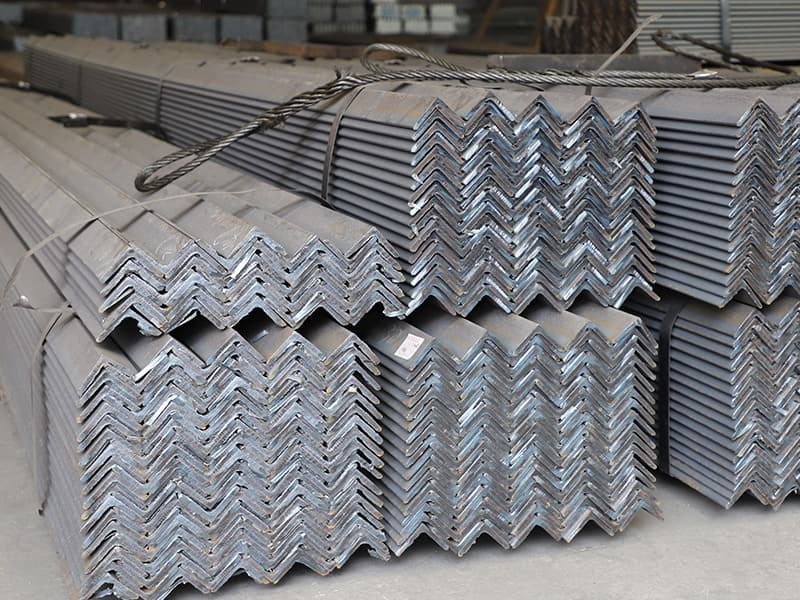
Kerf and End Trim Are Small, But They Are Not Zero
Every cut removes material. A band saw takes roughly 3 to 5 mm per cut. Plasma takes about 2 to 3 mm. Laser takes 1 to 2 mm.
On a 12 m bar with three cuts, kerf costs you 9 to 15 mm. Against a 550 mm remnant, that is noise. Kerf is never the reason an order goes wrong. It matters only when you are cutting hundreds of short pieces from one bar and the count is high.
End trim is a different story, and buyers forget it. Mills cut to a length tolerance, often up to plus fifty millimetres on standard lengths, but you cannot bank on the plus side. Many shops square both ends before the first cut, which removes 20 to 40 mm per bar. On a 12 m bar that is a third of a percent. On a project using 900 bars, it is real.
I put a flat 50 mm per bar into the nesting sheet and stop thinking about it. It is close enough, it is conservative, and it stops the argument at the saw.
Define Your Shortest Usable Remnant Before You Nest
This is the number that decides whether your allowance is honest.
A 400 mm offcut of L100 × 100 × 10 exists physically. It weighs 5.9 kg. It is also useless for almost every structural bracket on a hull, so in practice it is scrap. If your nesting treats it as material, you will under-order and then reorder at a premium. If your nesting treats it as waste, you will order the right count.
Most fabrication shops I work with set the threshold at 600 to 1,000 mm, depending on what they build. Pick one number per project, write it at the top of the nesting sheet, and apply it every time. A remnant below the threshold is scrap, full stop.
That single rule explains why a shop with a 12% measured scrap rate can still be short of steel. The scrap rate counts kilos. The shortfall counts pieces.
Which Purchasing Habits Quietly Add Tonnage to a Marine Angle Steel Order?
Bad arithmetic is the visible cause. Bad timing is the expensive one. Most of the excess steel I see was ordered before anyone knew what the drawings required.
The habits that add tonnage are ordering before the drawing freeze, treating mill minimum order quantity as a target, splitting one requirement across two purchase orders, and never netting the remnant register. Each adds steel without adding a single usable part.
Ordering Before the Drawing Freeze
GB/T 37535-2019 is blunt about sequence. Yards should allow the design cycle to finish, wait for drawing approval, and then nest before ordering, selecting specifications from the nesting result.
That sequence exists for a reason, and it is not bureaucratic. Angle steel on a hull is secondary structure. It follows the primary structure. When a block layout shifts by 300 mm, the frame spacing shifts with it, and every cut length on that block changes.
I have watched a buyer release 60 tonnes of L125 × 125 × 10 against a preliminary arrangement drawing. Two weeks later the yard moved a bulkhead. The section was still correct. Half the cut lengths were not. The steel arrived, sat in the store, and a second order went out for the revised lengths. Nobody returned the first shipment, because returning steel across an ocean costs more than the steel.
Buyers call this a design change. The storeman calls it dead stock. Either way it is tonnage that was ordered too early, and no allowance percentage would have caught it.
Treating Mill Minimum Order Quantity as a Target
Mills roll to a minimum quantity per size and grade combination, commonly in the range of 20 to 30 tonnes for a specific section and steel grade. I have seen buyers take that number and order exactly the minimum for a line that needed six tonnes, because “the price per tonne is better at the minimum.”
The price per tonne is better. The total cost is worse. You have just bought twenty extra tonnes of a size you will not use again, at a discount that does not cover the capital tied up in it.
The better move is consolidation. If three lines in the same grade can share a size, merge them and let the combined requirement meet the minimum honestly. If they cannot, buy the small quantity from stock rather than from a mill run, and accept a higher unit price on six tonnes instead of financing twenty.
Splitting One Requirement Across Two Orders
This one looks like risk management. A buyer splits a 40 tonne requirement into two 20 tonne orders, placed with two suppliers, to protect the schedule.
Now two mills each apply their own minimum, each roll their own heat, and each ship on their own schedule. The combined tonnage is higher than one consolidated order, the certificate set is doubled, and the yard has two bundle populations to keep separate by heat number. If one shipment is late, the other cannot cover the gap because the sizes were divided, not duplicated.
Splitting is a legitimate tactic for schedule risk on very large orders. On a mid-size order it is usually just two sets of minimum charges.
Never Netting the Remnant Register
GB/T 37535-2019 also asks designers to prioritise existing remnant stock when they nest. That is a small sentence with a large effect.
Most fabricators have a remnant pile. Very few have a remnant register with lengths, sizes, grades, and heat numbers written down. Without the register, the nesting engineer cannot see the material, so it does not exist, so it gets reordered.
I walked a stockyard in Liaocheng last season where the remnant rack held four full bays of angle offcuts. The yard manager told me it was about thirty tonnes. When we measured a sample and counted the bays, the real figure was closer to seventy. None of it was on the system, and all of it had been bought twice.
A register does not need software. A whiteboard with size, grade, length, and heat number, updated when a bar leaves the saw, is enough to start. The point is that the material has to be visible before the nest is built, not after.
How Do You Set a Reorder Trigger Instead of a Buffer?
Once the project lines are nested, the only steel you should hold is the steel you consume repeatedly. Everything else is a calculated quantity, not a stock decision.
Set a reorder trigger instead of a buffer by separating project-specific sizes from high-runner sizes. Nest and order the project sizes exactly, and hold safety stock only on the three to five sizes you consume every week, sized as consumption rate times lead time plus two to four weeks.
Separate the Two Categories of Angle
| Category | Characteristics | Ordering Method | Stock Held |
|---|---|---|---|
| Project-specific | Odd lengths, single grade, one hull | Nest, count bars, order to the bar | None beyond the line |
| High-runner | Common sizes, repeat weekly, mixed grades | Reorder trigger at a fixed level | 2 to 4 weeks of consumption |
| Long-lead special | Non-standard section or grade, mill run only | Forecast against the block schedule | None, but book capacity early |
Trying to hold safety stock on a project-specific size is where most overordering hides. The size is used once, the buffer never gets consumed, and it becomes the leftover nobody can sell.
Size the Trigger With Real Numbers
Take your average weekly consumption of one high-runner size. Multiply by the total lead time from order placement to arrival at your gate. Add two to four weeks of consumption as the working buffer. That is your trigger level.
For custom sizes out of China, a realistic total lead time is often ten to twelve weeks once you include mill scheduling, production, and ocean freight. If you consume ten tonnes a week of a size, you need roughly 100 tonnes in the pipeline just to keep the saw running, plus 20 to 40 tonnes on the floor. That number is not a guess. It is arithmetic, and it is defensible to a finance director in a way that “ten percent extra” never is.
What “Just in Case” Should Actually Buy
If a buyer wants protection against the unknown, the money is better spent on verification than on tonnage.
A pre-shipment dimensional and weight check costs a fraction of a tonne of steel. It catches the underweight section before it reaches your yard, which is the failure mode that actually stops a fabrication line. Our Gulf customers build this into every order for exactly that reason, and the same approach has kept a long-running account in Saudi Arabia with us for repeat business across plate and angle. They do not buy buffer tonnes. They buy certainty about the tonnes they do buy.
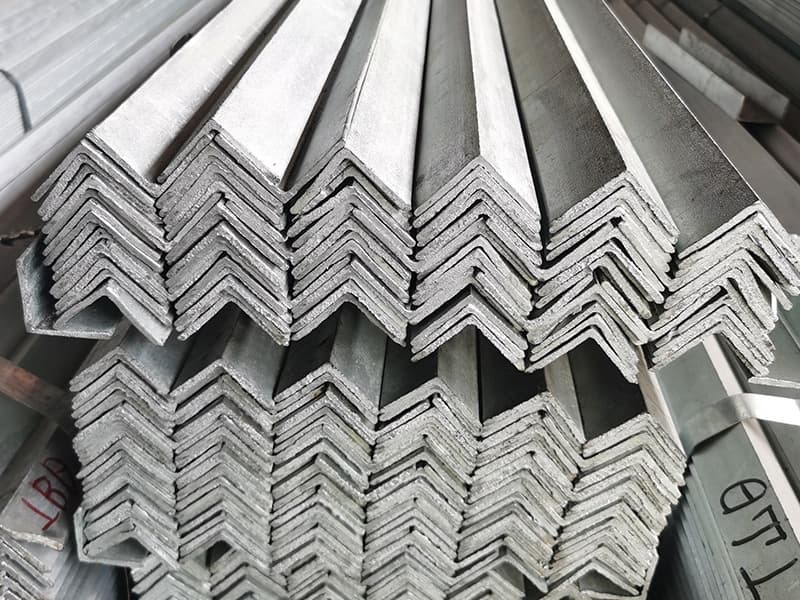
Here is the full control set in one place.
| Overordering Cause | Typical Tonnage Impact | Where It Hides | Correct Control |
|---|---|---|---|
| Flat percentage on net weight | +5% to +15% | Estimating sheet | Nest first, then apply a residual allowance |
| Compounded stage allowances | +10% to +17% | Between departments | One allowance, owned by one role |
| Rounding tonnage to bars | +10% to +25% | Purchase order quantity | Order whole bars, derive tonnage |
| Ordering before drawing freeze | +5% to +30% | Design change log | Nest only after drawing approval |
| Mill minimum treated as target | +10% to +40% on small lines | Mill order book | Consolidate sizes or buy from stock |
| Splitting one requirement | +5% to +15% | Two purchase orders | Single order unless schedule risk is real |
| Remnant never netted | +3% to +10% | Stockyard | Remnant register updated at the saw |
| Safety stock on one-off sizes | +5% to +20% | Warehouse | Stock only high-runner sizes |
Conclusion
Order bars, not tonnes. Nest before you buy, net your remnants, and keep buffers only on the sizes you cut every week.