
One wrong bundle leaves the rack and a block stops three weeks later. Picking errors in angle steel are never small, so we built a routine that stops them.
Prevent picking errors in a marine angle steel warehouse by giving every bundle one unique location and one readable tag, keeping look-alike sections apart, and scanning both location and tag at pick and at load-out. Paper-only picking caps accuracy near 99.5 percent.
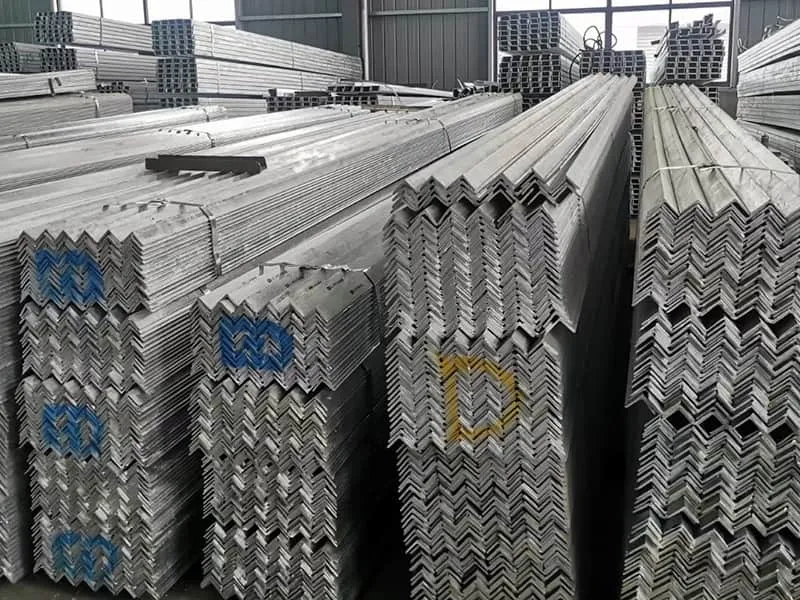
Most picking errors I see in this trade are not people being careless. They are buildings that make the correct pick hard and the wrong pick easy. Two sizes that look identical at three metres, stacked on the same rack, with the tag facing the wall.
A warehouse that ships a few hundred tonnes of angle a month will make thousands of individual picks a year. At 99 percent accuracy that is dozens of wrong picks annually, and in shipbuilding one wrong pick can mean a frame cut from the wrong section, a weld procedure that no longer applies, and a surveyor asking why the heat number on the piece does not match the certificate. The fix is not a lecture to the crew. The fix is layout, tagging, and a verification step that does not depend on memory.
Why Do Marine Angle Steel Picks Go Wrong So Often?
Angle steel is the hardest product to pick by eye. Every size is an L, every colour is grey, and two conforming bars can differ by 2 mm.
Most marine angle steel picking errors come from four causes: look-alike sections stored together, tags that cannot be read from the aisle, bundles nested so the middle bars are invisible, and locations that drift as the yard fills. Almost none come from a careless picker.
The Tag Is the Only Thing That Separates Two Bars
An L75×75×6 and an L75×75×8 share the same leg length, the same surface finish and the same rolled edge. They differ only in thickness, and thickness is the one dimension you cannot judge from a walk-past. On a standard EN 10056-1 mass table the first runs 6.85 kg/m and the second 9.03 kg/m, a 32 percent gap in weight that is completely invisible on the rack.
That gap is the whole problem. A picker who grabs the 6 mm bundle for a 8 mm order has made a mistake that weighs 32 percent light, and nothing about the bar in his hand tells him so. He reads the tag, or he guesses. If the tag is on the far side of the bundle, or faded, or written in a hand that only two people in the yard can read, he guesses.
We used to think this was a discipline issue. It is a labelling issue. A bundle tag has to survive blasting grit, monsoon rain, forklift contact and two years of UV, and it has to be readable from the aisle without climbing the rack.
Nesting Hides the Middle of the Bundle
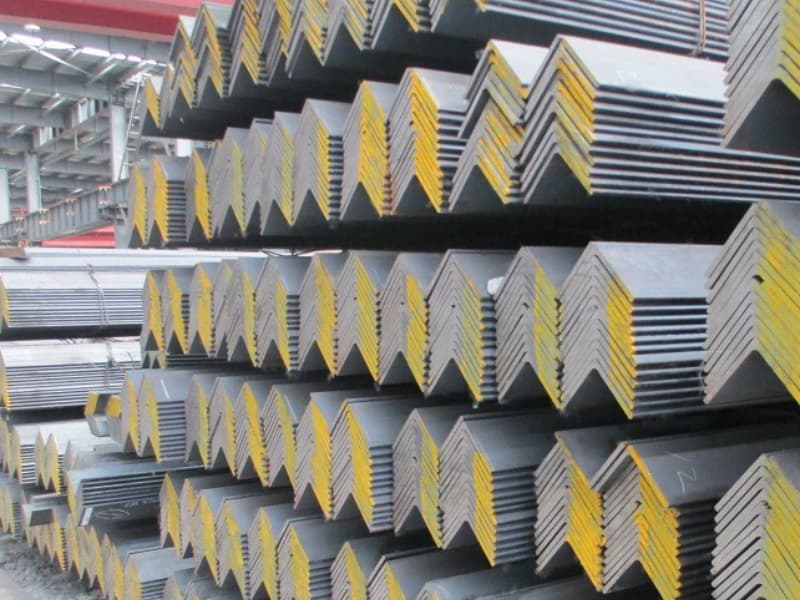
Angle bundles are usually nested leg-to-leg to save height and to stop the toes from deforming in transit. That is good packing and bad warehouse design, because the nesting means the top layer is a continuous grey surface. You can see the size of the top bar. You cannot see what is underneath.
Mixed-heat and mixed-size bundles do exist. They come out of mills that consolidate small lots, and they come out of our own yard when someone tops up a part-used bundle from a second heat. Under CCS survey practice a surveyor walking the storage area will pull a bar from the middle and check it against the tag, and if the heat number does not match, the whole bundle becomes suspect until it is re-identified. That is a conversation you want to have at goods-in, not in front of a surveyor during a hold point. Our traceability routine from warehouse receipt to installation treats that middle-bar check as the first record in the chain, not the last.
Locations Drift as the Yard Fills Up
The third cause is quieter. A rack position is assigned when the bundle arrives, and then the yard gets busy. A bundle is moved to make room for a wider section. A forklift driver parks a part-used bundle in the next bay because it is closer to the saw. Nobody updates the register because the move took ninety seconds and the register is on a laptop in the office.
Three weeks later the pick list says bay 4, rack 2, and the bundle is in bay 6. The picker finds an L100×100×10 in bay 4, rack 2, because that is what the label on the rack says, and ships it, and the L100×100×10 that was supposed to be there is now two bays away. This is how a location system turns into a suggestion.
Look-Alike Pairs That Cause Most Errors
Not every pair is equally dangerous. In our experience four combinations account for most of the wrong picks we investigate, and each one has a different tell.
| Pair | Mass (kg/m) | Gap | Why it gets picked wrong |
|---|---|---|---|
| L75×75×6 vs L75×75×8 | 6.85 vs 9.03 | 32% | Identical leg faces; only thickness differs |
| L100×100×8 vs L100×100×10 | 12.2 vs 15.1 | 24% | Same outside profile; 2 mm on each leg |
| L90×90×8 vs L100×100×8 | 10.9 vs 12.2 | 12% | 10 mm leg difference reads as nothing at 3 m |
| L100×75×8 vs L125×80×8 | 10.5 vs 12.4 | 18% | Unequal legs; the long-leg direction looks the same |
The pattern is obvious once it is written down. The pairs that hurt are the ones where the visible dimension is shared and the invisible dimension carries the difference. Any layout that puts those pairs side by side is asking for the error.
What the Error Data Actually Says
Warehouse research keeps landing on the same five causes, and none of them is “the operator was not paying attention”. Similar products stored together. Poorly defined locations. A dirty item master with two codes for one product. No final verification. And rush periods with temporary staff.
That list should be uncomfortable reading for anyone running a steel yard, because a steel yard has all five by default. Every angle in the store is a similar product. Locations are often painted numbers that half the crew ignores. The item master frequently carries both an old GB size designation and a new EN one for the same bar. And the final verification is a man with a clipboard at the loading bay, in the rain, at 6 p.m.
The encouraging part is that all five are design problems, not personality problems. You can fix a rack layout in a week. You cannot fix human attention at all.
How Should You Lay Out a Marine Angle Steel Warehouse to Prevent Wrong Picks?
Layout does more for pick accuracy than any training programme. If the correct bundle is the easiest thing to reach, the crew will reach for it.
Lay out a marine angle steel warehouse by coding every storage position to bay, rack, level and face, storing each bundle under one code only, separating look-alike sizes onto different racks, and slotting fast-moving sizes nearest the saw. The address does the picking; the picker only confirms it.
Address Every Rack Like a Postcode
A location code has to be short enough to shout and specific enough that two people cannot disagree about it. Ours runs four fields: bay, rack, level, face. B04-R02-L3-A means bay 4, rack 2, third level up, face A, which is the side you see walking in from the main aisle.
Two rules make the code work. First, the code is painted on the rack at eye level and again at the end of the bay, so it can be read from a moving forklift. Second, the code belongs to the position, not to the product. When a bundle leaves, the position becomes empty and stays empty in the register until something new is put in it. That sounds trivial. It is the difference between a register that describes the yard and one that describes last month’s yard.
The register entry for a bundle then carries five things: location code, size, grade, heat number, and piece count. A bundle without all five is not put away. It sits in receiving until the missing field is filled, because a bundle that cannot be described cannot be found later.
Give Look-Alike Sizes Physical Distance
The cheapest accuracy improvement in any warehouse is separating the pairs that get confused. It costs nothing but a decision.
The rule we use is simple: if two sizes differ by less than 15 percent in mass, they do not share a rack, and they do not share a bay end. They go on opposite sides of the aisle, ideally with a third size between them. The extra ten seconds of walking is repaid the first time nobody ships 8 mm against a 10 mm order.
There is a second version of the same rule for grades. Grade A and AH36 look identical and are not interchangeable, because one is certified for ordinary strength hull structure and the other carries a 355 MPa minimum yield with impact testing. If both sit in the same rack because they are the same size, someone will eventually pick the wrong one and the certificate will not match the steel. Grade segregation is not optional in a marine warehouse; it is the whole point of holding certified stock. If your item master still carries an old GB designation and a new EN one for the same bar, start with how to check marine angle steel grade designations before you touch the rack layout.
Slot by Pick Frequency, Not by Arrival Date
Most yards store by arrival, which is the least useful possible order. The bundle that arrived on Tuesday goes in the first empty slot, and the size that half your orders call for ends up in bay 9 behind the plate racks.
Pick the twenty sizes that account for most of your order lines and put them in the golden zone, which is roughly knee to shoulder height and within the first ten metres of the saw or the loading door. Travel is the largest single cost in manual picking, well ahead of searching and extracting, so moving a fast mover ten metres closer is a real gain, not a cosmetic one.
Slow movers and project-specific sizes go to the far bays and the top levels. Long-length stock that only moves by crane goes where the crane can reach without repositioning. None of this is complicated. It just has to be decided once and defended whenever someone wants to “just put it here for now”.
Keep the Pick Face Clean
A rack position should hold one bundle, one size, one heat. When a part-used bundle is topped up with a second heat, the position now holds two identities and the tag describes one of them.
Our rule is that a topped-up bundle gets a second tag and a suffix, so the position reads B04-R02-L3-A-1 and B04-R02-L3-A-2, and the register carries both heat numbers. It is more admin. It also means a surveyor can pull any bar and trace it in under a minute, which is the standard we are actually trying to meet.
Which Checks Catch a Wrong Pick Before the Truck Leaves?
Every warehouse has a final check. The question is whether that check is a signature or a measurement.
Catch a wrong marine angle steel pick by scanning the location code and bundle tag at the rack, then counting pieces and weighing the load before it leaves. The scan catches the wrong position, the count the wrong bundle, the weight the wrong thickness.
Scan the Location, Then the Bundle
Two scans, in a fixed order, at the point of pick. First the rack code, then the bundle tag. The system compares both against the pick line and refuses to release the next task if either does not match.
The order matters more than it looks. If you scan only the bundle, a picker can walk to the wrong rack, find a bundle with a similar tag and confirm it, because the tag is what he expects to see. If you scan the location first, the system has already told him he is in the wrong place before he touches anything. Field studies of paperless picking consistently show selection accuracy moving from the mid-90s with paper to the high 99s with handheld scanning, and the gain comes from this kind of forced confirmation rather than from the scanner itself.
The cost is real: a scanner, a label printer, and a few weeks of the crew hating the change. Compared with one stopped block, it is not a large number.
Use Weight as a Second Opinion, and Know Where It Fails
Weight is the only check that sees through the tag. A bundle label can be wrong, but a bundle cannot lie about its mass.
Take a pick of 24 bars of L100×100×10 at 12 m. On the standard table that is 24 × 12 × 15.1, or 4,349 kg. If the crew pulls L100×100×8 instead, the same 24 bars weigh 24 × 12 × 12.2, or 3,514 kg. That is 835 kg light, about 19 percent, and any crane load cell or platform scale will catch it long before the truck is loaded.
Now the case where weight fails. Suppose the order is a 3 tonne bundle of L75×75×8, and the crew pulls L75×75×6 by mistake. The correct bundle holds about 27 bars of 12 m. The wrong one holds about 36 bars for the same tonnage. If they load 36 bars, the scale reads 2,959 kg instead of 3,000 kg, which looks like a rounding error and passes. The weight check said yes and the steel is still wrong.
That is why the count has to sit next to the weight. Weight is blind to errors that happen to preserve tonnage, and a piece count is blind to errors that preserve count. Together they close the gap that either one leaves open. The same table arithmetic sits behind checking theoretical weight against a supplier quotation, and it is worth teaching both jobs to the same person.
Match Tag, Heat Number and Certificate at Load-Out
The third check is documentary, and it happens at the loading bay while the crane is still attached.
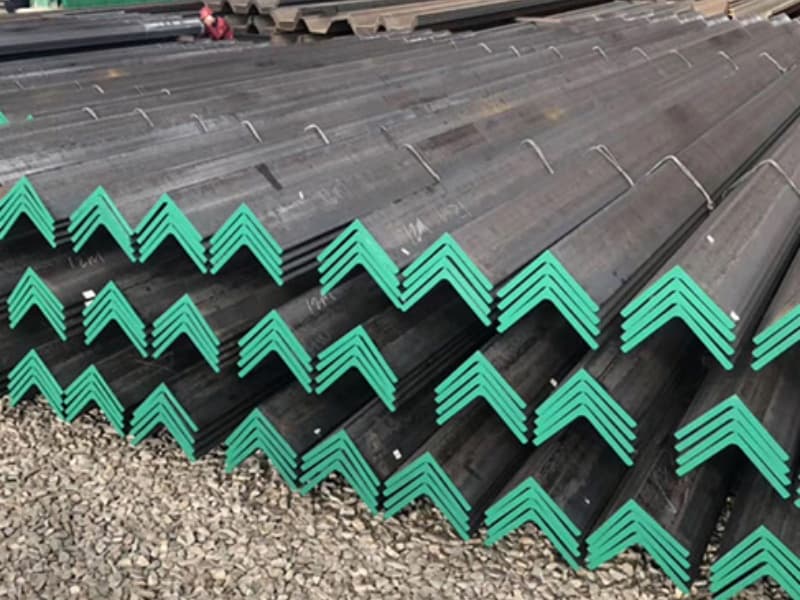
Three things have to agree: the bundle tag on the steel, the packing list line, and the mill test certificate for that heat. If the tag says AH36 and the certificate for that heat says grade A, the bundle is not shipping, whatever the pick list says. If the tag carries a heat number that does not appear on any certificate in the file, the bundle came from somewhere the paperwork does not cover, and that is a bigger problem than a picking error.
This is the step that most yards skip because it feels like paperwork rather than picking. It is the step that catches the errors that scans cannot see, because a mislabelled bundle scans perfectly against a wrong register.
When we ship to Gulf Metal Solutions in Dammam, their receiving clerk works down the packing list bundle by bundle at the port, checking tag against line against certificate before the truck leaves the quay. Their routine is stricter than most, and it is the reason their claims conversations are short.
Where Third-Party Inspection Fits
A pre-shipment inspection is not a picking check, but it functions as one. An inspector who pulls three bars from each bundle and measures leg, thickness and squareness will find a wrong-size bundle immediately, because the measured thickness will not match the tag.
If you are buying certified marine angle and the order matters, the inspection is cheap insurance against exactly this class of error. Ask for it before the container is sealed, not after.

| Verification method | Typical accuracy | What it catches | What it misses |
|---|---|---|---|
| Visual check against paper pick list | 97.0–98.5% | Gross size differences | Thickness swaps, look-alike pairs |
| Paper list plus piece count | up to 99.5% | Wrong bundle, short count | Wrong thickness at correct count |
| Barcode scan at pick and pack | 99.0–99.5% | Wrong location, wrong tag | Mislabelled bundles |
| Scan plus weight verification | 99.7–99.9% | Wrong thickness, short weight | Tonnage-preserving swaps |
| Scan, weight and certificate match | 99.9%+ | All of the above | Nothing structural |
The accuracy figures are warehouse benchmarks, not steel-specific measurements, and your own numbers will depend on how disciplined the register is. The ranking, though, holds in every yard I have walked through.
What the Accuracy Numbers Say About Each Method
The Warehousing Education and Research Council puts best-in-class order picking accuracy at 99.68 percent or better in its 2025 measures, with a median nearer 99.3 percent and the bottom fifth of respondents below 98 percent. Those are whole-order figures, which flatter a yard, because an order with twelve lines only counts as correct if all twelve are right.
Run the arithmetic on your own volume. If you ship 400 order lines a month at 99 percent, that is four wrong lines a month, or 48 a year. At 99.9 percent it is roughly five a year. The difference between those two numbers is not effort. It is the difference between a paper list and a scan.
How Do You Measure Picking Accuracy Without Blaming the Picker?
You cannot improve a number you do not define, and most yards define this one badly.
Measure marine angle steel picking accuracy as correctly picked lines divided by total lines picked, counted from internal audits rather than customer complaints. Log every error with a cause code, review them weekly by zone, and treat a repeating code as a layout fault rather than blame.
Define the Error Before You Count It
Picking accuracy measured per order and measured per line are different numbers from the same work. An order with twenty lines and one wrong is a failed order but a 95 percent line accuracy. Decide which one you are tracking and never mix them in the same report.
Count from audits, not from claims. A customer complaint tells you about the errors that escaped. An internal audit tells you about the errors your own check caught, and those are the ones that show you where the process is weak. A yard that only counts escapes will always look better than it is.
Use Four Error Codes, Not One
One error code tells you nothing. Four tells you where to spend money.
| Code | Meaning | Usual root cause | Usual fix |
|---|---|---|---|
| E1 | Wrong size picked | Look-alike pair stored together | Rack separation |
| E2 | Wrong grade picked | Grade not segregated | Dedicated grade zone |
| E3 | Wrong quantity | Bundle count not verified | Count at pick and load |
| E4 | Wrong location, right product | Register drift after a move | Location scan, move log |
If E1 dominates, you have a layout problem and the answer is physical distance. If E4 dominates, you have a register problem and the answer is a scan at the rack. The codes stop the weekly meeting from turning into a general complaint about carelessness and turn it into a specific decision about a specific bay.
Cycle Count by Velocity, Not by Calendar
A year-end wall-to-wall count tells you that you were wrong twelve months ago. Count by velocity instead: fast movers weekly, medium movers monthly, slow movers quarterly. A size that ships daily and is counted weekly cannot drift far.
Count the position, not the product. Open the rack, read the tag, count the pieces, weigh if the bundle is small enough, and confirm the register matches. Ten minutes per position, and the register stays a description of the yard rather than a record of intentions.
Handle Peak Season and New Hires Separately
Errors cluster when volume spikes and temporary staff arrive. That is not a coincidence and it is not a character flaw. A temp who has never seen an angle bundle cannot tell 8 mm from 10 mm, and no amount of briefing will fix that in a week.
Two things help. First, during peaks, route every pick of a look-alike pair through the scan step even if the yard normally allows paper for small orders. Second, pair new hires with an experienced picker for the first two weeks and keep them off the fast-moving certified stock until they can name the four dangerous pairs from memory. It sounds slow. It is faster than a reship.
I have stood in our Liaocheng bay and watched a loader walk past a rack three times looking for L75×75×8 while the tags on that rack all faced the wall. He was not confused about the size. He simply could not see the tag, so he kept walking. We turned the bundles around that afternoon and the “picking problem” in that bay disappeared.
Conclusion
Picking errors in marine angle steel are a layout and labelling problem before a people problem. Fix the address, separate look-alikes, and let a scan and a scale remember.