
Marine angle steel that leaves the yard pitted, bent, or mixed-up costs more than any discount you negotiated. Storage discipline decides. Here is the routine that protects every bundle.
Store marine angle steel raised at least 150 mm off the ground on aligned dunnage, laid open side down so water drains from the corner, under a loose sloped tarpaulin, sorted by grade and size and rotated first-in-first-out. Inspect weekly, restack after storms, and never seal wet steel tightly.
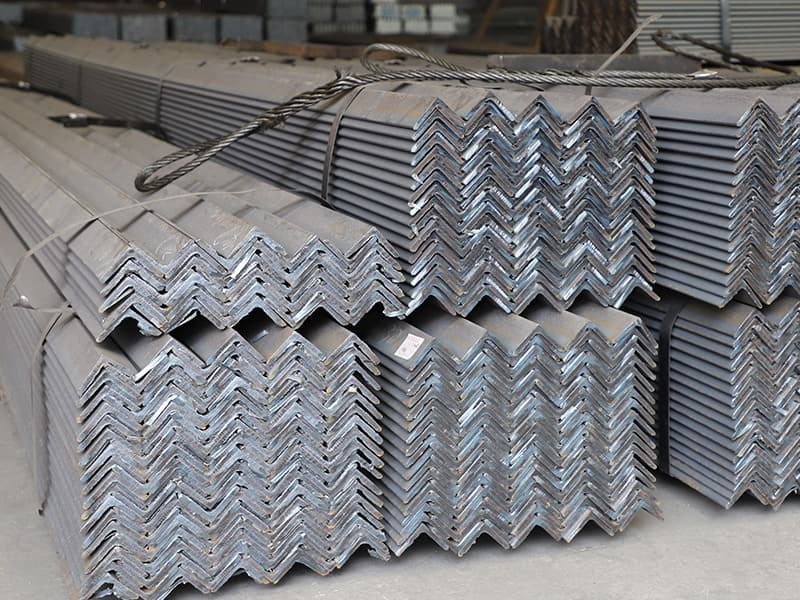
I am Zora Guo. I ship marine angle steel to shipyards and wholesalers in more than 15 countries, and I walk through enough customer yards to know that corrosion almost never starts on the mill floor. It starts in the yard, in the first three months the steel sits there. The good news: the fixes are cheap. The four sections below cover the ground system, the orientation and covering, the corrosion mechanism itself, and the handling habits that stop mechanical damage. Get these right and your angle steel reaches the fabrication shop exactly as it left our warehouse in Liaocheng.
How Should You Raise and Support Marine Angle Steel Off the Ground?
Most storage damage I see starts at the bottom of the stack, where a bar rests on mud or on a random brick. Moisture wicks up, the bottom face rusts first, and nobody notices until the bundle is opened.
Never place marine angle steel directly on soil, gravel, or wet concrete. Raise every stack at least 150 mm on timber sleepers or steel racks, each support vertically aligned from bottom layer to top, so the load passes straight through instead of bending the lowest bars.
Why Ground Contact Starts Rust From Below
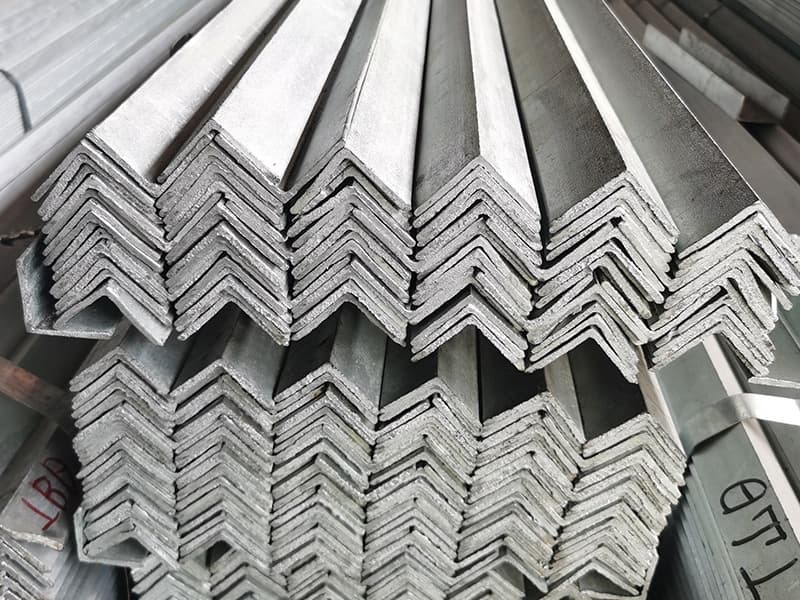
The bottom face of a stack is the only face nobody inspects, and it is the wettest. Soil holds moisture for days after rain. Gravel traps standing water between the stones. Even a concrete slab releases water vapour on cool mornings, and that vapour condenses on the underside of the lowest bars, where air never moves. I have opened bundles in a Gulf port yard where the top three layers still showed mill scale and the bottom layer had flaking rust you could rub off with a glove. Same heat, same delivery, completely different outcome — all because of 100 millimetres of missing timber.
Ground contact also does mechanical damage. A bar resting on irregular rubble carries the whole stack weight on two or three point contacts. That local pressure dents the leg, and a dented leg shows up later as a fit-up gap at the frame. This is why my first recommendation in every yard visit sounds boring: buy sleepers, level them, and keep them.
Dunnage Height by Ground Type
The required lift depends on what is under the stack. These are the height bands I use as yard rules of thumb:
| Ground condition | Minimum lift under the bottom layer | Why this level |
|---|---|---|
| Dry indoor concrete floor | 100 mm | Blocks vapour, allows sweep access |
| Outdoor concrete or asphalt | 300 mm | Clears splash-back and surface rainwater |
| Compacted soil or gravel yard | 500 mm | Clears puddles, mud splash and weed growth |
| Any ground with poor drainage | 500 mm plus a drainage slope away from the stack | Standing water is the worst case |
The 150 mm figure in the snippet is the absolute minimum for a clean, drained slab. In a real open yard in Vietnam or the Philippines during the rainy season, I would not accept less than 300 mm, and on soil I want 500 mm. The cost difference is two sleepers instead of one. Compare that with scrapping a bottom layer of AH36.
Alignment Beats Strength
Support height alone does not prevent bending. The support points must sit in the same vertical plane from the bottom of the stack to the top. When one layer’s sleeper is offset from the one below, the bottom bars carry a bending load they were never sized for. Over three months that shows as a permanent bow, and a bowed angle takes hours in the straightening press before it can be welded.
Two more spacing rules. For bars up to about 6 metres, two support points are enough. Longer bars need three or four, spaced roughly every 1.5 to 2 metres. And the sleepers themselves should be flat timber or concrete at least 50 mm thick — never loose bricks or rubble, which crack, settle, and quietly create the misalignment you were trying to avoid.
One practical check I teach yard crews: sight along the bottom layer from the end of the stack. If you can see daylight gaps between the bar and any sleeper, the support set has settled or shifted, and the stack needs re-blocking before the next rain.
Which Orientation and Covering Keeps Water Out of the Steel?
An angle section is a channel in disguise. Laid the wrong way, every bar in the bundle becomes a tiny gutter that collects rainwater and holds it against the steel for days.
Store marine angle steel with the open corner facing down so water drains off the toes, keep the stack top sloped slightly for runoff, and cover with a loose tarpaulin that leaves air space at the sides. Never wrap wet steel tightly; trapped moisture corrodes faster than open rain.
Open Side Down Is Non-Negotiable
The corner of an angle is the natural collection point for water and mud. Turned up, it holds a small pond in every bar. Turned down, the same geometry drains itself and dries in the first hour of sun. This single flip of orientation probably removes more rust than any coating you can buy, and it costs nothing. On nested bundles, the nested shape already forms channels — so the bundle as a whole should also sit so those channels drain outward, not inward at the ends.
Stack top slope helps too. A gentle tilt of a few degrees on the top protective layer throws rainwater off the bundle instead of letting it pool in the small hollows between bars. Keep the slope modest; steep stacks are unstable and dangerous to build.
Covering: Loose Beats Tight
Tarpaulins cause as many problems as they solve when they are misused. The rules I insist on are simple. Cover the top and let the sides hang free, with a gap at the bottom edge for air to move. Never shrink-wrap or strap the tarp tight against the steel. And never cover steel that arrived wet — let it drain and dry first, because a sealed wet bundle turns into a humid chamber and rusts from the inside out. After every heavy storm, open or lift the cover, let the stack breathe for an hour, and check the tarp for holes before re-securing it.
In covered sheds the same logic applies through ventilation rather than tarps. Keep relative humidity below about 60 percent where the climate allows it, and never store angle steel beside salt, fertiliser, cement, acids, or alkalis — contaminated dust settling on steel is far more aggressive than clean rainwater. I saw this firsthand at a customer warehouse where salt bags were stacked one bay over from the steel; the steel two bays down from that wall showed corrosion streaks while everything else stayed clean. We moved the salt. The streaks stopped.
| Covering option | Best for | Key risk if done wrong |
|---|---|---|
| Open air, no cover | Short holds, dry inland sites, fast-turning stock | Wet-dry cycling accelerates rust on top bars |
| Loose sloped tarpaulin | Open yards, stock held weeks to months | Tight wrapping traps moisture; holes funnel water |
| Covered shed, ventilated | Long holds, humid coastal climates | Poor airflow plus high humidity still corrodes |
| A-frame / cantilever racks indoors | Stock held over three months | Floor space cost, but zero stack contact |
For stock that will sit more than about three months, I push buyers toward racks. Air moves around every bar, counting is easy, and the bottom layer issue disappears entirely.
Rotation: First In, First Out
Covering and orientation slow corrosion; rotation limits the exposure window. New deliveries go behind or below older stock so the oldest material is drawn first. When I see the same bundle still in a yard after eight months, I already know the yard has no rotation discipline, and the audit will find it. A simple arrival date on each pile sign — waterproof marker or laminated card, never paper — is usually enough to make FIFO real instead of theoretical.
What Actually Drives Corrosion on Stored Marine Angle Steel?
Buyers often treat rust as a moral failing of the yard crew. It is chemistry, and understanding the chemistry tells you which of the fixes above actually matter at your site.
Corrosion on stored steel is driven by time-of-wetness and chlorides, not rain alone. Carbon-steel rust is porous and holds moisture, mill scale creates pitting cells at every break, and trapped water inside nested sections corrodes the contact lines. Keep surfaces dry, drained and away from salt air.
The Rust Layer Is a Sponge, Not a Shield
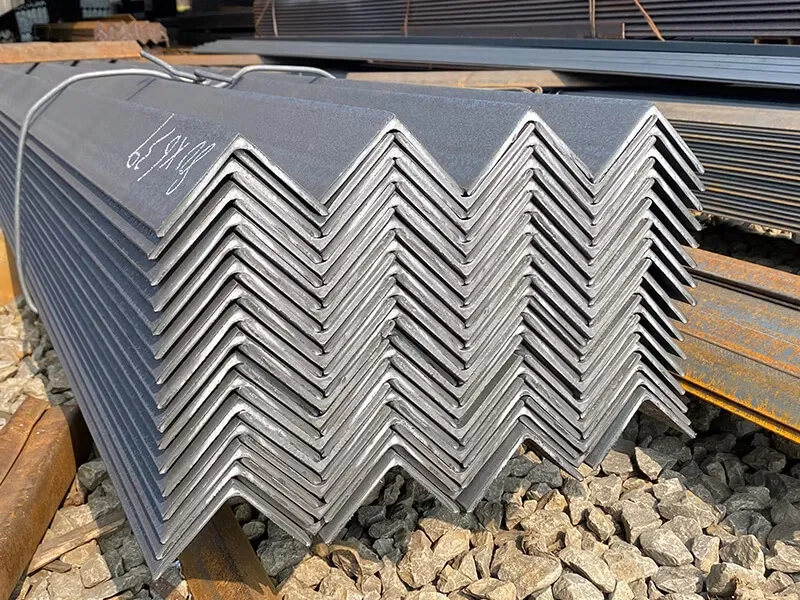
Rust on ordinary carbon steel is not protective. Its porosity runs at roughly 30 to 40 percent, so the oxide layer absorbs water and holds it against the metal, accelerating attack underneath. That is why a stack left in wet-dry cycling often corrodes faster than steel in nearly constant damp conditions, and why the top bar of an uncovered stack — which gets rained on and dries in the sun — can pit worse than the bars under the tarp.
Mill scale adds a second trap. Scale is cathodic to the steel underneath, so at every cracked or broken patch of scale, a small galvanic cell forms and pits the exposed metal. A bar with intact scale weathers slowly; a bar with scuffed, broken scale and wet-dry cycles pits first exactly where forklift tines and slings rubbed it. Handling practice and corrosion practice are the same subject.
Know Your Site: The ISO 9223 Categories
Atmospheric corrosivity is classified in ISO 9223, and the first-year corrosion loss of bare carbon steel under each category is a useful planning number for any yard near a coast:
| ISO 9223 category | Typical environment | Carbon steel first-year loss |
|---|---|---|
| C2 | Rural, low pollution | 1.3–25 µm |
| C3 | Urban, moderate sulphur dioxide | 25–50 µm |
| C4 | Industrial or mild coastal | 50–80 µm |
| C5 | Severe industrial or high chloride | 80–200 µm |
| CX | Tropical marine, salt spray | 200–700 µm |
Read that last row again before you plan an open-air yard in a port zone. At C5 to CX, unprotected carbon steel can lose a noticeable fraction of a millimetre of surface in the first year — and a 10 mm angle leg has no margin to give away. This is why storage strategy is a site decision: the same yard layout that is adequate in an inland Chinese industrial park is negligent in a coastal yard in Qatar.
The Traps Specific to Angle Sections
Three details make angle steel special. First, the internal corner: nested bars form crevices where water sits by capillary action long after the outer surfaces are dry, so the contact lines between bars corrode first. Orientation, layer separators, and drainage fight exactly this. Second, bundle strapping: under a strap, water wicks between bars and cannot evaporate — loosen, dry, and re-strap stock that arrived wet. Third, dissimilar metals: stainless offcuts or galvanised pieces stored in direct contact with carbon angle create galvanic cells at every contact point. Separate them, or put a spacer between them.
For buyers planning long holds in humid climates, a shop-applied anti-rust oil is worth pricing — it forms a continuous film that keeps air and moisture off the surface for up to a year of storage. Our own mill partners offer this pre-delivery, and I would rather pay for it than replace a pitted batch. When Gulf Metal Solutions in Saudi Arabia holds angle steel at their Dammam warehouse between project phases, they plan their holds and their third-party (SGS) re-inspection dates around exactly this kind of exposure window, and their stock reaches fabrication looking like it just left the mill.
How Do You Prevent Handling Damage in Stacks and During Retrieval?
Corrosion ruins steel slowly. Handling damage ruins it in one careless lift, and most of that damage happens to the bars underneath while someone pulls from the top.
Build stacks no higher than 1.2 metres (1.5 with machines), separate layers with timber or rubber pads so edges never bear on edges, lift with slings or clamps instead of dragging, and restack after storms. A rushed yard dents a bundle a week; a disciplined one loses almost nothing.
Stack Geometry and Layer Separation
Two height rules cover most yards: manual stacking tops out around 1.2 metres, machine-stacked piles around 1.5 metres. Wider than about 2.5 metres is unstable whatever the height. Heavier, thicker sections go in the lower layers, light and thin sections on top — a 3 mm thin-leg angle crushed under a 12 mm bar keeps the dent for life. And each layer gets its own spacer aligned with the sleepers below, so the load path stays vertical.
Layer separators do double duty against corrosion, because they break the continuous contact line between nested bars and let air into the crevice. Timber strips are standard; rubber pads are better for pre-galvanised or shot-blasted material, where a scratched surface is the pitting initiation point described in the last section.
Aisles matter as much as the stacks themselves. Keep at least a metre between piles and two metres on the main access route, so slings and fork tines never have to squeeze past a neighbouring bundle. I have watched a forklift driver in a cramped yard shear an entire bundle edge off against a concrete column — the fix was repainting floor lines, not training.
Lifting and Pulling Without Dents
Four habits prevent most mechanical damage. Use nylon slings or dedicated angle clamps, not bare wire rope dragged over the toes — wire rope cuts into soft surfaces and especially into any galvanised layer. Never drop a bundle onto the bottom bars; lower it, then release. When picking a single bar from a stack, support both sides of the pull so the remaining bars do not spring and rub. And when a forklift feeds a bundle, the tines should enter under the dunnage or a pallet, never prise apart the steel itself.
One more rule from the port side: after every storm, walk the yard. Piles shift, tarps tear, sleepers settle. A fifteen-minute inspection the morning after — tarps, labels, alignment, anything leaning — catches almost all of it. My rule for buyers is blunt: if your stack of 150×150 angles needed ten tons of other steel moved to reach it, your layout is the defect, not the worker.
What a Disciplined Yard Does Differently
The difference between yards that lose steel and yards that do not is rarely budget. It is whether these habits are written down and checked weekly.
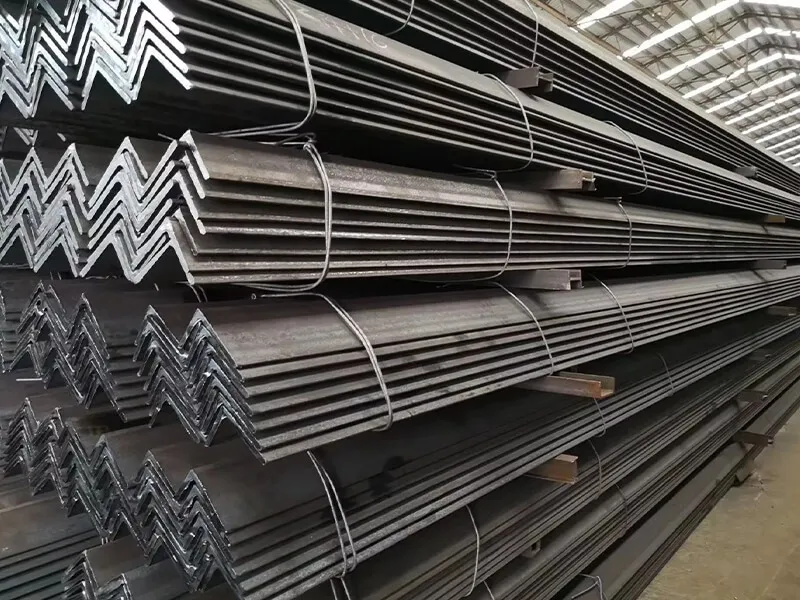
Here is the comparison I draw when a buyer asks what changes in practice:
| Aspect | Neglected yard | Disciplined yard |
|---|---|---|
| Ground support | Random bricks, misaligned, bars on soil | Level sleepers, aligned vertically, correct lift height |
| Orientation | Open corner up, water pools in every bar | Open side down, drained, sloped stack top |
| Covering | Tied-down tarp wrapped tight, holes unrepaired | Loose sloped cover, vented sides, checked after rain |
| Stock rotation | Oldest bundles buried, six-month-plus holds | FIFO by arrival date, nothing buried |
| Retrieval | Dragged out from under stacks, wire rope on bare steel | Clamps and slings, supported pulls, no drops |
| Inspection | After a complaint | Weekly checklist plus a walk after every storm |
None of the right-hand column costs more than the first month of the left-hand column’s losses. And every item on it protects the certification trail too — a rusted, dented, mislabelled bundle is not just a quality problem, it is a bundle nobody can prove the heat number on when the class surveyor arrives.
Conclusion
Raise it, drain it, cover it loosely, rotate it, lift it gently. These habits cost less than one scrapped bundle and keep your marine angle steel fabrication-ready.