
The steel is ready, the vessel is booked, and the forwarder says the bundles will not fit. One wrong mode choice means a re-quote, a missed sailing or a rust claim.
Choose containers for marine angle steel when the bars are 6 m or shorter and the parcel is under about 300 tonnes. Choose breakbulk when the bars run past 11.8 m, the parcel passes roughly 500 tonnes, or the discharge port has no container crane.
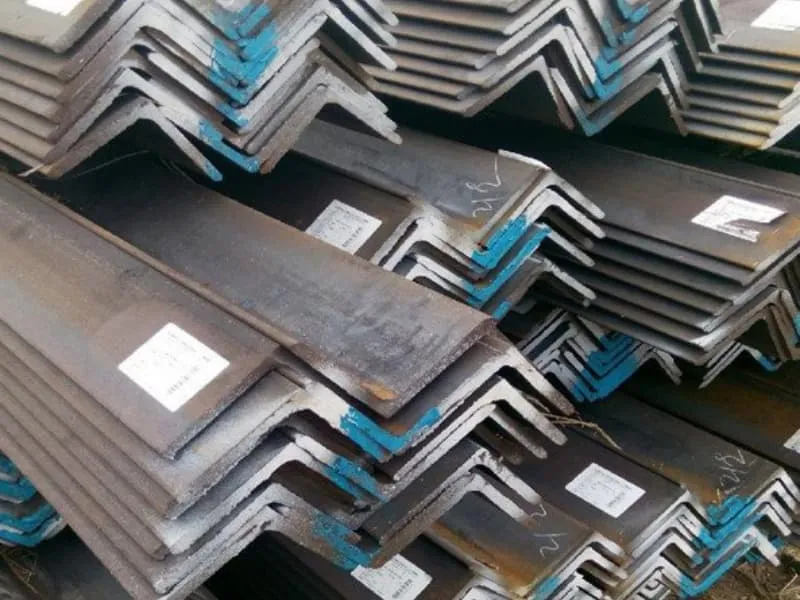
Most buyers ask me this question at the wrong moment. They ask it after the purchase order is signed, when the sizes are fixed and the delivery date is already printed in the contract. By then, the answer is not a choice. It is a consequence.
I would rather you ask it while the enquiry is still open, because the mode decision runs in a fixed order. Length comes first, and it removes options before money is discussed. Weight comes second, because it decides how many boxes you actually need. Parcel size comes third, and it is where breakbulk either becomes cheap or becomes silly. Discharge port equipment comes fourth. Protection comes last, and only to choose between the two modes you still have left.
Get that order wrong and you end up shipping 60 tonnes of 12 m angle as breakbulk because it “looks industrial”, when five containers would have cost less and arrived three weeks earlier. I have seen that mistake on both sides of the water.
Why Does Bar Length Decide the Shipping Mode Before Weight Does?
A 6 m bar will not enter a 20 ft box. A 12 m bar barely enters a 40 ft box. Length rules out whole modes before anyone compares freight.
Bar length decides the mode because container internal length is fixed: 5,898 mm in a 20 ft and 12,032 mm in a 40 ft. Anything past 5.8 m needs a 40 ft, and anything past 11.8 m should go breakbulk.
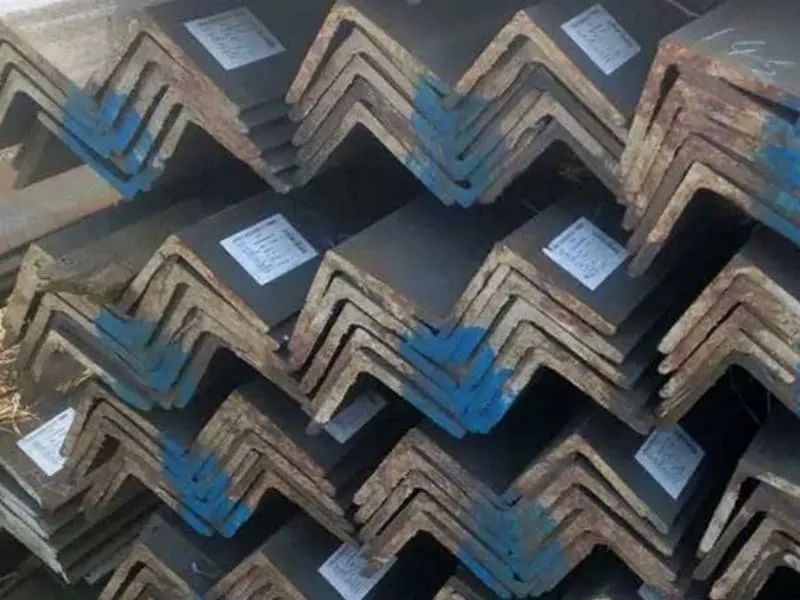
The 32 mm Problem
A standard 40 ft container has an internal length of 12,032 mm. A 12 m angle bar is 12,000 mm. That leaves 32 mm in total, which is 16 mm at each end.
On paper that fits. In a real yard it does not, because the bar has to be fed in through a door opening 2,340 mm wide and 2,280 mm high, along the full length of the box, without touching the side walls. A bundle of twenty bars has to go in as one bundle, because you cannot restack a bundle inside a container. One bent end, one protruding strap, one bundle that was lifted with a single sling in the middle, and the last half metre goes in with a crowbar and a lot of shouting.
I have watched our loading crew walk 12 m bars into a 40 ft box. The first four metres are easy. The last half metre is never quiet.
Why the Standard Allows a Bar That Will Not Fit
This is the part most buyers miss. EN 10056-2 allows straightness deviation of 0.4 percent of length as standard, and 0.2 percent as a tighter option. On a 12 m bar, 0.4 percent is 48 mm of bow.
The container gives you 32 mm.
So a bar that is fully compliant with the standard can be physically impossible to load into a 40 ft container. Nothing is wrong with the steel. Nothing is wrong with the box. The two tolerances simply do not meet. This is why experienced suppliers quote 11.8 m as the container-friendly maximum for angle, and why so many marine angle orders quietly get re-cut before stuffing.
If your drawings call for 12 m members, ask for 11.8 m plus a 200 mm allowance, or accept that the last part of the bundle will be cut at the port. Cutting at the port is the worst option, because you lose the mill end mark and the piece loses its heat identity right before it goes to sea.
The Length That Wastes the Least Space
Length is not only about fit. It is also about how much of the 12,032 mm you actually use.
| Bar length | Fits 20 ft (5,898 mm) | Fits 40 ft (12,032 mm) | Length used in a 40 ft |
|---|---|---|---|
| 5.8 m | Yes, with 98 mm spare | Yes, two rows | 11,600 mm, 96% |
| 6.0 m | No, 102 mm too long | Yes, two rows | 12,000 mm, 99.7% |
| 9.0 m | No | Yes, one row | 9,000 mm, 75% |
| 11.8 m | No | Yes | 11,800 mm, 98% |
| 12.0 m | No | 32 mm total clearance | 12,000 mm, on paper |
Two 6 m rows fill a 40 ft almost perfectly. One 9 m row wastes a quarter of the box, and that wasted quarter is dead freight you still pay for. If your cut list allows it, mix 9 m bars with 3 m pieces in the same box, or push the whole order to 6 m and let the yard splice. On a 40 ft, 6 m is the length that pays. If you have not fixed the sizes yet, check the marine angle steel size range we stock before you write the cut list.
There is one more detail on 20 ft boxes. The internal length is 5,898 mm, so 6 m bars do not fit even diagonally in any useful quantity. Suppliers who tell you they ship 6 m angle in 20 ft containers are either cutting to 5.8 m or loading through an open top with the bars overhanging, which the carrier will normally refuse.
Does Weight or Volume Fill a Container of Marine Angle Steel First?
Angle steel is dense. You will hit the payload limit with the box two-thirds empty, and that empty space is what you paid for.
Weight fills the container first, by a wide margin. A 40 ft box carries about 26.8 tonnes but holds 67 m³, and 26.8 tonnes of L100×100×10 occupies only about 5 m³ once stacked.

The 15 kg/m Rule of Thumb
Take L100×100×10. The standard weight table for marine angle steel gives 15.12 kg/m. A 12 m bar weighs 181 kg. A 40 ft container with a payload of 26,800 kg holds 147 of those bars, and with dunnage and lashing you should plan on 146.
Now the volume. The cross-section is 19.2 cm², so 146 bars of 12 m contain about 3.4 m³ of steel. Allow for nesting voids between the legs and you are stowing something like 5 to 6 m³ in a box with 67 m³ of internal volume.
That is roughly 8 percent utilisation. You are paying for a 67 m³ box and shipping 5 m³ of cargo. The rest is air, and the air does not get cheaper.
| Angle size | kg/m | Weight of a 12 m bar | Bars per 40 ft at 26.8 t | Steel volume in the box |
|---|---|---|---|---|
| L50×50×5 | 3.77 | 45 kg | About 590 | About 2.5 m³ |
| L63×63×6 | 5.72 | 69 kg | About 388 | About 3.1 m³ |
| L75×75×8 | 9.03 | 108 kg | About 247 | About 3.3 m³ |
| L100×100×10 | 15.12 | 181 kg | About 146 | About 3.4 m³ |
| L125×125×12 | 22.7 | 272 kg | About 98 | About 3.7 m³ |
| L150×150×12 | 27.3 | 328 kg | About 81 | About 3.9 m³ |
Read that column of volumes again. Every size lands between 2.5 and 4 m³ of actual steel, because the payload ceiling arrives first in every case. That is not a packing problem you can solve with better stacking. It is arithmetic.
Why Cutting 12 m Bars to 6 m Saves Nothing
A buyer once asked me to cut 120 tonnes of 12 m angle down to 6 m “to get more into the containers”. I ran the numbers before answering.
At 12 m, 120 tonnes is 661 bars, and 146 bars per box means five 40 ft containers. At 6 m, it is 1,322 bars at 91 kg each, and 295 bars per box. That is still five containers. Same freight, plus a cutting charge, plus a new set of cut ends with no mill mark.
Cutting only helps when length is the binding constraint, which is the 12 m case, not the weight case. If the bars are 12 m and you must containerise, cut to 11.8 m or 6 m for loading reasons and budget for the loss of end identity. Do not expect the freight to fall, because it will not.
The Road Limit After the Box Lands
The payload figure on the container is not the number that matters at the destination gate. Most destinations cap the legal road weight of the tractor, chassis and box together, and 26.8 tonnes of steel plus a 3.8 tonne box plus a chassis will often exceed it. In practice many receivers plan 24 to 26 tonnes of cargo per 40 ft, and some markets are stricter.
This is worth settling before you book, not after. If the receiving yard is 400 km inland from Dammam or Ho Chi Minh, an overweight box gets weighed, held and re-handled, and the cost lands on whoever booked the freight. On dense cargo like angle steel, I would rather ship 25 tonnes and move, than 26.8 tonnes and argue.
When Does Breakbulk Become Cheaper Than Containers?
Breakbulk looks cheap per tonne on a big project and expensive on a small one. The fixed costs do not shrink with the parcel.
Breakbulk usually wins above roughly 300 to 500 tonnes on a single bill, or whenever the bars are too long for a 40 ft. Below that, container fixed costs per tonne are lower and sailings are far more frequent.
The Break-Even Arithmetic
Containers are priced per box. Breakbulk is priced per revenue ton, which is the greater of the weight in tonnes and the volume in cubic metres. For bundled angle steel the stowage factor sits well under 1 m³ per tonne, so weight governs and you are effectively paying per tonne.
That difference in structure creates the break-even. Container cost per tonne is flat, because every box carries the same payload. Breakbulk cost per tonne falls as the parcel grows, because the fixed items, the heavy lift, the lashing, the survey, the port permits, get spread over more tonnes.
Here is the arithmetic with round numbers for illustration only, all rates [Zora will replace]:
| Item | Container | Breakbulk |
|---|---|---|
| Ocean freight | USD 1,800 per 40 ft | USD 45 per tonne |
| Cargo per unit | 26.8 t | Parcel size |
| Fixed charges | Included above | USD 6,000 per parcel |
| Cost per tonne at 100 t | USD 67 | USD 105 |
| Cost per tonne at 300 t | USD 67 | USD 65 |
| Cost per tonne at 1,000 t | USD 67 | USD 51 |
The lines cross at about 270 tonnes. That is the whole decision in one table. Below it, containers are cheaper and simpler. Above it, breakbulk starts to pay, and by 1,000 tonnes the gap is wide enough to matter on a project budget.
Two things move that crossing point. A higher container rate pushes it down, which favours breakbulk. A higher breakbulk fixed charge, for example a heavy-lift crane and a welded sea-fastening package, pushes it up, which favours containers. Ask your forwarder for the fixed charge separately. If they cannot separate it, they are not quoting breakbulk properly.
What FILO and FIOS Actually Transfer
The three letters after the rate matter more than the rate itself, because they decide who pays for the crane.
FIO means free in and out. The owner is free of loading and discharge, so your cargo pays the stevedores at both ends. FIOS adds stowed, so you also pay for the stowage plan and the lashing. FILO means free in, liner out: you pay the load port, the owner pays the discharge.
On a 300 tonne angle parcel, the load and discharge handling can be a meaningful share of the total, and it sits outside the headline rate. I have seen two quotations differ by 15 percent on the rate and reverse order once the terms were normalised. Always convert a breakbulk quote to delivered cost before you compare it with a container quote, and make sure the container quote includes THC at both ends and the inland legs.
Sailings, Not Just Rates
Freight is only half the comparison. Frequency is the other half.
Container services from Chinese ports to the Gulf and Southeast Asia run weekly or better, from several load ports. Liner breakbulk to a port like Dammam runs far less often, and in my experience you should plan on one or two sailings a month, with the exact date moving. If your erection schedule has a hard date, a two-week slip in a breakbulk sailing is a schedule problem, not a freight problem.
That is why I treat breakbulk as a planning decision, not a spot decision. If the tonnage justifies it, book early and accept the sailing date you are given. If the date is fixed and the tonnage is small, pay the container premium and keep control of the calendar.
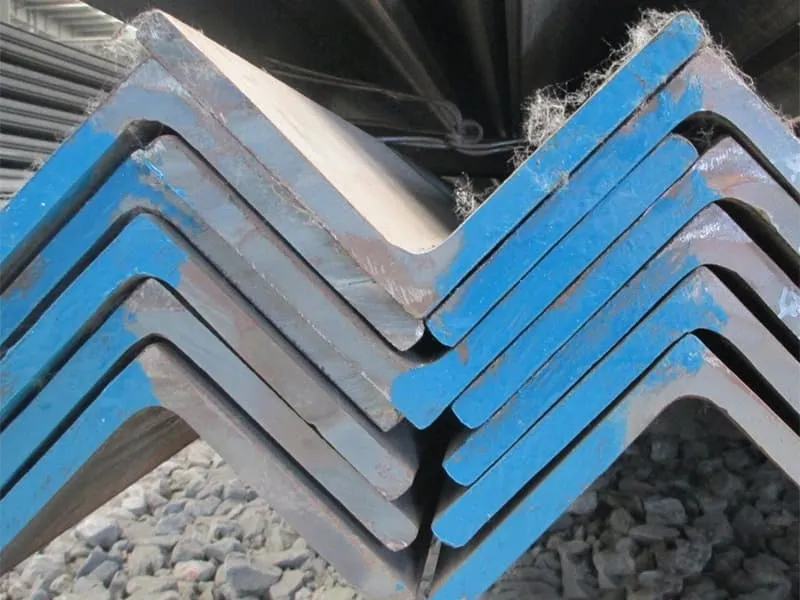
| Decision factor | Container, 20 ft or 40 ft | Breakbulk | Flat rack or open top |
|---|---|---|---|
| Bar length | Up to 5.8 m in 20 ft, 11.8 m in 40 ft | No practical limit | 12 to 15 m |
| Practical parcel | 25 to 150 t per booking | 300 t and up | Single bundles, 20 to 27 t |
| Sailing frequency | Weekly or better | One to two per month on many routes | With the container service |
| Weather exposure | Sealed, but condensation risk | Open to rain and spray | Partly exposed |
| Handling events | Two, crane at each port | Four or more, plus stowage | Two, plus OOG handling |
| Cost structure | Per box, flat per tonne | Per revenue ton, falling with size | Per box plus out-of-gauge surcharge |
| Best fit | Standard sizes, urgent dates, mixed parcels | Long bars, large tonnage, geared ports | 12 m bars at moderate tonnage |
| Main risk | Payload ceiling, container rain | Weather, lashing failure, sailing gaps | Damage at the exposed ends |
Which Mode Actually Keeps Marine Angle Steel in Better Condition?
A sealed box feels safer. It also traps moisture, and moisture is what turns a clean mill finish into a claim.
Containers protect angle steel from rain and handling but trap condensation; breakbulk exposes it to weather and more lifts but allows inspection and ventilation. Neither is automatically safer, so the packing and lashing plan decides the outcome.
Container Rain Is Real
Steel does not stop corroding because it is inside a box. Corrosion starts at around 40 percent relative humidity and accelerates quickly above 60 percent. A container loaded in Liaocheng in July can hold air at 80 percent humidity, then cool by fifteen degrees overnight at sea. The moisture condenses on the coldest surface, which is the steel, and you get container rain.
The fix is not a sheet of plastic. A half-sealed wrap traps water instead of excluding it. What works is dry cargo, dry dunnage, a calculated quantity of desiccant for the voyage length and the package volume, and a box that is checked for holes and door seals before stuffing. Timber dunnage has to be dry as well, because wet battens introduce the water you were trying to keep out.
I always ask for photographs of the empty box, the dunnage, the loading sequence and the closed doors. When a rust claim arrives eight weeks later, those four photographs decide the argument.
The Lashing Numbers the Chief Officer Will Ask For
Breakbulk cargo is secured under the IMO CSS Code, and the vessel’s Cargo Securing Manual is the document that governs your stow. In heavy weather the forces are not small: transverse accelerations can reach 0.8 g and longitudinal accelerations about 0.5 g.
The rule of thumb in the code is that the total Maximum Securing Load of the lashings on each side of a unit should equal the weight of the unit. It is a sanity check, not a calculation, and it understates the requirement for tall, narrow stacks where tipping governs rather than sliding.
This is where timber stops being packing and becomes a securing component. Steel on a steel deck has very low friction, and almost none when wet. Hardwood dunnage under the bundle multiplies the available friction, which reduces the number and size of lashings you need. Dundage must be dry, sound and even in thickness. Split or uneven battens give you the friction of nothing and a point load into the cargo at the same time.
For angle steel I would also watch the stack shape. Angle bundles nest, which is good for volume, but a nested stack of L sections is not a solid block. The legs interlock and the bundle behaves well until the lashing load comes on, then the outer bars walk. End blocking matters as much as the lashings.
Handling Counts as Damage
Every lift is a chance to bend an end or break a strap. A container moves the bundle twice, once at the load port and once at discharge, because the bundle is packed once and the box does the rest. Breakbulk moves it at the yard, onto the truck, off the truck at the quay, into the hold, and then again at discharge. Four to six events instead of two.
Bent ends matter more on marine angle than buyers expect. A deformed end cannot be spliced cleanly, so the fabricator cuts back 100 to 200 mm and loses the mill mark on that piece. Multiply that across a few bundles and you have a traceability problem on top of a dimensional one.
Our Dammam customer told me the packaging on our bundles was the best he had received, and I think that comment was really about handling, not about the wrap. Fewer touches means fewer claims. When a buyer chooses breakbulk for a 90 tonne parcel because the rate looked lower, I usually ask how many lifting points that parcel will see before it reaches the yard.
Conclusion
Pick by length first, then parcel size, then port equipment. The mode that fits your bars and your tonnage will also be the one that keeps the steel clean.