
Marine angle steel bundle dimensions look like a paperwork detail. They are not. They decide whether your order fits the container, whether the port crane can lift it, and who pays when the packing list and the actual bundles disagree.
A marine angle steel bundle is normally 1–3 tonnes, strapped at four points with two lifting slings. Before sailing, confirm five data: bundle length, cross-section, gross weight, piece count, and lifting points. Anything over 5 tonnes needs special equipment and written carrier approval.
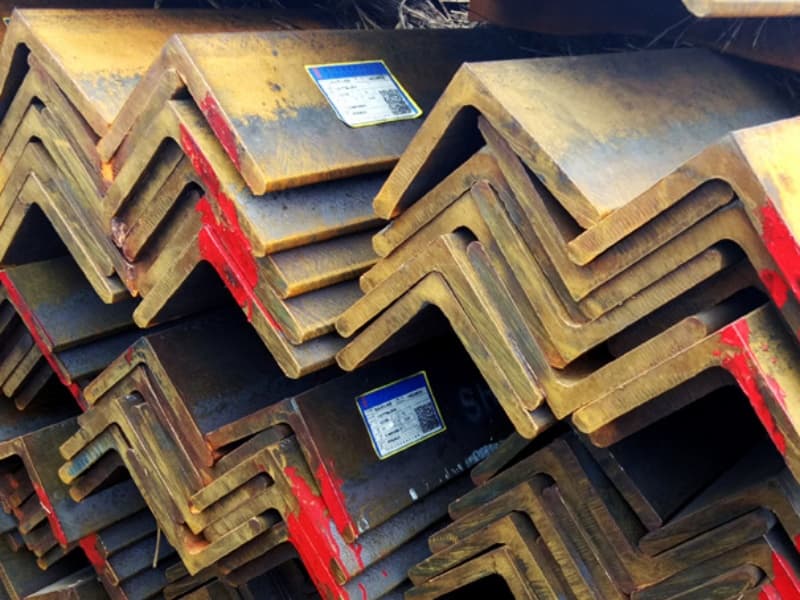
I have watched this play out at loading ports more times than I can count. Two weeks ago I stood on the apron at Qingdao while a forklift driver refused a bundle because the declared width was 600 mm and the real one was closer to 900 mm — it would not pass between the container door frames he had already positioned. One number, wrong by 300 mm, and the whole loading plan had to be rebuilt while the vessel cut its laycan. So let me walk you through the numbers that matter, in the order I check them.
Which Bundle Dimensions Should You Ask Your Supplier to Confirm?
Most buyers ask for a price per tonne and stop there. Then the bundles arrive at their yard and nobody knows how to lift, store, or count them. Asking for five bundle data points before shipping costs nothing and prevents most of it.
Before shipping, confirm five bundle data points: total length (6, 9, or 12 m), nested cross-section, gross weight per bundle (typically 1–3 t, max 5 t), bars per bundle, and lifting sling positions. Get every one of them onto the packing list, bundle by bundle.
The Five Data Points, One by One
Bundle length. This is usually the bar length: 6 m, 9 m, or 12 m for marine angle steel. It matters twice — once for transport (a 12 m bar only fits a 40 ft container or a bulk vessel sling load) and once for your own fabrication nesting. If you plan to nest 6 m pieces and the mill ships 12 m bars, your cutting plan changes and your offcut rate changes with it.
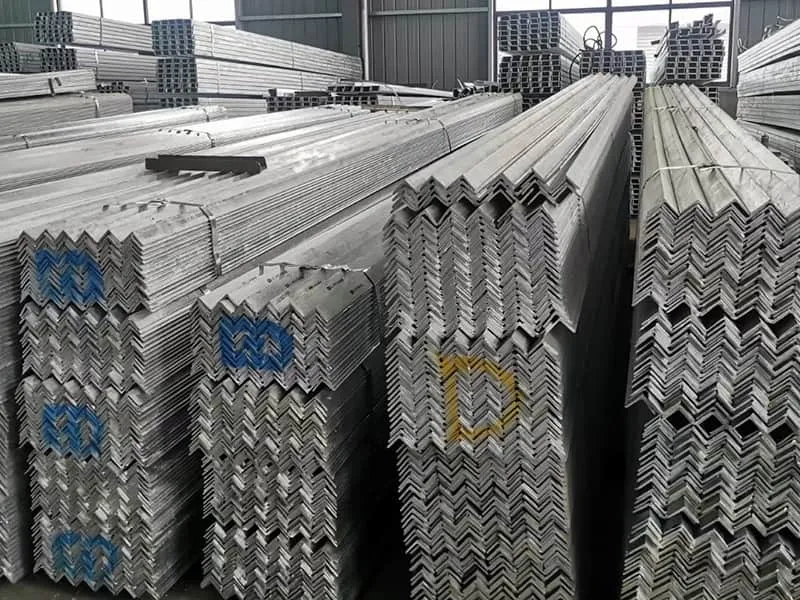
Cross-section width and height. Angle bars nest into each other like chevrons, so a bundle of, say, 100×100×10 mm sections is much slimmer than 14 loose bars side by side. A nested bundle of fourteen 12 m bars of that size is roughly 450 mm wide and 350 mm tall — I work this out from the kg/m table, not from a guess, and so should your supplier. The nested cross-section decides whether the bundle passes through a container door (2.34 m wide) and how many bundles stack side by side on a vessel or in your yard.
Gross weight per bundle. Export practice for long products settles around 1–3 tonnes per bundle, with 5 tonnes as the practical ceiling for standard handling. Below that, forklifts and two-leg slings cope anywhere in the world. Above it, you are into crane-dependent territory, and the rules change — I will come back to that.
Piece count per bundle. A bundle of 50×50×5 at 6 m runs about 22.6 kg per bar, so a 2.5 t bundle holds roughly 110 bars. A bundle of 150×150×12 at 12 m runs about 328 kg per bar, so the same 2.5 t holds only seven or eight. When your receiving team counts bars instead of weighing bundles, the small-size bundles are where disputes are born.
| Bundle data point | Typical range | Why the buyer cares |
|---|---|---|
| Bar / bundle length | 6 m / 9 m / 12 m | Equipment choice and nesting plan |
| Nested cross-section | 300–800 mm wide | Container door clearance, stacking |
| Gross weight | 1–3 t typical, 5 t max | Crane, forklift, container floor limits |
| Pieces per bundle | 7–110+ by size | Receiving count, dispute control |
| Lifting points | 2 slings, 4 strap positions | Safe handling, no bundle damage |

Strapping, Slings, and Dunnage — the Dimensions Nobody Quotes
The bundle is more than a stack of bars. Standard seaworthy packing for angle steel means steel straps at four positions along the length, two lifting slings built into the bundle (or salvaging timber edges so chain slings do not bite the bottom bars), and dunnage between layers and under the stack. I also ask for the strap specification: a polyester strap should have a breaking force of at least 1.5 times the bundle weight, and every sharp angle edge needs a corner protector, because a strap bearing directly on a cut edge sees two to three times its normal local stress and can part in transit.
Our own practice, refined after one too many bundles arrived with the bottom course scratched: waterproof paper around the inner layers, VCI paper for longer sea transits, and heat-number tags wired to both ends of every bundle. When Gulf Metal Solutions in Saudi Arabia told us our packaging was the best they had received for ship plates, it was not luck — it was because we send them the bundle drawing before the first strap is tensioned. For a refresher on how the tags themselves preserve traceability, see our article on bundle identification without losing traceability.
How Do Bundle Dimensions Affect Container and Vessel Choice?
Here is where dimensions stop being abstract. The bundle geometry interacts with container internals, payload caps, and destination road limits — and the weakest of the three wins.
A 12 m angle bundle fits a 40 ft container or travels as breakbulk; a 6 m bundle fits a 20 ft box. Steel is weight-limited, not volume-limited — most lanes cap a container at 21.6–27 t payload — and any bundle over 5 t needs the carrier’s written approval.
Length Comes First, Payload Comes Second
The container internals have not changed since my first shipment: a 40 ft general-purpose box gives you 12.032 m of internal length, so a 12 m angle bar goes in with about 32 mm of total slack — measure it once and you will never trust a “roughly 12 m” bundle again. A 20 ft box takes 5.8 m cut lengths, not 6.0 m bars. If your supplier offers “standard 6 m lengths in 20 ft containers”, ask them to cut to 5.8 m or move the order to a 40 ft box; the second option is almost always cheaper than special cutting.
Then run the weight check. Take the nested cross-section, work out bundles per tier, and multiply. A 40 ft container carrying 2.5 t bundles tops out around ten bundles — that is the payload cap talking, not the space. On our container loading capacity calculation article we walk through that arithmetic in full, including the destination road limits that trim a nominal 26–27 t payload down to 21–24 t on many lanes.
When a Bundle Outgrows the Box
Single bundles above roughly 5 tonnes exceed what a container floor and standard lashing are designed to carry. The fix is either a flat rack or bulk-vessel breakbulk, and both come with obligations: steel plates under the load to spread it, direct lashing chains rated to the cargo, and — this is the part buyers forget — the carrier’s written approval of the floor-loading arrangement. Anything over about 20 tonnes, or any dimension beyond 2.6 m, belongs on a flat rack or a bulk carrier, full stop.
Overlength is its own trap. A 12 m bundle on a 40 ft flat rack with a small overhang must be declared at its maximum outline, because open-top and flat-rack cargo is billed by the space it occupies on the vessel. If the shipping line re-measures at the terminal and finds 15 cm more than declared, the out-of-gauge surcharge jumps a tier, and the fines and terminal storage that follow cost far more than the surcharge ever would have. The comparison between the two transport modes is covered in detail in our container versus breakbulk shipping article.
| Bundle characteristic | Fits standard container | Needs special equipment |
|---|---|---|
| 6 m bars, ≤ 2.5 t per bundle | Yes — 20 ft or 40 ft | No |
| 12 m bars, ≤ 2.5 t per bundle | 40 ft only | No |
| Single bundle > 5 t | No | Flat rack / breakbulk + carrier approval |
| Length > 12 m | No | Flat rack, lashing calculation, 14-day booking buffer |
| Bundle width > 2.34 m | No — door clearance | Breakbulk only |
What Goes Wrong When Declared Bundle Dimensions Do Not Match Reality?
This is the most technical section, and the one I feel most strongly about, because every mismatch I have ever seen was avoidable at the packing stage.
Dimension mismatches surface at the worst moment: the port gate, the crane, the customs scan. A bundle 300 mm wider than declared misses the container door; a bundle 400 kg heavier breaks the VGM; an undeclared overhang triggers re-measurement fines. All are preventable at the packing stage.
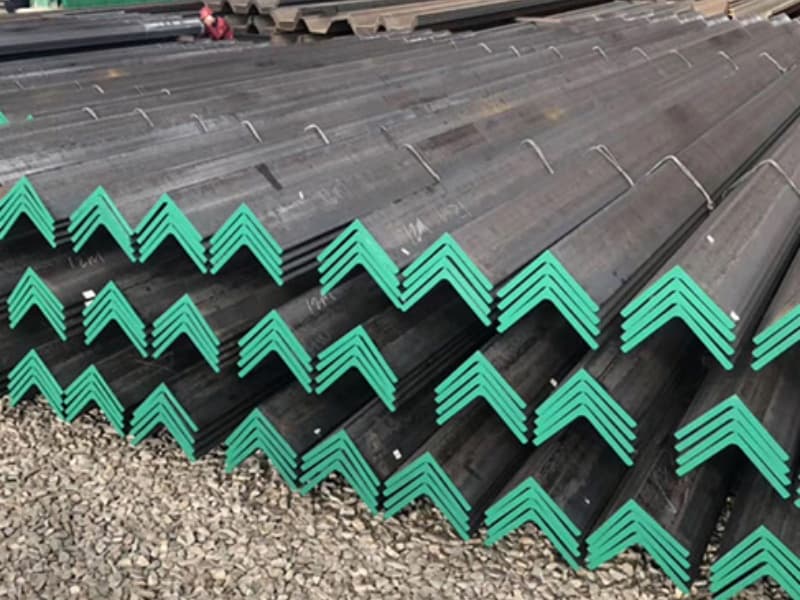
The Port-Side Failure Modes
Door and equipment clearance. Ports handle what the manifest promises. If the crane spreader is set for 700 mm bundles and yours measures 950 mm, the loading sequence stalls while someone re-rigs. If the bundle misses the container door by a hand’s width, the whole stowage plan is rebuilt on the quay. I watched a 26-bundle loading plan collapse this way once, and the demurrage that followed cost more than the steel in two of the bundles.
VGM and weighbridge conflicts. Since SOLAS made the Verified Gross Mass declaration mandatory, a bundle whose real weight drifts from the declared weight poisons the whole container number. A 300 kg error across ten bundles is 3 t off the VGM — enough for the terminal to pull the box from the stack, re-weigh it, and bill everyone for the delay. Weigh bundles, do not calculate them. The steel is what it is; the paperwork should match.
Count disputes at discharge. Bars per bundle is the number receiving teams fight over. If the packing list says 110 bars of 50×50×5 per bundle and the destination warehouse counts 96, nobody can tell whether bars were lost, miscounted at origin, or never packed. A bundle-level packing list — grade, heat number, size, piece count, gross weight per bundle — turns a one-year letter war into a ten-minute document review.
Why Insurers Care More Than You Think
Marine cargo insurance pays rust, shift, and crush claims only when the packing meets the “seaworthy packing” condition of the policy. Bundles that were not strapped to standard, loaded wet, or dunnaged only at the ends give the insurer an exit, and they take it. Dunnage matters more than buyers expect: timber only under both ends leaves the middle of a 12 m bundle unsupported, and road vibration over a few hundred kilometres can bow the bars permanently. Supports belong at roughly 1.5–2 m centres along the length.
The evidence that wins claims is collected during loading, not after: time-stamped photos of the empty container, each secured layer, the completed stow, the sealed doors, and the container number plate. We send that photo set with every shipment, and I would make it a contractual deliverable if I were buying — a supplier who refuses to photograph loading is telling you something.
| Mismatch type | Where it surfaces | Typical consequence |
|---|---|---|
| Width over-declared | Container door, crane rigging | Stowage plan rebuilt, demurrage |
| Weight under-declared | VGM check, weighbridge | Box pulled for re-weigh, fees |
| Piece count wrong | Destination receiving | Count dispute, slow claim |
| Overhang undeclared | Terminal re-measurement | OOG surcharge tier jump, fines |
| No mid-length dunnage | Destination yard | Bowed bars, fabrication rework |
How Should Buyers Verify Bundle Dimensions Before the Vessel Sails?
Everything above is preventable with one discipline: verify at the packing stage, when a correction costs an afternoon instead of a discharge dispute.
Verify bundle dimensions before sailing with four checks: confirm the bundle-level packing list against the mill certificates, weigh and measure bundles physically, review the loading photos against the stowage plan, and put an SGS inspector on the ground for critical orders.
The Four Checks in Practice
Paper check. Bundle-level packing list against the MTCs: heat numbers must match, piece counts must be arithmetically consistent with the kg/m table, and gross weights must sum to something close to the invoice tonnage. If the packing list total drifts more than about 2% from the invoice weight, stop and ask — rolled steel has a tolerance band, but sloppy sums are not tolerance, they are carelessness.
Physical check. Random bundles get weighed and measured. One tape measure across the nested cross-section and one pass over the weighbridge per ten bundles catches almost every systematic error. It takes the crew twenty minutes.
Photo check. Compare the loading photos against the stowage plan: dunnage at the centres, straps intact, corner protectors in place, nothing overhanging that was not declared. Photographs with timestamps are also what your insurer will ask for if anything happens later.
Third-party check. For first orders with a new supplier, or high-value high-strength grades, an SGS inspection before door closure costs a few hundred dollars. Gulf Metal Solutions runs exactly this check on our Dammam shipments — bundle by bundle, tag against certificate — and in three years of orders the practice has never once delayed a vessel.
A Final Word on Who This Protects
Here is the part buyers miss: these checks protect the supplier too. Every mismatch I have described was, in my experience, an honest error — a bundle built to an old drawing, a strap count copied from the last shipment, a weight calculated instead of weighed. A buyer who asks for bundle data early, checks it calmly, and puts it in writing is the buyer whose problems get fixed before the vessel sails. That is the supplier relationship you want, and frankly it is the one we fight hardest to keep.
| Approach | What it catches | Cost when skipped |
|---|---|---|
| Trust declared data only | Nothing | Disputes at discharge, insurance gaps |
| Paper check (list vs MTC) | Arithmetic and traceability errors | One clerk-hour |
| Physical weigh and measure | Systematic packing errors | Twenty minutes per ten bundles |
| Photo review vs stow plan | Lashing and dunnage failures | Review time only |
| Third-party inspection | All of the above, witnessed | A few hundred dollars, priceless |
Conclusion
Ask for bundle length, cross-section, weight, piece count, and lifting points before shipping. Verify them at packing, photograph the loading, and both your vessel schedule and your insurance cover stay intact.