
Your buyer’s port has one small crane, a shallow berth and no covered shed. One wrong bundle weight turns a clean delivery into a week of demurrage.
Plan marine angle steel shipments around the weakest link at the discharge port, not the cheapest freight rate. Ask for crane capacity at the real working radius, berth draft and quay loading, then size each bundle to the smallest lifting device in the chain. Settle that before the vessel sails.
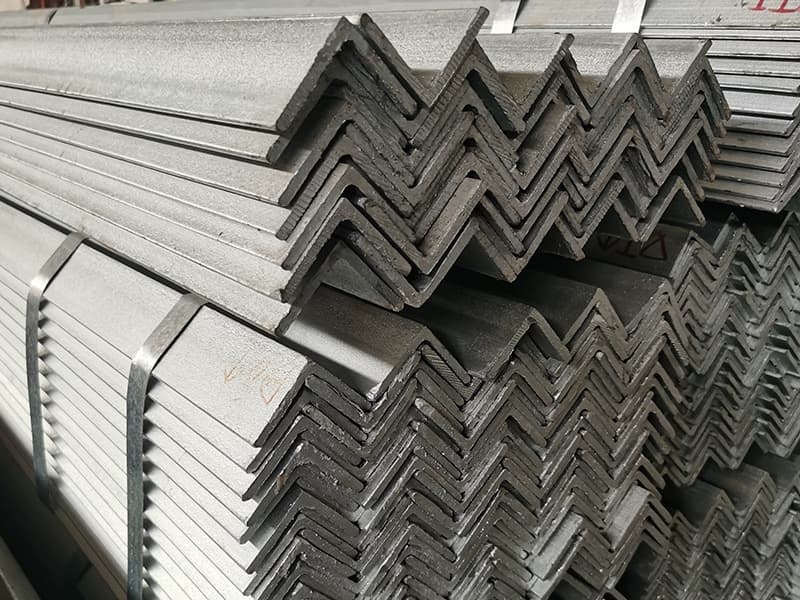
Most discharge problems I deal with do not start at the port. They start in the quotation, on the day somebody compares two freight rates per tonne and picks the lower one without asking what equipment will meet the cargo. I have watched a 26-bundle loading plan stall on a quay because the terminal crane could not reach the far side of the hold with a full bundle on the hook. The steel was correct, the certificates were correct, and the vessel still sat there while four stevedores re-rigged slings. That delay cost more than the freight difference on the whole parcel. So when a buyer tells me the destination is “a small port”, I stop treating it as a freight question and start treating it as an equipment question.
What Makes a Discharge Port “Limited” in Practice?
Limited rarely means no crane at all. It usually means a small crane, working far out, shared with three other vessels.
A port is equipment-limited when its crane cannot lift your bundle at the radius it must work, when the berth draft sits below the vessel’s sailing draft, or when the quay and shed cannot take the parcel. Any one of the three changes the plan.
The Four Numbers I Ask For First
Before I quote a CIF or CFR price into a port I have not shipped to, I send four questions. Not a general request for “port information”, because that usually comes back as a brochure. Four numbers, in writing, from the buyer or the local agent.
The first is the maximum draft alongside the berth at the tide the vessel will actually arrive on. Not the port’s maximum draft on the homepage. The second is the crane’s safe working load at the radius it will work, which is almost never the number painted on the boom. The third is the permitted quay loading in tonnes per square metre, because a heavy mobile crane needs to stand somewhere. The fourth is the laydown area and the free time attached to it.
Those four answers decide more about the shipment than the ocean freight rate does. I have refused a booking on a rate that looked excellent because the third answer came back at 1.7 t/m² and the only crane available weighed 400 tonnes.
| Constraint | What to ask for | Figure I commonly see | What it forces you to change |
|---|---|---|---|
| Berth draft | Max draft alongside, on arrival tide | 7.5 m at inner river jetties, 9.5 m at the entrance | Parcel split, smaller vessel, or lightering at anchorage |
| Crane capacity | SWL at the working radius, not the headline SWL | 25–40 t on a geared general cargo ship | Bundle weight, lifts per bundle, use of ship’s gear |
| Quay loading | Permitted load, t/m² | 1.7–3.1 t/m² for mobile harbour cranes | Crane position, staging plan, matting |
| Yard equipment | Forklift or reach stacker capacity | 3–5 t forklift at most mid-size yards | Bundle weight cap at the buyer’s gate |
| Storage | Covered area, free days | Open yard, 3–7 free days | Packing, rust protection, delivery pace |
Why the Headline Capacity Misleads
A crane is rated on a load curve, and the curve falls away fast. One common 124-tonne mobile harbour crane holds its full 124 tonnes between about 10.5 m and 12 m of radius, drops to roughly 100 tonnes at 16 m, and is down to about 50 tonnes at 30 m. Nothing has broken. The geometry simply changed.
That matters because the radius you need is not the distance from the crane to the near edge of the cargo. It is the distance to the far side of the hatch, plus the height of the lift, plus whatever the load swings through on the way out. On a vessel with a 20 m beam, a crane standing at the quay edge can easily be working at 25 m to 30 m of radius before the bundle clears the coaming. At that radius your 124-tonne crane is a 50-tonne crane.
Ship’s gear follows the same rule. A geared Handysize might carry four cranes of 30 tonnes each. That sounds generous until you learn that they cannot all work the same hold at the same time, that the 30 tonnes applies at a short radius, and that two cranes working in tandem on one bundle need a written lift plan and a rigging supervisor who has done it before.
The Constraint That Is Not a Crane
On a lot of small parcels the crane is not the bottleneck at all. It is the buyer’s forklift. A 3-tonne forklift at the yard gate sets a hard cap on bundle weight that no ship’s crane can override, because the bundle still has to come off the truck and go into a rack. I have had a buyer ask for 5-tonne bundles to save on strapping and handling, then discover his own yard could not move them and his men were breaking bundles on the apron with a gas torch. Cutting a bundle at destination destroys the piece identity and the heat traceability in one afternoon.
So the bundle weight has to be agreed against the smallest device in the chain, and that device is usually at the far end of the voyage, not at mine.
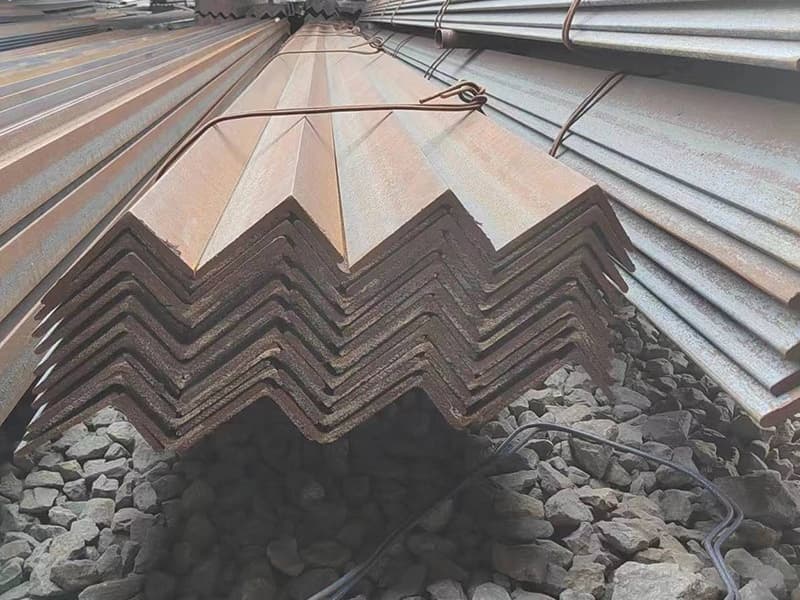
How Do Bundle Weight and Lift Points Decide Whether the Cargo Moves at All?
A 3.5-tonne bundle is light for a ship’s crane and heavy for a 3-tonne forklift. The chain breaks at the smallest link.
Match every bundle’s gross weight to the smallest lifting device at the destination, lift long bundles from two points at the quarter marks, and keep sling legs at 60 degrees or steeper to the horizontal. Stencil gross weight and lift points on every bundle before it leaves the works.
The Arithmetic Behind a Bundle
Angle mass is easy to check and almost nobody checks it. For an equal-leg angle, theoretical mass in kilograms per metre is the sum of the two legs, minus the thickness, multiplied by the thickness, multiplied by 0.00785. For L100×100×10 that is 190 × 10 × 0.00785, or 14.9 kg per metre. A 12 m bar is 179 kg. Twenty bars is 3.6 tonnes.
| Size | kg per m | 12 m bar | Bars per bundle | Bundle gross weight |
|---|---|---|---|---|
| L50×50×5 | 3.7 | 45 kg | 50 | 2.2 t |
| L75×75×8 | 8.9 | 107 kg | 30 | 3.2 t |
| L100×100×10 | 14.9 | 179 kg | 20 | 3.6 t |
| L150×150×12 | 27.1 | 326 kg | 12 | 3.9 t |
| L200×200×16 | 48.2 | 579 kg | 8 | 4.6 t |
Two things go wrong with that table in real life. First, the standard permits a tolerance on mass, so a nominal 3.6-tonne bundle can legally weigh more, and the strapping, the timber bearers and the dunnage add to it. Second, bundles get counted, not weighed. I insist on a weighbridge ticket per bundle for any port where the buyer’s forklift is close to its limit, because “about 3.5 tonnes” is how you break a axle.
The Sling Angle Nobody Measures
The load on each sling leg is not half the bundle weight. It is half the weight divided by the sine of the leg angle to the horizontal, so the penalty grows quickly as the legs flatten out.
| Leg angle to horizontal | Included angle | Tension per leg, 3.6 t bundle | Verdict |
|---|---|---|---|
| 75° | 30° | 1.86 t | Preferred |
| 60° | 60° | 2.08 t | Minimum for most lifts |
| 45° | 90° | 2.55 t | Needs a spreader beam |
| 30° | 120° | 3.60 t | Do not lift |
Port crane drivers work fast and the hook height is fixed by the boom. On a short bundle the legs go flat without anyone deciding to make them flat, and a 5-tonne sling quietly carries 7 tonnes. Good rigging guidance puts the preferred leg angle above 75 degrees to the horizontal and treats 60 degrees as the floor unless there are positive stops. Anything flatter wants a spreader beam, which costs time at every lift.
Why Angle Steel Cuts Slings
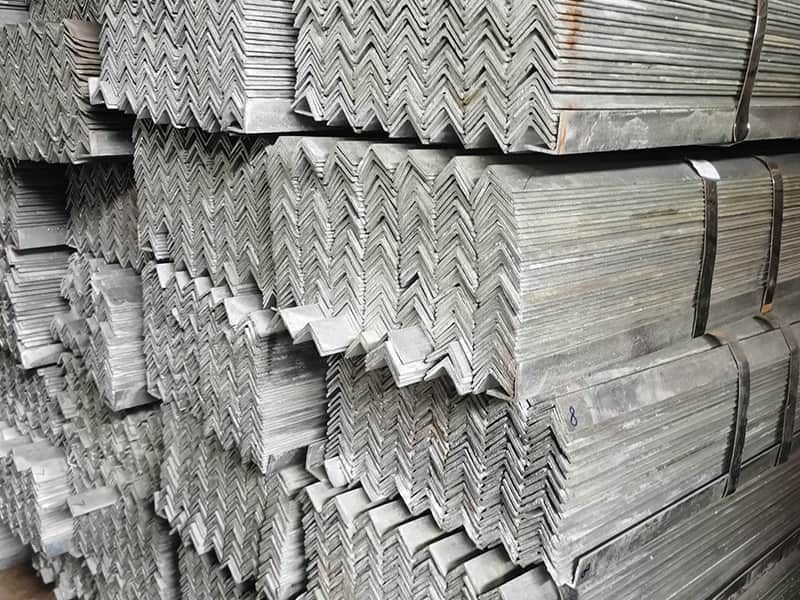
Angle has two sharp leg corners running the full length of the bundle, and they sit exactly where a choked sling bears. Synthetic web slings fail at those corners under tension even when the edge is not razor sharp. The official guidance is blunt about this: there is no such thing as cut-proof protection, cardboard and rags are not protection, and the only acceptable answer is a load-rated corner protector or a steel saddle that stays in place while the load swings.
This is where a cheap lifting plan becomes expensive. A sling that parts at 4 m over the quay drops 3.6 tonnes of steel onto whatever is underneath. If it parts over the hold, the bundle lands on the tank top and you are surveying a dented double bottom instead of discharging cargo. I will not load a bundle that has no protectors fitted and no lift points marked, and I say so in the loading instructions rather than at the quay.
Two Points, Not One
A 12 m bundle lifted from a single sling in the middle bows. The bars slide, the straps loosen, and the bundle arrives at the hold out of shape with two bars hanging out of the nest. On the return leg it will not sit flat on the truck, and the buyer’s men will cut the straps to re-stack it.
The fix is two lifting points at the quarter marks, so the overhang at each end is a quarter of the length and the bending moment stays low. On bundles above about 6 m, a spreader beam keeps the legs vertical at those points and stops the slings crushing the top bars. It is a small piece of equipment that saves a whole afternoon.
Pre-Slinging at the Works
We pre-sling long bundles at our yard when the destination is known to be short of gear. The slings go on at the works, tensioned and protected, and the bundle is loaded, shipped and discharged without anyone re-rigging it in the hold. It costs us twenty minutes per bundle and it removes the most common cause of a stalled discharge.
The Gulf Metal Solutions order into Dammam is the case I quote most often. Their feedback was not about steel quality first. It was about packaging, and about how fast we answered when something needed deciding. A buyer who is fighting a small crane at 02:00 does not want to wait two days for a supplier to confirm a bundle weight. He wants the number stencilled on the bundle, on a packing list, and in an email he can forward to his stevedore.
Which Vessel and Mode Suit a Port That Cannot Handle Normal Cargo?
The crane is only one variable. The vessel type decides what equipment the port needs before your cargo moves at all.
Book a geared multipurpose or general cargo vessel when the discharge port has no shore crane, and keep containers for ports with a working container terminal. Where draft is the limit, plan lightering at the anchorage with barges and, if the ship is gearless, a floating crane.
When to Book a Geared Vessel
A geared vessel carries its own discharge solution. A typical Handysize geared bulker has four cranes of about 30 tonnes; a tweendecker might carry two of 60 tonnes. That is enough for bundled angle in almost any configuration, and it is the reason geared tonnage earns a premium into West Africa, South Asia and parts of the Middle East.
The vetting question is never “is she geared”. It is “what is the SWL, at what radius, and can all cranes work at once”. Cargo gear clauses in a charter party exist because those three answers get argued about later. If the gear breaks down mid-discharge, the time may come off the owner’s account pro rata, which is little comfort to a buyer with trucks waiting at the gate.
Gearless vessels are cheaper per tonne and completely dependent on the shore. At a port with one overworked mobile crane, a gearless ship can wait for days. That waiting is demurrage, and demurrage is charged to whoever agreed to it.
When Containers Still Work
If the port has a container terminal, it has a container crane, and that crane is usually the most reliable piece of equipment on the quay. Angle up to about 5.8 m goes into a 20 ft box and up to 11.8 m into a 40 ft box. If the mode is still open, our container versus breakbulk comparison runs the same three checks in order. The discharge is then a truck problem, not a crane problem, and the buyer’s forklift only has to move a 2.5-tonne bundle, which is why container loading capacity is really a bundle-count question rather than a volume question.
The trap is a port that handles containers occasionally. One gantry crane, one berth, a queue of three ships. I would rather ship breakbulk into a slow berth than containers into a terminal that might not work my vessel for a week.
When the Water Is Too Shallow
Draft is the constraint that cannot be negotiated with a bigger crane. River ports publish their numbers and they are not generous. Chittagong, for example, lists 9.50 m as the maximum permissible draft for entering and leaving, 7.5 m at jetties 2 to 4, and 8.55 m at jetties 5 to 13. A vessel loaded for a 12 m berth does not call there fully laden.
Lightering is the answer. The ship stays at the anchorage, discharges part of the parcel into barges, and then proceeds to the berth at a draft the channel allows. If the ship is geared she can work straight into ungeared barges. If she is gearless, a floating crane has to come alongside and the cost climbs.
The price of that operation is real. Lighterage commonly adds USD 15 to 40 per tonne, discharge rates fall to roughly 200 to 350 tonnes per day against 500 to 800 at a berth, handling exposure rises, and the whole thing stops when the swell passes about 1.5 m or the wind passes 20 knots. On a 500-tonne parcel that is a five-figure decision, and it belongs in the quotation, not in the claim.
| Mode | Equipment needed at discharge | Realistic parcel | Extra cost | Main risk |
|---|---|---|---|---|
| Container | Container gantry crane and a 3 t forklift | Up to about 300 t | Lowest per tonne | No gantry, no discharge |
| Geared breakbulk | Ship’s cranes, 30 t class | 300–3,000 t | Moderate premium | Gear breakdown, slow lifts |
| Gearless breakbulk | Shore crane or floating crane | 1,000 t and up | Crane hire per day | Waiting for equipment |
| Lightering | Ship’s gear or floating crane plus barges | 500–5,000 t | USD 15–40 per tonne | Weather, double handling |
What Must Be Agreed in Writing Before the Vessel Sails?
Every one of these decisions is cheap before the fixture and expensive after it. Paper is how you keep it cheap.
Put the discharge equipment in the fixture, list every bundle’s gross weight on the packing list, and name who pays for barges, floating cranes and waiting time. A one-page discharge plan signed before sailing prevents most demurrage arguments at the other end.
The Cargo Gear Clause
If you are chartering, the cargo gear clause should say what gear the ship has, whether it is at the charterer’s disposal, who supplies the drivers, whether all cranes can work simultaneously, and what happens to laytime if one breaks down. Vague wording here is how a two-day discharge becomes a six-day argument.
If you are buying on CIF or CFR, the same information belongs in your supplier’s shipping advice. Ask which vessel, which gear, and what the heaviest bundle weighs. A supplier who cannot answer within a day has not planned the discharge either.
The Packing List That Survives the Quay
A packing list with a total tonnage is useless at a small port. What the stevedore needs is a line per bundle: bundle number, size, length, piece count, theoretical mass, weighed gross mass, and the lift points. Add a simple plan showing how the bundles are stowed in the hold, because the discharge sequence follows the stow.
We stencil the bundle number and gross weight on the end of every bundle in paint that survives salt water. It is the cheapest traceability you will ever buy. If the bundle geometry is still open at quotation stage, our notes on marine angle steel bundle dimensions cover what a gate, a crane and a container door will actually accept. When a bundle arrives at the buyer’s yard without a legible mark, the first thing that happens is a guess, and the second thing is a quality claim.
Laytime, Demurrage and Who Pays for the Barge
Liner terms mean the owner pays for loading and discharge. Free in and out means the charterer pays. Most arguments come from the space between those two, where the barge hire sits. If the plan includes lightering, the clause should name the lightering area, the party who orders the barges, who pays for them, whether waiting for a barge counts as laytime, and what draft the ship must reach before she berths.
Then keep the record. Notice of readiness, statement of facts, every stoppage, every rain break, every hour spent waiting for a floating crane. A letter of protest written on the day is worth ten emails written three weeks later.
Insurance and the Double Handling
Lightering means the cargo is handled twice, and each handling is a chance to bend a bundle or scuff a mill mark. Tell the insurer. A policy written for direct berth discharge may not respond the way you expect when the loss happens between two vessels at an anchorage. The same applies to the buyer’s inland insurance if the barge lands at a jetty the policy does not name.
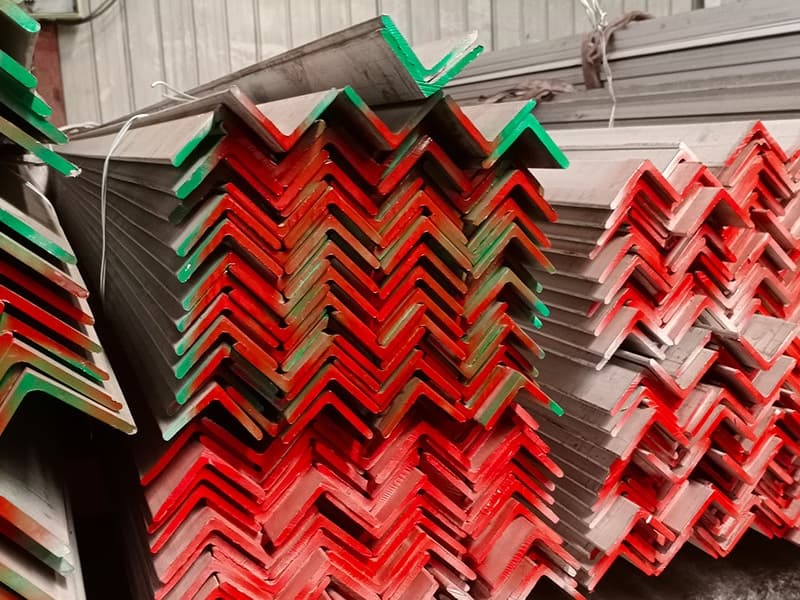
| Discharge configuration | Best for | Bundle cap | Plan in one line |
|---|---|---|---|
| Geared ship, direct to truck | Port with no shore crane | 3–4 t | Pre-sling, mark weights, confirm gear SWL at radius |
| Container terminal | Port with a working gantry | 2.5 t | 5.8 m or 11.8 m lengths, weigh every box |
| Gearless ship plus shore crane | Port with a strong mobile crane | 4–5 t | Book crane time, check quay loading, agree standby cost |
| Anchorage lightering | Draft-limited river port | 2–3 t per barge lift | Barges, weather window, draft survey, double-handling cover |
The configuration on the last line is the one I would choose last, and only when the draft leaves no alternative. It works. I have seen it work smoothly on a parcel that had no business going into that river at all. But it works when it is planned in the quotation, with the barge rate, the weather risk and the extra handling already priced, and it fails badly when it is discovered by the agent two days before arrival.
Conclusion
Plan the discharge before you plan the freight. Bundle weight, lift points and vessel gear decided early cost a fraction of what they cost at anchorage.