
Shipbuilding demands materials that withstand harsh ocean environments. Marine steel plates form the backbone of vessel construction. Many shipyards struggle with material selection and quality consistency.
Marine steel plates are specially designed for ship hull construction, offering superior corrosion resistance, impact toughness, and weldability. These plates form the primary structure of ship hulls, decks, bulkheads, and reinforcement areas. They must meet strict classification society standards like ABS, DNV, and LR for maritime safety and performance requirements.
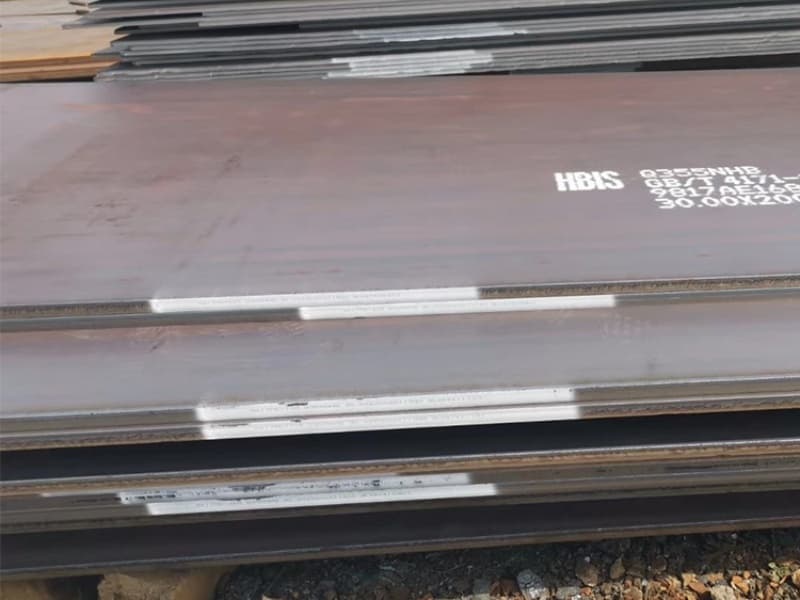
Understanding marine steel applications requires examining specific use cases and technical requirements. Let’s explore the fundamental questions that determine proper material selection in shipbuilding.
What are the applications of steel plates?
Steel plates serve multiple critical functions in ship construction. Many people underestimate their versatility beyond basic hull formation.
Steel plates apply to ship hull plating, deck construction, bulkheads, reinforcement framing, and structural components. They provide watertight integrity, structural strength, and impact resistance throughout vessel construction. Different thickness grades serve specific areas from thin plating to thick reinforcement sections.
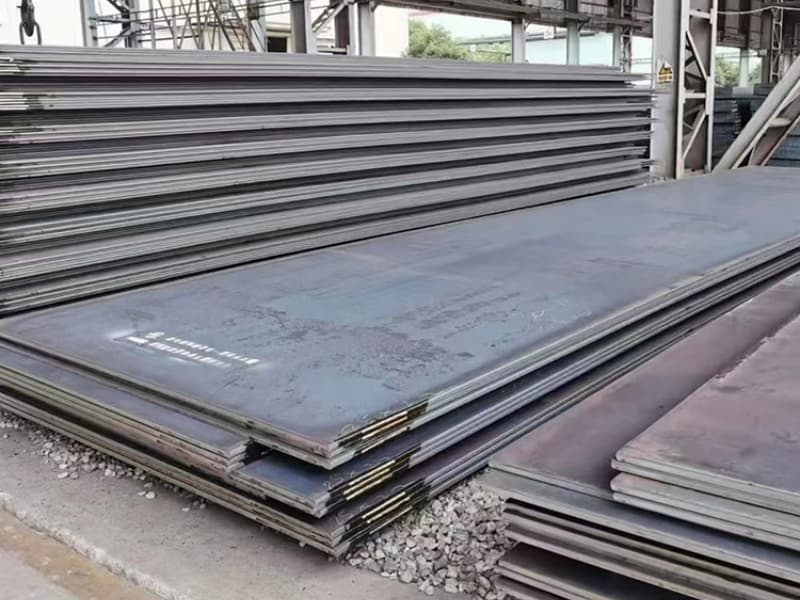
Comprehensive Steel Plate Applications in Marine Construction
Steel plates represent the fundamental building blocks of ship construction. Their applications span every major vessel component, each requiring specific material properties and processing techniques.
Hull Plating and Shell Construction
The outer hull uses steel plates to create watertight envelopes. Bottom plating withstands water pressure and potential grounding impacts. Side shell plating resists wave action and docking contacts. These plates typically range from 10mm to 40mm thickness depending on vessel size and classification requirements. The material must exhibit excellent corrosion resistance and impact toughness at low temperatures.
Deck Plating Systems
Main deck plates carry cargo loads and equipment weight. They provide torsional rigidity to the entire hull structure. Weather deck plates face direct exposure to marine atmosphere and saltwater spray. thickness varies based on location and load requirements. Deck plates require good fatigue resistance and surface flatness for proper equipment installation.
Bulkhead and Partition Construction
Watertight bulkheads use steel plates to create compartmentalization. These divisions prevent flooding progression if hull damage occurs. Collision bulkheads feature extra thickness for impact resistance. Tank bulkheads separate different liquid cargos while resisting chemical corrosion. Each bulkhead type demands specific plate specifications and welding procedures.
Reinforcement and Local Strengthening
High-stress areas require additional plate reinforcement. Engine seatings use thick plates to support massive propulsion machinery. Rudder stocks and stern frames need extra plate thickness for steering mechanism attachment. Hatch coamings and opening reinforcements use specially formed plates to maintain structural continuity around cutouts.
Tank and Hold Construction
Cargo tanks utilize steel plates resistant to specific cargos. Oil tanks need corrosion-resistant plates for various petroleum products. Chemical carriers require specialized alloy plates for aggressive substances. Ballast tanks use plates with enhanced corrosion protection due to constant water exposure. Each application demands material compatibility with stored substances.
Superstructure and Accommodation Blocks
Navigation bridges and crew accommodations use lighter gauge plates. These structures prioritize weight savings while maintaining structural integrity. The plates require good formability for complex shapes and aesthetic appearance for visible areas. Fire protection considerations influence material selection for accommodation areas.
| Application | Typical Thickness | Key Requirements |
|---|---|---|
| Hull Plating | 15-35mm | Impact toughness, corrosion resistance |
| Deck Plating | 12-25mm | Fatigue strength, flatness |
| Bulkheads | 8-20mm | Watertight integrity, stiffness |
| Reinforcement | 25-50mm | High strength, weldability |
| Tank Construction | 10-30mm | Chemical resistance, durability |
Our experience with Gulf Metal Solutions demonstrates these applications. They used our AH36 grade plates for hull construction and lower-grade materials for non-critical areas, optimizing both performance and cost efficiency.
What is the common steel use in shipbuilding?
Shipbuilding requires specific steel grades that meet maritime standards. Not all structural steels suit marine applications.
High-tensile steel grades like AH32, AH36, and DH36 are most common in shipbuilding. These steels offer excellent strength-to-weight ratios, good weldability, and impact resistance at low temperatures. They meet classification society requirements for various vessel types from cargo ships to specialized vessels.
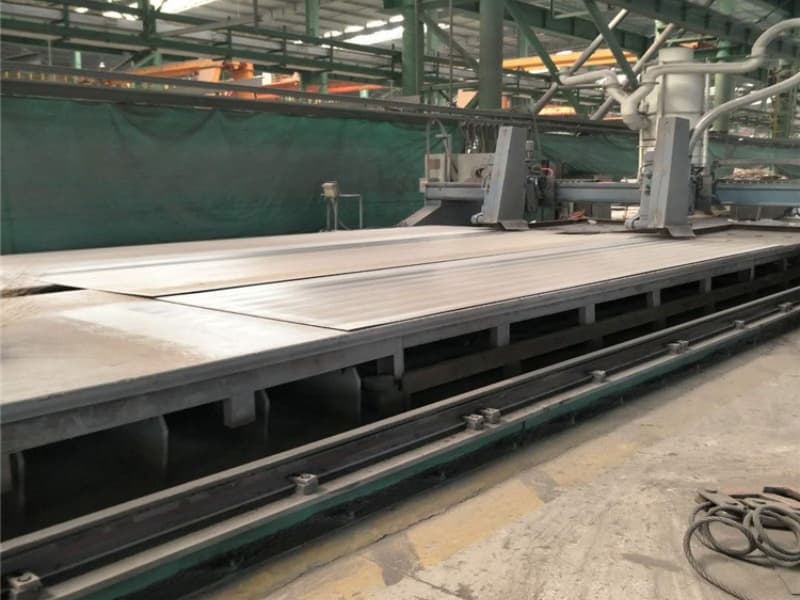
Standard Steel Grades in Modern Shipbuilding
The shipbuilding industry relies on standardized steel grades that ensure consistent performance and safety. Understanding these grades helps proper material selection for different vessel types and operating conditions.
Normal Strength Steel Grades
Grade A, B, D, and E represent normal strength shipbuilding steels. Grade A serves non-critical applications with minimal impact requirements. Grade B offers improved toughness for general structural use. Grade D provides better low-temperature performance for colder operations. Grade E delivers superior impact resistance for critical areas and harsh environments. These grades form the basis of most commercial vessel construction.
High Strength Steel Categories
AH32, AH36, DH32, DH36, EH32, and EH36 constitute high-strength shipbuilding steels. The "H" indicates high tensile strength, while the number specifies minimum yield strength in ksi. The letter prefix (A, D, E) indicates impact test temperature requirements. These steels allow weight reduction while maintaining structural integrity through higher strength properties.
Special Application Steels
Extra-high-strength steels like FH32-FH40 serve specific high-stress applications. Stainless steels and nickel alloys suit chemical carriers and LNG tanks. Cryogenic steels maintain toughness at extremely low temperatures for liquefied gas transport. Abrasion-resistant steels apply to areas subject to wear from cargo handling. Each special steel addresses unique operational challenges.
Classification Society Approvals
Marine steels require certification from recognized classification societies. American Bureau of Shipping (ABS), Det Norske Veritas (DNV), Lloyd’s Register (LR), and other societies set material standards. Each society maintains similar but distinct approval processes and testing requirements. Manufacturers must demonstrate consistent compliance through rigorous quality control systems.
Chemical Composition Requirements
Shipbuilding steels feature controlled chemical compositions for optimal performance. Carbon content balances strength and weldability. Manganese enhances strength and toughness. Silicon aids deoxidation during steelmaking. Phosphorus and sulfur levels remain low to ensure good toughness and weld quality. Micro-alloying elements like niobium and vanadium provide grain refinement and precipitation strengthening.
Mechanical Property Standards
Tensile strength, yield strength, and elongation values meet specific ranges. Impact toughness requirements vary by grade and application temperature. Bend testing verifies formability and internal soundness. Through-thickness properties prevent lamellar tearing in highly constrained joints. Each mechanical property serves specific structural performance needs.
| Steel Grade | Yield Strength (MPa) | Impact Test Temperature | Common Applications |
|---|---|---|---|
| AH32 | 315 | 0°C | General hull structures |
| AH36 | 355 | 0°C | Main hull plating |
| DH36 | 355 | -20°C | Cold service vessels |
| EH36 | 355 | -40°C | Arctic operations |
| FH36 | 355 | -60°C | Special low-temperature use |
Gulf Metal Solutions typically orders AH36 for main hull construction and DH36 for vessels operating in cooler climates. This grade selection ensures optimal performance while meeting classification society requirements.
Which plate forming techniques are common in ship building?
Ship construction involves complex plate forming processes. These techniques transform flat steel plates into three-dimensional hull components.
Common shipbuilding plate techniques include line heating, cold bending, roll forming, and press braking. Line heating uses controlled heat application to create complex curves. Cold bending employs hydraulic power for gradual deformation. These methods ensure accurate hull forms while maintaining material properties.
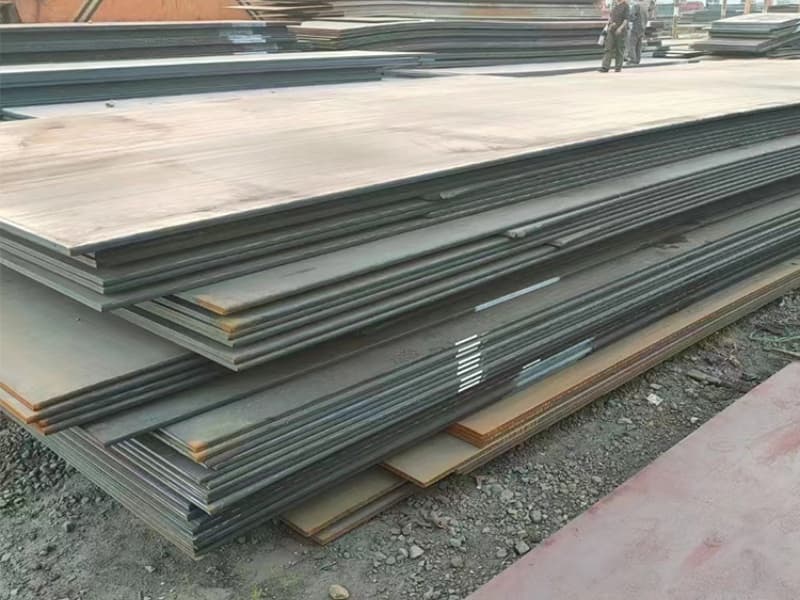
Advanced Plate Forming Methods in Ship Construction
Modern shipyards employ sophisticated forming techniques to create complex hull shapes from flat steel plates. Each method offers specific advantages for different curvature requirements and production scenarios.
Line Heating and Thermal Forming
This traditional method uses controlled heat application to induce curvature. Oxy-fuel torches or induction heaters apply heat along specific lines. The heated areas expand then contract during cooling, creating permanent deformation. Skilled operators control the process through heat intensity, speed, and pattern selection. The technique works well for complex double-curvature shapes like bow and stern sections. Modern yards use computer-controlled heating machines for improved accuracy and repeatability.
Cold Bending and Mechanical Forming
Hydraulic presses and bending machines create curvature without heat input. This method preserves the material’s original properties and microstructure. Three-roll pyramid rolls gradually curve plates through multiple passes. The process suits mild curvature requirements like flat-of-side hull areas. Computer numerical control ensures consistent results and dimensional accuracy. Cold bending generates less distortion and requires less subsequent correction compared to thermal methods.
Roll Forming and Plate Bending
Plate bending rolls handle thick plates for cylindrical and conical sections. Initial pinch rolls start the curvature, followed by main rolls that complete the bending process. Asymmetrical three-roll systems allow complete plate formation without edge pre-bending. Four-roll systems provide better control for precision work. This method applies to hull plating, mast sections, and pipe fabrication. Modern rolling machines feature CNC controls for automated curvature generation.
Press Braking and Incremental Forming
Hydraulic press brakes create sharp bends and angular shapes. The process works well for brackets, frames, and structural components. Incremental forming uses multiple small deformations to achieve complex shapes. CNC controls coordinate tool movement for accurate results. This method suits smaller components and localized forming requirements. The technique offers flexibility for prototyping and small-batch production.
Modern Automation Trends
Robotic forming systems increase productivity and consistency. Laser-assisted heating improves thermal forming accuracy. Computer simulation predicts springback and deformation patterns. Automated measurement systems verify formed shapes against design models. These technologies reduce reliance on manual skills and improve first-time accuracy.
Quality Control Considerations
Forming processes must maintain material properties within specification. Excessive cold working can reduce toughness in critical areas. Overheating during thermal forming may alter mechanical properties. Dimensional checks ensure formed components fit properly during assembly. Non-destructive testing verifies absence of cracking or other defects introduced during forming.
| Forming Method | Application | Advantages |
|---|---|---|
| Line Heating | Complex curvatures | Versatility, no specialized tools |
| Cold Bending | Mild curvature | Property preservation, consistency |
| Roll Forming | Cylindrical sections | High productivity, thickness capacity |
| Press Braking | Angular shapes | Precision, repeatability |
| Incremental Forming | Prototypes, small batches | Flexibility, low tooling cost |
Our clients like Gulf Metal Solutions prefer suppliers who understand these forming requirements. We provide plates with consistent properties that perform predictably during shipyard forming operations.
What is the primary material used in the construction of modern ship hulls?
Modern ship hull construction relies on specific materials that balance strength, weight, and corrosion resistance.
High-strength low-alloy (HSLA) steel is the primary material for modern ship hulls. These steels provide excellent strength-to-weight ratios, good weldability, and superior corrosion resistance compared to carbon steels. Grades like AH36 and DH36 meet classification society requirements for various vessel types and operating conditions.

Comprehensive Analysis of Modern Ship Hull Materials
The evolution of ship hull materials reflects advancing metallurgical knowledge and changing operational requirements. Modern materials must satisfy multiple performance criteria while remaining economically viable.
High-Strength Low-Alloy Steel Dominance
HSLA steels contain small alloy additions that significantly enhance properties. Micro-alloying elements like niobium, vanadium, and titanium refine grain structure. Copper, chromium, and nickel additions improve atmospheric corrosion resistance. The resulting materials offer 20-30% higher strength than conventional mild steels. This strength increase allows weight reduction or increased payload capacity within the same structural dimensions.
Chemical Composition Optimization
Modern hull steels feature carefully balanced chemical compositions. Carbon content typically ranges between 0.10-0.20% for optimal weldability and toughness. Manganese content between 0.90-1.60% enhances strength without compromising toughness. Silicon levels around 0.50% assist deoxidation during steelmaking. Controlled sulfur and phosphorus levels (below 0.025%) ensure good through-thickness properties and weld quality.
Microstructural Engineering Advances
Thermo-mechanical controlled processing (TMCP) creates fine-grained microstructures. Accelerated cooling after rolling refines the ferrite-pearlite structure. This processing enhances both strength and toughness simultaneously. The fine grain structure improves weld heat-affected zone properties. Modern mills employ advanced cooling systems to achieve precise microstructural control.
Corrosion Protection Integration
Hull steels work within comprehensive corrosion protection systems. Coatings provide primary barrier protection against seawater exposure. Cathodic protection systems supplement coating performance. Steel composition includes corrosion-resistant elements where applicable. Design features minimize crevice corrosion and stagnant areas. Maintenance protocols ensure ongoing protection throughout vessel life.
Classification Society Requirements
International associations set rigorous material standards. The International Association of Classification Societies (IACS) establishes unified requirements. Individual societies like ABS, DNV, and LR implement additional specific rules. Material manufacturers must maintain approval through regular audits and testing. Shipyards must document material traceability throughout construction.
Future Material Trends
Advanced steel grades continue evolving for specific applications. Extra-thick plates for large container ships require enhanced through-thickness properties. Arctic-grade steels maintain toughness at extremely low temperatures. Hybrid materials combine steel with composites for optimized performance. Environmental considerations drive development of more sustainable production methods.
| Material Type | Key Features | Typical Applications |
|---|---|---|
| Normal Strength | Good weldability, cost-effective | Small vessels, internal structures |
| High Strength | Weight savings, higher strength | Main hull structures, large vessels |
| Arctic Grade | Superior low-temperature toughness | Ice-class vessels, polar operations |
| Stainless Steel | Excellent corrosion resistance | Chemical carriers, special areas |
| Composite Materials | Light weight, corrosion immunity | Superstructures, special components |
Gulf Metal Solutions sources AH36 and DH36 grades from us for their shipbuilding projects. These materials provide the optimal balance of strength, weldability, and corrosion resistance for commercial vessel construction.
Conclusion
Marine steel plates serve critical functions throughout ship construction. Proper material selection and processing ensure vessel safety, performance, and longevity in demanding marine environments.