
Visiting our partner mill in Shandong, I watched raw materials transform into marine steel plates. Each step ensures the quality shipbuilders depend on.
Marine steel plate production involves iron ore processing, steelmaking, continuous casting, hot rolling, heat treatment, and final inspection. This rigorous process creates plates with specific mechanical properties and corrosion resistance required for ship classification society certifications and harsh marine environments.
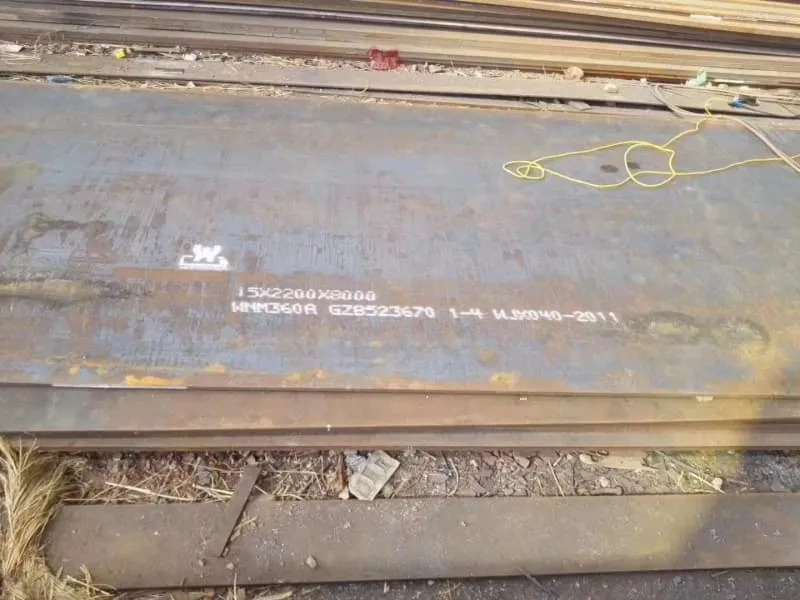
Understanding how marine steel plates are made helps you appreciate their quality and reliability. Let me walk you through the entire manufacturing journey.
What are the 6 steps of the steel manufacturing process?
A shipyard manager from Saudi Arabia asked about our production timeline. Explaining these six steps helped him understand our quality assurance process.
The six essential steel manufacturing steps are: iron making1, primary steelmaking2, secondary steelmaking3, continuous casting4, hot rolling5, and final treatment6. Each stage progressively refines the material to achieve precise chemical composition and mechanical properties for marine applications.
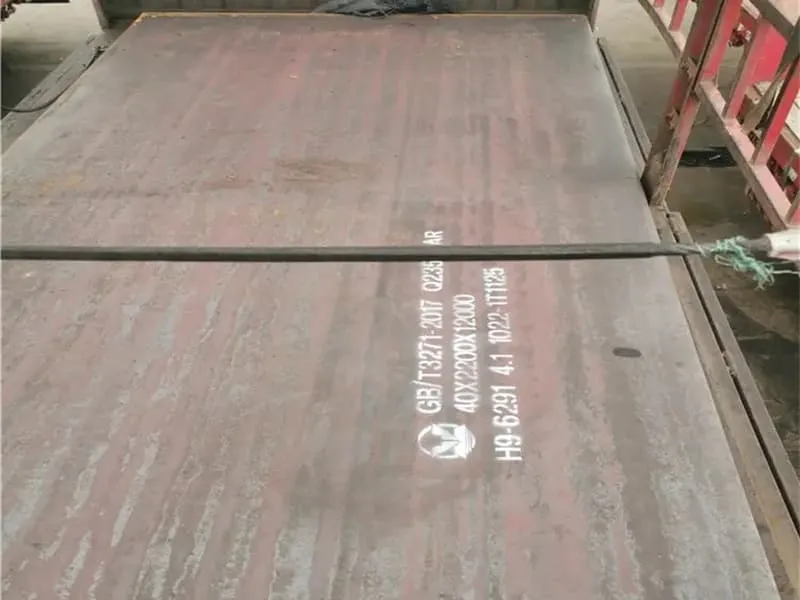
The Complete Steel Manufacturing Journey
Steel manufacturing transforms raw materials into high-performance marine plates through a carefully controlled sequence. Each step builds upon the previous one to achieve the required quality.
Iron Making – The Foundation
This first step converts iron ore into molten iron. Iron ore, coke, and limestone enter a blast furnace. Extreme heat melts the materials at over 1500°C. The process separates impurities as slag. The result is molten pig iron containing about 4% carbon. This pig iron serves as the raw material for steelmaking.
Primary Steelmaking – Carbon Reduction
Primary steelmaking reduces the carbon content from pig iron. Basic Oxygen Furnaces (BOF) or Electric Arc Furnaces (EAF) process the molten iron. Oxygen blows through the molten metal to oxidize excess carbon. The carbon content drops from 4% to between 0.02% and 0.1%. This creates liquid steel with the basic composition.
Secondary Steelmaking – Quality Refinement
Secondary steelmaking fine-tunes the chemical composition. This stage adds alloying elements like manganese, silicon, and nickel. The process removes unwanted elements like sulfur and phosphorus. Ladle furnaces maintain the molten steel temperature. Vacuum degassing removes hydrogen to prevent internal defects. This step ensures precise chemistry for marine grades.
Continuous Casting – Shape Formation
Continuous casting forms the molten steel into semi-finished shapes. The liquid steel pours into a water-cooled copper mold. The surface solidifies immediately while the center remains molten. Withdrawal rolls pull the continuously solidifying strand. Cutting torches slice the strand into slabs of required length. These slabs become the input material for rolling mills.
Hot Rolling – Dimensional Control
Hot rolling transforms slabs into finished plates. The slabs reheat to about 1200°C in furnaces. They pass through roughing mills that reduce thickness. Finishing mills achieve the final dimensions and surface quality. Controlled cooling settings determine the final microstructure and properties.
Final Treatment – Quality Assurance
The final treatment6 stage prepares plates for shipment. This includes cutting to exact sizes, surface inspection, and non-destructive testing. Ultrasonic testing detects internal flaws. The plates receive identification markings and certification. Protective coatings prevent corrosion during storage and transportation.
Steel Manufacturing Process Comparison
| Process Step | Input Material | Output Material | Key Equipment |
|---|---|---|---|
| Iron Making | Iron ore, coke, limestone | Molten pig iron | Blast furnace |
| Primary Steelmaking | Molten pig iron | Liquid steel | BOF or EAF |
| Secondary Steelmaking | Liquid steel | Refined steel | Ladle furnace |
| Continuous Casting | Refined steel | Slabs | Caster |
| Hot Rolling | Slabs | Plates | Rolling mill |
| Final Treatment | Plates | Finished plates | Testing equipment |
Our partner mills follow these steps meticulously. They maintain detailed process records for every heat of steel. This traceability gives our clients in Qatar and Philippines confidence in material quality.
How are steel plates1 manufactured?
A naval architect from Mexico needed specific plate dimensions for a new vessel design. Understanding the manufacturing process helped him optimize his specifications.
Steel plates are manufactured through slab reheating2, roughing mill reduction3, finishing mill shaping, accelerated cooling4, and heat treatment5. The process controls grain structure and mechanical properties to meet marine grade requirements6 for strength, toughness, and weldability.
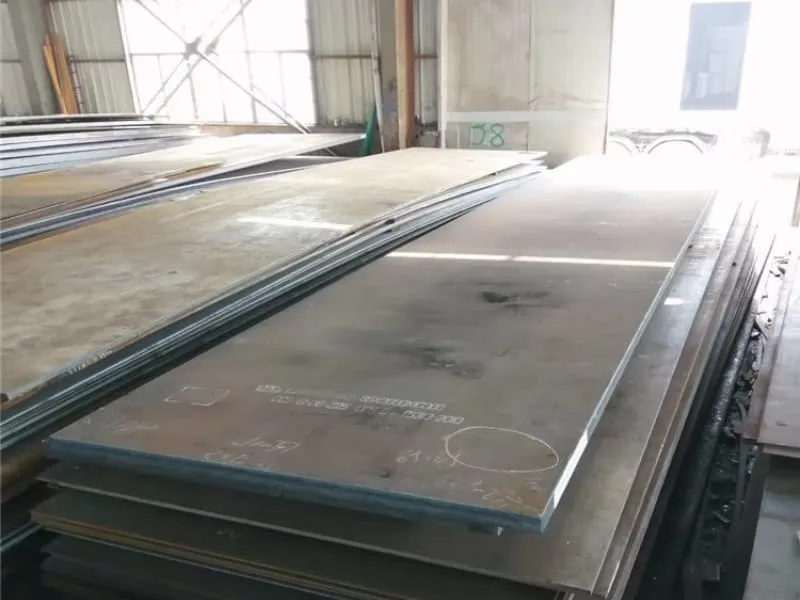
Plate Manufacturing Technical Details
Plate manufacturing requires precise control of temperature, deformation, and cooling rates. Each parameter affects the final plate properties and performance in marine service.
Slab Reheating Process
Slabs from continuous casting undergo reheating in walking beam furnaces. The temperature rises uniformly to 1150-1250°C. This temperature ensures proper plasticity for rolling. The heating rate must prevent thermal stresses that could cause cracks. Soaking time allows temperature equalization throughout the slab thickness.
Roughing Mill Operations
The reheated slabs proceed to the roughing mill. Heavy rolls reduce the slab thickness by 70-80%. This deformation breaks the original cast structure. The process creates a recrystallized fine grain structure. Width control systems maintain dimensional accuracy. The roughing mill produces transfer bars of intermediate thickness.
Finishing Mill Precision
Transfer bars enter the finishing mill for final dimensioning. Multiple stands achieve the exact thickness with tight tolerances. Modern mills control thickness to within ±0.2mm. The finishing temperature critically affects mechanical properties. For marine grades, finishing typically occurs between 800-900°C.
Accelerated Cooling Technology
After rolling, plates undergo controlled cooling. Water sprays or laminar flow systems provide rapid cooling. The cooling rate determines the final microstructure and strength. Accelerated cooling refines the grain size and enhances toughness. The stop cooling temperature is precisely controlled to around 600°C.
Heat Treatment Applications
Many marine plates require additional heat treatment5. Normalizing involves reheating to 900°C followed by air cooling. This treatment improves toughness and eliminates rolling stresses. Quenching and tempering creates higher strength grades through rapid cooling and tempering.
Plate Manufacturing Quality Control
| Process Parameter | Control Range | Measurement Method | Importance |
|---|---|---|---|
| Reheating Temperature | 1150-1250°C | Pyrometers | Plasticity for rolling |
| Finishing Temperature | 800-900°C | Thermal cameras | Grain size control |
| Cooling Rate | 5-30°C/second | Cooling controls | Microstructure development |
| Thickness Tolerance | ±0.2-0.5mm | X-ray gauges | Dimensional accuracy |
| Flatness | <5mm/m | Laser scanners | Fabrication ease |
Our mills in China utilize advanced automation systems. They maintain consistent quality across all plate productions. Clients in Thailand and Malaysia appreciate this consistency for their shipbuilding projects.
What are the steps in the manufacturing of steel?
A quality inspector from Romania questioned our testing frequency. Showing him the comprehensive manufacturing steps demonstrated our commitment to quality.
Steel manufacturing steps include raw material preparation, iron ore reduction in blast furnace1s, steelmaking in converters, secondary metallurgy2 for composition adjustment, continuous casting3 for slab formation, and thermomechanical processing4 for final properties development in rolling mills.
%[steel manufacturing detailed steps](https://cnmarinesteel.com/wp-content/uploads/2025/10/Marine-steel-plate-33.jpg "Steel Manufacturing Detailed Steps")
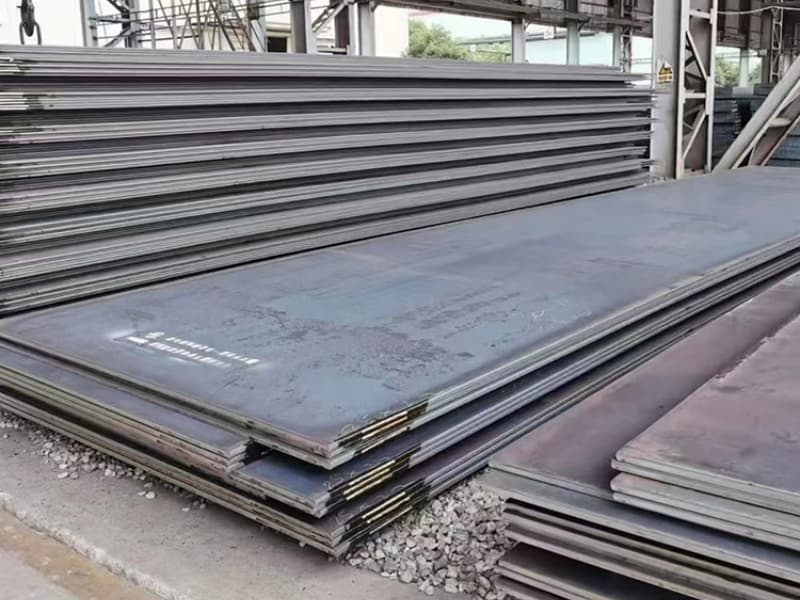
Detailed Steel Production Sequence
Steel manufacturing combines centuries-old principles with modern technology. Each step has evolved to produce higher quality steel more efficiently and consistently.
Raw Material Preparation and Handling
Iron ore undergoes crushing, screening, and beneficiation. The ore is mixed with fluxes and formed into sinter or pellets. Coal is converted to coke in coke ovens. These prepared materials ensure consistent furnace operation and steel quality. Raw material quality directly affects final steel purity.
Blast Furnace Iron Making
The blast furnace1 operates as a continuous chemical reactor. Prepared materials load from the top while hot air blasts from the bottom. Chemical reactions reduce iron oxides to metallic iron. The molten iron collects at the furnace bottom. Tapping occurs every few hours to remove molten iron and slag.
Steelmaking Process Options
Basic Oxygen Steelmaking5 uses pure oxygen to reduce carbon content. The process takes about 40 minutes per heat. Electric Arc Furnaces melt scrap steel using electrical energy. This method offers flexibility in raw materials. Both processes achieve the basic steel composition.
Secondary Metallurgy Precision
Ladle furnaces provide precise temperature control. Vacuum degassing removes dissolved gases. Injection systems add alloying elements accurately. Stirring ensures homogeneous composition. This stage achieves the exact chemical requirements for marine grades.
Continuous Casting Advancements
Modern casters produce slabs with excellent surface quality. Electromagnetic stirring improves internal structure. Automated powder feeding controls surface formation. The casting speed matches steel production rate. This continuous process replaced traditional ingot casting.
Thermomechanical Controlled Processing
This advanced technology combines deformation and temperature control. It creates specific microstructures for enhanced properties. The process is crucial for high-strength marine steels. It provides better toughness than conventional rolling.
Steel Manufacturing Evolution
| Process Stage | Traditional Method | Modern Method | Improvement |
|---|---|---|---|
| Iron Making | Charcoal furnaces | Blast furnaces | Higher efficiency |
| Steelmaking | Bessemer process | BOF/EAF | Better quality control |
| Casting | Ingot casting | Continuous casting | Higher yield |
| Rolling | Manual control | Automated TMCP | Superior properties |
| Quality Control | Destructive testing | Non-destructive testing | 100% inspection |
Our manufacturing partners invest continuously in process improvements. They adopt new technologies that enhance steel quality and consistency. This commitment benefits our clients across all export markets.
Which manufacturing processes are used for plates?
A fabricator from Pakistan needed plates with specific properties for a ship repair project. Understanding available processes helped them select the right material.
Plate manufacturing processes include hot rolling, thermo-mechanical controlled processing (TMCP), normalizing, quenching and tempering, and accelerated cooling. Each method creates different microstructures and properties suitable for various marine applications and service conditions.
%[plate manufacturing processes comparison](https://cnmarinesteel.com/wp-content/uploads/2025/10/Marine-steel-plate-34.jpg "Plate Manufacturing Processes Comparison")
Plate Processing Methods and Applications
Different manufacturing processes create plates with distinct characteristics. The choice depends on required properties, thickness, and intended application in ship structures.
Conventional Hot Rolling Process1
Hot rolling represents the basic plate production method. Slabs heat to high temperatures and deform between rolls. The process creates plates with good strength and toughness. The properties depend mainly on chemical composition. This method works well for standard thickness plates up to 150mm.
Thermo-Mechanical Controlled Processing2
TMCP combines controlled rolling with accelerated cooling. Rolling occurs in specific temperature ranges to refine grain structure. Accelerated cooling follows immediately after rolling. This process creates fine microstructures with excellent toughness. TMCP plates offer better weldability than conventionally processed plates.
Normalizing Heat Treatment3
Normalizing involves reheating rolled plates to about 900°C. The plates air cool to room temperature. This treatment produces a uniform fine-grained structure. It improves toughness and ductility while relieving internal stresses. Normalized plates show consistent properties through the thickness.
Quenching and Tempering Process4
Quenching rapidly cools plates from austenitizing temperature. This creates a martensitic structure with high strength. Tempering follows at intermediate temperatures. It improves toughness while maintaining high strength. Q&T plates serve in high-stress applications like offshore structures.
Accelerated Cooling Technology5
Accelerated cooling systems use water to control cooling rates. The technology enhances strength without increasing alloy content. It allows production of higher strength grades with better weldability. Modern systems provide precise cooling pattern control across the plate surface.
Process Selection Considerations6
The manufacturing process affects cost, delivery time, and properties. TMCP offers the best combination of strength and weldability. Normalizing provides excellent through-thickness properties. Q&T delivers the highest strength levels. The choice balances technical requirements with economic factors.
Plate Manufacturing Process Capabilities
| Process | Strength Range | Maximum Thickness | Key Advantages | Typical Applications |
|---|---|---|---|---|
| Hot Rolling | 235-355 MPa | 150mm | Cost-effective | General ship structures |
| TMCP | 355-690 MPa | 100mm | Excellent weldability | Hull plating |
| Normalizing | 355-460 MPa | 300mm | Uniform properties | Thick sections |
| Quench & Temper | 500-950 MPa | 150mm | High strength | Special components |
| Accelerated Cooling | 355-550 MPa | 80mm | Good combination | Various marine uses |
We guide clients in selecting the appropriate manufacturing process. Our technical team considers the specific application requirements and service conditions. This ensures optimal performance in actual marine environments.
Conclusion
Marine steel plate production combines advanced technology with rigorous quality control. Understanding the manufacturing process helps ensure proper material selection for shipbuilding and marine applications.
-
Understand the basics of hot rolling and its advantages for producing strong and tough plates. ↩ ↩ ↩ ↩ ↩
-
Explore this link to understand how TMCP enhances plate properties and weldability, crucial for marine applications. ↩ ↩ ↩ ↩
-
Find out how normalizing improves toughness and ductility, ensuring consistent properties in plates. ↩ ↩ ↩ ↩
-
Learn about the Q&T process to see how it improves strength and toughness for high-stress applications. ↩ ↩ ↩ ↩
-
Discover how this technology enhances strength and weldability, making it vital for modern marine structures. ↩ ↩ ↩ ↩ ↩
-
Explore key considerations for selecting the right manufacturing process to balance performance and cost. ↩ ↩ ↩ ↩