
Your first batch welds perfectly. The second batch from the same supplier cracks. Your project stops. That is batch inconsistency.
Batch inconsistency in bulb flat steel means differences in dimensions, chemistry, or mechanical properties between deliveries. These differences cause fit-up problems, weld failures, and structural weaknesses that can delay or ruin marine projects.
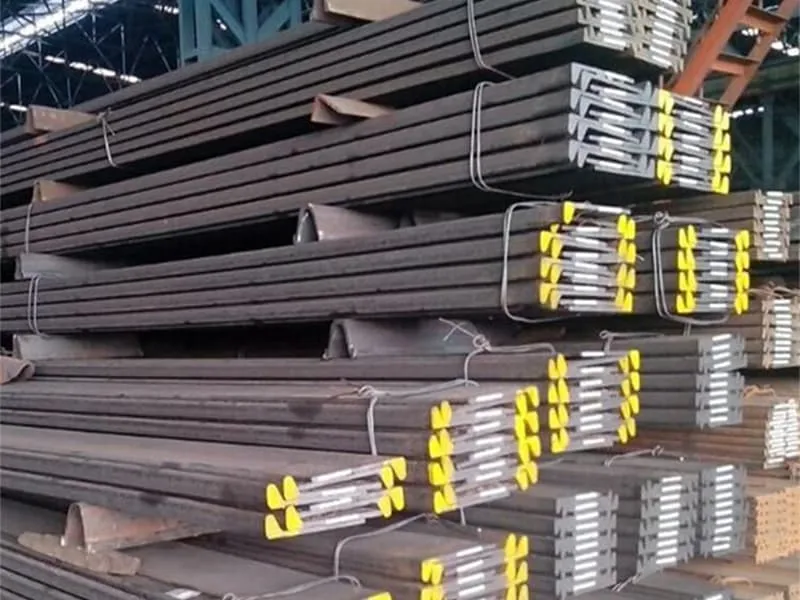
I have seen this problem hurt many buyers. They trust a supplier after one good order. Then the next order arrives and nothing fits. The welders complain. The schedule slips. The client asks questions. Let me walk you through what happens when bulb flat steel is not consistent, and how you can stop it from happening to you.
How Do Dimensional Variations Between Batches Affect Bulb Flat Steel Fit-Up?
You line up two pieces of steel. One is from batch A. One is from batch B. They do not meet properly.
Dimensional variations in bulb height1, web thickness, or flange width create gaps or overlaps during assembly. Welders have to force pieces together or add filler. This adds labor time and creates weak points in the final structure.

Why a few millimeters cost you hours of labor
I remember a fabricator in Vietnam. He ordered 200 tons of bulb flat steel2 for a barge. The first 50 tons came with a bulb height of 150.2 mm. The next 50 tons from the same supplier had a bulb height of 148.5 mm. That is a 1.7 mm difference. His team had to shim every joint. The job took an extra three days. He paid $4,000 in extra labor.
So let me show you exactly which dimensions matter and what happens when they change.
First, the critical dimensions for bulb flat steel. Unlike angle steel, bulb flat has a unique shape. You measure three things:
| Dimension | Symbol | Typical Tolerance (JIS) | What Inconsistency Does |
|---|---|---|---|
| Bulb height | H | ± 1.5mm | Changes the stiffness of the stiffener |
| Web thickness | t | ± 0.3mm | Affects weld penetration3 and strength |
| Flange width | W | ± 1.5mm | Changes fit with attached plate |
| Straightness | – | 1.5mm per meter | Causes gaps along the weld line |
When any of these changes between batches, the steel pieces do not align.
Second, how fit-up problems4 show up on site. Here is a table of what your welders will see:
| Variation | Problem | Extra Work Required |
|---|---|---|
| Bulb height +2mm then -2mm | Stiffener hits the deck plate unevenly | Grind down high spots or add shims |
| Web thickness ±0.5mm | Fillet weld size changes along the joint | Adjust welding parameters constantly |
| Flange width difference | Edge of flange does not line up | Extra passes or filler material |
| Bowed steel (straightness out) | Gap at mid-span when ends are aligned | Hydraulic press to straighten or big welds |
Third, the cost of poor fit-up. Let me give you real numbers from a project in Malaysia.
| Issue | Batch A (Good) | Batch B (Bad) | Difference |
|---|---|---|---|
| Bulb height | 150.1 mm | 148.3 mm | -1.8 mm |
| Fit-up time per joint | 2 minutes | 8 minutes | +6 minutes |
| Weld time per joint | 10 minutes | 15 minutes | +5 minutes |
| Total extra labor per 100 joints | 0 hours | 18 hours | 18 hours |
| Cost at $30/hour | $0 | $540 | $540 |
For a 1000‑joint project, that is $5,400 extra. Just from a 1.8 mm height difference.
What you can do. Ask your supplier for the measurement record of every batch. I send my clients a table like the one above for each bundle. Then they can see if all batches are within the same range. If one batch is different, we separate it and use it where fit-up is less critical.
What Happens When Chemical Composition Changes Across Bulb Flat Steel Batches?
Steel looks the same. But the chemistry inside is different. That changes everything about how it behaves.
Different chemical composition1 between batches changes the steel’s hardenability2, weldability3, and corrosion resistance4. A batch with higher carbon or sulfur can crack during welding. A batch with lower manganese can have weak spots.
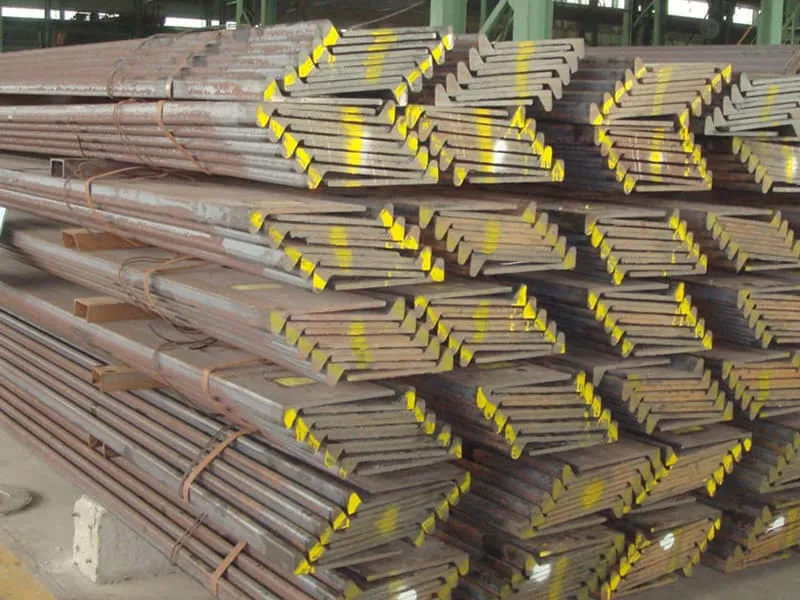
The invisible killer in your steel
I had a buyer from Saudi Arabia. He ordered 300 tons of bulb flat steel for an offshore platform. The first 150 tons welded beautifully. The next 150 tons came from a different mill run. Every weld on the second batch had small cracks. He tested the chemistry. The second batch had 0.27% carbon and 0.045% sulfur. The first batch had 0.19% carbon and 0.025% sulfur. That tiny difference caused all the cracking.
So let me break down what you need to track.
First, the key elements that vary between batches. Not all elements are equal. Some matter more than others.
| Element | Good Range for Marine Bulb Flat | What Too High Does | What Too Low Does |
|---|---|---|---|
| Carbon (C) | 0.18% – 0.22% | Hard to weld, brittle | Low strength |
| Manganese (Mn) | 0.65% – 1.10% | Hard to cut | Poor toughness |
| Silicon (Si) | 0.15% – 0.35% | No big problem | Poor deoxidation |
| Phosphorus (P) | ≤ 0.030% | Cold cracking | – |
| Sulfur (S) | ≤ 0.030% | Hot cracking | – |
| Copper (Cu) | ≤ 0.35% | Better corrosion resistance | Lower corrosion resistance |
Second, how chemistry changes between batches from the same mill. Even good mills have variation. But the variation should be small. Here is what I see in real life:
| Batch | C% | Mn% | S% | Weldability |
|---|---|---|---|---|
| Batch A (Good mill) | 0.20 | 0.85 | 0.020 | Excellent |
| Batch B (Same good mill) | 0.21 | 0.82 | 0.018 | Excellent |
| Batch C (Cheap mill) | 0.25 | 0.70 | 0.045 | Poor – cracks |
| Batch D (Cheap mill) | 0.16 | 0.55 | 0.050 | Weak – too soft |
Batch C and D should never be shipped to a marine project. But they are. That is why you need batch-specific MTCs5.
Third, the real impact on your welding and strength. Chemistry differences do not just affect weldability. They also change the final mechanical properties6.
| Chemistry Change | Effect on Weld | Effect on Finished Structure |
|---|---|---|
| C +0.05% | Harder to weld, preheat needed | Stronger but more brittle |
| S +0.020% | Hot cracks during welding | Hidden cracks under paint |
| Mn -0.30% | Poor fusion | Lower impact strength at low temperatures |
| Cu -0.10% | No effect on welding | Faster rusting in marine environment |
What you can do. Never accept one MTC for the whole order. Ask for an MTC for every heat number. Compare the numbers. If a batch is outside the range of the first batch, reject it or use it only for non‑critical parts.
I send my clients a spreadsheet with the chemistry of every heat number. Then they can see. One client from Thailand told me: "I know exactly what I am getting. No surprises."
Why Do Inconsistent Mechanical Properties Create Weldability and Strength Issues?
Chemistry drives mechanical properties1. But you also need to test the actual steel. A good MTC2 does not always mean good steel.
Inconsistent mechanical properties like yield strength3, tensile strength4, and elongation5 mean some pieces pass load tests and some fail. This creates unpredictable behavior under stress. Weld procedures that work for one batch may fail for another.
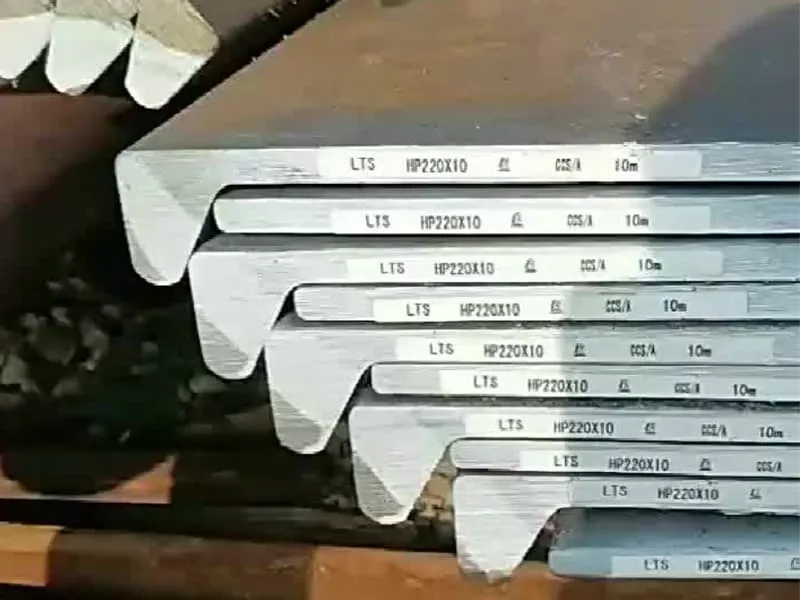
When the numbers on paper do not match reality
I remember a client from the Philippines. He was building a small tugboat. The steel had good MTCs. But when his welder used the same settings as before, the weld penetration was different. He cut a sample and tested it. The yield strength of the second batch was 25% lower than the first. The MTC said it was the same grade. But the real steel was weaker. The supplier had mixed lower grade steel into the shipment.
So let me explain what you must test and why.
First, the three mechanical properties that matter most for bulb flat steel.
| Property | What It Means | Typical Value for AH36 | What Inconsistency Causes |
|---|---|---|---|
| Yield strength (YS) | The stress at which steel starts to bend permanently | 355 MPa minimum | Some parts bend under load, others do not |
| Tensile strength (TS) | The maximum stress before breaking | 490-620 MPa | Unexpected failure under peak load |
| Elongation | How much the steel stretches before breaking | 21% minimum | Brittle fracture instead of bending |
Second, how inconsistent properties show up on site.
| Inconsistency | What Your Team Sees | Risk |
|---|---|---|
| YS varies by 50 MPa | Some stiffeners bend easily, others are hard to form | Uneven final shape |
| TS varies by 100 MPa | Welds break during testing at different loads | Unpredictable failure |
| Elongation varies by 10% | Some pieces crack when bent, others are fine | Hidden cracks |
| Impact toughness varies widely | Steel fails in cold weather on some parts but not others | Catastrophic failure in winter |
Third, why mills produce inconsistent mechanical properties6. The main reasons are:
- Different reheating temperatures between batches
- Different cooling rates (fast vs slow)
- Different rolling reduction ratios
- Different scrap mixes in the furnace
A good mill controls these tightly. A bad mill does not. And a trader who buys from multiple mills has no control at all.
Here is a comparison of two actual deliveries I have seen:
| Batch | YS (MPa) | TS (MPa) | Elongation (%) | Impact at 0°C (J) |
|---|---|---|---|---|
| Mill A – Batch 1 | 385 | 520 | 24% | 120 |
| Mill A – Batch 2 | 370 | 510 | 23% | 115 |
| Mill B – Batch 1 | 410 | 560 | 20% | 90 |
| Mill B – Batch 2 | 340 | 470 | 18% | 50 |
Mill A is consistent. Mill B is not. The buyer who mixed Mill B batches would have serious problems.
What you can do. Do not rely only on the MTC. Ask for samples from each batch. Test them in your own shop or hire a third-party lab. For critical projects, I recommend taking one sample per 50 tons for mechanical testing.
One of my clients from Qatar does this. He sends me a list of tests he needs. I cut samples at the mill and send them to a certified lab in China. The lab sends the report directly to him. No way to fake it. That gives him full confidence.
How Can Buyers Enforce Batch Consistency Through Testing and Inspection?
You cannot fix inconsistency after the steel arrives. But you can prevent it. The key is to check before shipment.
Buyers enforce batch consistency by requiring batch-specific MTCs1, performing random dimensional checks2 at the loading port, using third-party inspection3 (SGS/TÜV), and taking retained samples4 from each batch for their own lab testing.
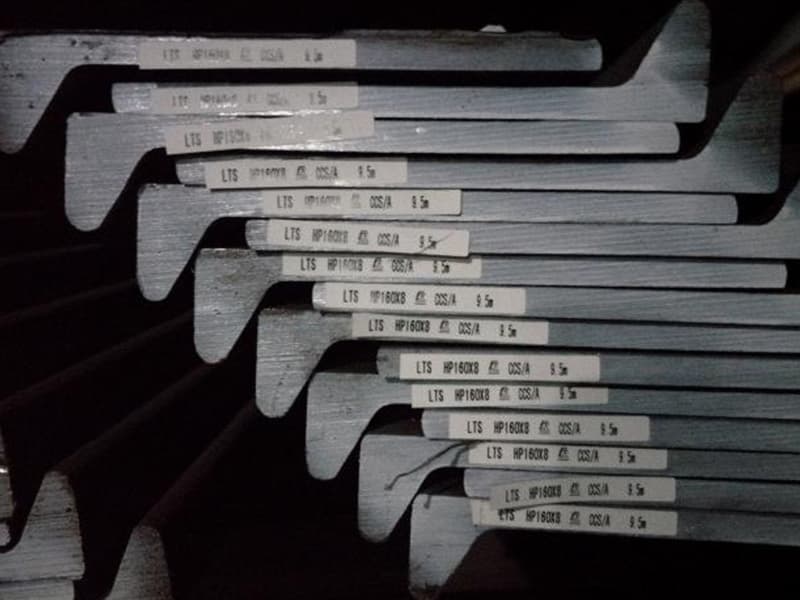
A four-step enforcement plan that actually works
I have a client from Malaysia who used to receive inconsistent steel from every supplier. Then he started using the four-step system I gave him. In two years, he has not had one bad batch. Let me share that system with you.
Step one: Set clear batch consistency requirements in your purchase order5. Do not just say "grade AH36". Write this:
"All bulb flat steel supplied under this order must come from a single mill heat. Consistency limits: leg length ±1.0mm (tighter than JIS), chemistry variation within 10% of the average, and mechanical properties within 5% of the average across all pieces. Supplier must provide batch-specific MTCs and a consistency report."
I have seen suppliers change their behavior when they see this in the PO. They pay attention.
Step two: Do pre-shipment dimensional and surface checks across all bundles. Before the steel is loaded, check at least 5 pieces per bundle. Use a table like this:
| Bundle ID | Heat Number | Bulb Height (mm) | Web Thickness (mm) | Straightness (mm/m) | Result |
|---|---|---|---|---|---|
| B01 | H123 | 150.1 | 12.02 | 0.8 | Pass |
| B02 | H123 | 150.0 | 12.00 | 1.0 | Pass |
| B03 | H456 | 148.5 | 11.92 | 2.2 | Fail |
| B04 | H456 | 149.0 | 11.95 | 1.5 | Pass |
If a bundle fails, do not load it. Ask for replacement. I do this for every order. My clients never see the failed bundles.
Step three: Use third-party inspection with a focus on cross-batch variation6. SGS or TÜV can do more than just pass/fail. Tell them: "We want a consistency check. Measure 10 pieces from Batch 1 and 10 pieces from Batch 2. Report the average and range for each batch. Tell me if they are statistically different."
The inspector will give you a report. If the batches are different, you can negotiate a discount or reject the inconsistent batch.
Step four: Keep a retained sample from every batch. Ask your supplier to cut a 30cm sample from each heat number. Label it with the heat number and bundle number. Send it with the shipment or separately. When the steel arrives, test the sample yourself. This gives you physical proof.
Here is a simple retained sample plan:
| Batch Size (tons) | Number of Samples | Tests to Run |
|---|---|---|
| Under 50 | 1 sample | Visual, dimensions (quick check) |
| 50 – 200 | 2 samples | Dimensions + chemistry (XRF) |
| Over 200 | 1 sample per 100 tons | Full mechanical test (optional) |
A checklist for your next purchase order
- PO requires single mill heat for each size/grade
- Batch-specific MTCs must be provided before loading
- Pre-shipment dimensional check across all bundles (photos required)
- Third-party inspection (SGS/TÜV) ordered for cross-batch variation
- Retained samples from each heat number to be sent with shipment
- Rejection clause for any batch that varies more than 5% from the average
I offer all of these to my clients. That is why my buyers trust me. You should ask your supplier to do the same.
Conclusion
Dimensional, chemical, and mechanical variations between batches ruin projects. Enforce consistency with MTCs, pre-shipment checks, and third-party inspection.
-
Understanding batch-specific MTCs is crucial for ensuring quality and consistency in steel supplies. ↩ ↩ ↩ ↩
-
Learn about effective dimensional check practices to ensure the quality of your steel products. ↩ ↩ ↩ ↩
-
Explore how third-party inspections can enhance your quality assurance processes and prevent inconsistencies. ↩ ↩ ↩ ↩
-
Discover the significance of retained samples in verifying the quality of steel batches. ↩ ↩ ↩ ↩
-
Get insights on crafting effective purchase orders that enforce quality standards in steel procurement. ↩ ↩ ↩
-
Understanding cross-batch variation is key to maintaining consistent quality in steel supplies. ↩ ↩ ↩