
A shipyard in Southeast Asia needed over 3,000 tons of certified marine steel for a new bulk carrier. Time was tight, and quality was non-negotiable. One wrong batch could jeopardize the entire build schedule and classification approval.
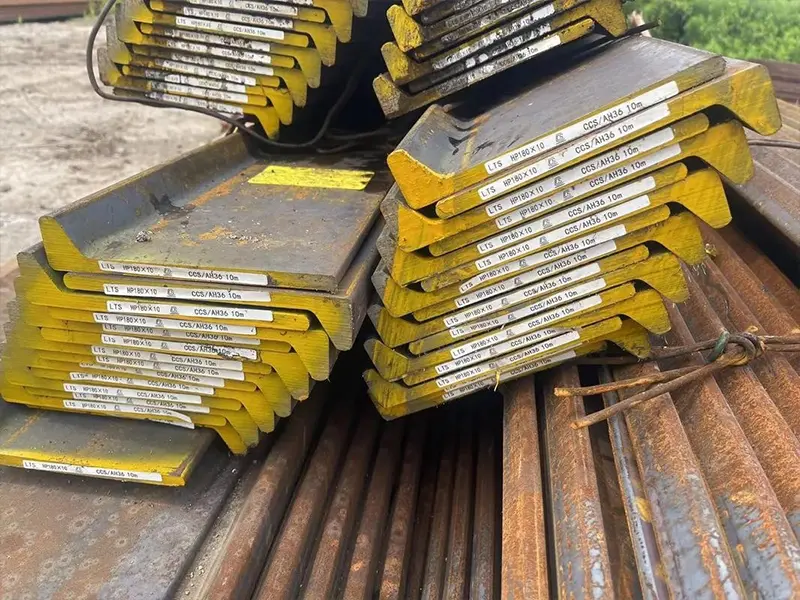
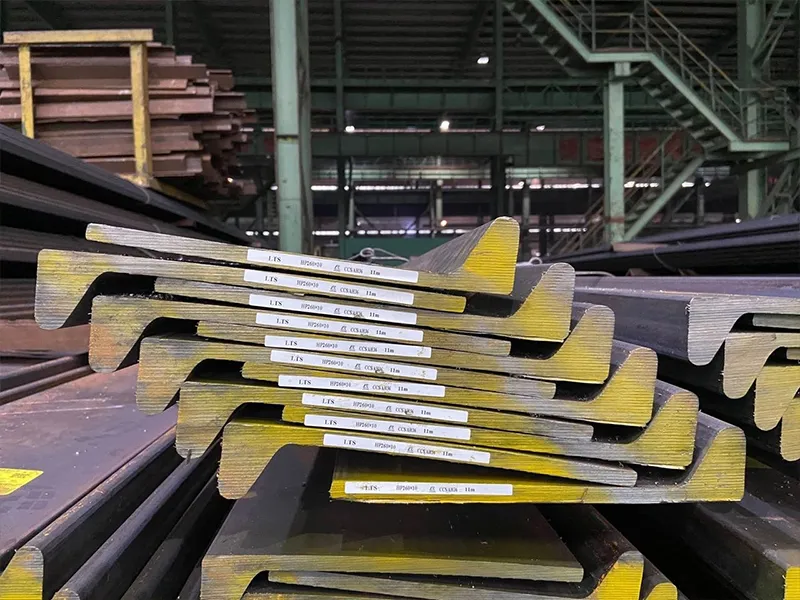
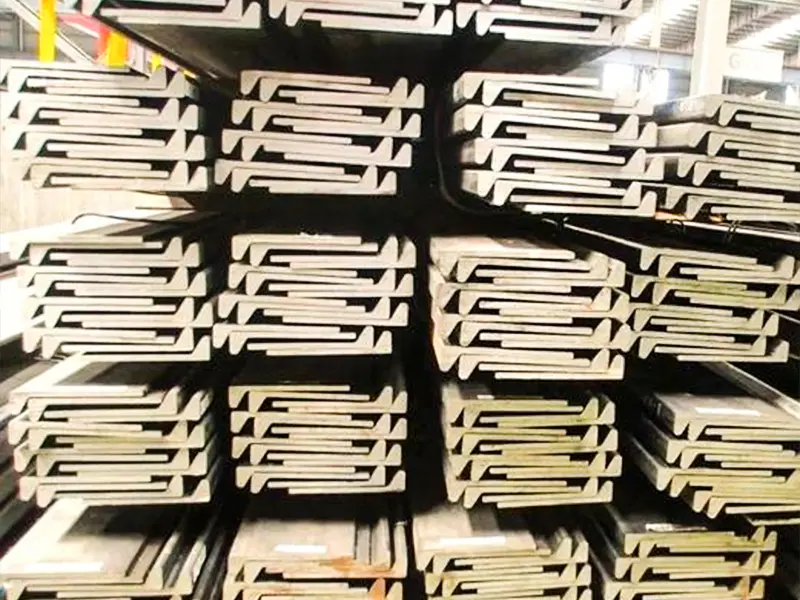
This case study details how we supplied marine steel plate, bulb flat, and L-shaped section steel for a 10,000-ton vessel. We focus on the material choices, logistical challenges, and quality protocols that ensured project success, providing a real-world blueprint for complex shipbuilding procurement.
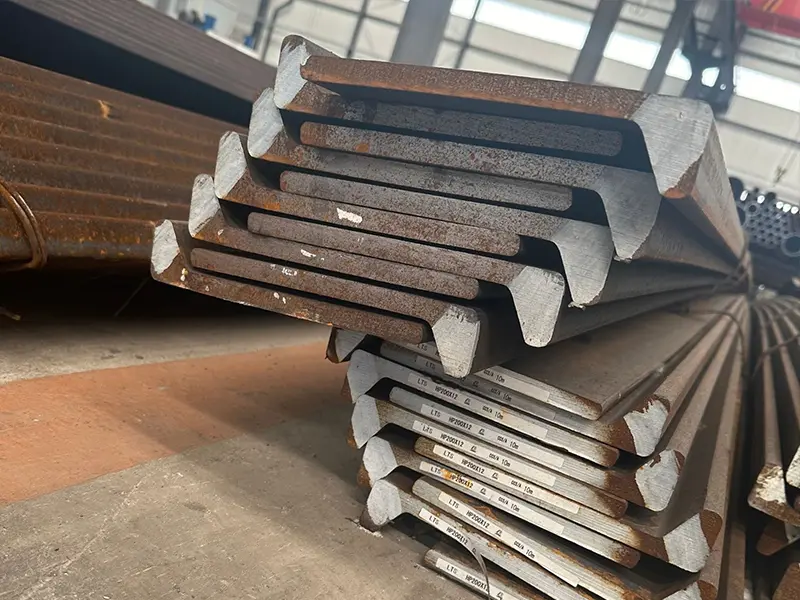
Building a ship is like assembling a giant, floating puzzle. Every piece of steel must fit perfectly and perform under immense stress. From the initial inquiry to the final delivery at the shipyard, every step demands precision. Let me walk you through this project, and along the way, we will answer some critical questions about shipbuilding steel.
How profitable is ship breaking?
You might wonder why we talk about building ships and breaking them in the same breath. For a shipowner, the end-of-life value is a key part of the vessel’s total economic equation. Understanding ship breaking profitability reveals the full lifecycle of the steel we supply.
Ship breaking1 can be profitable, but margins are highly volatile. Profit depends on global steel scrap prices2, the cost of safe dismantling, and the value of reusable equipment on the vessel. High steel prices and low labor costs in certain regions can make it a lucrative business.
The Economics and Ethics of a Ship’s Final Voyage
The profitability of ship breaking is not a simple calculation. It is a complex balance between commodity markets, environmental regulations3, and human labor. As a supplier of new marine steel, I see the end of a ship’s life as the closing loop in the material cycle. The steel we sell today may be the high-quality scrap recycled into new products decades from now.
The profit formula involves three main variables: Revenue, Costs, and Risks.
Revenue Streams from a Dead Ship
A beached vessel is not just a lump of steel. It is a source of several materials.
- Steel Scrap: This is the primary revenue, often 90-95% of the lightship weight. The price is tied to the global ferrous scrap market.
- Non-Ferrous Metals: Copper wiring, bronze propellers, and aluminum superstructures fetch much higher prices per ton than steel.
- Machinery and Equipment: Generators, engines, and even furniture can be resold for reuse.
- Tank Residuals: Slop oil and bunker fuel can be recovered and sold.
The Major Cost Centers
These costs eat into the revenue and determine the net profit.
- Purchase Price: The breaker must buy the ship from the owner. This price fluctuates with scrap prices and vessel location.
- Towing and Beaching: Moving a dead ship to a breaking yard, often across oceans, is expensive and risky.
- Dismantling Labor: This is the core operational cost. It varies massively between highly regulated, mechanized yards and low-cost, labor-intensive beaches.
- Environmental and Safety Compliance: Proper handling of asbestos, PCBs, oil, and other hazardous materials4 is a significant cost for responsible operators. Avoiding these costs is a source of profit for irresponsible ones.
The Profitability Spectrum: A Regional Comparison
Profitability looks very different in Alang, India, compared to a EU-certified yard5 in Turkey.
| Location / Method | Typical Profit Margin Driver | Key Cost Factor | Impact on Steel Cycle & Our Business |
|---|---|---|---|
| South Asia (Beaching) | Very high potential margin. | Extremely low labor cost, minimal environmental compliance. | Provides cheap scrap but raises serious ethical and environmental concerns. The scrap re-enters the global market. |
| Turkey (Pier-side) | Moderate, stable margin. | Higher labor cost than Asia, but better compliance. Mechanized. | Provides a cleaner stream of graded scrap. European mills may prefer this source. |
| China (Modern Yard) | Lower margin, government subsidized. | High labor and environmental costs. Often part of state-owned enterprise. | Focus is on domestic scrap circulation and environmental control, less on pure profit. |
| EU (Full Compliance) | Often marginal or loss-making. | Highest compliance and labor costs in the world. | Sets the standard for safety and environment. The high cost influences new ship design for easier recycling. |
This lifecycle view matters to our clients. A shipbuilder choosing higher-grade, more corrosion-resistant steel (like the AH36/DH36 we supply) is not just building a stronger ship. They are also creating a more valuable future asset. When that ship is finally broken, its steel is less corroded and contaminated, potentially yielding cleaner, higher-value scrap. Our role is to provide the quality raw material that starts this cycle responsibly. The profitability of breaking a ship begins with the decisions made at the shipyard decades earlier.
Why is high tensile steel used in ships?
The ocean is a brutal place. Waves, storms, and cargo loads apply enormous forces to a ship’s hull. Using ordinary steel would mean building a much heavier, less efficient vessel. High tensile steel1 solves this fundamental engineering challenge.
High tensile steel1 is used in ships because it is stronger than mild steel. This higher strength allows naval architects to use thinner plates and sections while maintaining structural integrity. The result is a lighter ship hull, which can carry more cargo, use less fuel, and increase the vessel’s overall profitability and performance.

The Engineering and Economic Imperative for Strength
The use of high tensile steel (HTS) is a direct response to the economic pressure to build bigger, more efficient ships. Let’s break down the "why" into clear physical and financial benefits.
The Physics: Strength-to-Weight Ratio is King
A ship’s hull is a massive beam floating in water. The key metric for its material is specific strength—strength divided by density.
- Mild Steel (A): Yield strength ~235 MPa. This is the baseline.
- High Tensile Steel (AH/DH/EH): Yield strength can be 315 MPa, 355 MPa, or higher. This is 30-50% stronger.
If you need a certain strength to withstand wave bending moments, you have two choices:
- Use a thick plate of mild steel.
- Use a thinner plate of high tensile steel.
Option 2 wins every time for critical structural areas. Thinner plates mean less weight high up in the ship, improving stability. They also mean less welding material and faster construction.
The Economics: Every Ton Saved is a Ton Earned
For a commercial vessel like a 10,000-ton bulk carrier, weight savings translate directly into revenue.
- More Cargo Capacity: The ship’s deadweight (cargo capacity2) is fixed. If the hull weighs 3,000 tons instead of 3,300 tons, that’s 300 more tons of cargo it can carry on every voyage.
- Fuel Efficiency: A lighter ship requires less power to move at the same speed. This saves thousands of dollars in fuel costs annually.
- Initial Material Cost: While HTS costs more per ton than mild steel, you use fewer tons. The total material cost for the structure can be similar or even lower, while performance is much better.
Application Zones on a Ship: A Strategic Map
Not every part of a ship needs HTS. It is used strategically where stresses are highest. In our project, we supplied different grades for different zones.
| Ship Area | Primary Stress | Typical Steel Grade Used | Why This Grade? |
|---|---|---|---|
| Keel & Bottom Shell | High hull bending, slamming loads, corrosion. | DH36 (High Tensile) | Maximum strength is needed at the bottom of the hull girder. ‘D’ grade signifies good impact toughness at 0°C. |
| Deck (especially center) | High tensile stress from hull bending. | AH36/DH36 (High Tensile) | The deck is in tension when the hull sags. High strength is critical to prevent cracking. |
| Side Shell | Intermediate stress, wave pressure. | Mix of AH32 and AH36. | Strength requirements are moderate. Using AH32 here can optimize cost. |
| Internal Bulkheads, Non-critical structures | Lower stress, local loads. | Grade A (Mild Steel) | No need for premium strength. Mild steel is cost-effective for these parts. |
For the 10,000-ton project, the shipyard’s specifications clearly called for AH36 plates for the main deck and DH36 for the bottom plates. Our job was to ensure every single plate we delivered had the correct mill certificate showing the chemical composition and mechanical properties met these exact grades. A single batch failure would have stopped production. Using HTS is not just a choice; it is a precise, documented commitment to the ship’s design and safety.
What is the best steel for ship building?
There is no single "best" steel. Asking this is like asking for the best tool—it depends on the job. The best steel is the one that perfectly matches the specific requirements of the ship’s design, classification society rules, and the intended service environment.
The best steel for shipbuilding is graded marine steel1 that meets international classification society standards (like ABS, LR, DNV). For most ocean-going vessels, normalized high tensile steels2 with good toughness (like AH36/DH36/EH36) offer the optimal balance of strength, weldability3, impact resistance4, and cost for critical hull structures.
Navigating the "Best" Choice: A Framework for Selection
Instead of a single answer, smart procurement uses a decision framework. The "best" steel is defined by a combination of properties, certifications, and practical supply factors. Let’s build this framework step by step.
Step 1: The Non-Negotiables – Classification Society Approval
This is the foundation. A steel cannot be used in a classed ship unless it is approved by the relevant society (ABS, Lloyd’s Register, DNV, BV, etc.). These approvals are based on rigorous testing of the mill’s production process. We only source from mills with these wide certifications, so our clients never face approval delays.
Step 2: The Core Properties Triad
Three properties must be balanced: Strength, Toughness, and Weldability.
- Strength (Yield Strength): Determines plate thickness. We covered this with HTS.
- Toughness (Impact Test): This is critical. It measures the steel’s ability to absorb energy and resist brittle fracture in cold waters. Grades are denoted by A, D, E, F for increasing low-temperature toughness5.
- Weldability (Carbon Equivalent – CE): Steel must be easily welded without cracking. A controlled chemical composition (CE value) ensures this.
Step 3: The Processing Condition
How is the steel treated after rolling? This affects its properties.
- As-Rolled (AR): For general purpose, lower-grade plates.
- Normalized (N or NR): Heated and cooled to refine the grain structure. This is the standard for most high-tensile ship plates as it improves toughness and consistency. For our project, all AH36/DH36 plates were normalized.
- Thermo-Mechanical Control Processed (TMCP)6: An advanced process offering high strength and toughness with lower carbon content, enhancing weldability3.
Comparative Table: Choosing the "Best" for the Application
Here is how a shipbuilder might decide:
| Ship Type / Component | Key Requirement | "Best" Steel Choice | Rationale & Our Supply Role |
|---|---|---|---|
| Large Container Ship Deck | Ultra-high strength to reduce weight, excellent toughness. | EH40 / FH40 TMCP | TMCP provides maximum strength-to-weight. ‘E/F’ grade ensures toughness for North Atlantic routes. We ensure CE value is low for welding. |
| Ice-Class ARC 6 Bulker | Exceptional low-temperature toughness5, resistance to ice impact. | DH36 / EH36 Normalized, with extra impact testing at -40°C or -50°C. | The ‘D/E’ grade is mandatory. We coordinate with the mill to perform the specific extra tests required by the class rules. |
| Coastal Feeder Vessel | Good all-round performance, cost-sensitive. | AH32 Normalized | Provides a strength boost over Grade A at a reasonable cost. A perfect balance for less extreme operations. |
| Chemical Tanker | Corrosion resistance to cargoes. | 316L Stainless Clad Plate or Corrosion-Resistant Alloy | This is a specialty product. The "best" steel here is defined by chemical compatibility, not just strength. |
| Standard 10,000-Ton Bulk Carrier (Our Case) | Optimal cost/performance, global trading. | AH36 for deck, DH36 for bottom, Grade A for internals. | This is the industry-standard, proven package. Our value is in reliably delivering this exact mix with perfect documentation. |
In our case study, the "best" steel was defined by the shipyard’s detailed specification sheet. They did not ask for "the best." They asked for "AH36 to ABS rules, normalized, with test certificates." Our expertise was in executing this request flawlessly: selecting the right mill batch, managing the SGS inspection to verify the certs matched the material, and packing it all for secure ocean freight. The "best" steel is ultimately the steel that arrives on time, to spec, and with paperwork that gives the shipyard and class surveyor complete confidence.
What is the disadvantage of using high tensile steel in ship construction?
High tensile steel seems like the perfect solution. But experienced naval engineers and shipyards know its higher strength comes with trade-offs. Ignoring these disadvantages can lead to construction problems and even operational failures.
The main disadvantages of high tensile steel in ship construction are its higher cost per ton1, greater sensitivity to welding procedures2, increased risk of fatigue crack propagation3 if not designed properly, and potential for more severe corrosion if a coating system fails. It demands higher skill and stricter quality control throughout the build process.
Managing the Trade-Offs: The Critical Flip Side of Strength
Using HTS is not a simple upgrade. It introduces new complexities that must be actively managed. Understanding these disadvantages is just as important as knowing the benefits.
Disadvantage 1: Cost and Availability
HTS has a higher base price per metric ton than mild steel. While you use less of it, the initial purchase order line item is more expensive. Furthermore, not all mills produce all grades in all sizes with short lead times. For a project requiring 100 tons of a specific EH40 thickness, sourcing can be trickier than for common AH36.
Disadvantage 2: Welding Complexity and Crack Sensitivity
This is the most significant operational challenge. HTS, especially in thicker sections, is more prone to hydrogen-induced cracking4 (HIC) and cold cracking in the weld heat-affected zone (HAZ).
- Why it happens: The higher strength often comes from alloying elements. These can make the steel’s microstructure harder and more brittle after welding if cooled too quickly.
- The solution demands strict procedure: Shipyards must use qualified Welding Procedure Specifications5 (WPS). This often means:
- Using low-hydrogen electrodes.
- Pre-heating the steel before welding.
- Controlling the interpass temperature.
- Performing post-weld heat treatment (PWHT) for critical joints.
- Our role as supplier: We provide the essential data—the actual chemical composition and CE value from the mill certificate. This data is the starting point for the shipyard’s welding engineers to develop their safe WPS.
Disadvantage 3: Fatigue and Notch Sensitivity
High strength steels can be more sensitive to stress concentrations.
- Fatigue Performance: Under cyclic loading (like repeated waves), a crack might initiate at a detail (like a weld toe or cut-out) just as easily as in mild steel. However, once a crack starts, it can propagate faster in some HTS grades.
- Design Consequence: This means structural details6 must be designed with even greater care. Sharp corners are more dangerous. Weld quality and profile become more critical.
Disadvantage 4: Corrosion Considerations
If the protective coating system breaks down, the corrosion rate of HTS is not necessarily higher. But the consequence is more severe. Because the plates are thinner, a given amount of corrosion eats through a larger percentage of the structural thickness, compromising strength faster.
A Balanced View: Risk Mitigation Table
The disadvantages are not reasons to avoid HTS. They are items for a project risk register7 that must be mitigated.
| Disadvantage | Potential Consequence | Mitigation Strategy | How a Supplier Can Support |
|---|---|---|---|
| Higher Cost | Project budget overrun. | Accurate weight optimization in design. Use HTS only where needed (see zoning table earlier). | Offer competitive, transparent pricing. Provide accurate technical data for precise ordering. |
| Welding Cracks | Rework, delays, structural defects. | Enforce strict WPS, welder training, and inspection (NDT like UT). | Supply certified steel with consistent chemistry. Provide full traceability and mill certs for WPS qualification. |
| Fatigue Sensitivity | In-service cracking, inspection headaches. | Improved detail design (smoother transitions), high-quality weld finishing (grinding). | N/A (Design phase issue). But consistent material properties ensure predictable performance. |
| Corrosion Impact | Faster loss of section strength. | Robust coating specification (e.g., high-performance epoxy), increased inspection frequency. | Supply steel with good surface condition (e.g., shot-blasted) for optimal coating adhesion. |
In the 10,000-ton project, the shipyard was well aware of these issues. Their technical team reviewed our mill certificates8 before production welding began. Their quality control team performed extra non-destructive testing9 on HTS welds. As their supplier, our responsibility was to deliver a product that was perfectly consistent and fully documented. This allowed them to focus on managing the construction challenges, not worrying about material quality. The disadvantage of HTS is not a flaw; it is a call for greater professionalism at every stage, from the mill to the shipyard welder.
Conclusion
Supplying steel for a ship is a partnership in precision. It requires the right material grade, flawless execution, and total transparency to navigate challenges from welding to delivery.
-
Understanding the cost factors can help in budgeting and project planning for ship construction. ↩ ↩ ↩ ↩ ↩
-
Exploring welding best practices ensures structural integrity and reduces the risk of operational failures. ↩ ↩ ↩ ↩
-
Learning about fatigue crack propagation can help in designing safer and more durable ships. ↩ ↩ ↩ ↩
-
Gaining insights into HIC can improve welding techniques and prevent costly repairs. ↩ ↩ ↩
-
Familiarizing with WPS can enhance welding quality and compliance in ship construction. ↩ ↩ ↩ ↩
-
Proper design of structural details is essential for preventing failures and ensuring safety. ↩ ↩
-
A well-structured risk register can help manage potential issues effectively during construction. ↩
-
Knowing what to look for in mill certificates ensures material quality and compliance with specifications. ↩
-
Understanding NDT can help ensure the quality and reliability of welds in shipbuilding. ↩